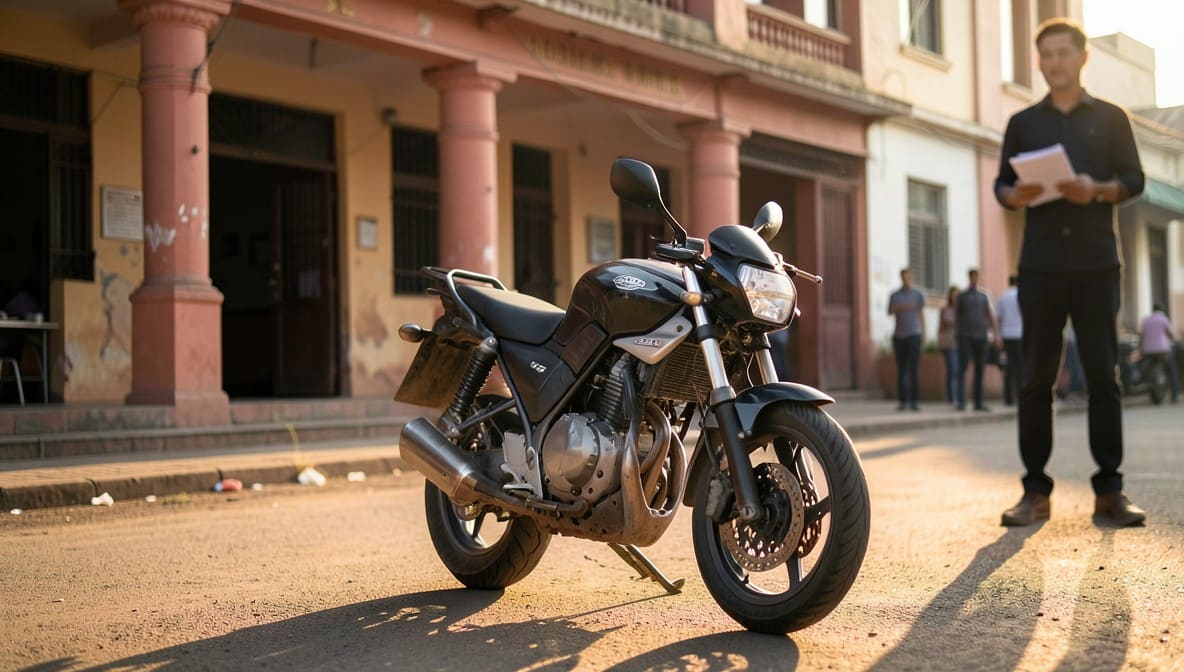
The Uttarakhand High Court has clarified that the mere association of a vehicle with a narcotic offence does not justify its prolonged retention without evidence of its instrumental role. In a significant ruling, the Court ordered the immediate release of a seized scooter, emphasizing that preventive detention of property without prima facie proof violates the principle of proportionality and invites unnecessary depreciation.
Background & Facts
The Dispute
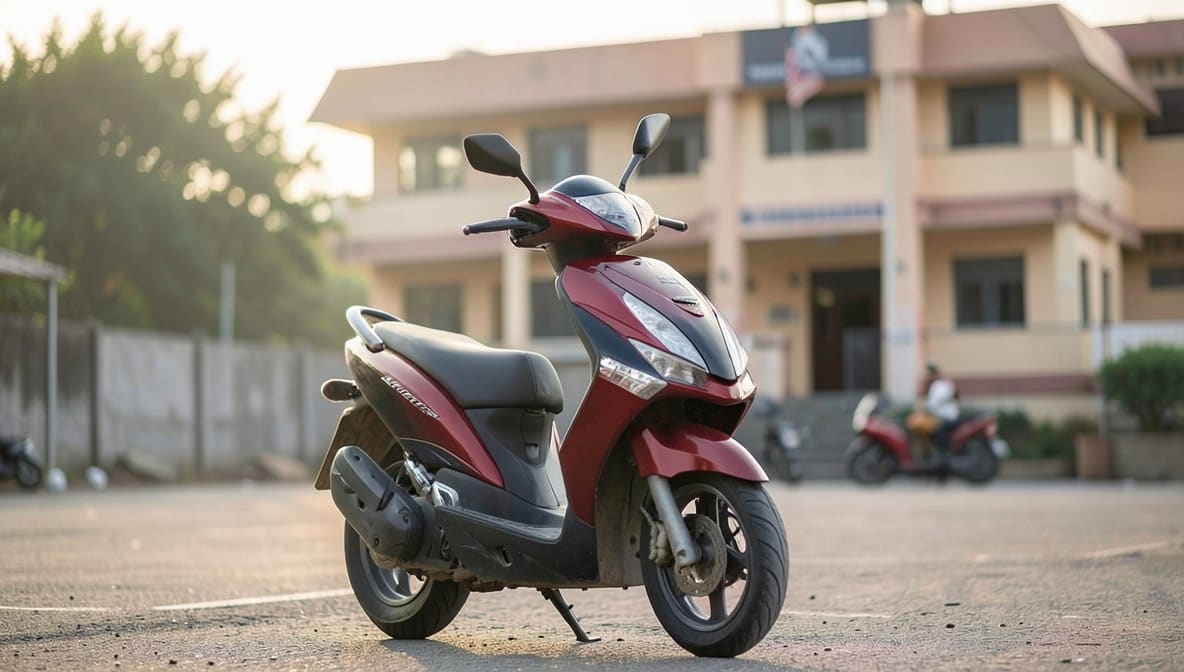
The applicant, a resident of Nepal, sought the quashing of an order dated 01.12.2025 passed by the 1st Additional District & Sessions Judge, Udham Singh Nagar, which rejected his application for the release of a seized TVS NTORQ Scooty. The vehicle was seized during the recovery of 4.20 grams of heroin (Smack) from the applicant’s son, who was arrested in connection with the offence. The prosecution alleged that the scooter was used for transporting the contraband, but no specific evidence was adduced to substantiate this claim.
Key Facts
- The scooter, bearing registration number Su0 Pa0 Pra0 002003Pa6011, Chassis No. MD626AG70L2L02924, and Engine No. BG7LL2800996, was seized on 18.07.2025.
- The applicant is the registered owner of the vehicle, which is registered with the Transport Department of Nepal.
- The son of the applicant was arrested in connection with F.I.R. No. 0144 of 2025 for possession and trafficking of narcotic substances.
- The prosecution did not produce any documentary, testimonial, or circumstantial evidence demonstrating that the scooter was used to transport the contraband.
- The vehicle has remained in police custody since 18.07.2025, over six months at the time of the hearing.
- The applicant submitted that continued detention would cause irreversible depreciation and mechanical deterioration.
Procedural History
- 18.07.2025: Scooter seized during recovery of 4.20 grams of Smack.
- 01.12.2025: Trial Court rejected application for release of the scooter.
- 20.04.2026: Criminal Miscellaneous Application filed before the Uttarakhand High Court seeking quashing of the order and release of the vehicle.
Relief Sought
The applicant sought:
- Quashing of the order dated 01.12.2025.
- Immediate release of the seized scooter.
- Directions to the competent authority to return the vehicle upon furnishing appropriate bond and undertaking.
The Legal Issue
The central question was whether a vehicle seized in connection with a narcotic offence can be retained indefinitely by the police in the absence of any prima facie evidence establishing its direct and instrumental use in the commission of the offence.
Arguments Presented
For the Appellant
Learned counsel for the applicant relied on Sunderbhai Ambalal Desai v. State of Gujarat (2002) 10 SCC 283, arguing that prolonged retention of seized vehicles without judicial oversight causes undue hardship and economic loss. It was contended that the vehicle was merely a mode of conveyance and not an instrumentality of the crime. No material on record established that the scooter was used to transport narcotics. The applicant emphasized that the vehicle’s continued detention served no investigative purpose and violated the principle of proportionality under Article 21 of the Constitution.
For the Respondent
The State Counsel contended that the vehicle was involved in the illegal transportation of contraband and that confiscation proceedings were underway. It was submitted that the applicant being a foreign national and the vehicle being registered in Nepal, its release might hinder the investigation. However, no specific evidence linking the vehicle to the offence was cited.
The Court's Analysis
The Court examined the judgment in Sunderbhai Ambalal Desai v. State of Gujarat, wherein the Supreme Court held that seized vehicles, especially those not inherently illegal, must be released on interim basis upon furnishing adequate bond or security to prevent depreciation and hardship. The Court observed that the prosecution’s case rested on mere suspicion, not on any tangible evidence connecting the scooter to the transportation of narcotics.
"The mere fact that a vehicle was present at the scene of recovery or was being used by the accused does not ipso facto make it an instrumentality of the offence. There must be a direct nexus established by cogent material."
The Court noted that the State had not demonstrated how retaining the scooter for over six months aided the investigation. The absence of any forensic, testimonial, or documentary proof linking the vehicle to the offence rendered the continued custody unjustified. The Court further held that the applicant’s nationality and the vehicle’s foreign registration did not, by themselves, justify denial of release, as these factors could be addressed through the conditions of the bond.
The Court emphasized that the principle of proportionality under Article 21 requires that the state’s action must not be excessive or arbitrary. Retaining a valuable asset without proof of its criminal use amounts to punitive deprivation without trial.
The Verdict
The applicant succeeded. The Uttarakhand High Court quashed the order dated 01.12.2025 and directed the competent authority to release the TVS NTORQ Scooty forthwith, subject to the applicant furnishing a personal bond of ₹50,000 and two sureties, each of the same amount. The applicant was required to undertake that: (i) he shall produce the vehicle whenever required during investigation or trial; (ii) he shall not transfer, alienate, or create any third-party interest in the vehicle without prior court permission; and (iii) he shall maintain the vehicle in proper condition. The Court clarified that this release shall not prejudice the trial in F.I.R. No. 0144 of 2025.
What This Means For Similar Cases
Seizure Must Be Justified by Evidence, Not Suspicion
- Practitioners must challenge prolonged retention of vehicles in narcotic cases where no evidence links the vehicle to the offence.
- Courts are now bound to apply the Sunderbhai Desai principle: if the vehicle is not inherently illegal and no prima facie nexus is shown, interim release with bond is mandatory.
- Police cannot rely on the accused’s presence or the vehicle’s location at the time of seizure as sufficient grounds for detention.
Bond Conditions Are Sufficient Safeguards
- The Court has affirmed that personal bonds with sureties and undertakings are adequate to ensure the vehicle’s availability for trial.
- Conditions such as non-transfer, maintenance, and production on demand are enforceable and do not require physical custody.
- Foreign-registered vehicles cannot be denied release solely on the basis of nationality or registration jurisdiction.
Proportionality Is a Constitutional Imperative
- The judgment reinforces that Article 21 protects property rights against arbitrary state action.
- Depreciation and loss of value are recognized as legitimate harms warranting judicial intervention.
- This precedent applies equally to cars, motorcycles, and other non-contraband property seized in drug cases.