The Allahabad High Court has granted bail in a serious NDPS case involving nearly 30 kg of ganja, clarifying that non-compliance with Sections 50 and 52-A of the Narcotic Drugs and Psychotropic Substances Act does not automatically vitiate proceedings when the contraband is not recovered from the accused’s personal possession. This decision reinforces the principle that procedural lapses must be evaluated in context, particularly where the accused’s direct control over the seized substance is not established.
Background & Facts
The Dispute
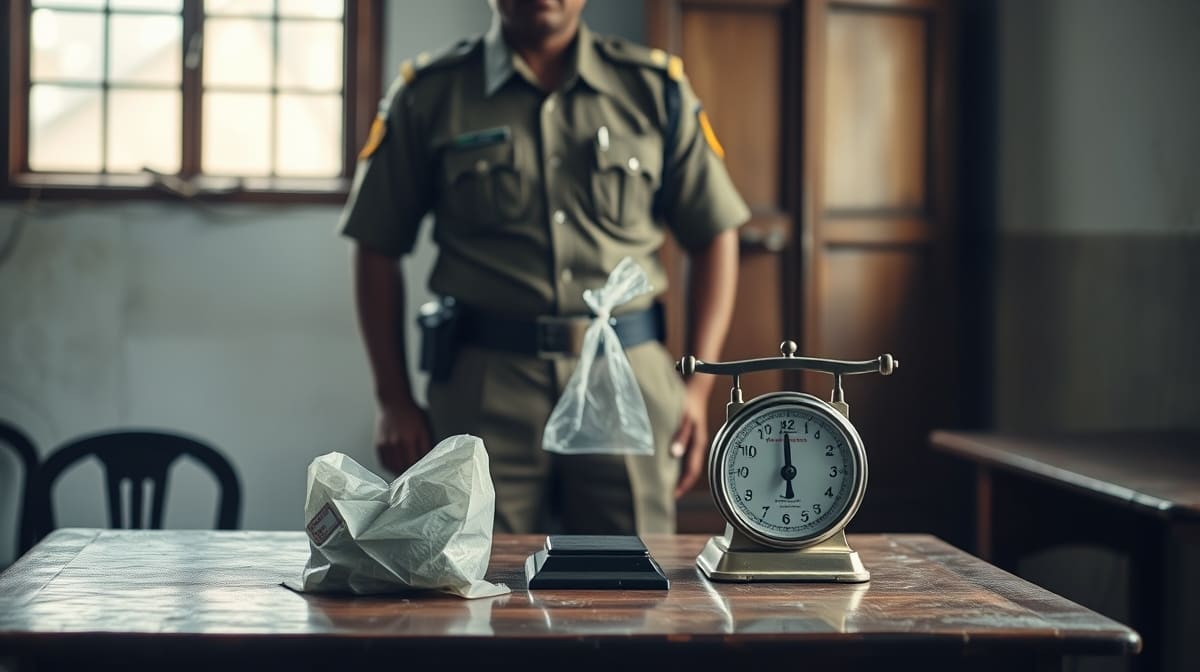
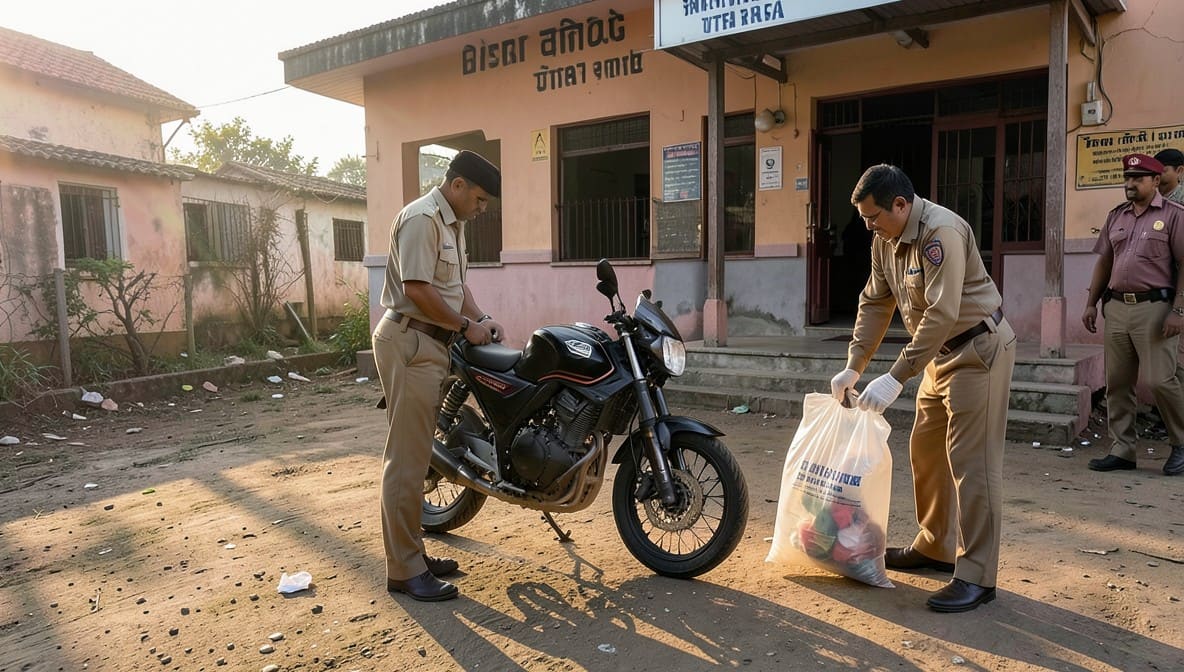
The applicant, Gopal, is accused in Case Crime No. 78 of 2026, registered at Police Station Farah, District Mathura, under Sections 8 and 20 of the Narcotic Drugs and Psychotropic Substances Act, 1985. The case arises from the recovery of 29.760 kg of ganja from a motorcycle allegedly jointly possessed by the applicant and co-accused Pappu @ Mahendra. The applicant was arrested on 11.03.2026 and has been in judicial custody since then.
Key Facts
- The contraband was recovered from a motorcycle, not from the personal person, clothing, or immediate vicinity of the applicant.
- The applicant claims he was falsely implicated due to ulterior motives.
- No evidence links the applicant directly to the motorcycle or its contents at the time of recovery.
- The applicant’s counsel contends that the mandatory procedures under Sections 50 and 52-A of the NDPS Act were not followed.
- The samples of the seized ganja were allegedly not collected in accordance with Rules 9, 10, and 11 of the Union of India’s notification published in the Official Gazette.
- The samples were not certified by a Judicial Magistrate as required under the procedural framework.
- The applicant has been in custody since 11.03.2026, with no indication of an early trial conclusion due to heavy pendency.
Procedural History
- 11.03.2026: Applicant arrested and remanded to judicial custody.
- 12.03.2026: First Information Report (FIR No. 78/2026) registered at PS Farah, Mathura.
- 25.04.2026: Charge sheet filed before the Trial Court.
- 15.05.2026: Trial court rejected interim bail application.
- 03.05.2026: Criminal Misc. Bail Application No. 14064 of 2026 filed before the Allahabad High Court under Section 483 of the Bharatiya Nagarik Suraksha Sanhita, 2023.
- 05.05.2026: Hearing concluded before Justice Jitendra Kumar Sinha.
The Parties' Positions
For the Applicant
- The recovery was from a vehicle, not from the applicant’s person or personal possession.
- Sections 50 and 52-A of the NDPS Act, which mandate procedural safeguards including notice to the accused and independent witness presence, are not triggered when the contraband is not found in the accused’s personal custody.
- The sample collection and certification procedures under Rules 9, 10, and 11 were violated, casting doubt on the integrity of the evidence.
- The applicant has no prior criminal record and undertakes to comply with all bail conditions.
- Prolonged incarceration without trial violates the right to speedy justice.
For the Respondent (State)
- The recovery was from a motorcycle, which was not in the applicant’s exclusive possession, and therefore Section 50 of the NDPS Act does not apply.
- The sample collection and testing procedures were conducted in accordance with the prescribed rules.
- The nature of the offence - possession of nearly 30 kg of ganja - is grave and falls under Section 20, attracting stringent bail conditions.
- Granting bail in such cases undermines the state’s efforts to combat large-scale drug trafficking.
Relief Sought
The applicant seeks bail pending trial, with conditions to ensure his presence and non-interference with the investigation and trial process.
The Legal Issue
Can bail be granted under Section 483 of the Bharatiya Nagarik Suraksha Sanhita, 2023, in an NDPS case where the contraband was recovered from a shared vehicle rather than the accused’s personal possession, and where procedural lapses under Sections 50 and 52-A are alleged but not determinative of guilt?
Arguments Presented
For the Appellant/Petitioner
The applicant’s counsel relied on Nadeem Ahmad v. State of West Bengal (2025) INSC 993 and Union of India v. Shiv Shanker Kesari (2007) 7 SCC 798 to argue that the rigour of Section 37 of the NDPS Act must be tempered by the nature of possession. Since the ganja was recovered from a motorcycle and not from the applicant’s person, clothing, or immediate control, the strict conditions of Section 50 (right to be produced before a Magistrate before search) and Section 52-A (mandatory recording of reasons for seizure) were not triggered. The counsel emphasized that procedural irregularities in sample collection do not automatically render the case unprosecutable, but they do justify a liberal approach to bail where the accused’s direct involvement is not established. The applicant’s clean record and undertaking to comply with conditions were highlighted.
For the Respondent/State
The Additional Government Advocate contended that the quantity of ganja (29.760 kg) is well above the commercial quantity threshold under Section 20, making the case inherently serious. The State argued that the recovery from a vehicle used by the accused constitutes constructive possession, thereby invoking Section 50. It further submitted that the procedural compliance was adequately demonstrated through the seizure memo and lab report, and that bail should be denied to deter drug trafficking. The State did not dispute the delay in trial but maintained that gravity of offence outweighs procedural concerns.
The Court's Analysis
The Court examined the distinction between personal possession and constructive or joint possession, particularly in the context of Section 50 of the NDPS Act. It noted that Section 50 applies only when the search is conducted on the person of the accused or in a place under his exclusive control. The Court observed:
"The recovery of contraband from a vehicle, which is not shown to be exclusively owned or controlled by the accused, does not trigger the mandatory requirements of Section 50 of the NDPS Act."
The Court further held that while procedural lapses in sample collection and certification are serious, they do not, by themselves, establish innocence or invalidate the prosecution’s case. However, in the absence of direct evidence linking the applicant to the motorcycle or its contents, the Court found that the applicant’s continued incarceration pending trial - without any indication of imminent trial conclusion - constituted undue hardship. The Court distinguished Union of India v. Shiv Shanker Kesari, which dealt with personal possession, and applied Nadeem Ahmad, which held that bail should not be denied solely on the basis of quantity when the accused’s direct involvement is not established. The Court emphasized that the purpose of bail is not to determine guilt but to balance liberty against the risk of flight or tampering. The conditions imposed were designed to mitigate these risks without prejudicing the trial.
The Verdict
The applicant succeeded. The Court allowed the bail application and directed the release of Gopal on a personal bond of Rs. 50,000 with two sureties each in the like amount. The applicant must comply with five conditions: (i) no intimidation or inducement of witnesses; (ii) no pressure on prosecution witnesses; (iii) personal appearance before the trial court on dates for opening of case, framing of charge, and recording of statement under Section 351 of B.N.S.S.; (iv) no request for adjournment on dates when witnesses are present; and (v) presence before the court on all fixed dates, personally or through counsel. Breach of any condition shall result in cancellation of bail. The Court explicitly clarified that this order does not express any opinion on the merits of the case.
What This Means For Similar Cases
Section 50 NDPS Does Not Apply to Vehicle Recoveries Without Personal Control
- Practitioners must now argue that Section 50 of the NDPS Act is triggered only when contraband is recovered from the accused’s person, residence, or place under exclusive control.
- Recovery from a shared vehicle, public space, or third-party property does not automatically invoke Section 50, even if the accused was present.
- This creates a new threshold for invoking procedural safeguards in NDPS cases.
Bail Is Not Automatically Denied in Large-Quantity NDPS Cases
- The Court reaffirmed that quantity alone cannot override the right to liberty when direct possession is unproven.
- Courts must examine the nature of possession, not merely the weight of contraband, when deciding bail.
- This aligns with the principle in Nadeem Ahmad that bail should be granted where the accused’s role is not clearly established.
Procedural Irregularities Are Not Fatal but Can Influence Bail Discretion
- While non-compliance with Rules 9 - 11 or Section 52-A does not automatically lead to acquittal, it can be a material factor in granting bail.
- Practitioners should highlight such lapses as indicators of investigative negligence, not as grounds for dismissal, but as reasons for liberal bail.
- This encourages more rigorous compliance by investigating agencies without requiring outright dismissal of cases.