The Supreme Court has reaffirmed that strict compliance with Section 50 of the Narcotic Drugs and Psychotropic Substances Act, 1985 is mandatory for any search involving a person or their belongings. Failure to inform the accused of their right to be searched before a Gazetted Officer or Magistrate renders the entire recovery suspect and invalidates conviction, even when contraband is found.
Background & Facts
The Dispute
The respondent, Surat Singh, was accused of possessing 11 kg 50 grams of charas in contravention of Section 20 of the Narcotic Drugs and Psychotropic Substances Act, 1985 (NDPS Act). The prosecution alleged that on 13.03.2013, during a routine nakabandi operation near Dhangu Dhank, Himachal Pradesh, the accused was seen carrying a red-gray coloured bag. Upon seeing the police party, he attempted to flee and was apprehended. A search of the bag yielded the contraband.
Key Facts
- The accused was apprehended on 13.03.2013 at approximately 7:00 a.m. near Dhangu Dhank, Himachal Pradesh
- The police party, led by SHO Daya Ram, included ASI Raj Kumar and others
- The accused was carrying a red-gray coloured bag, which was searched
- A personal search of the accused was also conducted
- Consent for the search was obtained via Ext. PW-1/A, wherein the accused was offered three options: search before a Magistrate, before a Gazetted Officer, or before the Investigating Officer in the presence of witnesses
- The charas was recovered from the bag, not directly from the accused’s person
- The contraband weighed 11 kg 50 grams and was sealed in parcel Ext. P-1 with three "H" seals
- A sample of the seal was taken on cloth (Ext. PW-1/C)
- Rukka Ext. PW-11/A was prepared and led to FIR Ext. PW-7/D
- The sealed parcel was deposited in the malkhana by Head Constable Babu Lal; entry recorded in malkhana register (Ext. PW-7/A)
- NCB Form in triplicate was prepared (Ext. PW-1/E)
- The case property was sent to FSL Junga via RC No. 4
- The prosecution examined 11 witnesses
- The accused denied the charges under Section 313 Cr.P.C., claiming false implication
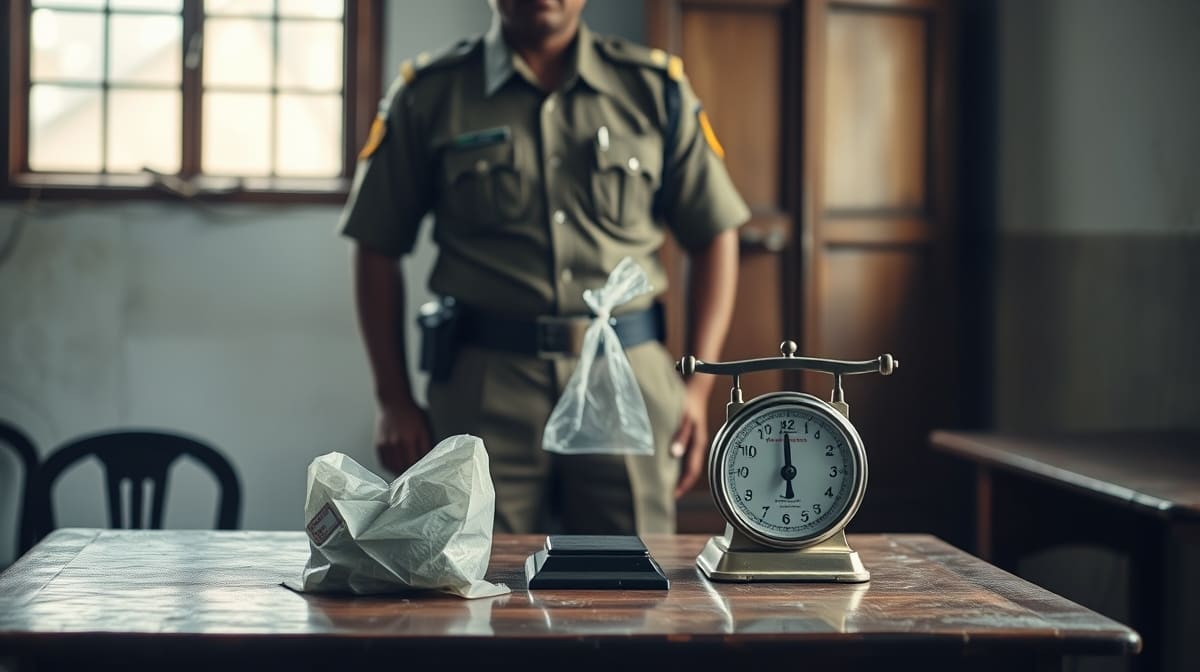
- PW-8, a shopkeeper, testified that only a traditional weighing scale was available in his shop; no electronic scale was present, contradicting the prosecution’s claim that charas was weighed electronically
Procedural History
- 13.03.2013: Arrest and recovery of charas
- 13.03.2013: FIR registered (Ext. PW-7/D)
- 31.12.2014: Special Judge, Shimla, convicted Surat Singh under Section 20 NDPS Act and sentenced him to 10 years rigorous imprisonment and a fine of Rs. 1,00,000
- 08.10.2015: High Court of Himachal Pradesh allowed the appeal, acquitted the accused, and set aside the conviction
- 16.03.2026: Supreme Court dismissed the State’s appeal
Relief Sought
The State sought to set aside the High Court’s acquittal and restore the conviction and sentence of 10 years rigorous imprisonment and Rs. 1,00,000 fine imposed by the Trial Court.
The Legal Issue
The central question was whether the failure to apprise the accused of his statutory right under Section 50 of the NDPS Act to be searched before a Gazetted Officer or a Magistrate - and instead offering a third option to be searched by the Investigating Officer - vitiated the recovery and rendered the conviction unsustainable.
Arguments Presented
For the Appellant (State of Himachal Pradesh)
The State contended that the recovery was valid because the charas was found in the accused’s bag, not from his person, and thus Section 50 did not strictly apply. It argued that the recovery was a chance discovery during routine patrol, with no prior information, and that the accused failed to prove false implication. The State relied on Abdul Rashid Ibrahim Mansuri v. State of Gujarat and State of Punjab v. Makhan Singh to assert that possession of contraband in one’s possession raises a presumption of guilt. It further argued that the High Court erred in interfering with the Trial Court’s factual findings and that the testimony of PW-8 regarding the weighing scale was inconsequential.
For the Respondent (Surat Singh)
The respondent argued that Section 50 of the NDPS Act mandates only two options for search - before a Magistrate or a Gazetted Officer - and that offering a third option to the Investigating Officer was a clear violation. He relied on Suresh v. State of Madhya Pradesh and State of Rajasthan v. Parmanand to establish that when both the bag and the person are searched, Section 50 is attracted. He further emphasized that the prosecution’s claim of using an electronic weighing scale was disproved by PW-8’s uncontroverted testimony, casting doubt on the entire chain of evidence. He invoked Sanjeet Kumar Singh v. State of Chhattisgarh to argue that once the legality of the search is compromised, the presumption under Section 54 cannot be invoked. He also cited State of Rajasthan v. Kistoora Ram to underscore the limited scope of interference in appeals against acquittal.
The Court's Analysis
The Supreme Court undertook a rigorous analysis of Section 50 of the NDPS Act and its judicial interpretation. It emphasized that the provision is not directory but mandatory, as affirmed by the Constitution Bench in Vijaysinh Chandubha Jadeja v. State of Gujarat. The Court held that the accused must be explicitly informed of his right to be searched before a Magistrate or a Gazetted Officer. Offering a third option - search by the Investigating Officer - is a statutory violation that cannot be excused as substantial compliance.
"Merely asking them as to whether they would offer their personal search to him, i.e. the police officer or to gazetted officer may not satisfy the protection afforded under Section 50 of the NDPS Act... failure to inform... may render the recovery of the contraband suspect and the conviction and sentence of an accused bad and unsustainable in law."
The Court noted that the recovery from the bag did not exempt the State from Section 50’s requirements, as the accused’s person was also searched. Citing State of Rajasthan v. Parmanand, the Court held that when both the bag and the person are subjected to search, Section 50 is fully attracted. The consent obtained under Ext. PW-1/A was therefore invalid.
The Court further found that the prosecution’s claim regarding the use of an electronic weighing scale was directly contradicted by PW-8’s testimony, which remained unchallenged. This inconsistency further undermined the credibility of the recovery process. The Court concluded that the High Court was fully justified in setting aside the conviction, as the violation of Section 50 rendered the entire evidence suspect.
The Verdict
The Supreme Court dismissed the State’s appeal. The acquittal of Surat Singh by the High Court was upheld. The conviction and sentence of 10 years rigorous imprisonment and a fine of Rs. 1,00,000 imposed by the Trial Court were set aside. The accused stands acquitted of all charges under Section 20 of the NDPS Act.
What This Means For Similar Cases
Search Compliance Is Non-Negotiable
- Practitioners must ensure that in every NDPS case involving search of a person or their belongings, the accused is explicitly informed of only two options: search before a Magistrate or a Gazetted Officer
- Any deviation - including offering search by the Investigating Officer - invalidates the recovery and renders conviction unsustainable
- Consent memos must reflect the statutory options verbatim; no paraphrasing or additional options permitted
Doubt in Chain of Custody Defeats Prosecution
- Any inconsistency in the recovery process - such as use of unverified weighing scales, uncorroborated malkhana entries, or unexplained delays - must be challenged as fatal to the prosecution’s case
- Oral testimony contradicting documentary claims (e.g., weighing scale) must be treated as material evidence undermining credibility
- The presumption under Section 54 cannot be invoked if the initial search is tainted
Acquittals Are Protected Against Mechanical Interference
- Appeals against acquittal face a high threshold; courts must not substitute their view for that of the Trial Court or High Court unless the acquittal is perverse or impossible
- Where two views are possible, the benefit of doubt must go to the accused
- This judgment reinforces that procedural violations in NDPS cases are not technicalities - they are jurisdictional defects