The Madhya Pradesh High Court has clarified that the voluntary compounding of an illegal mining offence under statutory rules, coupled with the absence of any need for custodial interrogation, renders anticipatory bail not only appropriate but necessary. This ruling reinforces the principle that bail should be the norm when arrest serves no investigative purpose.
Background & Facts
The Dispute
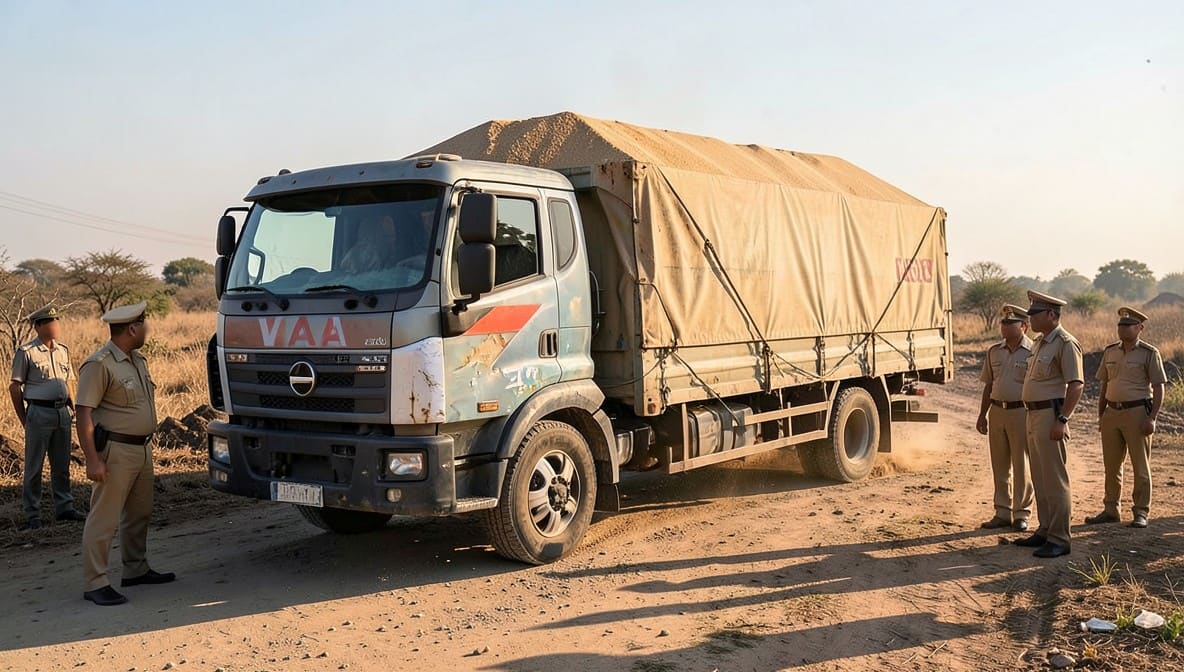
The applicant, Rajesh Sahu, is sought to be prosecuted for an offence under Section 303(2) of the Bharatiya Nagrik Suraksha Sanhita, 2023, relating to theft, arising from the alleged illegal mining and transportation of 20 cubic meters of minerals. The incident occurred in the jurisdiction of Police Station Orchha, District Niwari, leading to Crime No. 39/2026.
Key Facts
- On or about 10.06.2025, the applicant’s vehicle was intercepted while transporting illegally mined minerals.
- A notice under Rule 19(1) of the M.P. Prevention of Illegal Mining and Transportation of Minerals Rules, 2022, was issued against the applicant.
- On 11.06.2025, the Collector, Niwari, passed an order directing the applicant to pay a compounding amount of Rs. 4,36,000/- and a compounding fee of Rs. 1,000/-. The applicant complied fully.
- Following payment, the Collector ordered the release of the seized vehicle.
- Subsequently, on directions from the Chief Judicial Magistrate, Tikamgarh, an FIR was registered against the applicant under Section 303(2) BNS, 2023, for theft.
- The applicant moved an application for interim custody of the vehicle, which was allowed by the Fourth Additional Sessions Judge in Revision No. 43/2026.
- The police have now issued a notice to the applicant, indicating intent to arrest him in connection with the FIR.
Procedural History
- 10.06.2025: Notice issued under Rule 19(1) of M.P. Prevention of Illegal Mining Rules, 2022.
- 11.06.2025: Collector’s order directing compounding payment of Rs. 4,36,000/- and Rs. 1,000/- fee; payment made and vehicle released.
- Late June 2025: FIR registered under Section 303(2) BNS, 2023, for theft, based on same incident.
- July 2025: Application for interim custody of vehicle filed and allowed by Additional Sessions Judge.
- April 2026: Police issued notice to applicant intimating possible arrest.
- 11.05.2026: Present anticipatory bail application filed under Section 482 BNSS / Section 438 CrPC.
Relief Sought
The applicant seeks anticipatory bail in the event of arrest, praying for release on personal bond with surety, subject to conditions under Section 438(2) BNSS, and to avoid custodial detention.
The Legal Issue
The central question was whether an applicant who has already compounded an illegal mining offence under statutory rules, paid the prescribed penalty, and had the seized property released, still requires custodial interrogation warranting denial of anticipatory bail under Section 438 BNSS.
Arguments Presented
For the Appellant/Petitioner
Learned counsel submitted that the applicant had fully complied with the compounding procedure under the M.P. Prevention of Illegal Mining Rules, 2022, thereby extinguishing the civil and administrative liability. The registration of an FIR for theft was an afterthought, as no new evidence emerged post-compounding. No incriminating material remains in the applicant’s possession. The applicant has no history of evasion and has cooperated with authorities. Reliance was placed on Dipesh v. State of M.P. (M.Cr.C. No. 49340/2019) to show that registration of theft in such cases is not inherently justified when compounding has occurred.
For the Respondent/State
The Government Advocate contended that illegal mining is a serious economic offence and that registration of an FIR for theft under BNS is valid. The State argued that compounding under mining rules does not bar criminal prosecution, and that the applicant’s involvement in the offence remains unchallenged. It was submitted that anticipatory bail should be denied due to the gravity of the alleged offence and the potential for evidence tampering.
The Court's Analysis
The Court examined the sequence of events and the legal effect of compounding under Rule 19(1) of the M.P. Prevention of Illegal Mining Rules, 2022. It noted that compounding is a statutory mechanism designed to resolve minor violations without resorting to criminal proceedings, and that compliance with such procedures signifies acceptance of liability and extinguishes the administrative basis for further action.
"Looking to the factual aspects that the applicant for the violation of Mines and Minerals Act and the Rules framed thereunder, has already deposited the compounding amount, and by the application of interim custody, the vehicle was released by the Collector."
The Court observed that the registration of an FIR for theft under Section 303(2) BNS, 2023, in the wake of compounding, appears to be a procedural overreach. The Court cited its own coordinate bench decision in Dipesh v. State of M.P. to affirm that such registration does not automatically justify arrest when the underlying violation has been resolved.
The Court further held that no custodial interrogation is required since the vehicle has been released, the compounding amount paid, and the applicant has already appeared before the Collector. The police have issued a notice for appearance, indicating that the applicant is not a flight risk. The Court emphasized that anticipatory bail is not a matter of privilege but a safeguard against arbitrary arrest, particularly where the accused has no history of non-cooperation.
The Court declined to comment on the merits of the underlying allegation, but held that the conditions for granting anticipatory bail under Section 438 BNSS are satisfied.
The Verdict
The applicant succeeded. The Court granted anticipatory bail, directing that in the event of arrest, the applicant shall be released on furnishing a personal bond of Rs. 50,000/- with one solvent surety of like amount. The applicant is directed to cooperate with the investigating agency, appear before the Investigating Officer or Magistrate as directed, and abide by all conditions under Section 438(2) BNSS. The application stands disposed of.
What This Means For Similar Cases
Compounding Extinguishes Need for Arrest in Mining Cases
- Practitioners may now argue that compounding under state mining rules constitutes a conclusive resolution of administrative liability, making criminal arrest unjustified absent new evidence.
- FIRs registered for theft or criminal breach after compounding should be challenged on grounds of abuse of process.
Custodial Interrogation Must Be Justified
- Courts will not permit arrest where the accused has complied with statutory procedures and no incriminating material remains in possession.
- Issuance of a notice for appearance, without prior summons or seizure, is sufficient to satisfy the requirement of cooperation.
Precedent from Coordinate Benches Is Binding in Bail Matters
- Decisions from coordinate benches on similar factual matrices, such as Dipesh v. State of M.P., must be followed unless distinguished on material grounds.
- Denial of anticipatory bail solely on the basis of the nature of the offence, without regard to compliance or cooperation, is legally unsustainable.