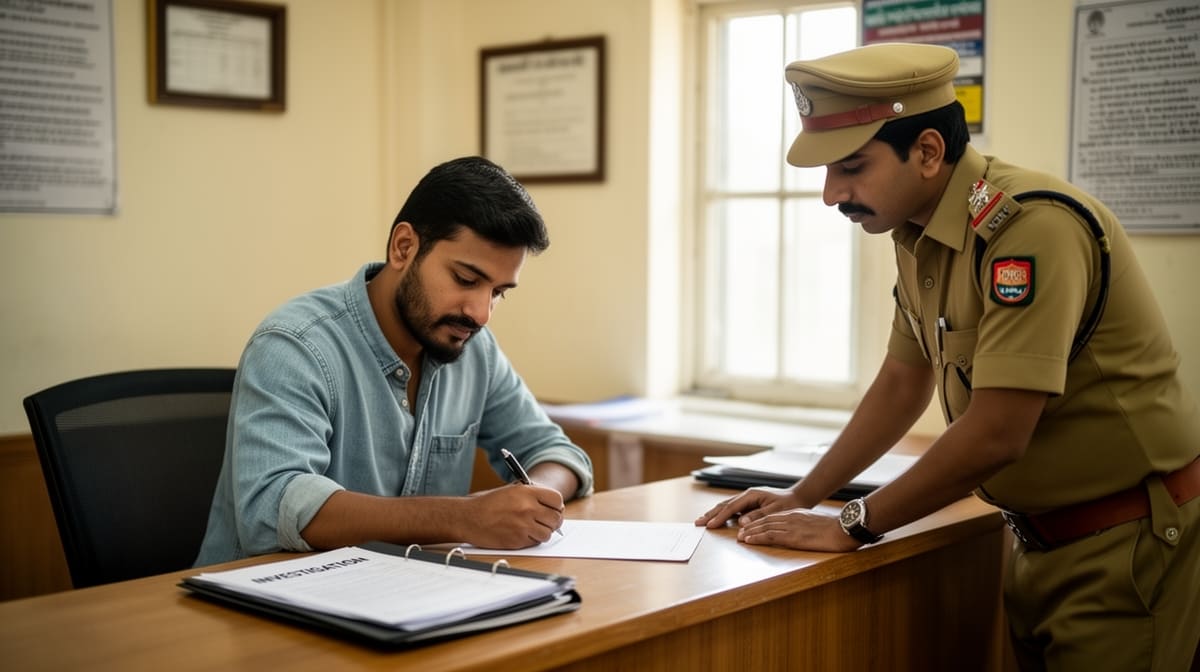
The Madhya Pradesh High Court has clarified that anticipatory bail may be granted where applicants have no direct involvement in a grave offence like rape, and where allegations against them pertain to separate, non-sexual acts occurring after the primary incident. This order reinforces the principle that bail cannot be denied solely on the basis of the nature of the offence when personal involvement is absent.
Background & Facts
The Dispute
The applicants, including APA SINGH and others, are apprehending arrest in connection with Crime No. 64/2026 registered at Police Station Kalidevi, District Jhabua, Madhya Pradesh. The case involves allegations of rape under Section 64(1) and Section 3(5) of the Bhartiya Nyay Sanhita, 2023, and Section 3 and 4 of the Protection of Children from Sexual Offences (POCSO) Act, 2012. The applicants are not alleged to have committed the rape itself.
Key Facts
- The rape is alleged to have been committed by Arjun, the son of applicant No. 1 (APA SINGH), and another unknown person.
- After the rape, the victim’s family members went to the house of the applicants to confront them.
- During this confrontation, an altercation occurred, resulting in allegations of assault against the applicants.
- A separate case under Section 323 of the Indian Penal Code is registered against applicant No. 2 for the assault.
- The applicants have no prior criminal record.
- No overt act directly linking the applicants to the rape has been alleged in the FIR or case diary.
Procedural History
- Date of Incident: Not specified in judgment, but Crime No. 64/2026 registered prior to 12.05.2026.
- 12.05.2026: Application filed under Section 482 of the Bhartiya Nagrik Suraksha Sanhita, 2023 (equivalent to Section 438 of the CrPC, 1973) seeking anticipatory bail.
- 12.05.2026: Hearing before the High Court at Indore.
The Parties' Positions
For the Applicants
- Counsel for the applicants argued that the applicants had no role in the rape.
- The allegations against them arise only from a subsequent incident of assault when the victim’s family visited their home.
- No evidence or witness statement connects them to the sexual offence.
- They have clean criminal records.
- Arrest would cause serious prejudice without any investigative necessity.
For the Respondent/State
- The State opposed the bail plea, contending that the gravity of the offences under POCSO and the Bhartiya Nyay Sanhita warranted denial of anticipatory bail.
- However, the State did not dispute that the applicants were not accused of committing the rape.
- The State acknowledged that a separate case under Section 323 IPC was registered against applicant No. 2 for assault.
Relief Sought
The applicants sought anticipatory bail in the event of arrest, with conditions including personal bond and surety, and compliance with statutory conditions under Section 438(2) CrPC.
The Legal Issue
Can anticipatory bail be granted to persons who are not alleged to have committed the primary offence of rape, but are only accused of subsequent assault, where there is no criminal antecedent and custodial interrogation is unnecessary?
Arguments Presented
For the Appellant/Petitioner
The applicants relied on the principle that anticipatory bail is a preventive remedy meant to protect individuals from arbitrary arrest where there is no direct involvement in the gravest allegations. They cited Arnesh Kumar v. State of Bihar to argue that gravity of offence alone cannot override the requirement of necessity for custody. They emphasized that the allegations against them were distinct, non-sexual, and arose from a reaction to the crime, not participation in it. No evidence linked them to the rape, and their arrest would serve no investigative purpose.
For the Respondent/State
The State contended that offences under POCSO and the Bhartiya Nyay Sanhita are heinous and warrant strict bail denial. However, it did not present any material to show that the applicants had conspired, abetted, or aided in the rape. The State’s opposition was largely based on the nature of the charges, not on any specific involvement of the applicants in the sexual offence.
The Court's Analysis
The Court undertook a careful distinction between the two sets of allegations: the rape committed by the son and another person, and the subsequent assault by the applicants upon the victim’s family. It noted that the case diary contained no evidence suggesting the applicants were present during the rape, participated in it, or aided in its commission. The Court observed that the assault, while punishable, was a separate incident occurring after the fact.
"This Court finds force in the submissions as advanced by counsel for the applicants and is of the considered opinion that under the facts and circumstances of the case, the custodial interrogation of the applicants is not necessary in the present case."
The Court emphasized that Section 438 CrPC permits anticipatory bail where arrest is apprehended and custody is not essential for investigation. It held that the absence of criminal antecedents, the lack of direct involvement in the rape, and the existence of a separate, lesser charge under Section 323 IPC weighed heavily in favor of granting relief. The Court also noted that the applicants were not fleeing or likely to tamper with evidence.
The Court further clarified that while POCSO and the Bhartiya Nyay Sanhita carry serious penalties, the doctrine of anticipatory bail remains available where the applicant’s role is peripheral and custodial interrogation serves no legitimate purpose.
The Verdict
The application was allowed. The applicants shall be released on anticipatory bail upon arrest, subject to: (1) executing a personal bond of Rs. 25,000 each; (2) furnishing one solvent surety each in the same amount, to the satisfaction of the arresting officer; (3) making themselves available for police interrogation as required; and (4) complying with all conditions under Section 438(2) CrPC. The order is effective immediately.
What This Means For Similar Cases
Custodial Interrogation Must Be Justified
- Practitioners must challenge arrest in cases where clients are not alleged to have committed the primary offence, especially in sexual crimes.
- The burden shifts to the prosecution to demonstrate why custody is necessary when involvement is indirect or collateral.
- Courts will not automatically deny bail merely because the offence is serious if the accused’s role is limited to a separate, subsequent act.
Distinct Allegations Require Distinct Treatment
- Where multiple offences arise from a single incident but involve different actors, courts must separate the allegations for bail purposes.
- An applicant cannot be denied anticipatory bail on the basis of another person’s conduct unless there is evidence of conspiracy, abetment, or common intention.
- Assault following a rape, without participation in the rape itself, does not justify denial of bail under POCSO or the Bhartiya Nyay Sanhita.
Procedural Safeguards Remain Applicable
- Even when bail is granted, conditions under Section 438(2) CrPC remain binding: no contact with witnesses, no tampering with evidence, and mandatory availability for questioning.
- The requirement of a solvent surety and personal bond ensures accountability without incarceration.
- This precedent supports applications in similar cases involving family members accused of post-facto conduct.