The Chhattisgarh High Court has reaffirmed that courts must not interfere at the FIR stage merely because an accused claims a social media post was uploaded inadvertently. The judgment underscores that allegations disclosing cognizable offences under the IPC and IT Act cannot be quashed on disputed factual grounds, leaving their verification to the trial court.
Background & Facts
The Dispute
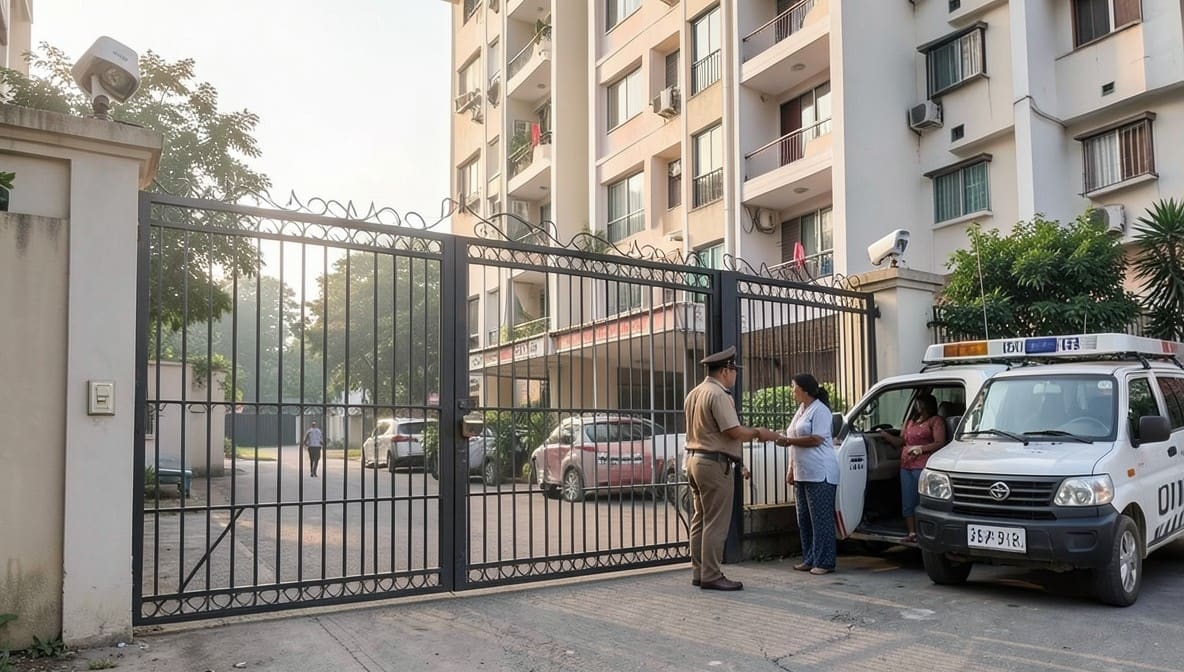
The petitioner, Ramakant Vaishnav, an Army Sepoy posted in Kerala, was named in an FIR registered at Police Station Salhewara, District Khairagarh-Chhuikhadan-Gandai, for allegedly posting an abusive WhatsApp status targeting the former Chief Minister of Chhattisgarh, Shri Bhupesh Baghel, and his family members. The complaint was filed by Respondent No. 2, Tahmid Khan, a Member of Legislative Assembly and active Congress party worker, who claimed to have viewed the status on 28.04.2023 while at his shop.
Key Facts
- The alleged WhatsApp status was uploaded on 28.04.2023 at approximately 12:00 PM
- The status reportedly contained an image related to the Dantewada Naxalite attack alongside derogatory remarks against the former Chief Minister and his family
- The complainant, Tahmid Khan, submitted a written complaint to Police Station Salhewara on the same day, 28.04.2023
- FIR No. 12/2023 was registered on 29.04.2023 under Sections 294, 504, 505(1)(b) of the Indian Penal Code and Section 67 of the Information Technology Act, 2000
- The prosecution relied solely on a screenshot and Call Detail Record (CDR) certified under Section 65B of the Indian Evidence Act
- No mobile phone, pendrive, memory card, or original electronic device was seized or produced
- The charge sheet was filed on 30.09.2024
- Cognizance was taken by the Judicial Magistrate First Class, Chhuikhadan, on 13.11.2024 in Criminal Case No. 1196/2024
- Charges were framed on the same date, 13.11.2024
- The petitioner was granted bail by the trial court and has not allegedly misused liberty
Procedural History
- 28.04.2023: Alleged WhatsApp status uploaded
- 28.04.2023: Written complaint submitted by Tahmid Khan at Police Station Salhewara
- 29.04.2023: FIR No. 12/2023 registered
- 30.09.2024: Charge sheet filed before Judicial Magistrate First Class
- 13.11.2024: Cognizance taken and charges framed in Criminal Case No. 1196/2024
- 2026: Writ petition filed under Section 528 of the Bharatiya Nagarik Suraksha Sanhita, 2023 (successor to Section 482 CrPC)
The Parties' Positions
Petitioner: Claims the WhatsApp status was not intentionally uploaded. He asserts that the content was recorded by another person and forwarded to him. Due to a technical glitch, it was inadvertently posted as his status. He alleges the FIR was filed with mala fide political motives by Respondent No. 2 to harass him. He further argues that the prosecution lacks primary electronic evidence and relies on an unverified screenshot.
Respondent No. 1 (State): Contends that the allegations, even if unproven, prima facie disclose offences under Sections 294, 504, 505(1)(b) IPC and Section 67 IT Act. The use of abusive language against a public figure on a public platform constitutes a threat to public order and tranquility.
Relief Sought
The petitioner sought quashing of:
- FIR No. 12/2023
- Charge sheet dated 30.09.2024
- Cognizance taken on 13.11.2024
- Charges framed on 13.11.2024
He argued that continuation of proceedings would cause irreparable harm to his military career, given his posting in Kerala and difficulty in securing leave for court appearances.
The Legal Issue
The central question was whether the High Court may exercise its inherent jurisdiction under Section 528 of the Bharatiya Nagarik Suraksha Sanhita, 2023 (equivalent to Section 482 CrPC) to quash an FIR and subsequent proceedings when the accused claims the alleged offensive content was uploaded inadvertently, and the prosecution relies only on a screenshot and CDR without seizing the original device.
Arguments Presented
For the Petitioner
The petitioner’s counsel argued that the upload was unintentional, resulting from a technical error, and not a deliberate act. He emphasized that the prosecution failed to seize the original mobile device or any digital storage medium, rendering the evidence inadmissible under Section 65B of the Indian Evidence Act. He cited Neharika Infrastructure Pvt. Ltd. v. State of Maharashtra to argue that quashing is warranted where proceedings are malicious or lack evidentiary foundation. He further contended that the petitioner’s status as a serving soldier makes continued litigation unduly burdensome and prejudicial to his service.
For the Respondent/State
The Deputy Government Advocate countered that the allegations, if true, constitute clear violations of Section 294 (obscene acts), Section 504 (intentional insult), Section 505(1)(b) (statements conducing to public mischief), and Section 67 IT Act (publishing obscene material electronically). She argued that the complainant’s detailed affidavit, the timing of the post, and the nature of the content establish a prima facie case. She maintained that evidentiary deficiencies are matters for trial, not grounds for quashing at the FIR stage.
The Court's Analysis
The Court examined the scope of inherent powers under Section 528 BNSS, which mirrors Section 482 CrPC, and reiterated that such jurisdiction must be exercised sparingly and only in exceptional circumstances. The Court held that interference is permissible only if: (a) the allegations do not disclose any offence even if accepted at face value, or (b) the proceedings are manifestly mala fide or maliciously instituted.
"The power under Section 482 Cr.P.C. is very wide, but conferment of wide power requires the Court to be cautious. The Court, when it exercises power under Section 482 Cr.P.C., only has to consider whether or not the allegations of F.I.R. disclose the commission of a cognizable offence and is not required to consider the case on merit."
The Court found that the FIR contained specific allegations: the petitioner uploaded an offensive WhatsApp status containing abusive language against a public figure and his family, visible to the public, causing distress and potential incitement to public anger. These allegations, if true, clearly fall within the ambit of Sections 294, 504, 505(1)(b) IPC and Section 67 IT Act.
The petitioner’s claim of inadvertent upload due to technical error or mental stress was held to be a factual dispute requiring evidence, cross-examination, and witness testimony - matters beyond the purview of a Section 482 proceeding. The Court noted that the absence of the original device or forensic analysis does not render the FIR legally invalid; it affects evidentiary weight, not the existence of a prima facie case.
The Court further relied on State Represented by the Inspector of Police v. M. Maridoss & Anr. to emphasize that a High Court is not required to conduct a mini-trial at the quashing stage. The mere fact that the prosecution’s evidence may be weak or circumstantial does not justify quashing.
The Verdict
The petition was dismissed. The Court held that the FIR, charge sheet, cognizance, and charges framed cannot be quashed. The trial court shall proceed with the case on its merits. No costs were awarded. The petitioner’s bail status remains unaffected.
What This Means For Similar Cases
Inadvertent Uploads Are Not Grounds for Quashing
- Practitioners must not rely on claims of accidental posting or technical glitches to seek quashing under Section 482 CrPC
- Courts will treat such assertions as factual defenses to be raised at trial, not as jurisdictional bars to prosecution
- Even if the accused claims no intent, the mere act of publishing offensive content on a public platform may suffice for a prima facie case
Evidentiary Gaps Do Not Invalidate FIRs
- Failure to seize the original device or produce forensic reports does not render an FIR legally unsustainable
- Screenshots and CDRs certified under Section 65B are sufficient to establish a prima facie case at the FIR stage
- Challenges to evidentiary sufficiency must be raised during trial, not through writ petitions
Political Context Does Not Automatically Imply Mala Fides
- Allegations of political vendetta require concrete proof of ulterior motive, not mere speculation
- Courts will not infer mala fides from the identity of the complainant unless there is clear evidence of abuse of process
- Public figures are entitled to legal protection against abusive speech, even if the complainant is politically affiliated