The Karnataka High Court recently dismissed a criminal petition seeking quashing of an FIR registered under Sections 329(4), 79, 352, 351(2), and 351(3) of the Bharatiya Nyaya Sanhita, 2023 (BNS). The Court reiterated that the scope of examination under Section 482 of the Code of Criminal Procedure (CrPC) is confined to determining whether the FIR discloses the commission of a cognizable offence. The judgment underscores the limited role of courts in quashing FIRs at the preliminary stage, particularly when the complaint contains averments that prima facie establish the essential ingredients of the alleged offences.
Background & Facts
The Dispute
The petitioner, B.H. Nagaraju, was accused in an FIR registered by his sister-in-law, Bindya K. Raj, alleging offences under Sections 329(4), 79, 352, 351(2), and 351(3) of the BNS. The dispute arose from a long-standing civil conflict between the parties, involving a partnership in M/s. Mithila Land Developers and multiple legal proceedings, including a civil suit, arbitration, and prior criminal complaints.
Key Facts
- The petitioner and complainant were partners in M/s. Mithila Land Developers (Regn. No. RJR/27/2017-18), which obtained investments from outsiders on a profit-sharing basis.
- Disputes arose between the parties, leading to the filing of OS No. 163/2024 by the petitioner, seeking a temporary injunction, which was denied. The suit remained pending.
- CMP No. 476/2024 appointed a sole arbitrator, and arbitration proceedings (AC No. 162/2025) were ongoing.
- The petitioner faced multiple criminal complaints:
- Crime No. 447/2024 (Sections 341, 406, 417, 419, 465, and 506 IPC read with Section 34 IPC).
- Crime No. 406/2024 (similar offences).
- Both complaints were challenged in Crl.P. No. 9531/2024, which was dismissed, and investigation was underway.
- The complainant alleged that the petitioner, along with others, cheated her and her husband of Rs. 42 crores. After the police refused to register a complaint, the petitioner filed WP No. 30719/2025, leading to the registration of Crime No. 49/2026 under directions from the High Court.
- WP No. 4836/2026 stayed further proceedings in Crime No. 49/2026 on 12.02.2026.
The Alleged Incident
- On 15.09.2025, the complainant’s husband received information that the petitioner was damaging partnership property at Ravutanahalli. Upon inspection, the husband found damaged windows, roof, and walls.
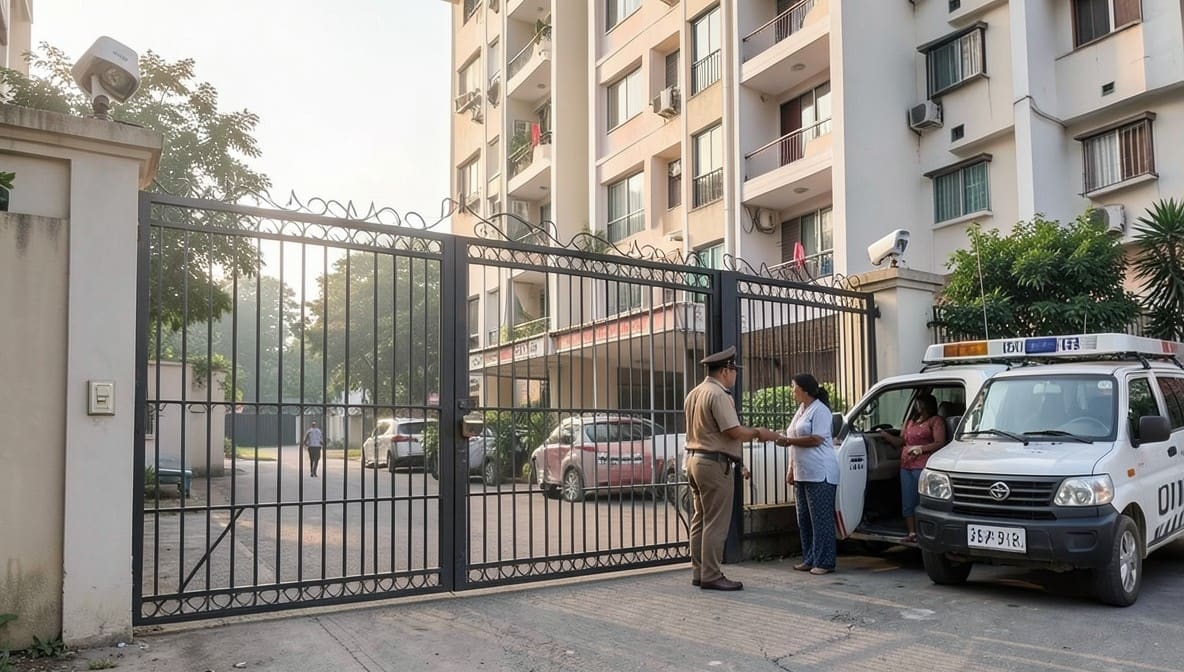
- On 12.02.2026, at 3:30 PM, the petitioner allegedly trespassed into the complainant’s apartment at RNS Shanti Nivasa, abused her in foul language, threatened to isolate her family, and made defamatory statements to neighbours. The complainant claimed these acts were recorded on CCTV.
- The complainant filed a preliminary complaint on 13.02.2026 and a written complaint on 31.03.2026, alleging continuous harassment and offences under the BNS.
Procedural History
- 13.02.2026: Preliminary complaint filed (Petition No. 1349260600029).
- 31.03.2026: Written complaint filed before RMC Yard Police Station.
- Crime No. 67/2026 registered for offences under Sections 329(4), 79, 352, 351(2), and 351(3) of the BNS.
- Crl.P. No. 5873/2026 filed under Section 482 CrPC seeking quashing of the FIR.
- 25.06.2026: Petition heard and reserved for orders.
- 03.07.2026: Judgment delivered dismissing the petition.
Relief Sought
The petitioner sought quashing of Crime No. 67/2026 on grounds of:
- Unexplained delay of 48 days in filing the complaint.
- The complaint being an afterthought and counterblast to the petitioner’s earlier complaint.
- The dispute being purely civil in nature.
- Lack of evidence to support the allegations, including the claim that the petitioner accompanied police during the incident.
The Legal Issue
The central question before the Court was whether the FIR disclosed the essential ingredients of the offences alleged under the BNS, and if the petitioner was entitled to quashing of the FIR under Section 482 CrPC on grounds of delay, malafide intent, or the civil nature of the dispute.
Arguments Presented
For the Petitioner
- The petitioner contended that the complaint was filed with malafide intent as a counterblast to his earlier complaint (Crime No. 49/2026).
- The dispute was purely civil, involving partnership disagreements and prior litigation.
- The complaint suffered from unexplained delay of 48 days and did not disclose any cognizable offence.
- The petitioner claimed he accompanied police for investigation on 12.02.2026, making the allegations of trespass and criminal intimidation improbable.
- Entry into the apartment complex was permitted, belying the allegation of trespass (Section 329 BNS).
- The incident did not occur in public view, making the invocation of Section 352 BNS illegal.
- No threat was likely, as the petitioner was with police, negating allegations under Sections 351(2), 351(3), and 79 of the BNS.
For the Respondents
- State of Karnataka (Respondent No. 1): Opposed the petition, arguing that the complaint disclosed essential ingredients of the offences, and contentions raised were matters for investigation and trial.
- Complainant (Respondent No. 2):
- Argued that the petitioner’s claim of accompanying police was a defense to be elucidated during trial.
- The complaint disclosed essential ingredients of criminal trespass, outraging modesty, and criminal intimidation.
- Even if one offence was made out, the FIR could not be quashed.
- The petitioner’s earlier attempt to register a counter-case was dismissed as a civil dispute but later registered under court directions.
- The address mentioned in Crime No. 49/2026 and WP No. 30719/2025 was Shourya Farm Studio Road, Bettahalli, not the apartment complex where the incident allegedly occurred. Thus, the petitioner’s claim of accompanying police was unjustified.
- The complainant’s allegations were corroborated by CCTV footage, which should be taken at face value.
- The delay in filing the complaint was explained, as it was initially registered on 13.02.2026 and later formalized on 31.03.2026.
The Court's Analysis
The Court relied on the principle laid down in State of A.P. v. Golconda Linga Swamy ((2004) 6 SCC 522), which holds that an FIR need not be an encyclopaedia of facts but must disclose the skeletal features of the offences alleged. The Court examined the essential ingredients of the offences under the BNS:
-
Section 329(4) BNS (House Trespass):
- The complaint contained clear averments of the petitioner’s entry into the complainant’s apartment, satisfying the essential ingredients of house trespass.
-
Section 79 BNS (Outraging Modesty of a Woman):
- The complainant alleged that the petitioner used abusive words intending to insult her modesty, fulfilling the ingredients of the offence.
-
Section 352 BNS (Intentional Insult):
- The Court noted that while the complaint lacked specific details of the words used, it disclosed threats of injury with intent to cause alarm, which prima facie established the offence.
- The Court relied on Madhushree Datta v. State of Karnataka ((2025) 3 SCC 612), which held that disclosure of insulting words is necessary, but some ingredients were present in the complaint.
-
Sections 351(2) and 351(3) BNS (Criminal Intimidation):
- The complaint alleged threats to harm the complainant and her family, which prima facie satisfied the ingredients of criminal intimidation.
The Court observed that the petitioner’s contentions were defensive in nature and could not be considered at the stage of quashing under Section 482 CrPC. The petitioner did not dispute visiting the apartment complex, and the complainant’s address was not mentioned in Crime No. 49/2026 or WP No. 30719/2025, raising questions about the necessity of his visit. The complainant’s reliance on CCTV footage further corroborated her allegations.
The Court held that the antecedents of litigation between the parties could not be the sole ground to dismiss the complaint, especially when the allegations disclosed prima facie offences. The petitioner’s claim of accompanying police was not substantiated by any mahazar or evidence, weakening his defense.
"It is settled law that scope of examination in challenge against registration of FIR, would be confined to finding out whether FIR did not disclose commission of an offence without anything being added or subtracted from the recitals therein."
The Verdict
The Court dismissed the criminal petition (Crl.P. No. 5873/2026), holding that the FIR disclosed the essential ingredients of the offences under Sections 329(4), 79, 352, 351(2), and 351(3) of the BNS. The petitioner’s contentions regarding delay, malafide intent, and the civil nature of the dispute were insufficient to quash the FIR at this stage.
What This Means For Similar Cases
FIR Quashing Requires Prima Facie Disclosure of Offences
- Courts will not quash an FIR merely because the dispute has civil antecedents or involves prior litigation.
- The FIR must disclose the skeletal features of the offences alleged, and the court’s role is limited to examining whether the allegations prima facie establish the ingredients of the offences.
- Defenses such as delay, malafide intent, or the civil nature of the dispute are matters for trial and cannot be grounds for quashing under Section 482 CrPC.
Corroborative Evidence Strengthens Complaints
- Complaints supported by CCTV footage, documentary evidence, or witness statements are more likely to withstand challenges under Section 482 CrPC.
- Allegations of trespass, outraging modesty, or criminal intimidation must be specific and corroborated to avoid dismissal at the preliminary stage.
Counterblast Complaints Face Scrutiny
- Complaints filed as counterblasts to earlier legal proceedings may face closer scrutiny, but they cannot be quashed solely on this ground if they disclose prima facie offences.
- The court will examine whether the allegations are factually plausible and not merely retaliatory.