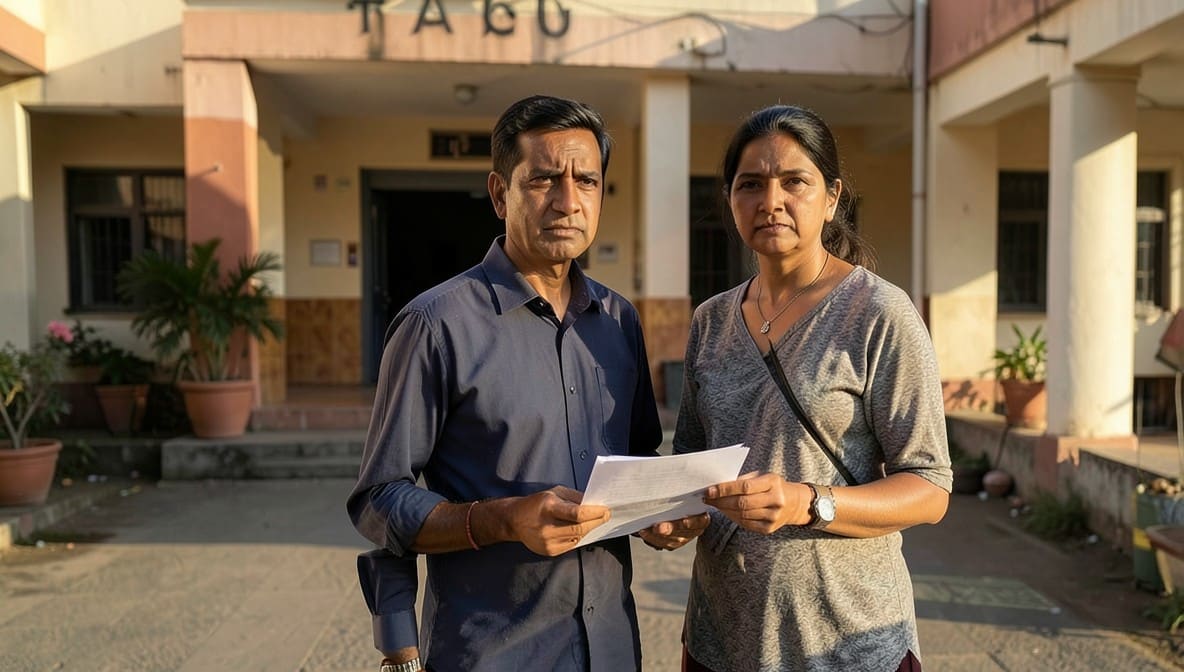
The Chhattisgarh High Court has reaffirmed the mandatory nature of bail bonds under Section 437-A of the CrPC, dismissing a petition seeking exemption on grounds of financial hardship. The ruling underscores that statutory compliance with appellate appearance obligations cannot be waived, even for accused persons facing economic constraints.
Background & Facts
The Dispute
The petitioner, Arun Vasant Bapat, a 59-year-old resident of Bilaspur, Chhattisgarh, is an appellant in three criminal appeals decided by this Court: Criminal Appeal No. 299/2006, Criminal Appeal No. 830/2005, and Criminal Appeal No. 631/2007. All three appeals concluded with judgments dated 13.03.2026 and 26.02.2026, respectively. In each judgment, the Court directed the petitioner to execute personal bail bonds of Rs. 25,000 each, with one surety in the same amount, under Section 437-A CrPC, to ensure his appearance before the Supreme Court in the event of a Special Leave Petition.
Key Facts
- The petitioner is currently employed as a private tutor, earning his livelihood through teaching students
- He has been directed to furnish three separate bail bonds of Rs. 25,000 each, totaling Rs. 75,000
- Each bond must be accompanied by one surety of equivalent value
- The bonds are valid for six months from the date of each judgment
- The petitioner claims inability to arrange the bonds due to financial distress
- No evidence of income, assets, or financial hardship was submitted with the petition
Procedural History
- 13.03.2026: Judgment delivered in Criminal Appeal No. 299/2006, directing bail bond under Section 437-A CrPC
- 26.02.2026: Judgments delivered in Criminal Appeal No. 830/2005 and Criminal Appeal No. 631/2007, same direction
- 06.05.2026: CRMP No. 1085 of 2026 filed seeking exemption from furnishing bail bonds
- 06.05.2026: I.A. No. 1/2026 filed seeking exemption from filing certified copies and filing separate petitions for each case - allowed by order
Relief Sought
The petitioner sought modification of the three judgments to exempt him from furnishing bail bonds of Rs. 25,000 each, totaling Rs. 75,000, on the ground of financial hardship and inability to arrange sureties.
The Legal Issue
The central question was whether Section 437-A of the CrPC permits judicial discretion to exempt an accused from furnishing bail bonds on grounds of financial distress, or whether compliance is mandatory and non-negotiable.
Arguments Presented
For the Petitioner
Ms. Sareena Khan, Advocate, contended that the petitioner is economically vulnerable and sustains himself solely through private tutoring. She argued that requiring three bonds of Rs. 25,000 each imposes an undue burden, especially since the petitioner has no other source of income or assets. She relied on principles of equity and proportionality, urging the Court to exercise discretion under Article 142 to modify the order.
For the Respondent
Mr. Jitendra Shrivastava, Government Advocate, submitted that Section 437-A CrPC is a mandatory statutory provision designed to ensure the accused’s presence before higher courts. He emphasized that the provision leaves no room for judicial discretion and that financial hardship, without documentary proof, cannot override statutory compliance. He cited State of Maharashtra v. Suresh and Rajesh Kumar v. State of Haryana to affirm that Section 437-A is procedural and non-discretionary.
The Court's Analysis
The Court undertook a detailed examination of Section 437-A CrPC, noting its explicit language and legislative intent. The provision mandates that before disposal of an appeal, the appellate court "shall require" the accused to execute bail bonds with sureties. The use of the word "shall" renders the obligation compulsory, not discretionary.
"The Court trying the offence or the Appellate Court, as the case may be, shall require the accused to execute bail bonds with sureties..."
The Court observed that the provision was introduced to prevent accused persons from evading appellate proceedings by absconding after acquittal or conviction. It noted that the six-month validity period is reasonable and aligned with the typical timeline for filing Special Leave Petitions.
The Court rejected the petitioner’s plea of financial hardship, stating that economic difficulty, without supporting documentation such as income certificates, bank statements, or affidavits of indigence, cannot override a statutory mandate. The Court emphasized that Section 437-A is not punitive but procedural, serving the public interest in ensuring the integrity of the appellate process.
The Court further held that the petitioner’s employment as a tutor does not establish insolvency or inability to arrange sureties, as sureties may be provided by third parties, and bonds may be executed in installments or with co-sureties.
The Verdict
The petition was dismissed. The Court held that the petitioner must comply with the existing orders dated 13.03.2026 and 26.02.2026, and furnish three personal bail bonds of Rs. 25,000 each, with one surety in the like amount per bond, as mandated under Section 437-A CrPC. The bonds shall remain in force for six months from the date of each judgment. No modification or exemption is granted.
What This Means For Similar Cases
Statutory Compliance Overrides Financial Hardship
- Practitioners must advise clients that financial distress alone is insufficient to seek exemption from Section 437-A bail bonds
- Courts will not entertain oral assertions of hardship without documentary proof
- The obligation is procedural, not punitive, and applies uniformly regardless of economic status
No Discretion Under Section 437-A
- The word "shall" in Section 437-A leaves no room for judicial discretion
- Even in cases of acquittal or minor offences, the requirement is mandatory
- Any attempt to bypass the provision risks forfeiture under Section 446 CrPC
Strategic Implications for Appellate Practice
- Counsel should prepare clients for bond obligations at the outset of appellate proceedings
- Consider arranging sureties in advance or seeking co-sureties to ease burden
- File applications for installment payment or reduction only if supported by verified financial affidavits