The Himachal Pradesh High Court has clarified that courts must exercise discretion under Section 446 CrPC to reduce penalties imposed on sureties who made genuine efforts to produce the accused and face severe financial hardship, reinforcing that punitive measures must be proportionate and context-sensitive.
Background & Facts
The Dispute
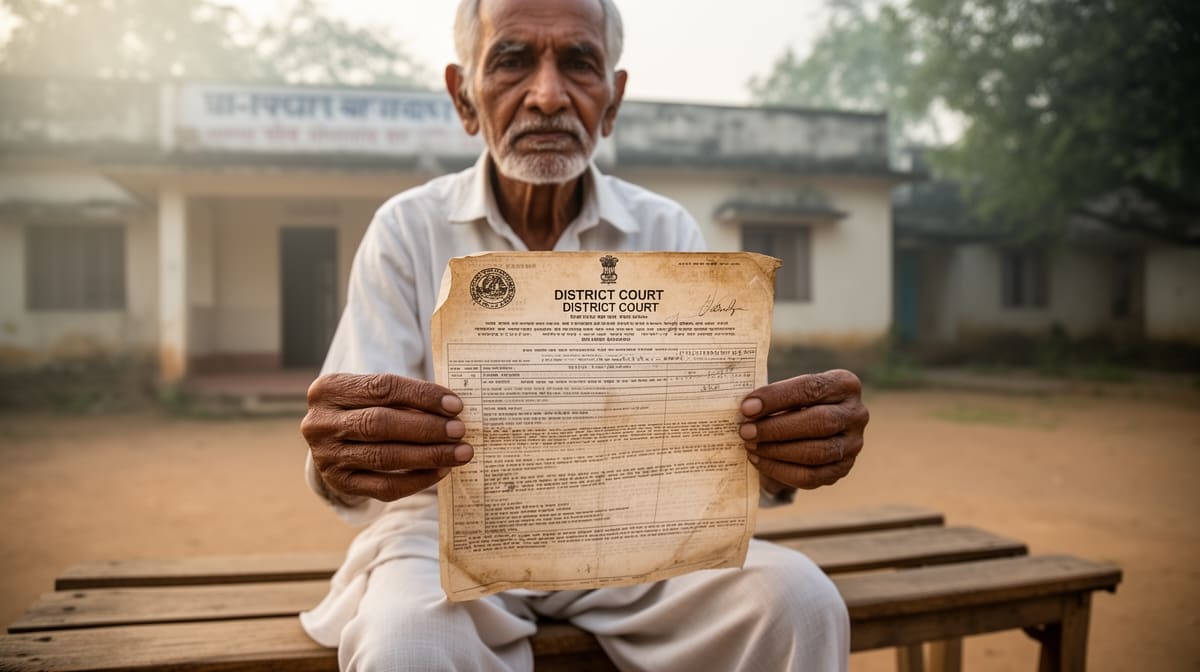
The appellant, Yash Pal, stood as surety for the accused Kunal Sharma alias Raunak in NDPS Trial No. 18 of 2024. The accused failed to appear before the Special Judge, Shimla, despite multiple notices. The trial court, invoking Section 446 CrPC, forfeited the surety bonds furnished by the appellant and imposed a penalty of Rs. 1,00,000, directing its recovery as arrears of land revenue.
Key Facts
- The accused was released on bail on the condition that the appellant, as surety, ensure his presence during trial proceedings.
- The appellant furnished a surety bond with a penalty clause of Rs. 1,00,000.
- The accused failed to appear on multiple dates, despite service of notices.
- The appellant submitted that he made sincere efforts to locate the accused and communicate with him, but was unable to secure his attendance.
- The appellant is a person of limited means; payment of the full penalty would force him to sell his property and cause severe hardship to his family.
Procedural History
- 15.01.2024: Accused Kunal Sharma granted bail with surety bond executed by appellant.
- 05.08.2024 to 10.12.2024: Accused failed to appear on six scheduled hearing dates.
- 15.01.2025: Trial court issued notice to appellant to show cause why penalty should not be imposed.
- 24.02.2025: Special Judge, Shimla, forfeited surety bond and imposed penalty of Rs. 1,00,000 under Section 446 CrPC.
- 28.03.2025: Appellant filed Criminal Appeal No. 157 of 2025 before the High Court of Himachal Pradesh.
- 01.04.2026: Judgment delivered by Justice Sandeep Sharma.
Relief Sought
The appellant sought modification of the penalty imposed under Section 446 CrPC, arguing that the full amount of Rs. 1,00,000 was excessive, unjust, and disproportionate given his financial condition and sincere efforts to produce the accused.
The Legal Issue
The central question was whether Section 446(3) CrPC permits an appellate court to exercise discretion to remit a portion of the penalty imposed on a surety, even after the trial court has passed a final order, and whether financial hardship and genuine efforts by the surety must be considered in determining the quantum of penalty.
Arguments Presented
For the Appellant
Ms. Yogita Sharma, Advocate, argued that the appellant had made sincere efforts to locate the accused and ensure his appearance, but was unable to do so due to circumstances beyond his control. She emphasized that the appellant is a person of limited means and that enforcing the full penalty of Rs. 1,00,000 would lead to destitution. Reliance was placed on Jameela Khader v. State of Kerala, Balraj S. Kapoor v. State of Bombay, Sualal Mushilal v. State, and Moola Ram v. State of Rajasthan to contend that the power to remit penalty under Section 446(3) CrPC can be exercised even at a subsequent stage, including on appeal, so long as the penalty remains unpaid.
For the Respondent
The Additional Advocate Generals contended that the trial court had followed due process by issuing notice and recording the breach. They argued that the surety had voluntarily undertaken liability and that the penalty was lawful. They further submitted that the appellant had not filed an appeal under Section 449 CrPC and that the petition under Section 482 CrPC was not maintainable as an alternative remedy existed. However, they conceded that the court retained inherent jurisdiction to intervene in cases of manifest injustice.
The Court's Analysis
The Court undertook a detailed examination of Section 446 CrPC, particularly subsection (3), which states: "The Court may, at its discretion, remit any portion of the penalty mentioned and enforce payment in part only."
The Court acknowledged that while forfeiture of the bond is automatic upon proof of breach, the imposition of penalty is discretionary. The Court observed:
"The power to remit any portion of the penalty is not confined to the stage of the original order. It is a continuing power, exercisable even on appeal, provided the penalty has not been fully recovered."
The Court distinguished between the mandatory nature of forfeiture and the discretionary nature of penalty imposition. It held that the trial court’s failure to consider the appellant’s financial condition and sincere efforts constituted a failure to exercise discretion properly.
The Court reviewed the precedents cited by the appellant and found that while Balraj Kapoor expressed some hesitation, the cumulative weight of Jameela Khader, Sualal Mushilal, and Moola Ram established that appellate courts may exercise remission power under Section 446(3) CrPC even after the trial court’s order, provided the penalty remains unpaid.
The Court further noted:
"The object of surety is not to punish the surety but to ensure the accused’s presence. When the surety has acted in good faith and lacks means, the State’s interest in revenue recovery must yield to the principle of proportionality."
The Court rejected the argument that the appellant’s failure to file an appeal under Section 449 CrPC barred relief, holding that the High Court’s inherent jurisdiction under Section 482 CrPC permits intervention to prevent abuse of process or miscarriage of justice.
The Verdict
The appeal was allowed. The order dated 24.02.2025 imposing a penalty of Rs. 1,00,000 was modified to reduce the penalty to Rs. 50,000. The appellant is directed to deposit Rs. 50,000 with the learned Special Judge, Shimla, within two months from the date of this order. All other pending applications stood disposed of.
What This Means For Similar Cases
Discretion Must Be Exercised with Proportionality
- Practitioners must argue that penalties under Section 446 CrPC must be proportionate to the surety’s means and efforts, not merely the bond amount.
- Courts cannot impose the full bond amount as a default; they must record reasons for rejecting remission.
Appellate Courts Can Remit Penalties Post-Order
- A surety may seek reduction of penalty even after the trial court’s order, through appeal or revision, if the penalty remains unpaid.
- The power under Section 446(3) CrPC is not exhausted at the trial stage and remains available to higher courts.
Financial Hardship Is a Legally Recognized Mitigating Factor
-
Evidence of poverty, loss of livelihood, or risk of asset forfeiture must be formally presented and considered.
-
Courts must distinguish between willful default and genuine inability, even if the accused absconds.
-
Always request a detailed affidavit from the surety detailing income, assets, liabilities, and efforts made to locate the accused.
-
Cite Jameela Khader and Moola Ram to support the argument that remission is a statutory right, not a mere privilege.