
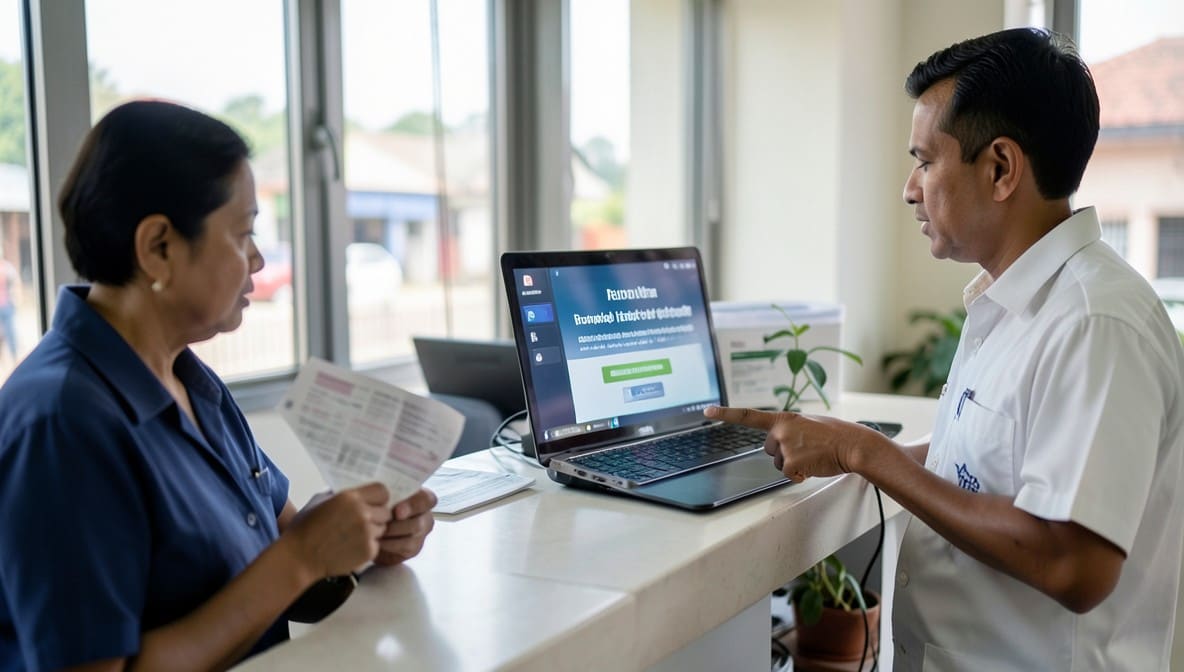
The Supreme Court has clarified that a billing discrepancy in medical services, promptly rectified by refund, cannot form the basis of a criminal charge of cheating under Section 420 IPC. This judgment reinforces the principle that civil disputes over service charges, even when involving corporate entities, must not be criminalized absent clear evidence of dishonest intent at the inception of the transaction.
Background & Facts
The Dispute
The dispute arose from the medical treatment of Smt. Bina Sen, who was admitted to Narayana Multispecialty Hospital, Barasat, Kolkata, on 13.02.2021 for a fractured right femur. She underwent successful surgery on 15.02.2021 and was discharged on 19.02.2021. The hospital issued a bill of Rs. 1,94,307.84, of which the complainant paid Rs. 1,71,130 after discounts. Upon discharge, the complainant raised concerns about billing inaccuracies and requested medical records for insurance purposes.
Key Facts
- The hospital included a charge of Rs. 2,500 for an HRCT test in the initial bill.
- The HRCT test was proposed but not conducted, as the patient’s condition did not warrant it.
- On 23.02.2021, the hospital issued a revised bill excluding the Rs. 2,500 charge.
- On 24.02.2021, the hospital emailed the complainant, offering to refund the Rs. 2,500 either by collection at the counter or via bank transfer.
- A reminder was sent thereafter, requesting the complainant to facilitate the refund.
- The complainant did not respond to the refund offer.
- On 25.02.2021, the complainant filed a criminal complaint alleging fraud, criminal breach of trust, and criminal conspiracy.
- The complaint also alleged that hospital staff, Suvendu Prakash and Anup Bhaduri, threatened the complainant during a confrontation on 20.02.2021.
- The complaint did not allege any offence under Section 503 IPC, but the High Court suo motu invoked Section 504 IPC.
Procedural History
- 13.02.2021: Patient admitted to Narayana Multispecialty Hospital.
- 15.02.2021: Successful surgery performed.
- 19.02.2021: Patient discharged.
- 20.02.2021: Complainant raised billing concerns and requested medical records.
- 23.02.2021: Hospital issued revised bill excluding Rs. 2,500 for unperformed HRCT.
- 24.02.2021: Hospital emailed refund offer to complainant.
- 25.02.2021: Criminal complaint filed before Judicial Magistrate, 2nd Court, Barasat.
- 11.03.2021: Magistrate issued summons under Sections 406, 420, 120B IPC and Section 34 of the West Bengal Clinical Establishments Act, 2017.
- 2021: Appellants filed petition under Section 482 CrPC before the High Court.
- 16.05.2023: High Court set aside summons, remanded for reconsideration of complicity, and suo motu held that Section 504 IPC was prima facie made out.
- 28.08.2023: Supreme Court stayed proceedings and granted SLP.
The Parties' Positions
For the Appellants
The appellants, including the corporate hospital entity, its Chairman, and staff, contended that:
- The Rs. 2,500 charge was an inadvertent billing error, not a fraudulent act.
- The hospital promptly offered a refund upon discovery of the error.
- No entrustment of property occurred to constitute criminal breach of trust under Section 406 IPC.
- No prior agreement existed to commit any offence, negating criminal conspiracy under Section 120B IPC.
- The alleged threats were isolated, uncorroborated, and did not meet the threshold of criminal intimidation or insult under Sections 503 or 504 IPC.
- The complaint was a disguised civil dispute, improperly criminalized.
For the Respondent
The complainant, through the prosecution, alleged:
- The hospital intentionally inflated the bill with a non-performed test.
- The refusal to provide medical records promptly amounted to concealment.
- The conduct of hospital staff constituted threats and intimidation.
- The corporate entity and its Chairman were complicit in systemic billing irregularities.
Relief Sought
The appellants sought quashing of the criminal complaint and summoning order under Section 482 CrPC. The complainant sought continuation of criminal proceedings against all accused for offences under Sections 406, 420, 120B IPC and Section 34 of the 2017 Act.
The Legal Issue
The central question was whether Section 420 IPC is attracted when a medical institution inadvertently includes a charge for a non-performed diagnostic test, promptly offers a refund upon discovery, and no evidence exists of dishonest intent at the time of billing.
Arguments Presented
For the Appellant
The appellants relied on State of Haryana v. Bhajan Lal to argue that where allegations, even if accepted at face value, do not disclose a cognizable offence, the High Court must quash proceedings under Section 482 CrPC. They emphasized that the Rs. 2,500 charge was a clerical error, corrected within days, and that no fiduciary relationship existed to support criminal breach of trust. They further contended that the High Court erred in invoking Section 504 IPC suo motu without any pleading or evidence of insult intended to provoke breach of peace.
For the Respondent
The complainant did not appear before the Supreme Court. The amicus curiae, Mr. Gagan Gupta, acknowledged that the facts did not support criminal charges under Sections 406 or 420 IPC, but urged the Court to consider whether the hospital’s conduct under the 2017 Act could justify criminal liability under Section 34. He conceded that the complaint lacked specificity on how Section 34 was violated.
The Court's Analysis
The Court undertook a rigorous analysis of each invoked provision. It held that for Section 420 IPC, the essential ingredient is dishonest intention at the time of inducement. The Court observed:
"The allegation of cheating is completely misplaced. The discrepancy in billing appears to be more of an inadvertence, than a case of dishonest intention on part of the hospital."
It further noted that the hospital’s prompt refund offer negated any inference of fraudulent intent. The Court distinguished this from cases where bills are deliberately inflated with no intention to correct, citing Joseph Salvaraj A. v. State of Gujarat and Ajay Mitra v. State of M.P. to affirm that mere overcharging without deceitful design does not constitute cheating.
Regarding Section 406 IPC, the Court held that criminal breach of trust requires entrustment of property with a fiduciary obligation. The Court found no such relationship between the hospital and the complainant. The payment was for services rendered, not property held in trust. The Court cited Sadhupati Nageswara Rao v. State of Andhra Pradesh to reinforce that mere receipt of money for services does not create a fiduciary duty.
On Section 120B IPC, the Court held that conspiracy cannot exist without a prior agreement to commit an illegal act. Since the foundational offences were absent, the conspiracy charge collapsed.
The Court also criticized the High Court for invoking Section 504 IPC suo motu. The complaint did not allege insult or intentional provocation to cause breach of peace. The High Court’s observation that the staff’s statements "prima facie make out an offence" was held to be an impermissible expansion of the complaint’s scope. The Court emphasized that courts cannot convert general grievances into specific criminal offences without proper pleading.
Regarding Section 34 of the West Bengal Clinical Establishments Act, 2017, the Court held that the Act provides a comprehensive regulatory framework with adjudicatory mechanisms under Sections 35 and 36. Criminal liability under Section 34 is triggered only for violations that cause death or injury due to negligence, or for wilful contravention of registration conditions. The mere delay in providing records or a billing error does not meet this threshold. The Court stated:
"Without even indicating as to how and in which manner the criminal offence has been committed, it is not permissible for the complainant to proceed with prosecution by just mentioning Section 34 in the complaint."
The Court concluded that the complaint, even if true, disclosed only a civil or statutory grievance, not a criminal offence.
The Verdict
The appeals were allowed. The Supreme Court set aside the High Court’s order dated 16.05.2023 and quashed Complaint Case No. C-533 of 2021 in its entirety. The criminal proceedings against all accused, including the corporate entity, its Chairman, and staff, were permanently stayed. The Court clarified that this quashing does not bar the complainant from pursuing civil remedies or filing a complaint before the West Bengal Clinical Establishment Regulatory Commission under the 2017 Act.
What This Means For Similar Cases
Billing Errors Do Not Automatically Equal Cheating
- Practitioners must distinguish between inadvertent billing mistakes and fraudulent overcharging when advising clients in healthcare disputes.
- A prompt refund offer, documented via email or written communication, is a strong defense against Section 420 IPC charges.
- Courts must examine intent at the time of billing, not merely the existence of an overcharge.
Criminalization of Civil Disputes Must Be Curbed
- Complaints under Section 482 CrPC must be granted where the dispute is essentially contractual or regulatory.
- Courts should not allow criminal proceedings to be used as leverage in civil disputes over medical bills.
- The Bhajan Lal guidelines must be strictly applied to prevent abuse of process.
Statutory Remedies Precede Criminal Prosecution
- For violations under state clinical establishments acts, complainants must first exhaust adjudicatory mechanisms before seeking criminal liability.
- Section 34 of such Acts cannot be invoked merely by citing it in a complaint; the pleading must specify the nature of the violation and its consequences.
- Regulatory penalties under Sections 29 and 35 are the primary remedies; criminal punishment under Section 34 is reserved for grave, life-threatening negligence.





