In a significant ruling on bail jurisprudence under the Narcotic Drugs and Psychotropic Substances Act, 1985 (NDPS Act), the Kerala High Court has clarified that searches conducted in private vehicles at public places between sunset and sunrise require strict compliance with Section 42 of the NDPS Act. The Court held that failure to record grounds of belief or obtain a warrant vitiates the search, entitling the accused to bail. This judgment reinforces the procedural safeguards under the NDPS Act and limits the applicability of Section 43 to public places only.
Background & Facts
The Dispute
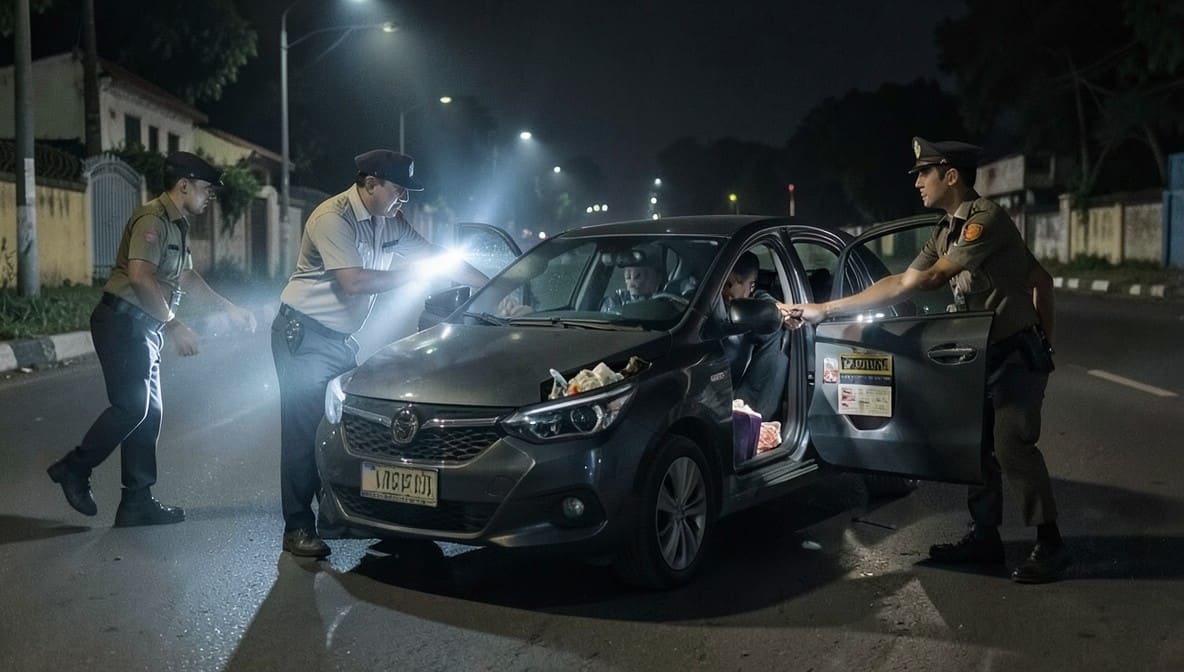
The petitioner, Jamsheer P, aged 32, was accused in Crime No. 82/2026 of Chevayur Police Station, Kozhikode, for an offence punishable under Section 20(b)(ii)(C) of the NDPS Act. The prosecution alleged that on 05.02.2026 at 21:45 hours, the petitioner was found transporting 41.5 kilograms of ganja in a car bearing registration number KL.44.4031 at Mundikkalthazham Pattalamukku, Kozhikode.
Key Facts
- The contraband was seized between sunset and sunrise from a private vehicle on a public road
- The search was conducted based on prior information but without a warrant from the jurisdictional Magistrate
- No grounds of belief were recorded or forwarded as mandated under Section 42(1) proviso of the NDPS Act
- The petitioner was arrested and sought bail under Section 483 of the Bharatiya Nagarik Suraksha Sanhita, 2023 (BNSS)
Procedural History
- 05.02.2026: FIR registered (Crime No. 82/2026) under Section 20(b)(ii)(C) NDPS Act
- 05.02.2026: Petitioner arrested and remanded
- 02.06.2026: Bail application (Crl.MP No. 3/2026) dismissed by the Special Court (Atrocities against SC/ST), Manjeri
- 01.07.2026: Present bail application (B.A. No. 3145/2026) filed before the Kerala High Court
Relief Sought
The petitioner sought regular bail on the ground that the search and seizure were vitiated due to non-compliance with Section 42 of the NDPS Act, rendering the evidence inadmissible.
The Legal Issue
The central question was whether Section 42 of the NDPS Act applies to searches conducted in private vehicles at public places between sunset and sunrise, and whether non-compliance with its procedural requirements entitles the accused to bail.
Arguments Presented
For the Petitioner
- Contended that the search was conducted without a warrant and without recording grounds of belief as required under Section 42(1) proviso of the NDPS Act
- Argued that the seizure was vitiated as it occurred in a private vehicle at a public place between sunset and sunrise, necessitating Section 42 compliance
- Relied on Muhammed Sahal v. State of Kerala (2026 KHC OnLine 501) to support the argument that Section 43 of the NDPS Act does not apply to private vehicles
For the Respondent
- Submitted that the recovery was made at a public place, thereby attracting Section 43 of the NDPS Act, which does not require warrant or grounds of belief
- Argued that compliance with Section 42 is a question of fact and need not be considered at the bail stage
The Court's Analysis
The Court undertook a detailed examination of the procedural requirements under Sections 42 and 43 of the NDPS Act and their applicability to searches in private vehicles at public places.
"Admittedly, the contraband was seized between sunset and sunrise from a private vehicle running through public road. In Boota Singh & Others v. State of Haryana [(2021) 19 SCC 606], the Supreme Court has categorically settled the law that a private vehicle at a public place can be treated as only a private place, and hence the mandatory requirement under Section 42 of the NDPS Act has to be complied with. In such cases, the procedure under Section 43 of the NDPS Act cannot be applied."
The Court emphasized that Section 42 imposes mandatory procedural safeguards when searches are conducted in private places or vehicles, particularly between sunset and sunrise. The proviso to Section 42(1) requires the empowered officer to record grounds of belief if a warrant cannot be obtained without affording opportunity for concealment of evidence or escape of the offender. Section 42(2) further mandates that the grounds of belief be forwarded to the immediate official superior within 72 hours.
The Court held that the information recorded under Section 41(1) of the NDPS Act (which pertains to prior information) cannot substitute for the grounds of belief required under Section 42. The detecting officer failed to record any reason justifying the search without a warrant to avoid concealment of evidence or escape of the offender. Thus, there was total non-compliance with Section 42, rendering the search and seizure illegal.
"The 'grounds of belief' mentioned in the proviso to Section 42(1) must contain the statutory satisfaction that obtaining a warrant or authorisation would have resulted in concealment of evidence or escape of offenders. The learned Senior Public Prosecutor made available to me the information given under Section 41(1) of the NDPS Act. It cannot be treated as grounds of belief under Section 42 of the NDPS Act since it does not contain any reason recorded by the detecting officer for conducting the search in a conveyance without obtaining a warrant so as to avoid concealment of evidence or escape by the offender."
The Verdict
The Court allowed the bail application and directed the petitioner's release on the following conditions:
- Execution of a bond for Rs. 1,00,000 with two solvent sureties for the like sum each
- Full cooperation with the investigation
- Appearance before the investigating officer every Saturday between 10:00 a.m. and 11:00 a.m. until further orders, and as and when required
- No commission of similar offences while on bail
- No contact with prosecution witnesses or tampering with evidence
- No leaving the State of Kerala without permission of the trial Court
- Jurisdictional court to handle any applications for modification or cancellation of bail conditions
What This Means For Similar Cases
Private Vehicles at Public Places Are Private Places Under NDPS Act
- The judgment reaffirms that private vehicles, even when on public roads, are treated as private places for the purposes of Section 42 of the NDPS Act
- Practitioners must argue that Section 43 (which applies to public places) does not apply to searches in private vehicles, regardless of location
Strict Compliance with Section 42 Is Non-Negotiable
- Grounds of belief must explicitly state why a warrant could not be obtained without risking concealment of evidence or escape of the offender
- Mere recording of prior information under Section 41(1) is insufficient to satisfy Section 42(1) proviso
- Failure to comply with Section 42(2) (forwarding grounds within 72 hours) will vitiate the search and entitle the accused to bail
Bail Is a Remedy for Procedural Non-Compliance
- Courts are increasingly inclined to grant bail where procedural safeguards under the NDPS Act are violated
- Defence counsel should scrutinize search and seizure records for compliance with Section 42 and Section 43 to argue for bail
- Prosecution must ensure meticulous adherence to procedural requirements to avoid acquittal or bail on technical grounds