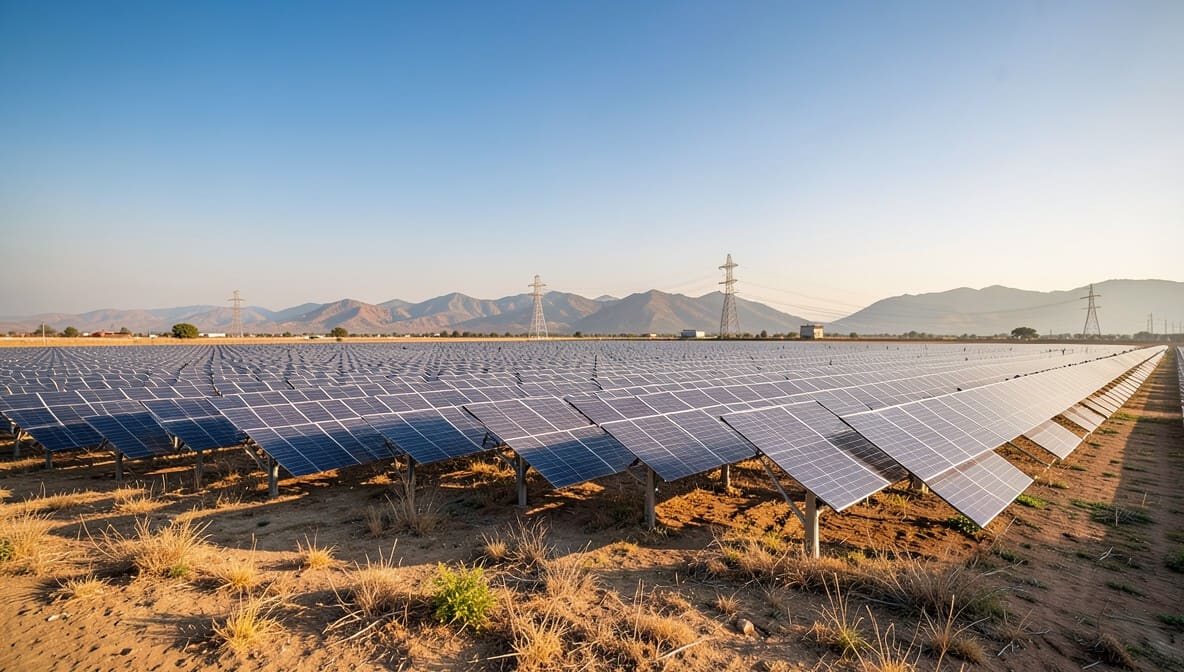
The Competition Commission of India has dismissed a detailed information alleging anti-competitive conduct by the Adani Group and Solar Energy Corporation of India in a 2019 solar power bidding process, concluding there is no prima facie case of abuse of dominance or collusion. The order underscores the high evidentiary threshold for initiating investigations under the Competition Act, 2002, particularly where allegations rely on speculative claims rather than concrete market data.
Background & Facts
The Dispute
The Informant, Shri Ravi Sharma, filed an information under Section 19(1)(a) of the Competition Act, 2002, against Adani Enterprises Ltd. (OP-1), Adani Green Energy Limited (OP-2), Gautam S. Adani (OP-3), Sagar R. Adani (OP-4), Azure Power India Private Limited (OP-5), Solar Energy Corporation of India (OP-6/SECI), and nine state power distribution companies (OP-7 to OP-12). The Informant alleged that the Adani Group, in collusion with SECI and Azure Power, manipulated a 2019 tender for solar power projects and manufacturing capacity to exclude competitors and consolidate market dominance.
Key Facts
- On 25.06.2019, SECI issued a Request for Selection (RfS) for 7 GW of ISTS-connected solar PV power plants linked with 2 GW per annum of solar manufacturing capacity, divided into Package A (Cells and Modules) and Package B (Ingots and Wafers).
- The RfS included a "Green Shoe Option" allowing successful bidders to claim additional capacity if others defaulted, with a tariff ceiling of ₹2.93/kWh.
- The bid submission deadline was 13.11.2019; techno-commercial bids opened on 14.11.2019 and financial bids on 21.11.2019.
- Three bidders qualified: OP-2 (Adani Green), OP-5 (Azure Power), and Navayuga Engineering Co. Ltd.
- An e-reverse auction held on 22.11.2019 resulted in Letters of Award (LoAs) dated 10.12.2019 to OP-2 and OP-5 at ₹2.92/kWh.
- OP-2 was awarded 2 GW manufacturing and 8 GW solar capacity; OP-5 received 1 GW manufacturing and 4 GW solar capacity.
- An Addendum to the LoAs permitted bidders to sell power to third parties if PSAs with DISCOMs were not executed, without liability to SECI.
- On 08.06.2020 and 16.07.2020, OP-2 and OP-5 submitted undertakings to continue obligations even if PSAs were not signed.
- On 02.02.2021 and 18.02.2021, OP-2 and OP-5 unilaterally reduced their quoted tariffs to ₹2.54/kWh.
- On 22.07.2021, both bidders offered to waive Basic Customs Duty on equipment.
- On 07.12.2022, OP-5 informed SECI that 2333 MW of its awarded capacity was commercially unavailable due to PILs and CERC regulatory delays.
- On 02.03.2023, OP-5 indicated intent to transfer 2333 MW capacity to OP-2.
- On 06.07.2023, a meeting was held between OP-2, OP-5, and SECI to discuss OP-5’s challenges.
- On 16.10.2023, OP-5 requested termination of PPAs for 2333 MW and return of Performance Bank Guarantee of ₹116.65 crore.
- On 23.02.2024, SECI issued an addendum to OP-2’s LoA for 1799 MW capacity.
- On 02.05.2024, OP-5 surrendered 700 MW capacity, which SECI stated was NOT reallocated to OP-2.
- The Informant referenced a US Department of Justice indictment dated 24.10.2024 alleging bribery and fraud by Adani Group executives.
Procedural History
- 12.02.2025: CCI sought additional information from Informant within four weeks.
- 14.05.2025: CCI granted one final opportunity to submit additional information.
- 06.06.2025: Informant filed first Additional Affidavit.
- 09.07.2025: CCI sought further detailed evidence on abuse of dominance.
- 24.07.2025: Informant filed second Additional Affidavit.
- 03.09.2025: CCI sought views from Ministry of New and Renewable Energy (MNRE).
- 28.10.2025: MNRE forwarded SECI’s comments.
- 26.11.2025: CCI considered all submissions and prepared for final order.
- 16.04.2026: CCI passed final order closing the case.
The Parties' Positions
Informant’s Allegations:
- The RfS was designed to favor large players like OP-2 and OP-5.
- The Green Shoe Option and bundling of manufacturing with generation violated MoP guidelines.
- OP-5 acted as a proxy for OP-2 to facilitate capacity transfer.
- OP-2 leveraged group-wide cross-subsidization, below-market capital, and vertical integration (mining, transmission, distribution) to exclude competitors.
- OP-2’s 16% market share in private power generation and 40% combined share with Adani Power indicated dominance.
- The US indictment corroborated allegations of bribery and market manipulation.
SECI’s Defense:
- The RfS complied with MNRE and MoP guidelines.
- Green Shoe Option was mandated by MNRE via letters dated 14.08.2019 and 09.10.2019.
- Tariff reductions by bidders benefited consumers and were lawful.
- Capacity reallocations followed due process and were approved by DISCOMs and SERCs.
- No merger, acquisition, or combination triggered Section 5 of the Act.
- No evidence established dominance in any relevant market.
- Allegations of bribery and fraud are criminal matters outside the scope of competition law.
Relief Sought
The Informant sought:
- Declaration that OPs violated Sections 3 and 4 of the Competition Act.
- Order restraining anti-competitive conduct.
- Imposition of penalties under Section 27.
- Any other relief deemed fit in public interest.
The Legal Issue
The central question was whether the conduct of OP-2, OP-5, and SECI in the 2019 solar bidding process constituted abuse of dominant position under Section 4 of the Competition Act, 2002, or whether the tender design and subsequent transactions amounted to anti-competitive agreements under Section 3, given the absence of direct evidence of collusion, market definition, or demonstrable exclusionary effects.
Arguments Presented
For the Petitioner
The Informant contended that OP-2, as part of the Adani Group, held a dominant position in utility-scale renewable energy generation, supported by its 16% share of private sector power generation and 40% combined share with Adani Power. He argued that OP-2’s rapid expansion, access to below-market capital via group entities, and control over transmission infrastructure created artificial entry barriers. The Informant cited the Green Shoe Option, bundling of manufacturing with generation, and unilateral tariff reductions as mechanisms to exclude smaller players. He relied on the US indictment to suggest a pattern of systemic corruption and market manipulation. He further argued that SECI’s role as intermediary did not insulate it from liability for designing a tender that favored a specific group.
For the Respondent
SECI contended that the RfS was designed in accordance with MNRE directives and MoP guidelines, which explicitly permitted the Green Shoe Option and bundling of manufacturing with generation. It emphasized that tender conditions are within the procurer’s domain and cannot be deemed anti-competitive merely because they favor larger bidders. SECI highlighted that tariff reductions benefited consumers and were voluntary. It denied any collusion with OP-5 or OP-2, asserting that capacity reallocations were transparent, approved by SERCs, and not rushed. SECI also argued that the Informant failed to define a relevant market, provide market share data, or prove dominance under the three-pronged test under Section 4. It distinguished between criminal allegations (bribery) and competition law violations, noting that the CCI lacks jurisdiction over corruption matters.
The Court's Analysis
The Commission undertook a rigorous assessment of whether the Informant’s allegations met the threshold for initiating an investigation under Section 26(1) of the Act. It emphasized that the burden lies on the Informant to establish a prima facie case of contravention, not merely to raise suspicions.
"A procurer, as a consumer, can stipulate certain technical specifications/conditions/clauses in the tender document as per its requirements which by themselves cannot be deemed anticompetitive."
The Commission relied on precedents such as G.P. Konar v. Department of Agriculture and Farmers Welfare and Harish Kumar v. S.B. Telecommunications to affirm that tender design, even if it favors large players, is not inherently anti-competitive unless it excludes competition without objective justification. The Green Shoe Option was validated as being explicitly mandated by MNRE, and the CERC had previously upheld its legality in Petition No. 286/AT/2021.
The Commission rejected the Informant’s claim that OP-5 was a proxy for OP-2, noting the absence of any documentary or testimonial evidence of collusion. The unilateral tariff reductions were deemed pro-consumer and lawful. The alleged transfer of 2333 MW capacity was found to be unsubstantiated, as SECI confirmed the 700 MW surrendered by OP-5 was not reallocated to OP-2.
Regarding dominance, the Commission observed that the power generation market in India includes numerous large public and private players - NTPC, Tata Power, JSW Energy, Reliance, and others - and that no evidence was provided to delineate a relevant market for utility-scale solar generation distinct from the broader power generation market. The Informant’s reliance on media reports and the US indictment did not satisfy the evidentiary standard for dominance under Section 4.
"The Commission has time and again stressed that dominance of an enterprise in the relevant market is something which needs to be established rather than merely relying on hearsay statements/media reports/social media content."
The Commission further held that cross-subsidization and economies of scale, even if present, do not by themselves constitute abuse under Section 4 without proof of exclusionary conduct or exploitative pricing. The alleged vertical integration and gatekeeping power over transmission lacked specific data on market access denial to competitors.
The allegations of bribery and fraud, while serious, were outside the purview of competition law and fell under criminal jurisdiction. The CCI cannot act as a surrogate for investigative agencies in such matters.
The Verdict
The Competition Commission of India dismissed the information and closed the case under Section 26(2) of the Competition Act, 2002. The Commission found no prima facie case of abuse of dominance under Section 4 or anti-competitive agreement under Section 3. No investigation was ordered. The Informant’s allegations were deemed speculative, unsubstantiated, and legally insufficient to warrant further proceedings. The Secretary was directed to communicate the order to the Informant and SECI.
What This Means For Similar Cases
Tender Design Is Not Per Se Anti-Competitive
- Practitioners must now demonstrate that tender conditions have an actual exclusionary effect, not just a structural preference for large players.
- Procurers may set eligibility criteria, bundling conditions, and incentive structures without violating the Act, provided they are aligned with statutory or policy objectives.
- Allegations based solely on the size of bidders or perceived unfair advantage are insufficient.
Dominance Requires Precise Market Definition and Data
- Claims of dominance must be supported by quantified market shares, entry barriers, and counterparty dependence - not media reports or group affiliations.
- Cross-subsidization alone does not establish dominance; evidence of exclusionary pricing or denial of market access is required.
- In multi-source markets like power generation, defining a relevant product market (e.g., solar vs. thermal) is critical and must be substantiated.
CCI Will Not Act on Criminal Allegations Without Competition-Specific Evidence
-
Allegations of bribery, fraud, or corruption must be referred to criminal authorities; they do not automatically trigger competition law investigations.
-
The CCI will not infer anti-competitive intent from unrelated criminal proceedings abroad.
-
Informants must separate competition law claims from criminal allegations and focus on market impact.
-
Practitioners should avoid conflating regulatory non-compliance with competition law violations.
-
In future cases, parties should proactively submit market data, competitor responses, and consumer impact studies to meet the prima facie threshold.