The Allahabad High Court has clarified that a conviction under Sections 399 and 402 IPC for dacoity cannot stand where the number of persons actually participating in the offence is less than five, as required by Section 391 IPC. This judgment reinforces the statutory threshold for dacoity and provides critical guidance on evidentiary sufficiency in joint offences.
Background & Facts
The Dispute
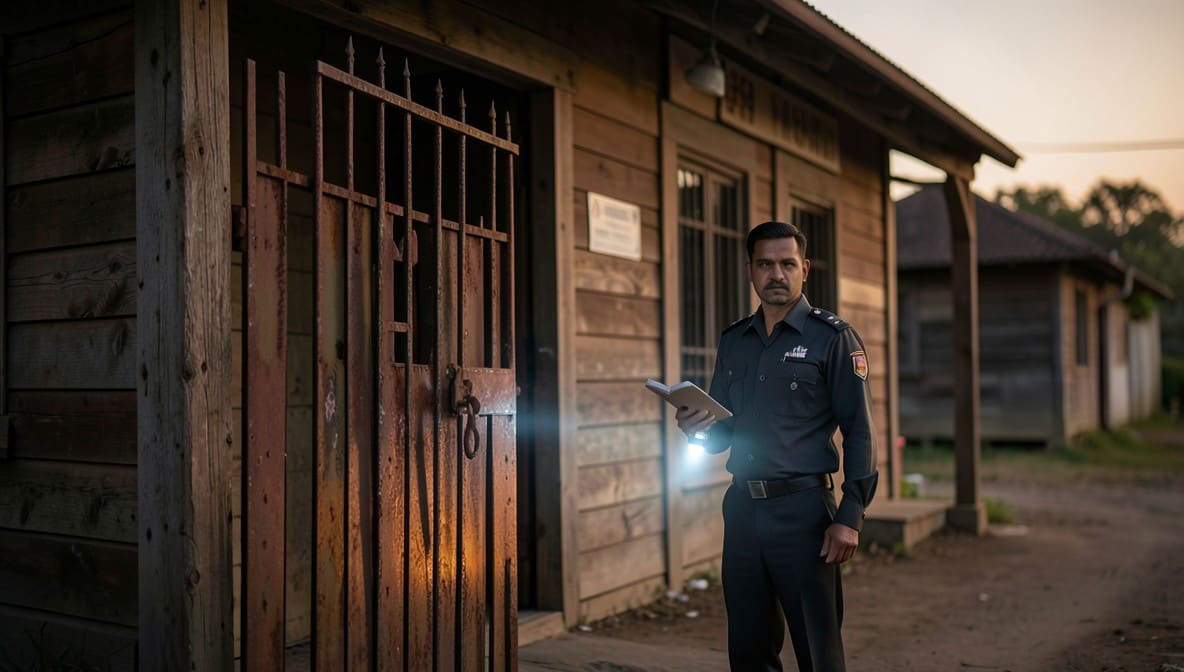
The case arose from a police raid on 13.11.1980 in Village Kuri, District Mainpuri, Uttar Pradesh, where a police party led by Station House Officer S.K. Awasthi attempted to apprehend accused persons linked to Crime No. 74/1980 (Section 396 IPC) and Crime No. 76/1980 (Sections 395/397 IPC). During the operation, the police received information that 8 to 10 armed miscreants were preparing to commit dacoity near the shala of Chhotey Baba. Upon arrival, the police confronted the group, fired VLP shots for illumination, and arrested three individuals: Sahab Singh, Rakshpal, and Ramesh S/o Chimni Lal. The remaining accused fled.
Key Facts
- The incident occurred on 13.11.1980 at approximately 12:00 midnight
- Three accused were arrested on the spot: Sahab Singh, Rakshpal, and Ramesh S/o Chimni Lal
- From Sahab Singh: one country-made 12-bore pistol and four live cartridges recovered
- From Ramesh S/o Chimni Lal: one country-made 12-bore pistol and three live cartridges recovered
- From Rakshpal: one country-made 12-bore pistol and five live cartridges recovered
- Recovery memo (Ex. Ka-3) prepared by Sub-Inspector B.L. Varma (PW-2) on the spot
- Case registered as Crime No. 217/1980 under Sections 399/402 IPC on 14.11.1980 at 6:30 A.M.
- Six other accused were charge-sheeted later as absconders: Ratan Singh, Ram Snehi, Sunahri, Ram Singh, Ramesh S/o Tula Ram, and two unidentified companions
- The prosecution did not examine the first informant (S.K. Awasthi) or Constable Raj Kumar, who allegedly fired the VLP shots
- No independent civilian witnesses were examined
- No FSL report was produced to confirm whether the pistols were loaded at the time of recovery
Procedural History
- 13.11.1980: Incident occurred at midnight
- 14.11.1980: Crime No. 217/1980 registered
- 1981: Charge-sheet submitted against Sahab Singh, Rakshpal, and Ramesh S/o Chimni Lal under Sections 399/402 IPC and Section 25 of the Arms Act
- 06.04.1981: Charge-sheet filed against Ratan Singh, Ram Snehi, and Sunahri
- 29.06.1981: Charge-sheet filed against Ram Snehi and Ramesh S/o Tula Ram as absconders
- 04.06.1984: Trial Court convicted all three arrested accused under Sections 399/402 IPC and Section 25 of the Arms Act
- 1984: Criminal Appeal No. 1796/1984 filed before the High Court
- 22.09.2025: Appellant No. 1, Sahab Singh, died
- 27.10.2025: Appellant No. 1, Rakshpal, died
- 24.03.2026: Judgment delivered by the High Court
The Parties' Positions
For the Appellant (Ramesh S/o Chimni Lal): Argued that the prosecution failed to prove participation in a group of five or more persons, as required for dacoity under Section 391 IPC. Contended that the arrest was made in darkness, identification was unreliable, no independent witnesses were examined, and the VLP shooter was not examined. Asserted that the pistols were not proven to be loaded or ready for use.
For the Respondent (State): Maintained that the recovery of weapons from the accused, the police testimony, and the charge-sheet established participation in a dacoity conspiracy. Argued that the absence of civilian witnesses did not invalidate the case, as police testimony is admissible.
Relief Sought
The appellant sought quashing of his conviction under Sections 399/402 IPC, acquittal on those charges, and reduction or modification of the sentence under Section 25 of the Arms Act. He also sought the benefit of probation.
The Legal Issue
The central question was whether Section 399 IPC can be applied when the number of persons who actually participated in the dacoity and were arrested on the spot is fewer than five, given that Section 391 IPC defines dacoity as committed by five or more persons.
Arguments Presented
For the Appellant
Counsel argued that Section 391 IPC requires a minimum of five persons to constitute dacoity. Since only three accused were arrested at the scene and the rest were absconders not proven to have participated in the act, the essential ingredient of dacoity was missing. Relied on State of U.P. v. Ram Swarup and Rajendra Singh v. State of U.P. to assert that participation must be established for each accused, and mere presence or recovery of weapons is insufficient without proof of joint action. Highlighted the absence of the first informant and the VLP shooter as critical gaps in the prosecution case.
For the Respondent
The State contended that the charge-sheet included six other accused, and the recovery of weapons from three accused at the scene was sufficient to infer a common intention under Sections 399/402 IPC. Argued that police testimony, though not independent, is not inherently unreliable and that the Trial Court’s findings should be upheld unless demonstrably perverse.
The Court's Analysis
The Court undertook a rigorous analysis of the statutory definition of dacoity under Section 391 IPC, which states: "When five or more persons conjointly commit or attempt to commit a robbery, or when the members of a body of persons present at the commission of a robbery are five or more, the offence is called dacoity." The Court emphasized that the term "conjointly" requires active participation by five or more persons at the time of the offence.
"The very essence of dacoity under Section 391 IPC is the presence and participation of five or more persons acting in concert. The fact that some accused escaped does not alter the requirement that at least five must have been present and participating at the time of the offence."
The Court noted that the prosecution failed to establish that any of the six absconding accused were present at the scene or participated in the act. The charge-sheet against them was filed months later, and no evidence linked them to the incident on 13.11.1980. The Court held that the recovery of weapons from three individuals, without proof of their collective action, could not transform the offence into dacoity.
Regarding the conviction under Section 25 of the Arms Act, the Court found no infirmity. The pistols were recovered from the appellant’s possession at the time of arrest, the prosecution sanction was obtained from the District Magistrate, and the appellant did not raise any denial under Section 313 Cr.P.C. The Court held this conviction was sustainable.
The Court further considered the appellant’s age and the lapse of over 45 years since the offence. It observed that the appellant had no prior criminal record and that the purpose of punishment had been largely served. The Court invoked the Probation of Offenders Act, 1958, to substitute the sentence under Section 25 with probation.
The Verdict
The appellant’s conviction under Sections 399 and 402 IPC was quashed and he was acquitted of those charges. His conviction under Section 25 of the Arms Act was affirmed, but the sentence of one year’s rigorous imprisonment was set aside. Instead, he was granted probation under Section 4 of the Probation of Offenders Act, 1958, subject to a personal bond of Rs. 10,000 and a surety of the same amount, to be furnished within two months. He must also submit an undertaking not to commit any offence during the one-year probation period. In case of breach, he shall be taken into custody to serve the original sentence. The seized arms were ordered confiscated by the State. His bail bonds were discharged.
What This Means For Similar Cases
Dacoity Requires Five Active Participants
- Practitioners must now rigorously verify whether the prosecution has established the presence and participation of five or more persons at the time of the offence to sustain a conviction under Section 399/402 IPC
- Mere recovery of weapons from fewer than five accused, or the subsequent charge-sheeting of absconders, cannot substitute for proof of conjoint action
- The burden remains on the prosecution to prove the identity and participation of each of the five persons, not just the number of accused named in the FIR
Probation May Be Granted in Long-Pending Cases
- Courts may exercise discretion under the Probation of Offenders Act, 1958 in cases where the accused is elderly, has no prior record, and decades have passed since the offence
- Probation is not a right but a judicial discretion grounded in reformative justice, especially where deterrence and retribution have lost relevance
- Practitioners should consider filing applications for probation under Section 4 in cases involving delayed justice, particularly where the accused has led a law-abiding life since the incident
Police Testimony Alone Is Not Sufficient for Joint Offences
- While police testimony is admissible, courts will scrutinize its reliability when no independent witnesses are examined
- Failure to examine key eyewitnesses, such as the first informant or the person who fired illumination rounds, may render the prosecution case untenable
- Courts will increasingly demand corroboration for critical assertions in cases involving group offences