The Delhi High Court has acquitted three appellants convicted under Sections 399 and 402 IPC for preparation and assembly to commit dacoity, holding that the prosecution failed to establish the mandatory requirement of five persons and that the alleged overheard conversation in a public park was inherently implausible. The judgment underscores that mere assembly without concrete evidence of preparation cannot sustain conviction, and contradictory testimony of official witnesses regarding a fictitious fifth accused fatally undermines the prosecution case.
Background & Facts
The Incident
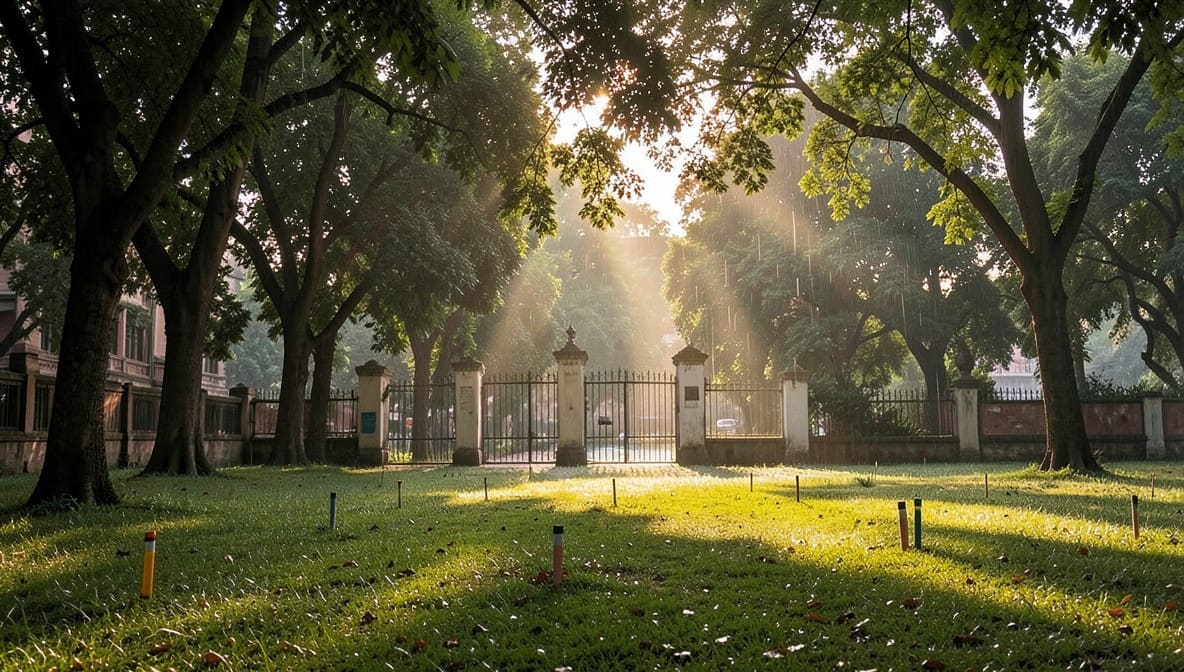
On 26 August 1999, Sub-Inspector Naseeb Singh, posted at the Operation Cell of North-West District, received secret information about a proposed dacoity. Acting on instructions from senior officers, he constituted a raiding party of eight personnel including himself, two ASIs, two Head Constables, and three Constables, along with the secret informer. The team proceeded to Roshnara Park, near Gate No. 4, where the assailants were allegedly to assemble.
At approximately 04:15 PM, three persons arrived in the park followed by two more on a motorcycle. The secret informer identified all five as those connected with the planned dacoity. To verify the information, the secret informer and Head Constable Randhir Singh (PW-1), in plain clothes, were deputed to approach the group and ascertain their conversation. HC Randhir Singh was instructed to give a pre-determined signal by moving his hand on his head if the information proved correct.
Apprehension and Recoveries
Upon receiving the signal, the police team surrounded the group from four corners and apprehended four persons. One Raju managed to escape and was never apprehended at any stage. The apprehended persons were searched, yielding:
- A button-actuated knife from Maharam Singh (from his right dub)
- A dagger from Tulsi
- A kripan from Shyam Kumar
SI Naseeb Singh prepared a rukka (Ex.PW-2/A) and registered a case at Police Station Roop Nagar under Sections 399/402 IPC and Section 25 of the Arms Act, 1959. Investigation was handed over to ASI Ram Kumar, culminating in a chargesheet under the same provisions.
Trial Court Proceedings
Charges were framed under Sections 399/402 IPC against all four apprehended persons (Maharam Singh, Shyam Kishore, Shyam Kumar, and Tulsi), all of whom pleaded not guilty. A charge under Section 25 Arms Act was framed against Maharam Singh, who also pleaded not guilty. Shyam Kishore was declared a proclaimed offender post-charge framing. Raju remained elusive throughout.
The Trial Court, by Impugned Judgment dated 26 February 2004, convicted Maharam Singh, Shyam Kumar, and Tulsi under Sections 399/402 IPC. Maharam Singh was additionally convicted under Section 25 Arms Act. By Order on Sentence dated 27 February 2004, each was sentenced to Rigorous Imprisonment for 5 years and a fine of Rs. 500 under Sections 399/402 IPC, with sentences to run concurrently and benefit of set-off under Section 428 CrPC. No separate sentence was awarded for the Arms Act conviction.
Procedural History
- 26.08.1999: Incident, apprehension, and registration of FIR
- 26.02.2004: Trial Court judgment of conviction
- 27.02.2004: Order on sentence
- 2004: Three separate criminal appeals filed (CRL.A. 202/2004, 205/2004, 207/2004)
- 04.08.2026: Arguments concluded, judgment reserved
- 24.08.2026: Judgment delivered by Justice Vimal Kumar Yadav
Relief Sought
The appellants sought acquittal on grounds that: (i) the mandatory requirement of five persons for Sections 399/402 IPC was not satisfied; (ii) the prosecution case suffered from inherent contradictions and improbabilities; (iii) the recovery of weapons was planted; and (iv) the alleged overheard conversation was fabricated.
The Legal Issue
The central questions were: (1) Whether conviction under Sections 399/402 IPC can stand when the prosecution fails to prove the presence of five or more persons assembled for the purpose of committing dacoity; (2) Whether the testimony of official witnesses regarding an overheard conversation in a public park, without any independent corroboration, can establish preparation for dacoity; (3) Whether contradictory testimony concerning a fictitious fifth accused and a police constable's presence vitiates the entire prosecution case including arms recovery.
Arguments Presented
For the Appellants
Learned counsel emphasized that Section 391 IPC defines dacoity as requiring five or more persons, which is an integral ingredient of Sections 399/402 IPC. Reliance was placed on Raj Kumar @ Raju v. State of Uttaranchal (2008) 11 SCC 709, Yog Raj v. State 1985 SCC OnLine Del 278, and Hari v. State 2026 SCC OnLine Ker 856, all reiterating that conviction for dacoity or related offences cannot be recorded where the number of persons falls short of five. It was contended that Raju was a fictitious character introduced to meet the statutory threshold, and that the alleged conversation overheard by HC Randhir Singh and the secret informer was inherently improbable - criminals planning dacoity in broad daylight in a public park would not discuss their plans audibly. Further, the recovery of weapons was alleged to be planted, especially in the absence of independent public witnesses.
For the Respondent (State)
The learned APP submitted that five persons were present as deposed by witnesses, and Raju's escape did not negate his presence. The recovery of prohibited weapons fortified the inference of preparation for dacoity. It was argued that joining independent public witnesses is not mandatory, and evidence of official witnesses must be evaluated on its own merit. The police team made sincere efforts to secure public witnesses (8-10 persons requested, twice), but none agreed. The Trial Court's conviction was therefore justified.
The Court's Analysis
The Court began by reproducing Sections 391, 399, and 402 IPC, noting that dacoity under Section 391 requires five or more persons, which automatically becomes integral to Sections 399/402 IPC. The critical inquiry was how preparation and assembly for dacoity can be ascertained.
"It is very difficult to gather such evidence even if it is presumed that the secret informers of the police were so meticulous so as to provide almost exact information of place of assembly, number of persons etc. It is still to be ascertained and brought on record that the persons had gathered for the purpose of committing dacoity or were in preparation of committing the dacoity. How this can be inferred as long as something more than the assembly of five or more persons is not shown by the prosecution."
The Court found the prosecution's reliance on HC Randhir Singh's testimony deeply problematic. The proposition that a policeman and secret informer could approach within hearing distance of five persons openly planning dacoity in a public park at 4:15 PM, without concealment behind bushes or trees, and overhear decipherable conversation, was "very unusual" and "not conceivable." Such persons would use coded language and conceal their design. No evidence was led of even a single word spoken - HC Randhir Singh did not depose what directions Maharam allegedly gave, and the secret informer was not examined.
"Not even ordinary individuals, leave alone a criminal or any sane person, would talk something of the nature attributed to the Appellants in the presence and hearing of unknown persons. There is nothing on record, which may reflect as to how HC Randhir Singh and secret informer concealed themselves."
The fatal blow came from the testimony of Constable Arjun Singh (PW-4). While PW-1, PW-3, and PW-6 (SI Naseeb Singh) testified that Constable Arjun Singh was part of the raiding team and chased the escaping Raju, PW-4 himself deposed that he was not part of the raiding team and joined the investigation only on 27 August 1999 (the day after the incident) with ASI Ram Kumar for limited purposes of interrogation and pointing-out proceedings. This contradiction **"knocks the bottom of the prosecution's case out and turns the edifice sought to be raised by prosecution into rubble." **
The Court relied on Raj Kumar @ Raju v. State of Uttaranchal, where the Supreme Court held that where charges were framed against six persons but two were acquitted for insufficient evidence, the remaining four could not be convicted for dacoity because the court did not record a finding that six persons committed the offence. In the present case, not even five persons were charged - the flaw was inherent from inception.
Regarding the Arms Act conviction, the Court held that the recovery could not be treated as above-board. The testimony of the three material witnesses (PW-1, 3, 6) was already found prone to incorrect narration, and no independent witness corroborated the recovery. The weapons were therefore not proved to be in conscious possession of the appellants.
The Verdict
The appeals were allowed. All three appellants - Tulsi, Shyam Kumar, and Maharam Singh @ Lala - were acquitted of all charges. Their bail bonds stand discharged. The recovered weapons were directed to be destroyed after the expiry of the appeal period. Pending applications, if any, were disposed of. The judgment was transmitted to the Trial Court and Prison Authorities for compliance.
What This Means For Similar Cases
Five-Person Threshold Is Jurisdictional, Not Evidentiary
The requirement of five persons under Section 391 IPC is a statutory precondition for invoking Sections 399/402 IPC, not merely an evidentiary detail. If the prosecution cannot prove the existence of five persons - whether because one escaped and was never identified, or because a witness contradicts the very existence of the fifth person - the charge cannot be sustained against the remaining accused. Practitioners must scrutinize the chargesheet and witness testimony at the framing stage itself to challenge non-compliance with this threshold.
Overheard Conversation in Public Place Requires Corroboration
The Court's rejection of the "overheard conversation" evidence establishes a practical benchmark: testimony that police officers in plain clothes approached within hearing distance of alleged conspirators in a public park in broad daylight, without concealment, and heard incriminating conversation, is inherently improbable unless supported by:
- Evidence of concealment (bushes, trees, structures)
- Specific words or coded language deposed by the witness
- Corroboration by independent witnesses or technical surveillance
Absent these, such testimony should be discarded as fabricated.
Contradictory Official Testimony Destroys Entire Prosecution Case
When official witnesses contradict each other on a material fact - here, whether a constable was part of the raiding team - the Court will not selectively believe one version. The contradiction vitiates the credibility of all related testimony, including recoveries effected by the same team. Practitioners should:
- Cross-examine each official witness on the composition of the raiding party
- Obtain duty rosters, movement registers, and wireless logs
- Highlight any discrepancy in the sequence of events to seek wholesale rejection of the prosecution version
Absence of Independent Witnesses Weakens Recovery Cases
While not mandatory, the failure to secure even one independent witness in a thickly populated area (Roshnara Park, North Delhi) despite two attempts (pre- and post-apprehension) renders the recovery suspect. In arms/NDPS cases, practitioners should press the Court to draw an adverse inference when the prosecution offers no explanation for the absence of public witnesses in a public place.