The Allahabad High Court has set aside convictions under Sections 399 and 402 IPC, emphasizing that mere suspicion or assembly at a suspected location cannot substitute for proof of specific preparation to commit dacoity. The judgment reinforces the foundational principle that criminal liability requires cogent, reliable evidence beyond reasonable doubt, particularly in cases reliant on police testimony and circumstantial reconstruction.
Background & Facts
The Dispute
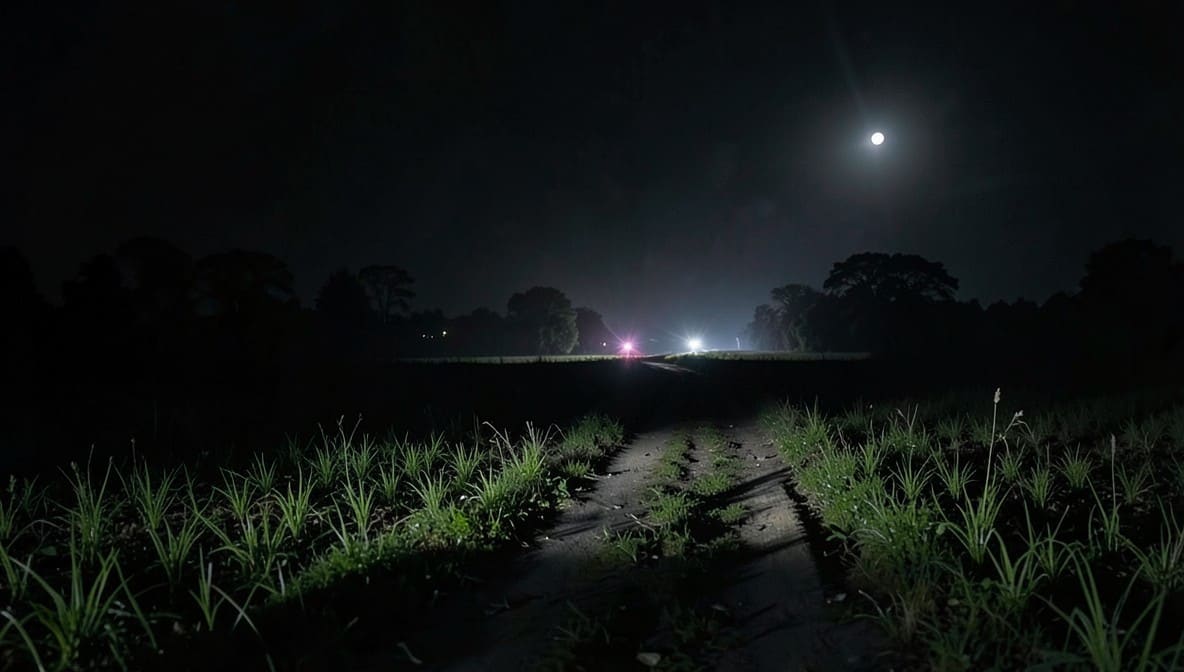
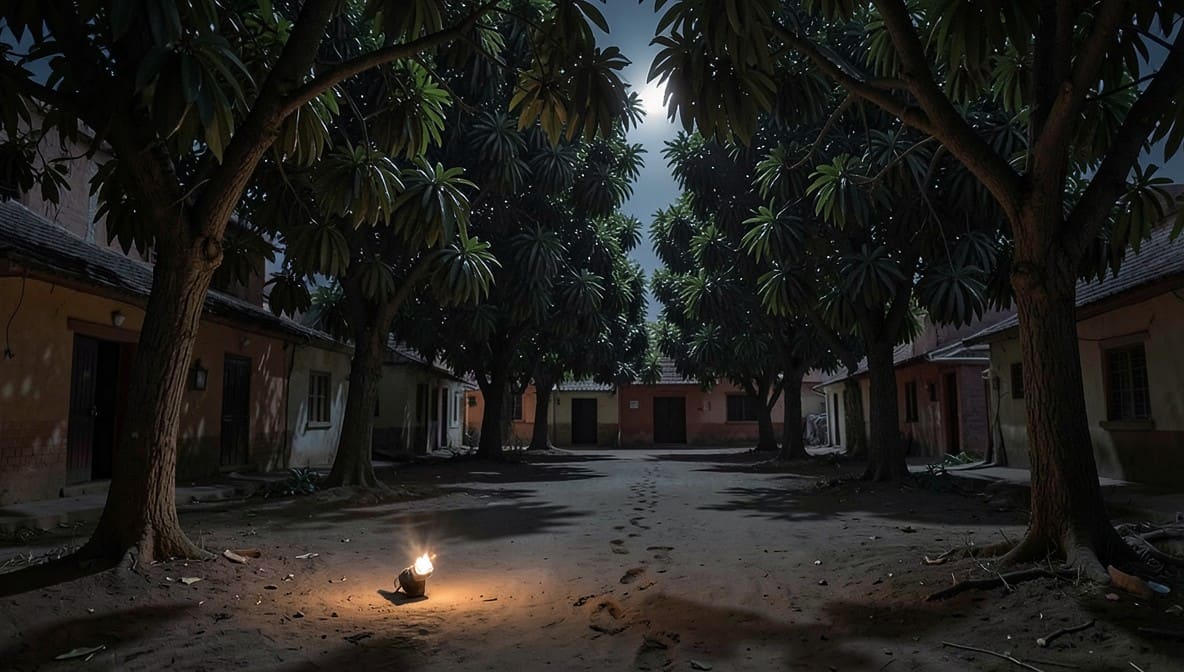
The appellant, Tara Chand, was convicted by the Special Additional Sessions Judge, Muzaffarnagar, under Sections 399 and 402 of the Indian Penal Code (IPC) for alleged preparation to commit dacoity. The prosecution alleged that on the night of 28.08.1979, Tara Chand and six others assembled in the grove of Lala Bhagwat, on the outskirts of village Gujarheri, with the intent to commit dacoity in the house of Gariba Singh, the village Pradhan. The case arose from a secret tip-off received by Station Officer Brij Bhushan Singh Chowdhary at 9:15 PM, prompting a police operation that resulted in the arrest of five individuals, including the appellant, at approximately 11:45 PM.
Key Facts
- The secret informant’s identity was never disclosed.
- Police personnel, including S.I. Ram Prasad (P.W.5) and Constable Nakshatra Pal (P.W.6), claimed to have overheard conversations about dacoity from a distance in complete darkness.
- Five accused persons were arrested on the spot: Nathu @ Nakli, Raja Ram, Tara Chand, Ramzan, and Inam.
- Recovered items included country-made pistols, live cartridges, a small gun, a club fitted with basakha, a torch, Biri, and matchsticks.
- All recovered articles were sealed and documented in a recovery memo, but no independent witness was present during the seizure.
- The torch alleged to have been used for illumination was not produced in court.
- The site plan (Ext. Ka-7) was prepared by S.I. Ram Kishore Kardam (P.W.7), who was not an eyewitness to the occurrence.
- Three witnesses - Dhir Singh (P.W.1), Brahm Pal (P.W.3), and Sewa Ram (P.W.4) - were examined, but P.W.1 was declared hostile. The residences of P.W.3 and P.W.4 were not established, nor was their presence at the grove at 11:45 PM substantiated.
- The trial court acquitted all accused under Section 25 of the Arms Act due to insufficient proof of possession.
Procedural History
- 28.08.1979: Alleged incident and arrest at 11:45 PM in the grove of Lala Bhagwat.
- 29.08.1979: First Information Report (FIR) registered at P.S. Titavi under Sections 399, 402 IPC and Section 25 Arms Act.
- 05.09.1979: Charge-sheet filed by S.I. Ram Kishore Kardam (P.W.7).
- 15.11.1979: Cognizance taken by Magistrate; case committed to Sessions Court.
- 13.05.1983: Trial Court convicted Tara Chand under Sections 399 and 402 IPC, sentencing him to three years rigorous imprisonment on each count.
- 05.04.2026: Criminal Appeal No. 1251 of 1983 heard by the Allahabad High Court.
- 05.04.2026: Judgment delivered acquitting the appellant.
The Parties' Positions
For the Appellant
The appellant’s counsel contended that:
- The prosecution’s case rested entirely on the testimony of police personnel with no independent corroboration.
- The site plan was prepared by the Investigating Officer without any eyewitness input, rendering it unreliable.
- No source of light was proven to have enabled identification in the dark grove at 11:45 PM.
- Section 100 Cr.P.C. was violated as no independent, respectable inhabitant of the locality was called to witness the search or recovery.
- The prosecution failed to prove any overt act of preparation for dacoity beyond vague allegations of conversation.
For the Respondent
The Additional Government Advocate argued that:
- The trial court rightly relied on the consistent testimony of police witnesses.
- The recovery of weapons and the timing of the operation established a clear case of preparation.
- Minor procedural lapses did not vitiate the conviction, especially where the core facts were established.
- The trial court’s findings should not be disturbed unless patently unreasonable.
Relief Sought
The appellant sought acquittal of the charges under Sections 399 and 402 IPC, discharge of his bail bonds, and a declaration that the conviction was legally unsustainable due to failure of the prosecution to prove its case beyond reasonable doubt.
The Legal Issue
The central question was whether Sections 399 and 402 IPC are established merely by the presence of accused persons at a location where dacoity was allegedly planned, or whether the prosecution must prove, beyond reasonable doubt, specific acts of preparation and intent to commit dacoity.
Arguments Presented
For the Appellant
The appellant’s counsel relied on the principle that mere assembly does not constitute preparation under Sections 399 and 402 IPC. Citing State of U.P. v. Krishna Gopal, the counsel emphasized that the prosecution must establish a direct nexus between the accused and a concrete plan to commit dacoity, not just suspicion or proximity. The failure to comply with Section 100 Cr.P.C. rendered the recovery of arms suspect, and the absence of independent witnesses or illumination undermined the credibility of identification. The prosecution’s reliance on the Investigating Officer’s site plan - prepared without eyewitness input - was legally untenable. The counsel argued that the trial court’s acceptance of police testimony without corroboration violated the rule in State of U.P. v. Ram Swarup that police evidence must be scrutinized with caution.
For the Respondent
The Additional Government Advocate contended that the prosecution’s narrative was internally consistent and supported by the recovery of weapons and the timing of the operation. He argued that the trial court’s appreciation of evidence was within its domain and that the High Court should not interfere unless the findings were perverse. He cited Rajendra Prasad v. State of Bihar to assert that minor procedural irregularities do not automatically invalidate convictions if the substance of the case is proven. He maintained that the accused’s presence at the grove at night, coupled with the recovery of arms and the prior intelligence, formed a sufficient basis for conviction.
The Court's Analysis
The Court undertook a meticulous review of the prosecution’s evidence and found it fundamentally deficient. It noted that Sections 399 and 402 IPC require proof of preparation and assembly specifically for the purpose of committing dacoity - not mere presence or suspicion. The Court observed:
"Mere assembly of persons at a place does not by itself constitute offence under Sections 399 or 402 I.P.C. unless prosecution proves beyond reasonable doubt that there was preparation and assembly specifically for purpose of committing dacoity."
The Court rejected the prosecution’s claim that the accused were heard discussing dacoity, noting that such conversations, if genuine, would be conducted in hushed tones, not loud enough to be overheard from a distance in darkness. The absence of any corroborating evidence - such as a torch, lighting device, or independent witness - rendered the police testimony speculative. The Court further held:
"Mere bald assertion by police witnesses is not sufficient in facts of the present case."
The site plan, prepared by the Investigating Officer who was not present at the scene, lacked critical details: it did not mark the location of the accused, the source of alleged conversation, or the point of observation. The Court emphasized that Section 100 Cr.P.C. mandates the presence of independent witnesses during search and seizure, and its non-compliance raises a reasonable doubt about the integrity of the recovery. The acquittal of all accused under Section 25 Arms Act further undermined the prosecution’s credibility.
The Court also noted that the prosecution failed to establish the presence of P.W.3 and P.W.4 in the grove at 11:45 PM, nor did it prove their status as local inhabitants. The declaration of P.W.1 as hostile further eroded the evidentiary foundation. The Court concluded:
"The prosecution has failed to discharge its burden in accordance with law and, therefore, the appellant is entitled to benefit of doubt."
It reiterated the cardinal principle of criminal jurisprudence: "however grave the suspicion may be, the same cannot take the place of legal proof."
The Verdict
The appellant is acquitted of the charges under Sections 399 and 402 IPC. The judgment and order dated 13.05.1983 of the trial court is set aside. The appellant’s bail bonds and sureties are discharged. The trial court record is to be transmitted forthwith to the concerned court for necessary compliance.
What This Means For Similar Cases
Preparation Must Be Proven, Not Assumed
- Practitioners must challenge convictions under Sections 399 and 402 IPC where the prosecution relies solely on proximity, timing, or police testimony without overt acts of preparation.
- The burden remains on the prosecution to prove specific, concrete steps taken toward committing dacoity - not just intent inferred from presence.
Non-Compliance with Section 100 CrPC Is Fatal
- Failure to secure independent witnesses during search or recovery invalidates the evidentiary value of recovered items, especially in cases involving arms.
- Courts must treat such lapses as material irregularities, not "minor" or "natural" deviations.
Police Testimony Requires Corroboration
-
In cases involving night-time operations, secret informants, and darkness, police testimony must be corroborated by independent evidence or physical proof.
-
Site plans prepared by investigating officers without eyewitness input are inadmissible as substantive evidence of occurrence.
-
Always demand proof of illumination, witness identity, and chain of custody in dacoity-related cases.
-
Argue that suspicion, however strong, cannot replace proof beyond reasonable doubt under Section 105 of the Evidence Act.