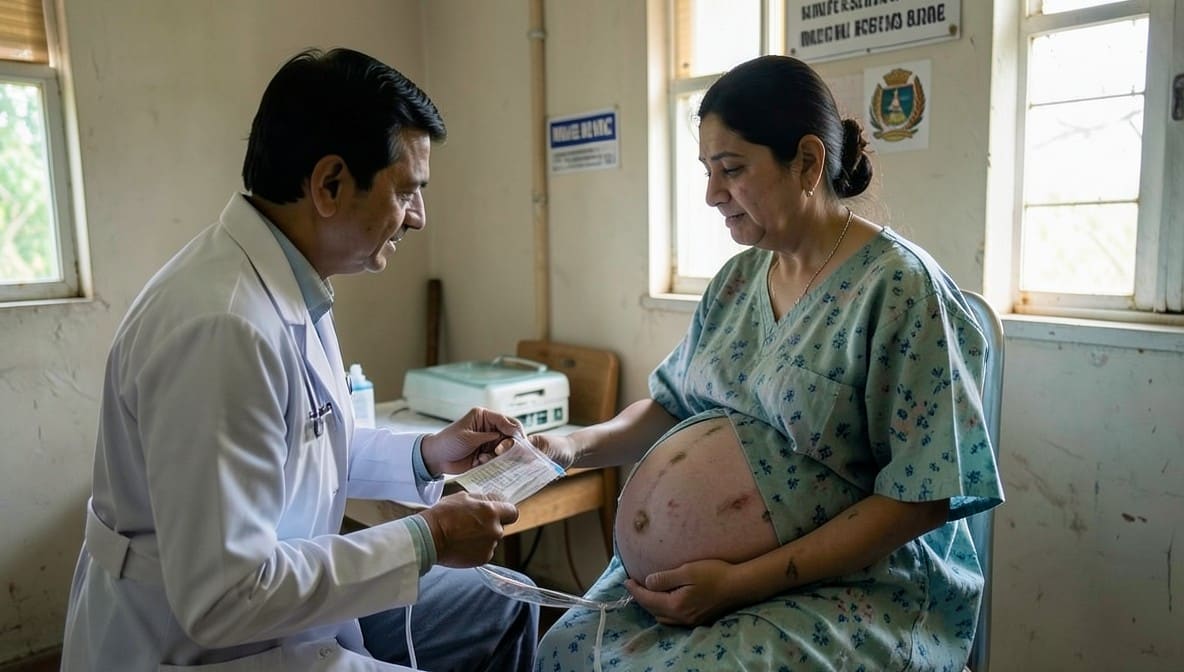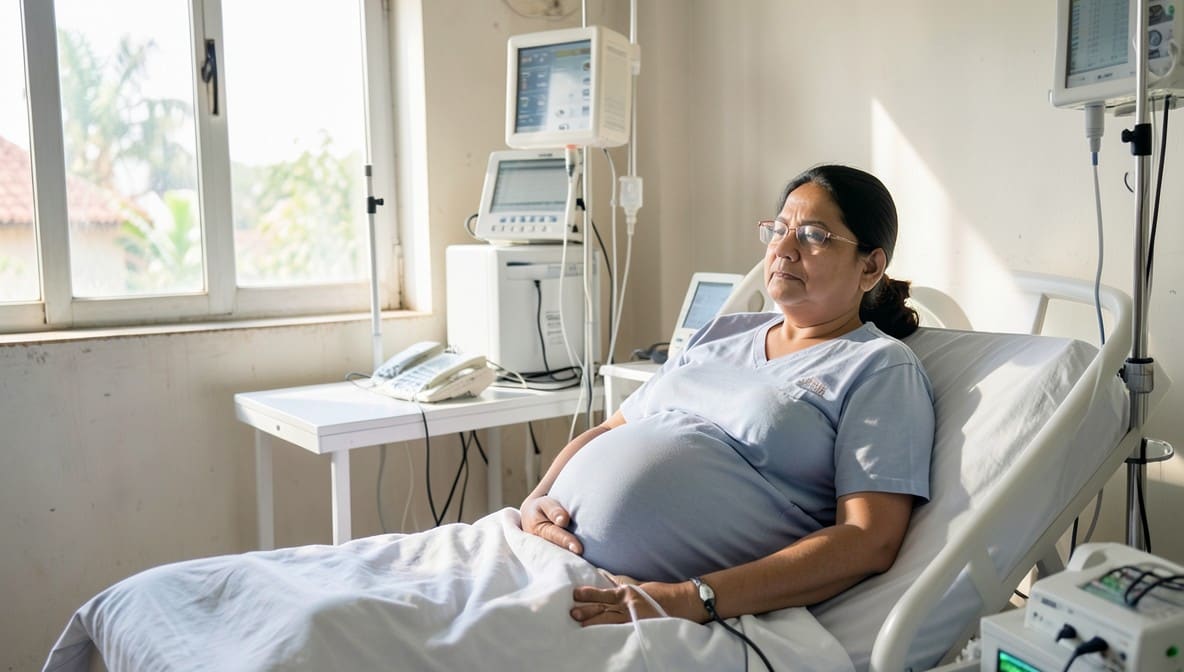
The Madras High Court has affirmed that the personal circumstances of a convicted mother nursing an infant constitute a compelling ground for suspending sentence under Section 389 CrPC, even where multiple pending cases exist. This ruling reasserts judicial discretion in bail matters grounded in human dignity and constitutional obligations under Article 21.
Background & Facts
The Dispute
The petitioner, S. Tamilselvi, was convicted by the trial court on 21 November 2025 for offences under Section 454 IPC (house-breaking by night) and Section 380 IPC (theft in dwelling house), each carrying a three-year sentence to run concurrently. She was sentenced to imprisonment and fined, with default terms. At the time of sentencing, her infant son, Kalainithi, was nine months old. She was remanded to judicial custody at the Central Women’s Prison, Vellore, along with her newborn.
Procedural History
- November 2025: Conviction and sentencing by trial court
- December 2025: Petitioner filed Crl.M.P. No. 1675 of 2025 seeking suspension of sentence; dismissed by trial court citing dual convictions
- January 2026: Appeal filed before Sessions Court (Crl.A. No. 2 of 2026); suspension petition (Crl.M.P. No. 149 of 2026) dismissed on grounds of prior pending cases without detailed reasoning
- March 2026: Criminal Original Petition filed under Section 528 of BNSS Act before Madras High Court seeking review of dismissal
Relief Sought
The petitioner sought suspension of sentence and release on bail pending appeal, citing the necessity of maternal care for her one-year-old child and the absence of any risk of flight or tampering with evidence.
The Legal Issue
The central question was whether Section 389(3) of the Code of Criminal Procedure permits suspension of sentence for a convicted woman nursing an infant, despite the existence of multiple pending criminal cases, and whether prior pendency of cases automatically disqualifies such relief.
Arguments Presented
For the Petitioner
Counsel argued that the trial and appellate courts erred in mechanically denying suspension on the basis of dual convictions and prior pending cases, without applying the balancing test under Section 389 CrPC. Reliance was placed on State of Rajasthan v. Ram Singh and K. S. Puttaswamy v. Union of India to emphasize the constitutional right to family life and the welfare of the child as integral to Article 21. The petitioner had never absconded, had always appeared before courts, and was granted bail in all other pending cases.
For the Respondent
The Additional Public Prosecutor contended that the petitioner’s involvement in 15 similar cases indicated a pattern of criminal conduct, justifying denial of suspension. It was argued that Section 389 CrPC is discretionary and that the courts below had rightly considered the gravity of the offences and the petitioner’s criminal history.
The Court's Analysis
The Court rejected the notion that multiple pending cases automatically disqualify suspension of sentence. It held that Section 389 CrPC is not a mechanical provision but requires a holistic assessment of the accused’s conduct, the nature of the offence, and personal circumstances. The Court observed that the trial court’s reasoning - that dual convictions bar suspension - was legally untenable, as Section 389(3) explicitly permits suspension even where multiple offences are involved, provided the conditions are met.
"The fact that the petitioner has other pending cases does not negate the compelling humanitarian ground of nursing a one-year-old child. The law does not penalize motherhood, nor does it equate pendency with culpability."
The Court further noted that the petitioner had been granted bail in all other cases, demonstrating no risk of non-appearance. The concurrent sentencing, rather than consecutive, indicated the trial court’s own recognition of proportionality. The Court emphasized that Article 21 encompasses the right to care for one’s child, and that incarceration of a nursing mother without compelling justification violates this fundamental right.
The Verdict
The petitioner succeeded. The Madras High Court held that Section 389 CrPC permits suspension of sentence for a convicted nursing mother, even with multiple pending cases, if no risk of flight or evidence tampering exists. The Court suspended the sentence and granted bail on conditions.
What This Means For Similar Cases
Maternal Care Overrides Prior Pendency
- Practitioners must now argue that pending cases alone cannot justify denial of sentence suspension under Section 389 CrPC
- Courts must conduct a case-specific inquiry into the welfare of the child and the mother’s conduct, not rely on aggregate pendency
- Evidence of consistent court appearances and prior bail grants should be central to such applications
Suspension Is Not a Reward, But a Humanitarian Safeguard
- The judgment clarifies that Section 389 CrPC is not limited to first-time offenders or minor offences
- Nursing mothers, regardless of the number of pending cases, are entitled to a hearing on humanitarian grounds
- Courts must record reasons for denial, not merely cite pendency as a blanket ground
Procedural Compliance Is Non-Negotiable
- Trial courts must not dismiss suspension petitions without applying the triple test: likelihood of appeal success, risk of flight, and special circumstances
- Appellate courts must not rubber-stamp dismissals based on procedural shortcuts
- Failure to consider personal circumstances may render orders liable to be set aside under Section 528 BNSS