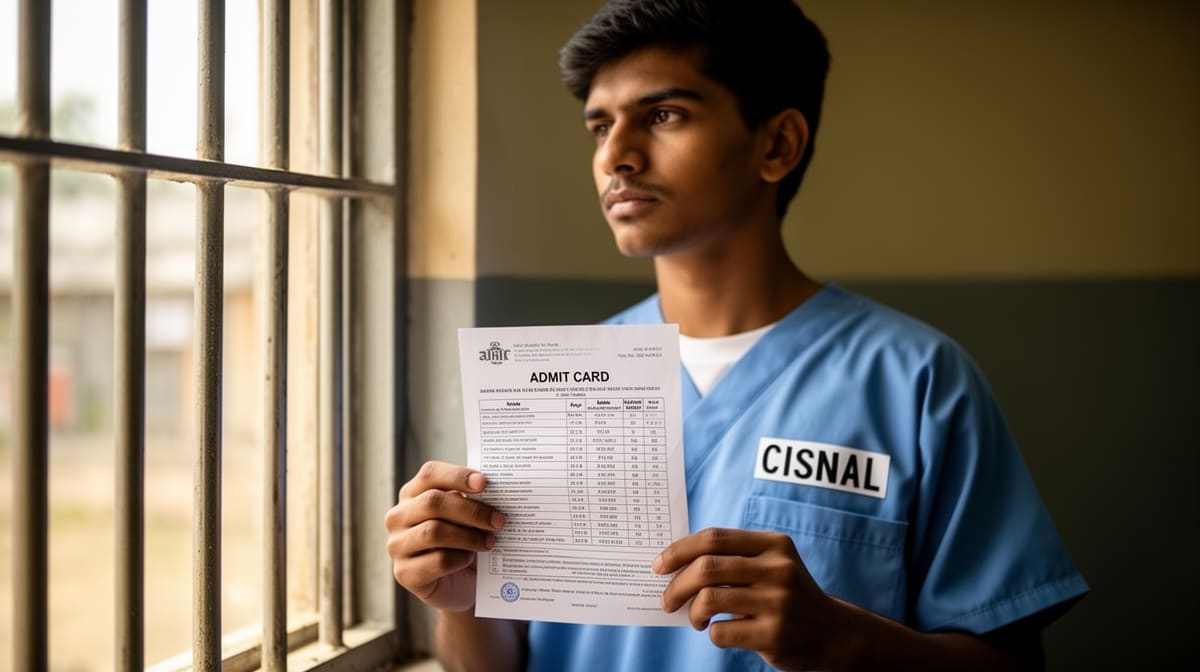
The Rajasthan High Court has clarified that a conviction under Section 376-D IPC does not create an absolute bar to transfer to an Open Air Camp, reinforcing the principle that prison administration must evaluate each case on its individual merits. This ruling provides critical guidance to prison authorities and legal practitioners on the discretionary nature of parole and transfer policies under state prison rules.
Background & Facts
The Dispute
The petitioner, Dharmraj alias Golu, a convict lodged at Central Jail, Jodhpur, applied for transfer to the Open Air Camp, Jodhpur, under the Rajasthan Prisoners Open Air Camp Rules, 1972. His application was rejected on 09.09.2025 solely on the ground that he stands convicted under Section 376-D IPC, which is listed under Rule 3(d) of the Rules of 1972 as an offence for which prisoners "shall ordinarily not be eligible" for transfer.
Key Facts
- The petitioner was convicted under Section 376-D IPC (gang rape resulting in death or persistent vegetative state of victim)
- He is currently serving a sentence of life imprisonment
- His application for transfer to the Open Air Camp was filed on an unspecified date prior to 09.09.2025
- The competent authority rejected the application on 09.09.2025 without examining any mitigating or exceptional circumstances
- No reasons were provided regarding the petitioner’s conduct in custody, rehabilitation progress, or risk assessment
Procedural History
- 09.09.2025: Application for transfer to Open Air Camp rejected by competent authority
- 2026: Criminal Writ Petition No. 2290/2026 filed before the High Court of Judicature for Rajasthan at Jodhpur
- 03.07.2026: Hearing conducted before Justice Kuldeep Mathur
Relief Sought
The petitioner sought quashing of the order dated 09.09.2025 and a direction to the competent authority to reconsider his application for transfer to the Open Air Camp, taking into account his individual circumstances and the precedents laid down in Subhash v. State of Rajasthan and Sandeep v. State of Rajasthan.
The Legal Issue
The central question was whether Rule 3(d) of the Rajasthan Prisoners Open Air Camp Rules, 1972, which states that prisoners convicted under Section 376 IPC "shall ordinarily not be eligible" for transfer to an Open Air Camp, creates an absolute prohibition, or whether it permits discretionary consideration based on special circumstances.
Arguments Presented
For the Petitioner
Learned counsel for the petitioner argued that the phrase "shall ordinarily not be eligible" is permissive, not prohibitive, and requires the competent authority to examine each case on its merits. He relied on two prior judgments of the same Court: Subhash v. State of Rajasthan (decided on 28.10.2025) and Sandeep v. State of Rajasthan (decided on 23.11.2021), both of which held that even prisoners convicted of heinous offences must be given an opportunity to demonstrate exceptional circumstances justifying transfer. He emphasized that the Rules do not contain an express bar and that administrative discretion must be exercised reasonably and not arbitrarily.
For the Respondent
The learned Deputy Government Advocate contended that Section 376-D IPC is a heinous offence involving extreme sexual violence, and that the legislative intent behind Rule 3(d) is to exclude such convicts from the privileges of Open Air Camps. He argued that the rejection was lawful, justified, and in public interest, and that the Court should not interfere with the administrative decision absent clear illegality.
The Court's Analysis
The Court examined the language of Rule 3(d) of the Rajasthan Prisoners Open Air Camp Rules, 1972, which states: "Prisoners convicted for offences under Section 376 IPC shall ordinarily not be eligible for being sent to an Open Air Camp." The Court emphasized that the use of the word "ordinarily" is inherently conditional and contextual. It cannot be read as an absolute or inflexible exclusion.
"The expression 'ordinarily not be eligible' does not create an absolute bar against consideration of such cases. The said expression contemplates that each case is required to be examined on its own merits and in the light of any special circumstances that may justify such transfer."
The Court further held that the competent authority has a duty to apply its mind to the individual facts of the case, including the prisoner’s conduct in custody, rehabilitation efforts, risk of reoffending, and any other relevant factors. A mechanical rejection based solely on the nature of the offence violates the principles of natural justice and arbitrary state action under Article 14 of the Constitution.
The Court relied on its own precedents in Subhash and Sandeep, where it had previously directed reconsideration of similar applications, reinforcing that judicial review is available to ensure that administrative discretion is not exercised in a mechanistic or discriminatory manner.
The Verdict
The petitioner succeeded. The Court quashed and set aside the order dated 09.09.2025 rejecting the transfer application. The matter was remanded to the competent authority for reconsideration of the petitioner’s case in light of the judgments in Subhash v. State of Rajasthan and Sandeep v. State of Rajasthan. The authority was directed to complete the exercise within two months from the date of receipt of a certified copy of this order.
What This Means For Similar Cases
Discretion Must Be Exercised, Not Avoided
- Prison authorities cannot rely on blanket exclusions under Rule 3(d) to deny transfer applications without individualized assessment
- A conviction under Section 376 IPC or 376-D IPC does not automatically disqualify a prisoner; the burden is on the authority to justify refusal based on specific, documented reasons
Precedents Bind Administrative Action
- Subhash and Sandeep now form binding precedent within Rajasthan for all Open Air Camp transfer applications involving sexual offences
- Legal practitioners must cite these judgments when challenging mechanical rejections in writ petitions
Procedural Fairness Is Mandatory
- Failure to record reasons for rejection renders the order liable to be set aside
- Petitioners may now seek production of the file to demonstrate lack of application of mind
No Automatic Bar for Heinous Offences
- Even in cases involving extreme violence, the Rules contemplate exceptions
- Rehabilitation potential, good conduct, and time served must be weighed - not ignored