The Chhattisgarh High Court has reaffirmed that in cases involving heinous sexual offences, the safety of victims and the preservation of public order may override statutory entitlements to parole, even where the convict has served a substantial portion of sentence. The judgment underscores that discretionary authority must prioritize societal safety over procedural compliance when credible threats are documented.
Background & Facts
The Dispute
The petitioner, Kishanlal S/o Shri Ruplal Markam, aged 75 years, was convicted under Section 376(D) of the Indian Penal Code for gang rape and sentenced to life imprisonment till natural death by the Additional Sessions Judge, FTC, Bilaspur on 27.03.2023 in Sessions Case No. 128/2019. The petitioner appealed the conviction and sentence before the High Court. On appeal, the High Court partly allowed the appeal and reduced the sentence from life imprisonment to rigorous imprisonment for 20 years. The petitioner has been in custody since 01.07.2019.
Key Facts
- The petitioner was convicted for an offence under Section 376(D) IPC, which pertains to gang rape resulting in death or persistent vegetative state of the victim
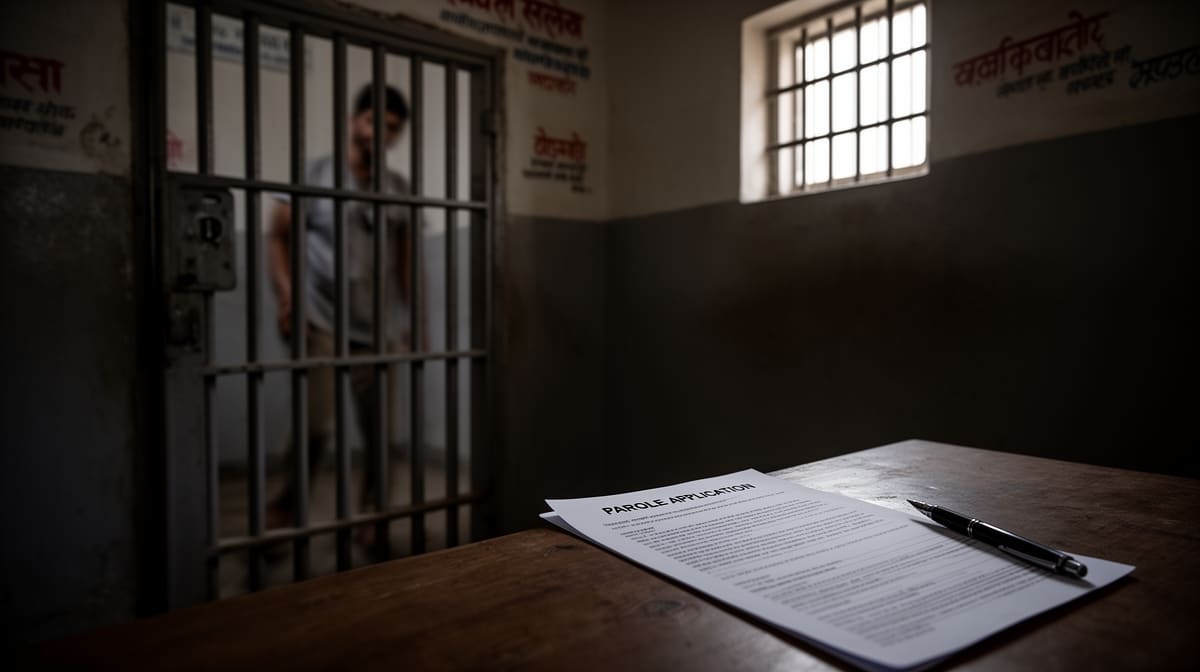
- He filed an application for temporary release on parole under the Chhattisgarh Prisoners Leave Rules, 1989
- The District Magistrate, Bilaspur, referred the application to the Superintendent of Police, Bilaspur, for inquiry
- The Superintendent of Police recorded statements from members of the victim’s family, who expressed grave apprehension that the petitioner’s temporary release would endanger their lives
- Based on these objections, the District Magistrate rejected the parole application by order dated 09.02.2026
- The rejection was summary, without detailed reasons, but relied on the victim’s family’s stated fears and the nature of the offence
- The petitioner was not granted a personal hearing before the rejection
Procedural History
- 01.07.2019: Petitioner taken into custody following conviction
- 27.03.2023: Conviction and life sentence imposed by Additional Sessions Judge, FTC, Bilaspur
- 2023: Appeal filed before Chhattisgarh High Court as CRA No. 972/2023
- Date unspecified prior to 09.02.2026: Sentence reduced to 20 years RI by High Court
- 09.02.2026: District Magistrate, Bilaspur, rejected parole application based on victim’s objections
- 18.03.2026: Writ Petition (WPCR No. 180 of 2026) filed before Chhattisgarh High Court
- 06.04.2026: Hearing before Division Bench of Chhattisgarh High Court
Relief Sought
The petitioner sought:
- Quashing of the order dated 09.02.2026 rejecting parole
- Direction to the respondents to release him on parole
- Any other relief deemed fit in the interest of justice
The Legal Issue
The central question was whether the rejection of a parole application under the Chhattisgarh Prisoners Leave Rules, 1989 can be justified solely on the basis of apprehensions expressed by the victim’s family, without a detailed application of mind or adherence to procedural safeguards.
Arguments Presented
For the Petitioner
Learned counsel contended that the rejection order dated 09.02.2026 was arbitrary and violated the statutory framework under the Chhattisgarh Prisoners Leave Rules, 1989. He argued that:
- The petitioner had served over six years of a 20-year sentence, qualifying him for parole consideration
- The Rules do not permit denial based solely on the objections of victims’ families without independent assessment of risk
- The order was summary, lacked reasoning, and denied the petitioner a hearing
- The High Court’s own reduction of sentence indicated recognition of mitigating factors
- Precedents such as State of Haryana v. Baldev Singh and State of Punjab v. Baldev Singh held that parole is a right, not a privilege, and must be granted unless there is clear evidence of risk
For the Respondent/State
The Government Advocate countered that:
- The offence under Section 376(D) IPC is among the most heinous, involving gang rape with extreme brutality
- The victim’s family, after enduring trauma, explicitly expressed fear for their lives if the petitioner were released even temporarily
- The Superintendent of Police, after due inquiry, had recorded these objections as credible and substantiated
- The High Court, in WPPIL No. 33 of 2025, had already expressed serious concern over prisoners absconding on parole, creating public order risks
- The authority was entitled to exercise caution in matters of public safety, especially where the victim’s psychological and physical security is at stake
- The Rules empower the District Magistrate to reject parole on grounds of public order, and the victim’s apprehension constitutes such a ground
The Court's Analysis
The Court examined the interplay between statutory entitlements under the Chhattisgarh Prisoners Leave Rules, 1989, and the overriding imperative of public safety. It acknowledged that while parole is a statutory right, it is not absolute and may be denied on valid grounds including public order and victim safety.
"The rejection of the petitioner’s application for temporary release is based not only on the nature and gravity of the offences for which he stands convicted, but also on the valid apprehension expressed by the victim’s family regarding threat to their lives."
The Court noted that the District Magistrate had acted on the recommendation of the Superintendent of Police, who had conducted an inquiry and recorded the victim’s family’s statements. Although the order was brief, the Court held that the gravity of the offence and the specific, documented fear of the victim’s family constituted sufficient grounds for denial.
The Court further relied on its own observation in WPPIL No. 33 of 2025, wherein it had expressed concern over the misuse of parole and the subsequent absconding of prisoners, which had led to public disorder. The Court emphasized that in cases involving sexual violence, the psychological trauma to victims and their families is not merely a procedural consideration but a substantive public safety issue.
The Court declined to treat the absence of a detailed order as fatal, holding that the context of the offence and the nature of the objections rendered the decision reasonable and within the bounds of discretion. It held that the Rules do not mandate a hearing in every case, particularly where the risk to public order is palpable.
The Verdict
The writ petition was dismissed. The Court upheld the rejection of the petitioner’s parole application dated 09.02.2026. No direction for release was issued. The Court affirmed that in cases involving offences under Section 376(D) IPC, the apprehension of threat to the victim’s family, when documented by law enforcement, constitutes a valid ground for denying parole, even if the convict has served a substantial portion of sentence.
What This Means For Similar Cases
Victim’s Fear Can Override Procedural Formalities
- Practitioners must now treat documented, specific fears expressed by victims’ families in heinous sexual offence cases as legally cognizable grounds for parole denial
- A summary order may suffice if the underlying inquiry by police is credible and the nature of the offence is grave
- The burden shifts to the petitioner to demonstrate that the fear is frivolous or fabricated, not merely to assert statutory entitlement
Parole Is Not a Right in Heinous Cases
- The judgment clarifies that while parole is generally a statutory right, it is not enforceable as a matter of course in cases involving sexual violence against women or children
- Courts will prioritize public order and victim safety over procedural compliance when credible threats are recorded
- Legal aid providers must advise clients in such cases that parole applications are highly discretionary and require robust evidence of rehabilitation and absence of threat
Precedent from Sua Sponte PILs Has Binding Weight
- Observations made in suo motu PILs concerning parole abuse, such as WPPIL No. 33 of 2025, now carry precedential weight in individual parole matters
- Practitioners must cite such observations when arguing for or against parole in cases involving sexual offences
- The judiciary is increasingly treating parole misuse as a systemic threat to public order, not merely an administrative issue