The Income Tax Appellate Tribunal (ITAT), Bangalore, has delivered a significant ruling on the characterization of factory shifting expenses as revenue or capital expenditure. The judgment clarifies the application of the enduring benefit test and emphasizes the nature of expenditure over the duration of benefit, providing crucial guidance for businesses incurring relocation costs.
Background & Facts
The Dispute
The appellant, NPR Auto Parts Manufacturing India Pvt. Ltd., is engaged in manufacturing spare parts and accessories for motorcycles and automobiles. During the Assessment Year (AY) 2017-18, the assessee shifted its factory from rented premises at Malur Industrial Area to its own premises within the same industrial estate. The assessee claimed an expenditure of Rs. 1,13,40,045 towards shifting expenses, including transportation, crane charges, and reinstallation costs, as revenue expenditure under Section 37(1) of the Income Tax Act, 1961.
Key Facts
- The assessee operated from rented premises at No-87, D1, Malur 2nd Phase, KIDB Industrial Area, Nosigere, Hubli until the shift.
- The new premises were Plot No. 6-O to 6-P, 4th Phase, Hulimangala Hoskote Village, Malur Industrial Area.
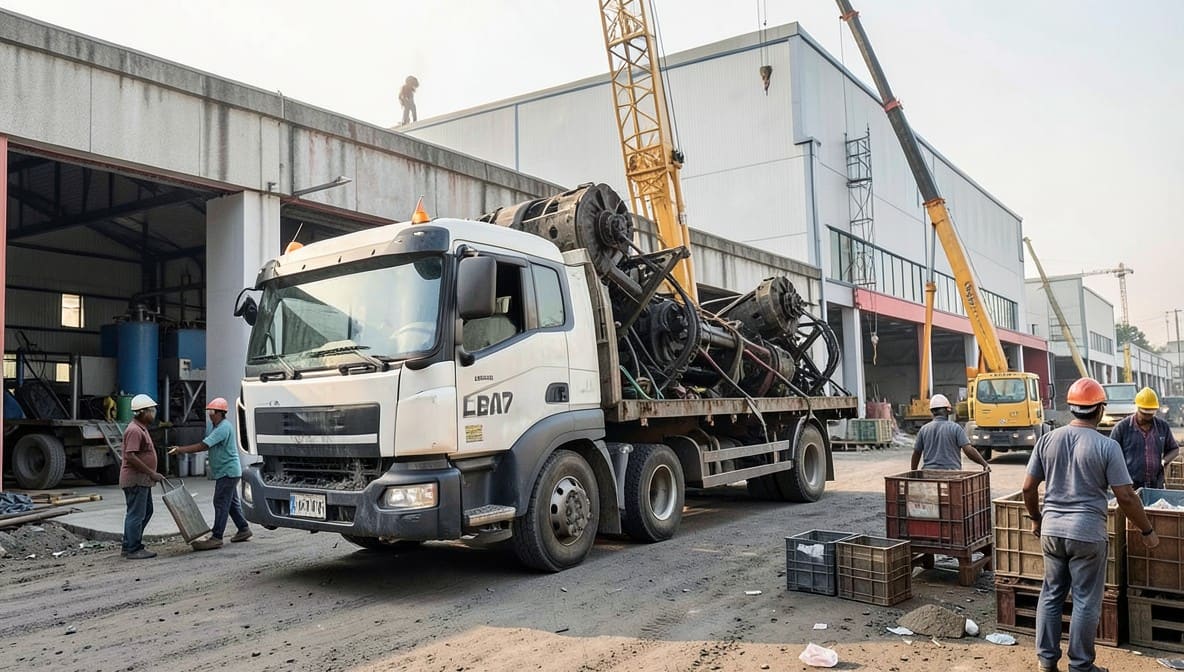
- The expenditure included costs for dismantling, transportation, reinstallation, crane charges, and incidental expenses for relocating existing machinery and assets.
- No new assets were acquired, nor was there any expansion or modification of the profit-making apparatus.
- The assessee argued that the expenditure was incurred for the continuity of business operations and did not result in any capital advantage.
Procedural History
- 19.04.2025: The Assessing Officer (AO) treated the shifting expenses as capital expenditure, disallowing the claim and adding the amount to the assessee’s total income. Depreciation of 10% (Rs. 11,34,000) was allowed.
- Appeal before CIT(A): The assessee contested the AO’s order, arguing that the expenditure was revenue in nature as it facilitated business continuity without creating any new asset. The assessee relied on judicial precedents, including Empire Jute Co. Ltd. v. CIT (124 ITR 1) and Loyal Super Fabrics v. CIT (304 ITR 78).
- CIT(A) Order: The Commissioner of Income Tax (Appeals) upheld the AO’s decision, relying on Sitalpur Sugar Works Ltd. v. CIT (49 ITR 160) and CIT v. Wipro Ltd. (41 taxmann.com 190). The CIT(A) held that the expenditure resulted in an enduring benefit and was thus capital in nature.
- 26.02.2026: The assessee filed an appeal before the ITAT, Bangalore (ITA No. 1460/Bang/2025).
Relief Sought
The assessee sought the following reliefs:
- Allowance of the shifting expenses (Rs. 1,13,40,045) as revenue expenditure under Section 37(1) of the Act.
- Reversal of the AO’s and CIT(A)’s orders treating the expenditure as capital in nature.
The Legal Issue
The central question before the ITAT was whether expenditure incurred for shifting a factory from rented premises to owned premises within the same industrial area constitutes revenue expenditure under Section 37(1) of the Income Tax Act, or capital expenditure based on the enduring benefit test.
Arguments Presented
For the Appellant (Assessee)
- The expenditure was incurred for relocating existing business operations from rented to owned premises, without acquiring any new asset or expanding the profit-making apparatus.
- The test of enduring benefit is not conclusive; the nature of expenditure (whether in the capital field or for business continuity) is determinative.
- Reliance was placed on judicial precedents:
- Empire Jute Co. Ltd. v. CIT (124 ITR 1): Expenditure facilitating business operations without altering the capital structure is revenue in nature.
- Loyal Super Fabrics v. CIT (304 ITR 78): Shifting compelled by business necessity, without improving profitability, is revenue expenditure.
- Jayant Packaging (P.) Ltd. v. DCIT (128 taxmann.com 2): Shifting expenses are revenue if no new asset is created.
- The expenditure was operational and incurred for efficient conduct of business, not for creating any enduring advantage in the capital field.
For the Respondent (Revenue)
- The expenditure was capital in nature as it provided a long-term structural advantage by enabling the assessee to operate in a better and more efficient environment.
- The enduring benefit test was satisfied, as the shifting resulted in improved efficiency and operational conditions over time.
- Reliance was placed on:
- Sitalpur Sugar Works Ltd. v. CIT (49 ITR 160): Expenditure for relocating a factory to a more advantageous location is capital in nature.
- CIT v. Wipro Ltd. (41 taxmann.com 190): Shifting expenses for better production efficiency are capital expenditure.
- British Insulated and Helsby Cables Ltd. v. Atherton (10 Tax Cases 155): Expenditure for enduring benefit is capital.
- The expenditure was not routine but affected the business setup, warranting capitalization.
The Court's Analysis
The ITAT undertook a detailed analysis of the legal principles governing revenue vs. capital expenditure, distinguishing the facts of the present case from precedents relied upon by the Revenue.
Distinguishing Sitalpur Sugar Works Ltd.
The Revenue relied heavily on Sitalpur Sugar Works Ltd. v. CIT, where the Supreme Court held that expenditure for relocating a factory to a commercially advantageous location (due to non-availability of raw materials and floods) was capital in nature. The Court observed that the expenditure was incurred not for carrying on business but for setting up the business in a more advantageous manner, resulting in a permanent improvement in the profit-making apparatus.
However, the ITAT distinguished the present case on the following grounds:
- The assessee merely relocated within the same industrial area, without any fundamental improvement in the business structure.
- The profit-making apparatus remained unchanged; no new assets were created, nor was there any expansion or modification.
- The expenditure was operational, incurred for continuity of business, and did not alter the capital base.
Applying Empire Jute Co. Ltd. and Loyal Super Fabrics
The ITAT relied on Empire Jute Co. Ltd. v. CIT, where the Supreme Court held that the test of enduring benefit is not conclusive. The nature of the advantage in a commercial sense is determinative. If the expenditure facilitates business operations without altering the fixed capital structure, it is revenue in nature.
Similarly, in Loyal Super Fabrics v. CIT, the Madras High Court held that shifting compelled by business necessity (e.g., environmental issues) is revenue expenditure, even if some incidental benefit endures. The Court emphasized that the test of enduring benefit cannot be applied mechanically without considering the surrounding circumstances.
Practical Considerations
The ITAT also considered the practical implications of capitalizing the expenditure:
- Administrative Burden: Capitalization would require recomputation of income for AY 2017-18 and subsequent years, including verification of depreciation claims and adjustments to the written down value of assets. This would create a cascading effect across multiple assessment years.
- Tax Neutrality: Whether the expenditure is allowed as revenue in one year or depreciated over several years, the ultimate tax impact remains broadly revenue neutral over the life of the asset.
- Proportionality: Insisting on capitalization at this stage would impose an onerous burden on both the assessee and the Department, without any meaningful benefit to the Revenue.
"The real test is whether the expenditure results in creation of an asset or advantage in the capital field. In the present case, no such asset or enduring advantage in the capital field was created. The shifting only enabled the assessee to conduct its business operations more efficiently at a different location while leaving the fixed capital structure untouched."
The Verdict
The ITAT allowed the assessee’s appeal, holding that the shifting expenses of Rs. 1,13,40,045 are revenue in nature and allowable as a deduction under Section 37(1) of the Income Tax Act. The Tribunal set aside the orders of the AO and CIT(A) and directed the allowance of the expenditure in the Assessment Year 2017-18. The grounds pertaining to recalculation of tax liability (Ground Nos. 4 & 5) and levy of interest (Ground Nos. 6 & 7) were dismissed as infructuous.
What This Means For Similar Cases
The Enduring Benefit Test Is Not Conclusive
- The ITAT reaffirmed that the enduring benefit test is not decisive in determining the nature of expenditure.
- Key Takeaway: Practitioners must argue that expenditure facilitating business continuity, without creating a new asset or altering the capital structure, is revenue in nature, even if some benefit endures.
Nature of Expenditure Prevails Over Duration
- The nature of the expenditure (whether in the capital field or for business operations) is more important than the duration of benefit.
- Key Takeaway:
- If the expenditure is operational (e.g., shifting, transportation, reinstallation), it is likely revenue.
- If the expenditure improves the profit-making apparatus (e.g., relocation to a commercially advantageous site), it may be capital.
Practical Implications of Capitalization
- Avoid Multi-Year Litigation: Capitalization of expenditure can lead to prolonged disputes across multiple assessment years, imposing administrative burdens on both taxpayers and tax authorities.
- Key Takeaway: Where the tax impact is revenue neutral over time, tribunals may allow revenue treatment to avoid unnecessary complexity and multiplicity of proceedings.