The Madras High Court has overturned an Income Tax Appellate Tribunal order that incorrectly relied on a judgment later reversed by the Supreme Court, reasserting the legal distinction between capital and revenue expenditure in the context of machinery replacement in manufacturing units. This ruling provides critical clarity for taxpayers and tax authorities on when expenditure on plant and machinery constitutes a capital investment versus a deductible repair.
Background & Facts
The Dispute
M/s. Super Spinning Mills Ltd., a textile manufacturer in Coimbatore, claimed expenditures of Rs. 6,19,43,673 for the Assessment Year 1996-97 and Rs. 13,10,00,563 for 1997-98 as revenue expenditure under Section 37(1) of the Income Tax Act, 1961, on the ground that these were costs incurred for replacing worn-out machinery. The Assessing Officer disallowed these claims, treating them as capital expenditure, and allowed depreciation at 12.5% instead. The dispute centered on whether replacing entire machines constituted "current repairs" or the creation of new capital assets.
Key Facts
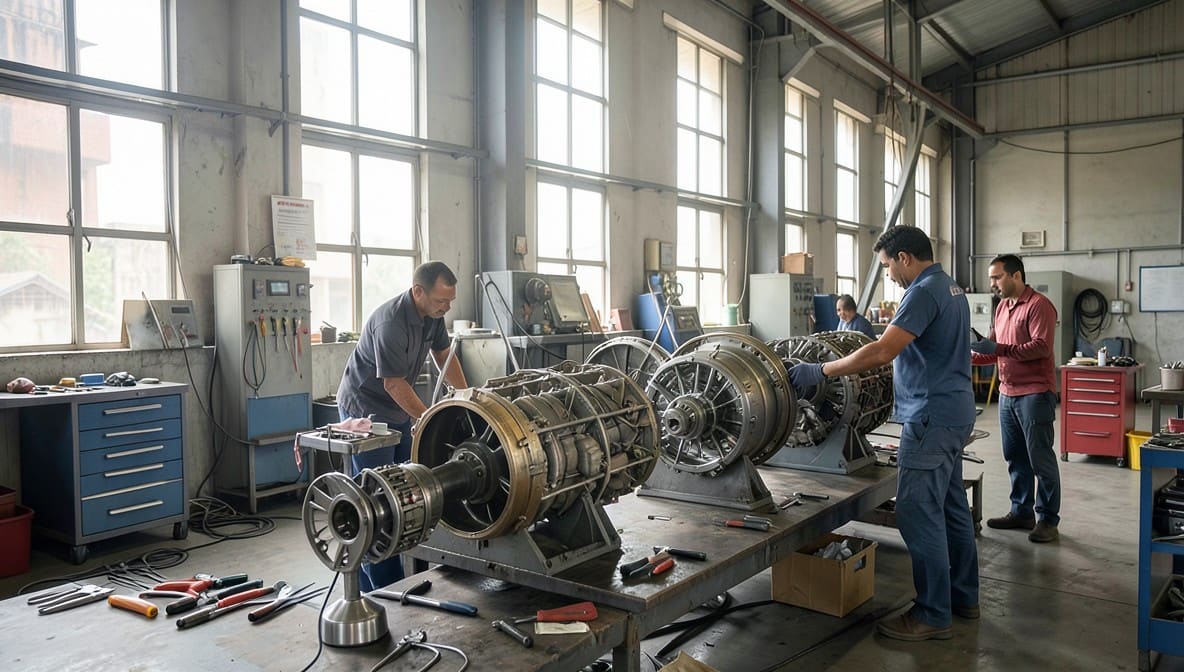
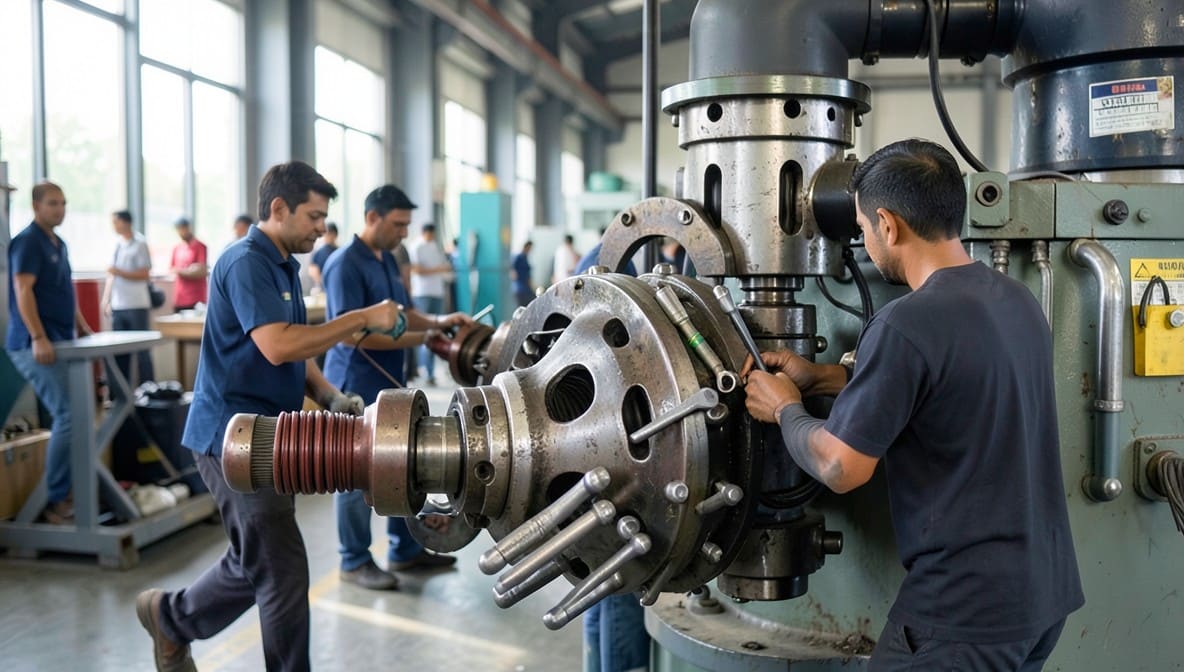
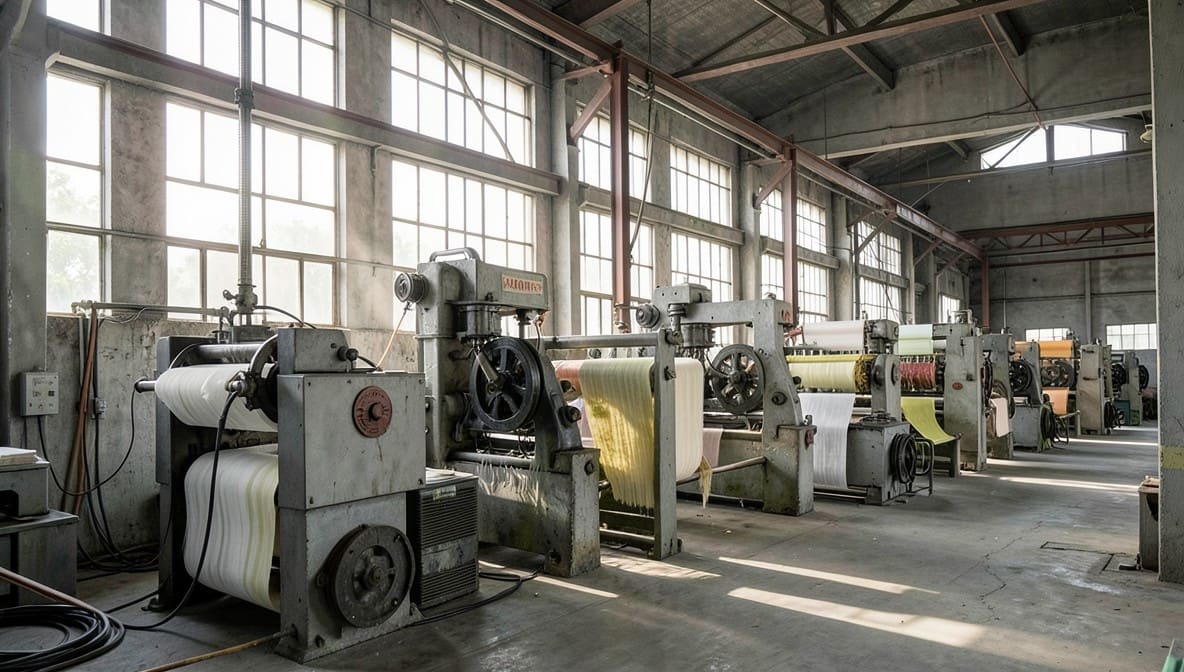
- The assessee operated a textile mill with multiple independent machines used in the yarn production process
- Over several years, the company systematically replaced old machinery with new, more efficient units
- Each replaced machine was independently functional and not merely a component of a single integrated unit
- The company capitalized the cost of new machinery in its books but claimed the same as revenue expenditure for tax purposes
- The Assessing Officer and Commissioner of Income Tax (Appeals) consistently treated these replacements as capital expenditure
- The ITAT, in its order dated 26.07.2005, allowed the claim relying on Commissioner of Income Tax v. Janakiraman Mills Ltd. (275 ITR 403)
Procedural History
- 27.11.1996: Return filed for AY 1996-97 declaring income of Rs. 6,03,371
- 2000-2001: CIT (A) disallowed replacement expenditure as revenue claim, allowed depreciation
- 2001-2002: ITAT consolidated appeals for AYs 1991-92 to 1998-99; issued common order on 26.07.2005 allowing claim based on Janakiraman Mills
- 2007: Supreme Court reversed Janakiraman Mills in Commissioner of Income Tax v. Saravana Spinning Mills (P) Ltd. (293 ITR 201)
- 2008: Supreme Court affirmed Saravana Spinning Mills in Commissioner of Income Tax v. Ramaraju Surgical Cotton Mills (166 Taxman 356)
- 2013: Madras High Court decided Super Spinning Mills Ltd. v. Assistant Commissioner of Income Tax (37 Taxmann.com 290), holding that independent machinery replacements are capital expenditure
- 01.04.2026: Judgment reserved
- 09.04.2026: Judgment delivered
The Parties' Positions
For the Revenue (Appellant): The ITAT erred in relying on Janakiraman Mills, which had been overruled by the Supreme Court. The replacements were not repairs but acquisitions of new assets. The Supreme Court in Saravana Spinning Mills and Ramaraju Surgical Cotton Mills held that each machine in a textile mill is an independent asset, and wholesale replacement constitutes capital expenditure.
For the Assessee (Respondent): The expenditure was for maintenance of production capacity and should be treated as revenue expenditure under Section 37(1). The ITAT correctly applied binding precedent at the time.
Relief Sought
The Revenue sought to set aside the ITAT order dated 26.07.2005 and restore the Assessing Officer’s order disallowing the revenue expenditure claim. The assessee sought confirmation of the ITAT’s decision.
The Legal Issue
Whether expenditure incurred for replacing independent, functioning machinery with new units constitutes revenue expenditure under Section 37(1) of the Income Tax Act, 1961, or capital expenditure that qualifies only for depreciation under Section 32?
Arguments Presented
For the Appellant
The Revenue argued that the ITAT’s reliance on Janakiraman Mills Ltd. was legally unsustainable because that judgment had been expressly overruled by the Supreme Court in Saravana Spinning Mills (2007) and reaffirmed in Ramaraju Surgical Cotton Mills (2008). The Supreme Court held that textile mill machinery consists of independent units, each capable of functioning separately. Replacement of such units is not repair but acquisition of a new asset. The assessee’s accounting practice of capitalizing the cost in books further confirmed the capital nature of the expenditure. The ITAT’s failure to consider these binding precedents rendered its order legally flawed.
For the Respondent
The assessee contended that the replacements were necessary to maintain production efficiency and were akin to current repairs. It argued that the ITAT’s decision was correct as per the law prevailing at the time of its order. The assessee also relied on the Madras High Court’s earlier decision in Janakiraman Mills, which had been followed by the ITAT in good faith.
The Court's Analysis
The Court observed that the ITAT’s order was based entirely on Commissioner of Income Tax v. Janakiraman Mills Ltd. (275 ITR 403), a judgment that was subsequently overruled by the Supreme Court in Commissioner of Income Tax v. Saravana Spinning Mills (P) Ltd. (293 ITR 201). The Supreme Court held that "each machine in a textile mill is an independent asset" and that "wholesale replacement of such machines cannot be treated as current repairs."
"The entire textile mill machineries cannot be regarded as a single asset, replacement of parts of which can be considered to be for mere purpose of preserving or maintaining this asset, all machineries put together constitute the production process and each separate machine is an independent entity."
The Court further noted that the assessee had previously litigated the same issue for AY 2005-06 in Super Spinning Mills Ltd. v. Assistant Commissioner of Income Tax (2013) 37 Taxmann.com 290, where the Madras High Court had held that replacement of independent machinery is capital expenditure. The Court emphasized that the ITAT’s failure to consider this binding precedent, or the overruling of Janakiraman Mills, amounted to a material error of law.
The Court also referenced Commissioner of Income Tax v. Mahalakshmi Textile Mills Ltd. (1967) 66 ITR 710 (SC), which established that even substantial replacement of a capital asset constitutes capital expenditure. The Court held that the assessee must satisfy a two-fold test to claim expenditure as revenue: (i) the old part is no longer available in the market, or (ii) the old part has been in use for over 50-60 years. Neither condition was met here.
The Court concluded that the ITAT’s order was based on a precedent that no longer had legal force and failed to apply binding Supreme Court and High Court rulings. The matter required fresh adjudication with proper application of the law.
The Verdict
The Madras High Court allowed the appeals, set aside the ITAT order dated 26.07.2005, and remanded the matters to the Commissioner of Income Tax (Appeals) for fresh adjudication. The appellate authority was directed to decide the issue in light of the Supreme Court’s rulings in Saravana Spinning Mills and Ramaraju Surgical Cotton Mills, and the Madras High Court’s decision in Super Spinning Mills Ltd. v. Assistant Commissioner of Income Tax (2013). The Court declined to award costs.
What This Means For Similar Cases
Replacement of Independent Machinery Is Capital Expenditure
- Practitioners must now treat replacement of standalone, independently functioning machinery as capital expenditure, not revenue
- Claims under Section 37(1) for such replacements will be disallowed unless the taxpayer proves the old part is obsolete or beyond economic repair
- Accounting practice of capitalizing the cost in books strengthens the Revenue’s position
Precedent Reliance Must Be Current
- Tribunals and courts cannot rely on judgments that have been expressly overruled by higher courts
- The doctrine of stare decisis requires application of the latest binding precedent, even if the earlier decision was followed in good faith
- Taxpayers must update their litigation strategy when higher courts reverse established rulings
Two-Pronged Test for Revenue Expenditure Claims
- To claim replacement as revenue expenditure, the taxpayer must establish either:
- The original part is no longer available in the market, or
- The original part has been in continuous use for 50-60 years
- Mere wear and tear or desire for modernization does not qualify
- This test applies uniformly across industries, not just textiles