The Income Tax Appellate Tribunal clarified that expenditure incurred on reconstructing a purchased residential house can be treated as part of the "cost of the new asset" for purposes of Section 54F, thereby permitting full exemption of the claimed amount. This holding resolves a long-standing ambiguity on whether renovation costs qualify for capital-gain relief.
Background & Facts
The Dispute
The appellant, Vinodbhai Chhaganbhai Tamboli, an individual assessee, contested the disallowance of a Section 54F exemption claimed in respect of the sale of a non-agricultural plot and subsequent purchase and reconstruction of a residential house in Vadodara.
Key Facts
- 28-10-2014: Assessee transferred a non-agricultural plot for ₹4,27,50,000 generating long-term capital gain.
- 27-08-2015: Return of income filed for AY 2015-2016, declaring total income of ₹2,09,14,790.
- 02-01-2015: Purchased residential house at A-30, Rajdeep Society, Vadodara for ₹49,50,000; incurred stamp duty/registration of ₹4,47,000.
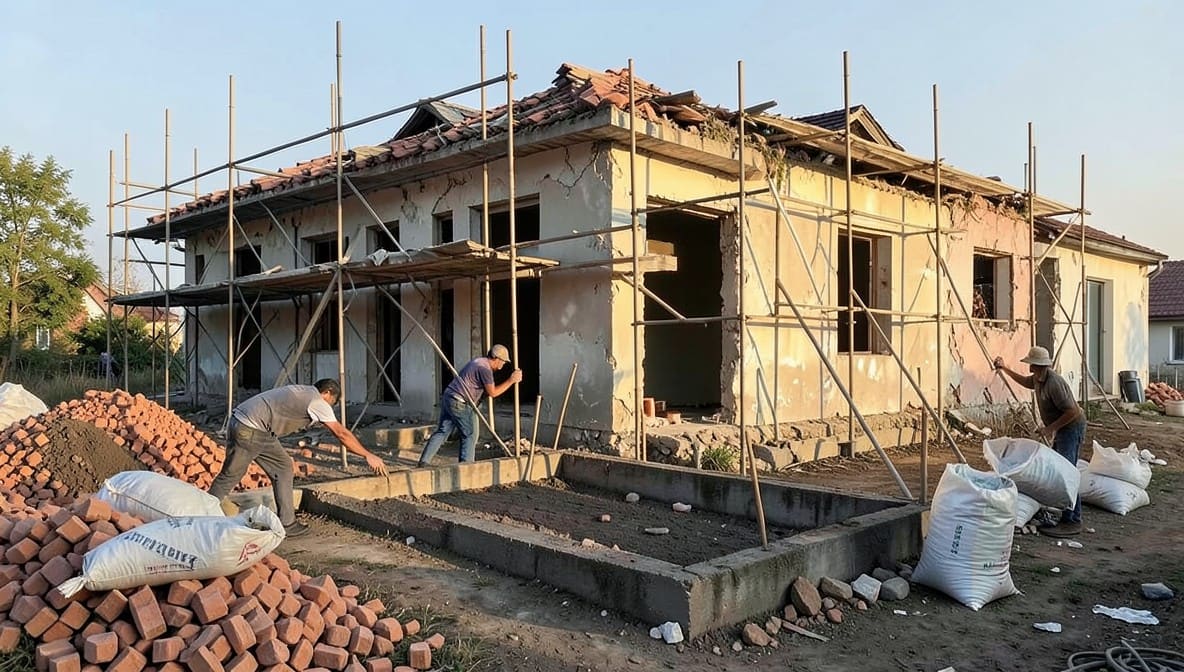
- Subsequent period (within three years): Incurred reconstruction expenditure of ₹86,05,000 to make the house habitable.
- Claim made for deduction under Section 54EC of ₹50,00,000 and under Section 54F of ₹1,29,52,940 (aggregate of purchase price, stamp duty and reconstruction costs).
- Assessing Officer allowed exemption only on purchase price and stamp duty (₹45,79,790) and disallowed reconstruction expense (₹83,73,150), deeming it renovation of an already habitable house.
Procedural History
- 04-02-2026: Order of Commissioner of Income Tax (Appeals) dismissing the appeal against the assessment order dated 31-10-2017.
- 08-06-2026: Conclusion of hearing before ITAT B Bench, Ahmedabad.
- 10-08-2026: Pronouncement of the present order allowing the appeal.
Parties' Positions
- Appellant: Asserted that the house was uninhabitable at purchase; reconstruction was essential to render it habitable and therefore forms part of the cost of the new asset under Section 54F. Emphasised liberal construction of the provision and reliance on CBDT Circular No. 667 (1993) and earlier Tribunal decisions.
- Respondent (Income Tax Department): Maintained that the house was already habitable (electricity, gas, occupied by seller) and that the excessive reconstruction expense represented mere beautification, not eligible under Section 54F.
Relief Sought
The appellant sought full allowance of the claimed ₹1,29,52,940 exemption under Section 54F, reversal of the partial disallowance, and costs.
The Legal Issue
Whether expenditure incurred on reconstruction/renovation of a residential house purchased in an uninhabitable condition can be treated as the "cost of the new asset" for computing exemption under Section 54F of the Income-Tax Act, 1961.
Arguments Presented
For the Appellant
- Contended that Section 54F is a beneficial provision intended to promote residential construction and should be given a liberal construction.
- Cited CBDT Circular No. 667 (1993) which includes the cost of plot and construction as part of the new asset.
- Relied on Tribunal precedents (Shrinivas R. Desai v. Assistant Commissioner of Income-tax, 2013 ITAT) that the phrase "purchased or constructed" does not preclude a combination of purchase and subsequent construction.
- Submitted documentary evidence of demolition, new foundation, and construction work to demonstrate that the house was rendered habitable only after the reconstruction.
For the Respondent
- Argued that the house was already habitable at the time of purchase, as evidenced by existing electricity, gas connections and seller’s occupation.
- Maintained that the reconstruction expense was merely beautification, exceeding the purchase price, and therefore outside the scope of Section 54F.
- Relied on Mrs. Meera Jacob v. Income-tax Officer (2008) where the Kerala High Court held that renovation of an existing house does not attract Section 54F relief.
The Court's Analysis
The Tribunal examined the purpose and language of Section 54F, noting its legislative intent to address housing shortage by encouraging both purchase and construction of residential houses. It observed that the statute speaks of the "cost of the new asset" without limiting it to the purchase consideration alone.
"We are of the view that by the same analogy the benefit of Section 54F should also be extended to an assessee who purchases plot of land with superstructure, demolishes the superstructure and thereafter, constructs a new residential house. However, the onus would be on the Assessee to establish a new residential house has come into existence after purchase and demolition of old superstructure…"
The Tribunal gave weight to CBDT Circular No. 667, which expressly includes construction cost in the cost of the new asset, provided the acquisition and construction occur within the statutory period. It distinguished the Meera Jacob decision by emphasizing that the present case involved purchase of an uninhabitable house followed by substantial reconstruction, unlike mere renovation of an already habitable dwelling.
Further, the Tribunal relied on Shrinivas R. Desai and Rustom Homi Vakil decisions, which held that the words "purchased or constructed" permit a combination of both actions and that post-purchase construction expenses integral to making the house livable constitute part of the qualifying investment.
Applying these principles, the Tribunal concluded that the reconstruction expenditure of ₹86,05,000 was essential to render the house habitable and therefore formed part of the cost of the new asset. Consequently, the full exemption claimed under Section 54F, amounting to ₹1,29,52,940, was permissible.
The Verdict
The appeal is allowed. The Tribunal deletes the partial disallowance of the Section 54F exemption and permits the deduction of ₹1,29,52,940 claimed by the assessee. No costs were awarded, and the order is pronounced on 10-08-2026.
What This Means For Similar Cases
Reconstruction as Part of Cost of New Asset
- Tax practitioners should treat substantial reconstruction that converts an uninhabitable property into a livable house as part of the "cost of the new asset" under Section 54F.
- Documentary proof of demolition, new foundation, and construction work is crucial to satisfy the onus.
Liberal Construction of Section 54F
- The provision must be interpreted generously to further the statutory goal of promoting residential construction.
- Reliance on CBDT Circular No. 667 (1993) and relevant Tribunal precedents strengthens the argument for including reconstruction costs.
Distinguishing Renovation from Reconstruction
- Mere cosmetic renovation of an already habitable house remains ineligible.
- Practitioners must assess the condition of the property at purchase; if the house required structural work to become habitable, the expenses qualify.