The Orissa High Court has reaffirmed that bail under the NDPS Act for offences involving commercial quantities cannot be granted without explicit judicial satisfaction of the stringent conditions under Section 37, regardless of parity with co-accused. This ruling underscores the non-negotiable nature of statutory safeguards in drug trafficking cases.
Background & Facts
The Dispute
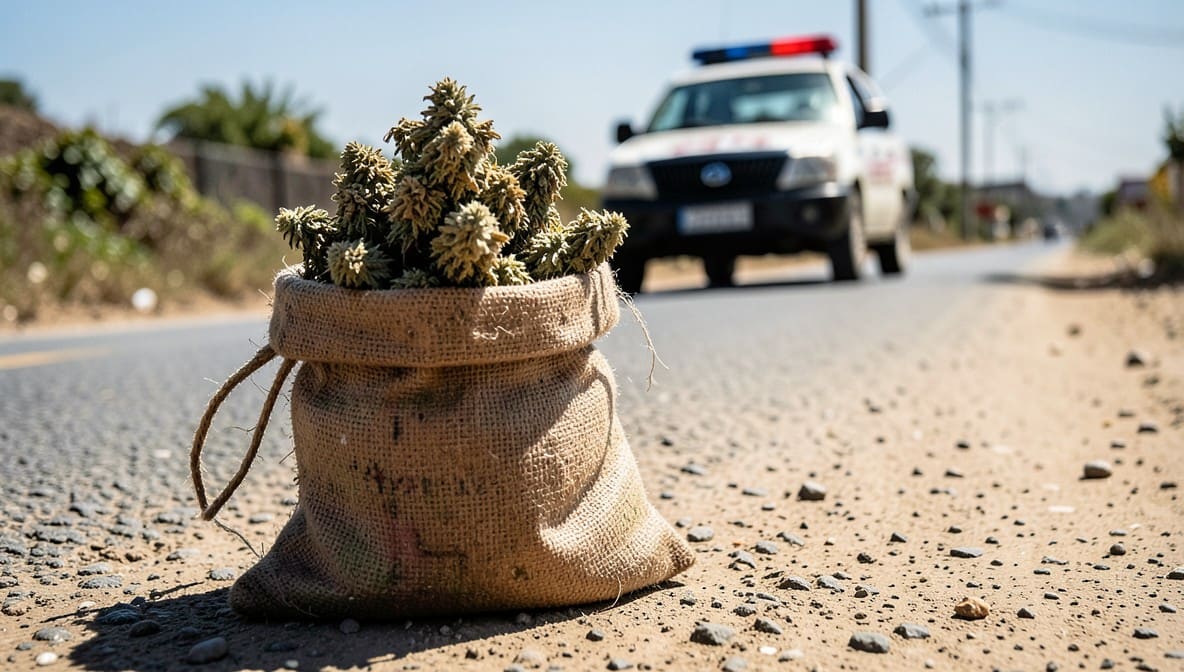
The petitioner, Ramakanta Naik, is accused in Tarava P.S. Case No. 178 of 2025, which corresponds to Special G.R. Case No. 42 of 2025, for allegedly transporting 9 Quintal 35 Kgs 140 Grams of contraband ganja in a Bolero pick-up vehicle bearing registration number OD-03AB-9281. The offences charged are under Sections 20(b)(ii)(C), 25, and 29 of the Narcotic Drugs and Psychotropic Substances Act, 1985 (NDPS Act).
Key Facts
- The contraband seized weighed 9 quintals, 35 kilograms, and 140 grams - a quantity classified as commercial under the NDPS Act.
- The petitioner was allegedly chased and apprehended by the police party, not caught at the scene.
- The petitioner was not found in conscious possession of the ganja at the time of arrest.
- Two co-accused, Sujit Naik and another, were granted bail by a coordinate bench of the same High Court in BLAPL No. 3112 of 2026.
- The petitioner’s counsel sought bail on grounds of parity and lack of direct possession.
Procedural History
- 2025: FIR registered at Tarava Police Station under Special G.R. Case No. 42 of 2025.
- 2026: Petitioner filed bail application under Section 483 of the Bharatiya Nagarik Suraksha Sanhita, 2023 (BNSS).
- 08.05.2026: Hearing before Justice G. Satapathy, Orissa High Court, Cuttack.
The Parties' Positions
For the Petitioner:
- Argued that co-accused had been granted bail, warranting parity.
- Contended that he was not apprehended at the spot and was not in conscious possession of the contraband.
- Sought release on bail under Section 483 BNSS, invoking principles of fairness and equal treatment.
For the Respondent (State):
- Asserted that the petitioner was actively chased and apprehended by police.
- Emphasized the massive commercial quantity of ganja involved.
- Opposed bail on grounds of the stringent conditions under Section 37 of the NDPS Act.
Relief Sought
The petitioner sought grant of bail pending trial, citing parity with co-accused and absence of direct possession.
The Legal Issue
Can bail be granted to an accused under the NDPS Act for an offence involving commercial quantity of contraband merely on the ground of parity with a co-accused, when the order granting bail to the co-accused does not record satisfaction of the conditions under Section 37 of the NDPS Act?
Arguments Presented
For the Petitioner
The petitioner’s counsel relied on the principle of parity, citing the grant of bail to co-accused in BLAPL No. 3112 of 2026. He argued that since the petitioner was not caught red-handed and was not in conscious possession, his case was comparable. He invoked Section 483 BNSS as the procedural mechanism for bail and contended that the absence of direct possession mitigated the risk of flight or reoffending.
For the Respondent
The Additional Public Prosecutor contended that the quantity of ganja - over 9 quintals - unequivocally constituted a commercial quantity under the NDPS Act. He emphasized that Section 37 imposes a mandatory two-pronged condition for bail: (i) the accused is not guilty, and (ii) the accused is not likely to commit any offence while on bail. He argued that no such satisfaction was recorded in the co-accused’s bail order, rendering it legally unsustainable and non-precedential.
The Court's Analysis
The Court undertook a rigorous analysis of Section 37 of the NDPS Act, which governs bail in cases involving commercial quantities. The Court held that this section is not merely procedural but a substantive bar requiring the court to record a specific satisfaction on two counts before granting bail. The Court observed that the grant of bail to co-accused in BLAPL No. 3112 of 2026 did not contain any reasoning or record of satisfaction under Section 37.
The Court then turned to the binding precedent in Satpal Singh v. State of Punjab (2018) 13 SCC 813, wherein the Supreme Court set aside bail orders granted to co-accused in a similar NDPS case because the High Court had failed to record satisfaction under Section 37. The Court quoted Paragraph 14 of Satpal Singh:
"The quantity is reportedly commercial. In the facts and circumstances of the case, the High Court could not have and should not have passed the order under Section 438 or 439 of CrPC without reference to Section 37 of NDPS Act and without entering a finding on the required level of satisfaction in case the Court was otherwise inclined to grant bail. Such a satisfaction having not been entered, the order dated 21.09.2007 (granting pre-arrest bail to accused person) is only to be set aside and we do so."
The Court held that the absence of such satisfaction in the co-accused’s order rendered it legally invalid and non-binding. Parity cannot be invoked on the basis of an illegal order. The Court further noted that the petitioner was allegedly chased and apprehended, indicating active involvement. The sheer scale of the contraband - over 9 quintals - reinforced the presumption of commercial intent and the heightened risk of reoffending.
The Court concluded that the petitioner had not discharged the burden under Section 37, and no judicial satisfaction had been recorded to justify bail. The principle of parity, therefore, could not override the mandatory statutory conditions.
The Verdict
The bail application of the petitioner was rejected. The Court held that the petitioner failed to satisfy the conditions under Section 37 of the NDPS Act, which are mandatory for bail in cases involving commercial quantities. No relief was granted. The order was disposed of on 08.05.2026, with a direction that a soft copy be transmitted to the trial court in Sonepur for reference.
What This Means For Similar Cases
Bail Parity Is Not Absolute in NDPS Cases
- Practitioners cannot rely on co-accused bail orders if those orders lack explicit satisfaction of Section 37 conditions.
- Courts must independently assess whether the statutory conditions under Section 37 are met - even if other accused are out on bail.
Section 37 Is a Non-Negotiable Threshold
- Any bail order under NDPS for commercial quantities without recording satisfaction on both limbs of Section 37 is legally unsustainable and liable to be set aside.
- Advocates must ensure that bail applications explicitly address both: (i) likelihood of innocence, and (ii) low risk of reoffending.
Quantity Alone Triggers Strict Scrutiny
- Transport of over 1 kg of ganja qualifies as commercial quantity; quantities exceeding 9 quintals demand the highest level of judicial caution.
- Allegations of being chased and apprehended, even without direct possession, may be sufficient to rebut claims of minimal involvement.
Procedural Reform Under BNSS
- Section 483 BNSS replaces CrPC Section 439 but does not dilute substantive requirements under special statutes like NDPS.
- Courts must still apply Section 37 NDPS as a mandatory filter, irrespective of the procedural code invoked.
Judicial Duty to Record Reasoning
- Judges must explicitly state in writing whether they are satisfied that the accused is not guilty and not likely to commit an offence while on bail.
- Oral remarks or implied assumptions are insufficient - the record must reflect a conscious, documented application of Section 37.
Practical Takeaway for Practitioners
- In NDPS cases involving commercial quantities, draft bail applications with a dedicated section addressing Section 37.
- Attach affidavits or evidence showing low risk of reoffending and credible grounds for innocence.
- Challenge co-accused bail orders on grounds of non-compliance with Section 37 if used to claim parity.
Arrest Cannot Be a Proxy for Guilt
- Even if the accused is apprehended during transit, the prosecution must still prove possession and intent.
- However, such circumstances make it harder to satisfy the "not likely to commit offence" limb of Section 37.
The Burden Shifts to the Accused
- The presumption under Section 37 is against bail; the burden lies on the accused to demonstrate compliance.
- Mere absence from the scene of seizure is not enough - the accused must affirmatively show why bail should be granted despite the statutory bar.
When Parity Fails
- Parity is a discretionary tool, not a right. It cannot override statutory mandates.
- If the co-accused’s bail order is legally defective, it cannot be cited as a precedent.
The Role of the Trial Court
- Trial courts must not grant bail in NDPS commercial quantity cases without recording satisfaction under Section 37.
- High Courts must set aside such orders on appeal, as confirmed by Satpal Singh.
The Future of NDPS Bail Jurisprudence
- This judgment reinforces that the NDPS Act’s bail regime is not a procedural formality but a substantive safeguard against abuse.
- Future bail applications must be structured around Section 37 - not around parity or procedural convenience.
Key Takeaway for Law Students
- Section 37 NDPS is a statutory exception to the general presumption of bail under CrPC.
- It reflects legislative intent to treat drug trafficking as a grave threat to public order.
- Courts are bound to apply it strictly - no exceptions, no shortcuts.
Final Note
This judgment is a stern reminder that in NDPS cases involving commercial quantities, the law does not permit leniency based on procedural convenience or perceived fairness. The statutory conditions are non-negotiable, and the record must reflect their explicit satisfaction.