The Bombay High Court recently reiterated the stringent bail conditions under Section 37 of the Narcotic Drugs and Psychotropic Substances Act, 1985 (NDPS Act), dismissing a bail application where the applicant was found in possession of 3 kg 214 gms of Afeem - a commercial quantity. The judgment underscores that bail in such cases is an exception, not the rule, and requires the court to record satisfaction that the accused is not guilty and unlikely to commit further offences while on bail.
Background & Facts
The Dispute
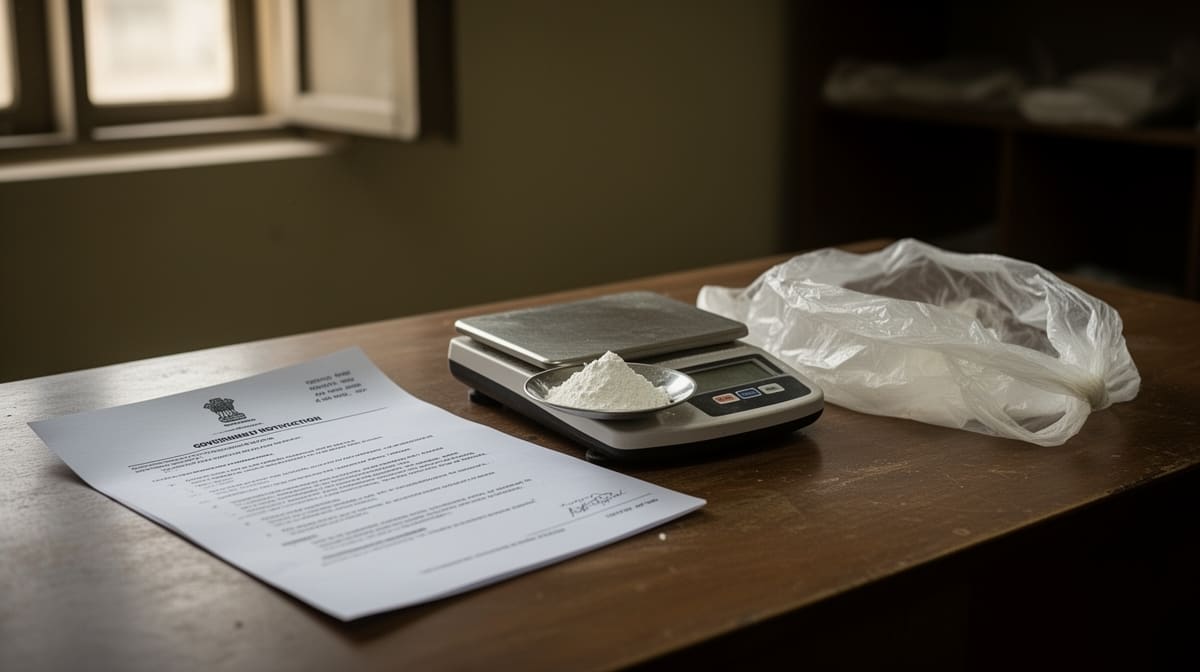
The applicant, Sumer Jayramji Bishnoi, was arrested on 17.08.2023 in connection with Crime No. 841 of 2023, registered at Kondhwa Police Station, Pune, for offences under Sections 8(c), 17(c), and 29 of the NDPS Act. The prosecution alleged that during a search conducted under the NDPS Act, the applicant was found in possession of 3 kg 214 gms of Afeem, a commercial quantity. The case was registered as Special Case No. 193 of 2024 before the Special Court under the NDPS Act, Pune.
Key Facts
- The applicant was arrested on 17.08.2023 and has remained in custody since.
- The contraband (Afeem) was seized from four transparent packets, which the prosecution claimed were identical.
- The Chemical Analysis Report confirmed the substance as Afeem.
- The applicant is Accused No. 1 in the case, with two co-accused: Chawandsing Mansing Rajput (Accused No. 2) and Lokendrasingh Rajput (Accused No. 3).
- Accused No. 3 was released on bail, while Accused No. 2 withdrew his bail application.
- The prosecution alleged that Accused No. 3, in connivance with the others, was delaying proceedings by repeatedly absenting himself from court hearings.
Procedural History
- 17.08.2023: Applicant arrested and crime registered.
- 07.11.2024: Bail Application (Exhibit-9) rejected by the Special Court.
- 16.06.2026: Accused No. 3 failed to appear before the Special Court, leading to adjournment.
- 29.06.2026: Present bail application filed before the Bombay High Court.
Relief Sought
The applicant sought bail on the grounds of:
- Alleged procedural irregularities in the seizure panchanama.
- Discrepancy in the weight of the contraband seized versus produced before the court.
- Prolonged incarceration (almost 2 years and 3 months) without framing of charges.
The Legal Issue
The primary question before the court was whether the applicant satisfied the mandatory conditions under Section 37 of the NDPS Act for grant of bail in cases involving commercial quantities of contraband. Specifically, the court had to determine:
- Whether there were reasonable grounds for believing the applicant was not guilty of the alleged offence.
- Whether the applicant was not likely to commit any offence while on bail.
Arguments Presented
For the Applicant
The applicant’s counsel raised three key contentions:
- Procedural Irregularities in Seizure: The seizure panchanama did not record that the four packets of contraband were similar and identical in nature before mixing them, relying on Venktesh Shiva Permal v. State of Maharashtra and Quentin Decon v. Customs.
- Discrepancy in Contraband Weight: Alleged inconsistency between the weight of the contraband seized and that produced before the trial court, citing Ibrahim Khwaja Miya Sayyed v. State of Maharashtra, Imran Mohamed Sharif Khan v. State of Maharashtra, and Abdul Kadir Ghogari v. Union of India.
- Prolonged Incarceration: The applicant had been in custody for nearly 2 years and 3 months without charges being framed, relying on Rahul Ashok Brahmane v. State of Maharashtra to argue that prolonged detention itself warranted bail.
For the Respondent
The State’s counsel, Ms. S. G. Talhar, opposed the bail application on the following grounds:
- Seizure Panchanama Compliance: The panchanama clearly recorded that the four packets were identical, and no discrepancy was found in the inventory conducted by the Magistrate.
- Delay in Proceedings: The delay in framing charges was attributed to Accused No. 3, who was on bail but repeatedly absented himself from court hearings, thereby stalling proceedings.
- Commercial Quantity: The quantity of contraband (3 kg 214 gms) was well above the commercial quantity threshold (2.50 gms), invoking the rigors of Section 37 of the NDPS Act.
The Court's Analysis
The court conducted a detailed examination of the mandatory conditions under Section 37 of the NDPS Act, which govern the grant of bail in cases involving commercial quantities of contraband. The court relied on the Supreme Court’s decision in Narcotics Control Bureau v. Kashif, which laid down the following principles:
"There has been consistent and persistent view of this Court that in the NDPS cases, where the offence is punishable with minimum sentence of ten years, the accused shall generally be not released on bail. Negation of bail is the rule and its grant is an exception. While considering the application for bail, the court has to bear in mind the provisions of Section 37 of the NDPS Act, which are mandatory in nature. The recording of finding as mandated in Section 37 is a sine qua non for granting bail to the accused involved in the offences under the said Act."
The court emphasized that Section 37 imposes two cumulative conditions for bail:
- The court must be satisfied that there are reasonable grounds for believing that the accused is not guilty of the alleged offence.
- The accused must be not likely to commit any offence while on bail.
The court observed that the applicant failed to substantiate his claims regarding procedural irregularities or discrepancies in the contraband’s weight. The seizure panchanama dated 17.08.2023 prima facie indicated that the contraband was seized from four transparent, similar packets, and the Chemical Analysis Report confirmed it as Afeem. The court distinguished the cited precedents (Venktesh Shiva Permal and Quentin Decon), noting that the factual matrix in those cases differed from the present one.
Regarding the delay in framing charges, the court accepted the State’s submission that the delay was caused by Accused No. 3’s repeated absences, which prevented the Special Court from proceeding with the case. The court held that neither the prosecution nor the court could be blamed for the delay, as the applicant’s co-accused was actively obstructing proceedings.
The court also noted that the quantity of contraband (3 kg 214 gms) was significantly above the commercial quantity threshold, making the rigors of Section 37 applicable. Given the mandatory nature of Section 37, the court concluded that the applicant had failed to satisfy the conditions for bail.
The Verdict
The Bombay High Court dismissed the bail application, holding that the applicant did not meet the mandatory conditions under Section 37 of the NDPS Act. The court emphasized that in cases involving commercial quantities of contraband, bail is an exception, not the rule, and the applicant’s prolonged incarceration alone was insufficient to warrant relief.
What This Means For Similar Cases
Strict Compliance with Section 37 NDPS Act
- Bail is an Exception: Practitioners must note that in NDPS cases involving commercial quantities, bail is not a right but an exception. The court must record satisfaction that the accused is not guilty and unlikely to commit offences while on bail.
- Procedural Defects Must Be Substantiated: Mere allegations of procedural irregularities in seizure or discrepancies in contraband weight will not suffice unless supported by concrete evidence. Courts will scrutinize the seizure panchanama and inventory records to verify compliance.
Delay in Proceedings: A Double-Edged Sword
- Accused Cannot Benefit from Their Own Delay: If the delay in framing charges is caused by co-accused absconding or obstructing proceedings, the court will not consider prolonged incarceration as a ground for bail. Practitioners should ensure that all accused cooperate in proceedings to avoid adverse inferences.
- State’s Burden to Prove Obstruction: The prosecution must clearly establish that the delay is attributable to the accused’s conduct. Mere assertions will not suffice - orders, witness statements, or court records must corroborate the State’s claims.
Commercial Quantity Thresholds Matter
- 2.50 gms is the Tipping Point: The judgment reinforces that possession of contraband above 2.50 gms (for Afeem) triggers Section 37’s rigors. Practitioners must quantify the contraband accurately and argue accordingly.
- No Liberal Approach: Courts will not adopt a liberal approach in granting bail for commercial quantity offences. The Supreme Court’s observations in Kashif remain binding, and lower courts will strictly apply the two cumulative conditions under Section 37.