The Himachal Pradesh High Court has reaffirmed the stringent bail regime under the Narcotic Drugs and Psychotropic Substances Act, 1985, dismissing a petition for regular bail in a case involving possession of 1.852 kilograms of charas. The judgment underscores that in offences involving commercial quantities, bail cannot be granted unless the court is satisfied that the accused is not guilty and not likely to reoffend - conditions that must be met irrespective of the accused’s personal circumstances.
Background & Facts
The Dispute
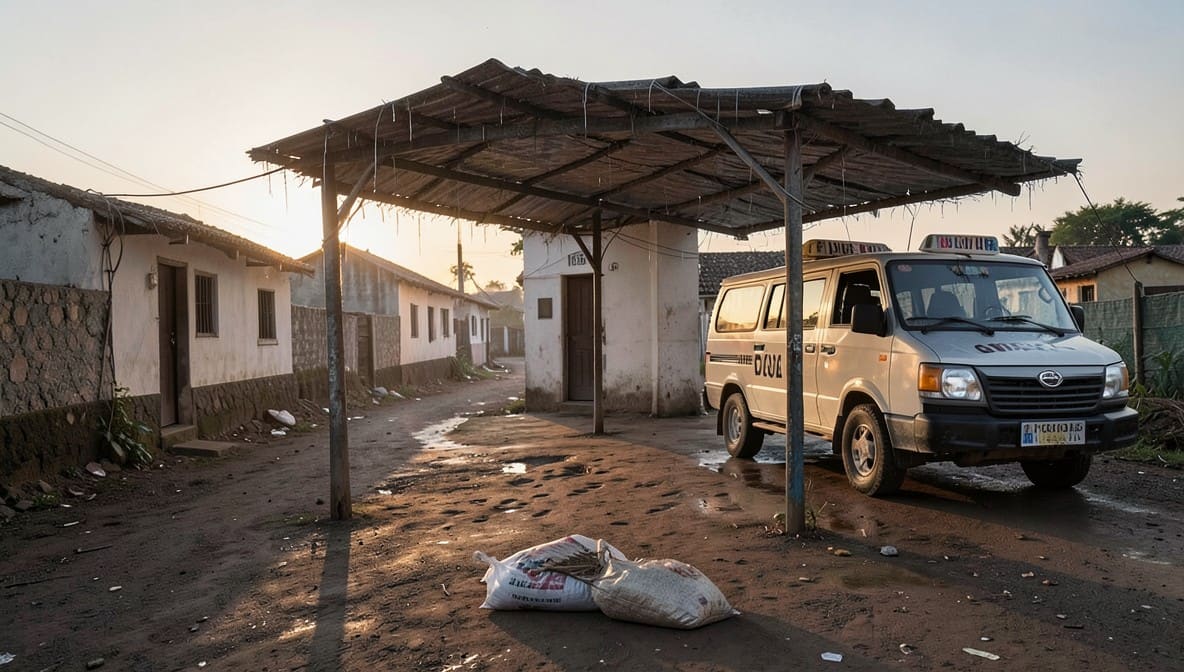
The petitioner, Mukesh Kumar @ Rinku, seeks regular bail in connection with FIR No. 167 of 2025, registered at Police Station Damtal, District Kangra, Himachal Pradesh, for offences under Sections 20 and 29 of the Narcotic Drugs and Psychotropic Substances (NDPS) Act. The prosecution alleges that on 29.12.2025, police on patrol near Tauki Excise Barrier observed three individuals inside a rain shelter exchanging a carry bag. Upon approach, the individuals attempted to flee but were apprehended. A carry bag, in the possession of co-accused Sonu alias Nittu, was searched and found to contain 1.852 kilograms of charas. All three individuals, including the petitioner, were arrested.
Key Facts
- The incident occurred on 29.12.2025 at approximately 5:00 PM near Tauki Excise Barrier, District Kangra
- Police recovered 1.852 kilograms of charas from a carry bag allegedly in the exclusive possession of co-accused Sonu alias Nittu
- The petitioner, Mukesh Kumar, was identified as one of the three individuals present at the scene
- The police recorded statements from two independent witnesses, Mohan Singh and Karan Sharma, who corroborated the apprehension
- The co-accused Balwinder @ Billa, during interrogation, claimed he and Prahlad had been supplying charas to Sonu and the petitioner after their release from Sub Jail, Nurpur
- Call detail records indicated communication between all three accused persons
- The Central Government has notified 1 kilogram of charas as a commercial quantity under the NDPS Act
- The charge sheet was filed on 23.04.2026
- The petitioner has not been charged with direct physical possession but is alleged to have been part of a joint enterprise involving the contraband
Procedural History
- 29.12.2025: FIR No. 167 of 2025 registered at Police Station Damtal
- 23.04.2026: Charge sheet filed before the trial court
- 05.05.2026: Petition for regular bail filed before the High Court of Himachal Pradesh
- 12.05.2026: Judgment reserved and delivered dismissing the bail petition
The Parties' Positions
For the Petitioner
The petitioner’s counsel, Mr. Ajay Kochhar, Senior Advocate, contended that the petitioner was not in conscious possession of the charas. The contraband was recovered from the bag carried by co-accused Sonu, and no monetary transaction, call records, or independent evidence directly linked the petitioner to the contraband. He argued that the petitioner was falsely implicated based on mere presence and suspicion, and that detention without trial would violate his right to personal liberty under Article 21 of the Constitution.
For the Respondent/State
The Additional Advocate General, Mr. Jitender Sharma, submitted that the petitioner’s conduct - fleeing upon seeing police, being in close proximity to the contraband, and being in communication with co-accused - established joint possession and conscious awareness. The quantity recovered (1.852 kg) exceeded the commercial threshold of 1 kg, triggering the mandatory restrictions under Section 37 of the NDPS Act. The prosecution had opposed the bail application, and the petitioner had failed to satisfy the twin conditions under Section 37(1)(b)(ii).
Relief Sought
The petitioner sought regular bail, arguing that continued custody served no useful purpose and that he would comply with all conditions imposed by the court.
The Legal Issue
The central question was whether the petitioner, accused of an offence involving a commercial quantity of charas under the NDPS Act, had satisfied the twin conditions under Section 37(1)(b)(ii) - namely, that there are reasonable grounds for believing he is not guilty of the offence and that he is not likely to commit any offence while on bail.
Arguments Presented
For the Petitioner
The petitioner’s counsel relied on the principle that mere presence at the scene of crime, without evidence of conscious possession or intent, cannot sustain a conviction. He argued that the recovery was from the co-accused’s bag, and the prosecution had not produced any evidence linking the petitioner to the contraband beyond circumstantial association. He cited Pinki v. State of U.P. and Prahlad Singh Bhati v. State (NCT of Delhi) to emphasize that bail should be the norm unless compelling reasons exist to deny it. He further contended that the co-accused’s statement, even if admissible, exonerated the petitioner and that the court should not rely on inadmissible confessions under Section 162 CrPC.
For the Respondent/State
The State countered that the petitioner’s attempt to flee upon police approach, combined with his presence alongside co-accused who were exchanging the bag, established joint and conscious possession. The quantity recovered (1.852 kg) was well above the commercial threshold, triggering the non-bailable regime under Section 37. The State emphasized that the Supreme Court in Union of India v. Niyazuddin and State of Meghalaya v. Lalrintluanga Sailo has held that the twin conditions under Section 37 are cumulative and mandatory. The petitioner had not adduced any material to rebut the prima facie case or demonstrate that he was not likely to reoffend.
The Court's Analysis
The Court undertook a detailed analysis of the statutory framework under Section 37 of the NDPS Act, emphasizing that it operates as a non-obstante clause overriding the general bail provisions of the CrPC. The Court observed that the legislature, in enacting Section 37, intended to impose stringent restrictions on bail in cases involving commercial quantities of narcotics, given the severe societal harm caused by drug trafficking.
"The expression 'reasonable grounds' means something more than prima facie grounds. It connotes substantial probable causes for believing that the accused is not guilty of the offence charged..."
The Court cited Union of India v. Shiv Shanker Kesari and State of Meghalaya v. Lalrintluanga Sailo to clarify that the twin conditions under Section 37(1)(b)(ii) are not alternative but cumulative. The accused must satisfy both: (i) reasonable grounds to believe he is not guilty, and (ii) reasonable grounds to believe he is not likely to commit any offence while on bail.
The Court rejected the petitioner’s reliance on the co-accused’s statement, holding that such statements are inadmissible under Section 162 CrPC and Section 25 of the Indian Evidence Act. The Court further held that the petitioner’s conduct - fleeing upon police approach - combined with the proximity to the contraband and communication with co-accused, established a prima facie case of joint possession. Citing Union of India v. Mohd. Nawaz Khan, the Court affirmed that possession under the NDPS Act includes constructive possession where the accused exercises control or has knowledge of the contraband.
The Court noted that the petitioner had not adduced any evidence to demonstrate his innocence or his low risk of reoffending. The quantity of charas recovered (1.852 kg) was not merely personal use but clearly commercial, and the petitioner’s failure to rebut the prosecution’s case meant he could not satisfy the statutory threshold for bail.
The Verdict
The petition was dismissed. The Court held that the petitioner failed to satisfy the twin conditions under Section 37(1)(b)(ii) of the NDPS Act. The petitioner remains in custody pending trial. No bail is granted. The Court clarified that its observations are confined to the bail stage and do not prejudge the merits of the case.
What This Means For Similar Cases
Bail Is Not a Right in Commercial NDPS Cases
- Practitioners must treat Section 37 NDPS as a mandatory, non-negotiable barrier to bail in commercial quantity cases
- Mere assertion of innocence or lack of direct possession is insufficient; the accused must present credible, admissible evidence to rebut the prima facie case
- Courts will not grant bail based on sympathy, delay in trial, or personal circumstances alone
Conscious Possession Is Broadly Interpreted
- Presence at the scene, flight from police, and association with co-accused can establish constructive possession under Section 20 NDPS
- Joint possession is sufficient for liability even if the contraband is physically held by another
- Call records, prior associations, and behavioral conduct (e.g., fleeing) are critical evidence in establishing mens rea
Admissible Evidence Must Be Used Strategically
- Co-accused statements during police interrogation are inadmissible under Section 162 CrPC and cannot be used to exonerate the accused
- Defence must rely on documentary evidence, alibis, or independent witnesses to challenge the prosecution’s case
- Failure to present any material to satisfy Section 37 will result in automatic denial of bail