The Delhi High Court, exercising its limited supervisory jurisdiction under Section 34 of the Arbitration and Conciliation Act, 1996, partially set aside the award dated 04.05.2023 in favour of the Louis Berger Group, holding that the tribunal had granted relief beyond the matters submitted for arbitration.
Background & Facts
The Dispute
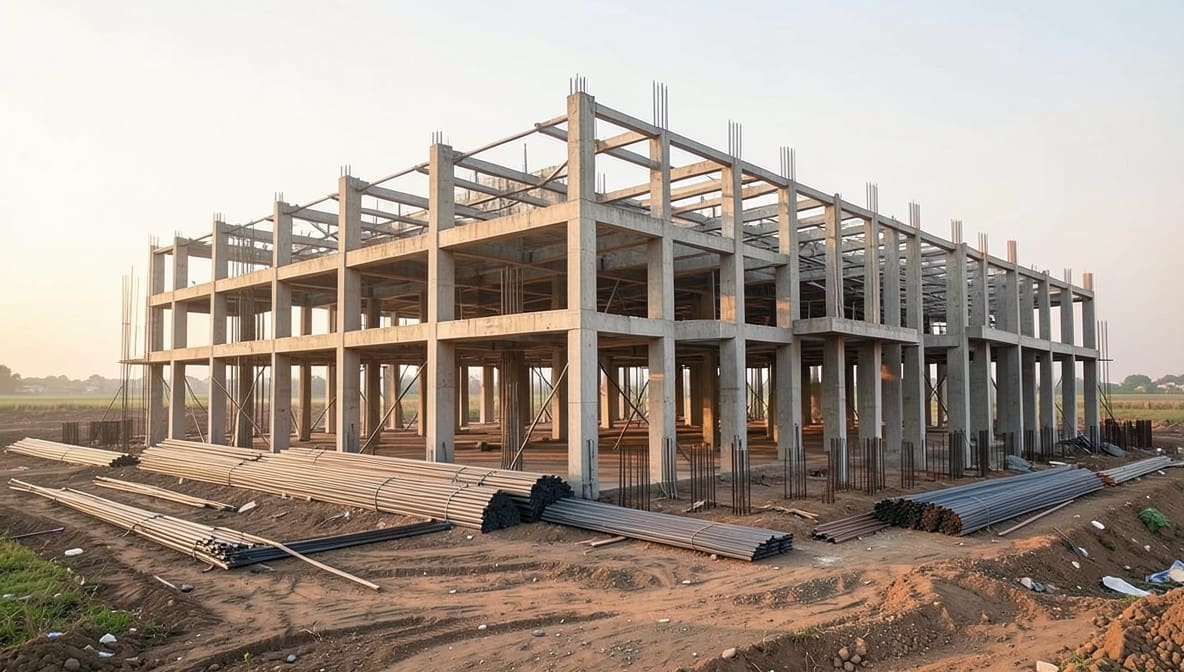
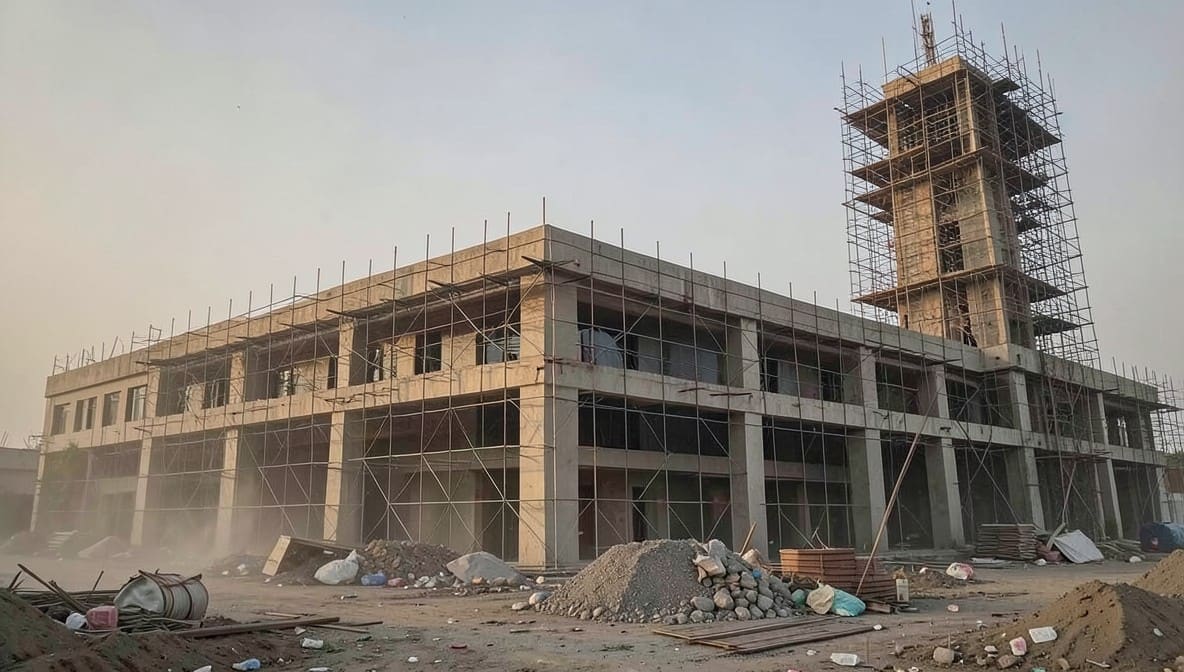
The National Highways Authority of India (NHAI) invited bids for the design, construction and maintenance of a cable-stayed bridge across the Chambal River at Kota, Rajasthan. The Louis Berger Group Inc., in joint venture with M/s COWI A/S, was the successful bidder and was awarded the consultancy contract on 07.12.2006 for a price of INR 8,16,30,000 and USD 24,40,590, exclusive of escalation and service tax. The contract covered four phases: (i) design methodology, (ii) proof-checking of contractor drawings, (iii) supervision of construction, and (iv) operation and maintenance (O&M).
Key Facts
- 01.01.2007: Respondent commenced performance of its obligations.
- 24.12.2009: Accident caused extensive damage to the partially constructed bridge.
- 07.08.2010: Committee of Experts submitted its report on the accident.
- 06.12.2010: NHAI issued a show-cause notice (SCN) to the respondent; reply received on 15.01.2011.
- 25.05.2012: Executive Committee imposed conditions for continuation, including price freeze as on 02.11.2010 and requirement that the original consultancy cost not exceed the contract value.
- Dec 2011 & Mar 2012: Respondent sought release of pending payments; NHAI insisted on compliance with the 2012 conditions.
- 31.08.2012: Respondent refused the unilateral conditions and did not sign the supplementary agreement.
- Feb 2016: NHAI released part payment covering up to July 2013; exchange-rate dispute resolved.
- 31.08.2023: O&M period was extended to this date; respondent continued O&M services.
- 17.07.2019: NHAI demanded execution of a supplementary agreement and invoicing in prescribed proforma.
- 08.11.2019 & 11.12.2019: Respondent submitted invoices; 17.01.2020 invoices received in specified format.
- 21.04.2020: NHAI approved O&M extension but withheld payment pending the supplementary agreement.
- 26.01.2021: Respondent invoked arbitration under Section 21 of the Act.
- 04.05.2023: Arbitral tribunal issued award.
Procedural History
- 24.07.2026: Petition filed under Section 34 of the Act (O.M.P. (COMM) 351/2023).
- 03.08.2026: Judgment pronounced.
- 26.01.2021: Arbitration notice served.
- 04.05.2023: Award dated; claims as follows:
- Claim 1: Construction period payment - INR 5,39,38,987 and USD 12,74,174.17 with interest 6% p.a. (local) and LIBOR+1% (foreign) - Allowed.
- Claim 2: O&M charges - INR 4,13,05,161 and USD 60,769 (partly allowed); after deduction of INR 1,07,40,310, awarded INR 5,16,82,887 and USD 60,769 with same interest - Partly allowed.
- Claim 3: Costs of arbitration - Allowed.
Parties' Positions
- Petitioner (NHAI): Contended that the tribunal erred by not deciding responsibility for the 24.12.2009 collapse, that the award granted O&M relief beyond the prayer (including services up to 19.11.2023), that the deduction for the unqualified O&M expert Sunil Bohra was not reflected, and that the claims were time-barred.
- Respondent (Louis Berger-COWI JV): Asserted that the dispute was limited to non-release of payments for services rendered, that the award stayed within the terms of the arbitration agreement, and that the limitation period was satisfied as arbitration was invoked within one year of the final rejection of the claim.
Relief Sought
The petitioner sought setting aside of the award, or in the alternative, severance of the portion dealing with O&M charges beyond the scope of arbitration, and a direction to award only the construction claim and costs.
The Legal Issue
Whether the arbitral award can be set aside, in whole or in part, on the ground that it deals with a dispute not contemplated by the arbitration agreement and that procedural fairness under Section 18 of the Act was violated, thereby exceeding the limited scope of interference provided by Section 34(2)(a)(iv) of the Arbitration and Conciliation Act, 1996.
Arguments Presented
For the Petitioner
- The tribunal exceeded its jurisdiction by awarding O&M charges for a period extending beyond the award date (up to 19.11.2023), which was not part of the submitted dispute.
- The tribunal relied on material (financial implication of Sunil Bohra) obtained behind the respondent’s back, violating the equal-treatment principle in Section 18.
- The award contravened the public policy of India by granting relief for services not yet rendered.
- Cited Ssangyong Engineering & Constructions Co. Ltd. v. NHAI and Gayatri Balasamy v. ISG Novasoft for the limited scope of Section 34 and the power to sever non-arbitrable portions.
For the Respondent
- The arbitration agreement covered all monetary claims arising from the consultancy contract, including O&M charges, and the tribunal correctly interpreted the scope.
- The limitation period was satisfied because arbitration was invoked on 26.01.2021, within one year of the petitioner’s final rejection on 21.04.2020.
- The tribunal’s award was based on the parties’ submissions and the expert’s qualifications were a matter of contract performance, not jurisdiction.
- Relied on Prakash Atlanta (JV) v. NHAI and Ramesh Kumar Jain v. BALCO for a liberal approach to appellate review of arbitral awards.
The Court's Analysis
The Court began by reiterating that under Section 34(2)(a)(iv) an award may be set aside only if it deals with a dispute not contemplated by the arbitration agreement, or contains decisions on matters beyond the scope of submission. It quoted the Supreme Court’s exposition in Ssangyong Engineering & Constructions Co. Ltd. v. NHAI that “the ‘patent illegality’ ground will not apply to international commercial arbitrations; the focus is on Sections 34(2)(a)(iii) and (iv).”
"The award travels beyond the scope of submission to arbitration and falls within the ambit of Section 34(2)(a)(iv) of the Act which reads as under:"
The Court examined the arbitration agreement and found that the parties had expressly limited the dispute to non-release of payments for services already rendered. The O&M claim sought remuneration for services extending to 19.11.2023, a period after the award date of 04.05.2023, and therefore lay outside the matters submitted for arbitration.
Next, the Court addressed procedural fairness. Section 18 mandates equal treatment and the opportunity to be heard. The tribunal had relied on an e-mail detailing the financial implication of employing Sunil Bohra, which was never disclosed to the petitioner for rebuttal. Citing Ssangyong again, the Court held that taking material behind a party’s back satisfies the ground under Section 34(2)(a)(iii) and warrants interference.
The Court then considered the limitation argument. It accepted the petitioner’s view that the cause of action arose on 25.05.2012 when the executive committee imposed the price-freeze conditions, but noted that the arbitration was invoked well within the six-year limitation period applicable to contractual claims, and therefore the limitation ground could not defeat the petition.
Finally, the Court applied the severability principle articulated in Gayatri Balasamy v. ISG Novasoft Technologies Ltd. The award’s “valid” portion (Claim 1 and costs) could be preserved, while the “invalid” portion (the O&M award) could be set aside. The Court emphasized that the power to sever is inherent in the jurisdiction conferred by Section 34, and that a partial setting aside aligns with the doctrine of omne majus continet in se minus.
The Verdict
The petition was partially allowed. The Court set aside the award’s portion relating to Claim 2 (O&M charges) as it was beyond the scope of arbitration and violated procedural fairness. Claim 1 (construction period payment) and Claim 3 (costs of arbitration) were upheld as awarded. No monetary award was altered for Claim 1; the respondent remains entitled to INR 5,39,38,987 and USD 12,74,174.17 with interest at 6% p.a. (local) and LIBOR + 1% (foreign). The Court dismissed the petition’s limitation argument and ordered the parties to comply with the award as modified.
What This Means For Similar Cases
Arbitration Scope Must Be Precisely Defined
- Parties should ensure that the arbitration agreement expressly lists all categories of disputes they intend to submit.
- Courts will not entertain awards that venture into matters not contemplated, even if the parties later agree to extended performance.
Procedural Fairness Is Non-Negotiable
- Tribunals must give each party a full opportunity to contest material evidence; undisclosed e-mails or expert reports can trigger a Section 34 challenge.
- Section 18 of the Act is a powerful safeguard; failure to comply can lead to partial or total set-aside of an award.
Severability Allows Partial Relief
- Even when an award is flawed, courts can preserve the valid portions, avoiding a total collapse of the arbitral process.
- Practitioners should be prepared to argue for severance rather than a blanket overturn, citing Gayatri Balasamy.