The Delhi High Court has reaffirmed the limited scope of judicial review under Section 34 of the Arbitration & Conciliation Act, 1996, dismissing a challenge to an arbitral award that awarded substantial compensation for variation works and overheads. The judgment underscores that courts cannot re-appreciate evidence or substitute their view for that of the arbitrator unless the award is patently illegal, contrary to the contract, or shocks the conscience.
Background & Facts
The Dispute
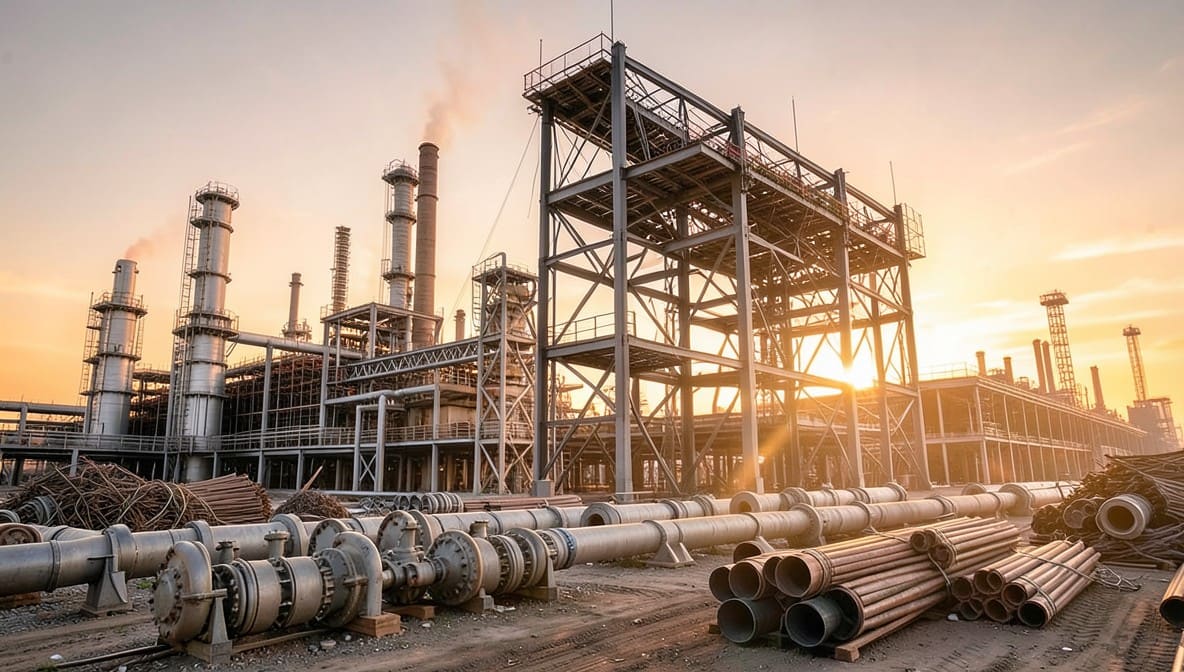
The dispute arose from a contract awarded by the National Highways Authority of India (NHAI) to M/S BEL-ACC(JV) for the strengthening and four-laning of a 14-kilometre stretch of NH-2 between Km. 307.500 and Km. 231.000 in Uttar Pradesh. The contract, dated 01.02.2001, had a value of Rs. 69,44,17,782 and was an item-rate contract governed by the General Conditions of Contract (GCC). The project was divided into two phases: Phase-I (28% of contract value) involved widening the existing two-lane road to four lanes by placing one lane on each side of the existing carriageway, while Phase-II (72%) involved entirely new construction of four lanes.
Key Facts
- The contract was an item-rate contract with rates specified in the Bill of Quantities (BOQ).
- NHAI introduced variations during execution, including shifting from left-hand-side widening to concentric widening and adding three overpasses within a 7-km stretch.
- The variations significantly altered the nature of work, requiring construction of over 33,000 cubic meters of RCC retaining walls.
- The Respondent claimed revised rates under Clauses 51 and 52 of the GCC for items where quantities exceeded 25% of BOQ and constituted more than 5% of the contract value.
- The Respondent also claimed compensation for overheads, loss of profit, reduced machinery productivity, and additional resource deployment.
- NHAI contended that the variations were within contractual limits and that the Respondent had accepted them without protest.
- The Respondent’s tendered rates were 28% below the estimated cost.
- The Respondent achieved only 22% overall progress by the time arbitration commenced.
Procedural History
- 01.02.2001: Contract awarded to Respondent.
- 2001 - 2003: Execution of works; variations introduced by NHAI.
- 24.06.2004: Respondent issued notice of intent to commence arbitration.
- 25.10.2004: Respondent filed Statement of Claim before Arbitral Tribunal.
- 13.12.2004: NHAI filed Statement of Defence.
- 27.05.2010: Three-member Arbitral Tribunal delivered award by majority.
- 2010: Petition under Section 34 filed before Delhi High Court.
- 24.03.2026: Judgment delivered by Justice Subramonium Prasad.
The Parties' Positions
For NHAI (Petitioner):
- Variations were not drastic or belated; covered under Clauses 51 and 52.
- Respondent accepted variations without reservation.
- Delay in progress was due to Respondent’s poor resource management and outdated machinery.
- Claims for overheads and additional resources were hypothetical and unsupported by evidence.
- Arbitral Tribunal’s award was based on personal experience, not evidence or contract terms.
For BEL-ACC(JV) (Respondent):
- Variations fundamentally altered the nature of the contract.
- Clauses 51 and 52 were triggered due to quantity variations exceeding 25% and constituting over 5% of contract value.
- Delays were caused by NHAI’s site hindrances and suspension of service road works.
- Overheads and additional resource costs were legitimate losses arising from NHAI’s breach.
- Arbitral Tribunal’s award was well-reasoned and within jurisdiction.
Relief Sought
NHAI sought to set aside the arbitral award dated 27.05.2010, specifically challenging:
- The award of Rs. 1,32,14,407 under Claim No.1 (revised rates).
- The award of Rs. 56,95,123 under Claim No.4 (overheads and profit).
- The award of Rs. 4.10 lakhs under Claim No.5 (additional resource deployment).
- The award of pendente lite and future interest at 10% from 24.06.2004.
The Legal Issue
The central question was whether the arbitral award, which awarded compensation for variation rates, overheads, and additional resources despite partial responsibility for delay being attributed to the contractor, constituted a patent illegality or was so unreasonable as to shock the conscience of the court, thereby warranting interference under Section 34 of the Arbitration & Conciliation Act, 1996.
Arguments Presented
For the Petitioner
NHAI contended that the Arbitral Tribunal’s award was patently illegal because:
- It awarded revised rates without any documented methodology or basis in the BOQ or contractual provisions.
- It ignored that overheads are embedded in item rates and accrue only upon actual execution of work.
- It awarded compensation for overheads despite finding that the Respondent was responsible for 78% of the delay.
- It awarded Rs. 4.10 lakhs for additional resources without any logbooks, invoices, or supporting documents.
- The award was inconsistent with the principle that a party cannot profit from its own breach.
- The Tribunal’s reliance on its own experience, rather than evidence, rendered the award arbitrary.
For the Respondent
BEL-ACC(JV) argued that:
- The award was comprehensive, reasoned, and grounded in the contract and evidence.
- The Tribunal correctly applied Clauses 51 and 52 of the GCC to revise rates for quantities exceeding 25% and 5% thresholds.
- The dissenting arbitrator’s view confirmed that the majority’s findings were plausible.
- The Tribunal balanced the conduct of both parties and awarded only for works actually executed under Phase-I.
- The award did not exceed the scope of the reference and was not contrary to the contract.
- Judicial review under Section 34 is extremely limited and cannot be used to re-appreciate evidence.
The Court's Analysis
The Court began by emphasizing that the Arbitration & Conciliation Act, 1996, as it stood prior to the 2015 Amendment, permitted interference with an arbitral award only under narrow grounds under Section 34(2)(b), particularly where the award was in conflict with the public policy of India. The Court relied on ONGC Ltd. v. Saw Pipes Ltd. and McDermott International Inc. v. Burn Standard Co. Ltd. to affirm that an award may be set aside if it is:
"so unfair and unreasonable that it shocks the conscience of the court."
The Court further held that patent illegality must go to the root of the matter and cannot be based on trivial errors or differences in interpretation. The Court noted that the Arbitral Tribunal had correctly identified that the variations in Phase-I substantially altered the nature of the work, triggering Clause 52 of the GCC. Although the Tribunal did not provide a detailed calculation methodology for Claim No.1, the Court observed that the awarded amount of Rs. 1,32,14,407 was only marginally higher than the rates claimed by the Respondent and, in some instances, even lower than the claimed rates (e.g., reduction from Rs. 3,40,003 to Rs. 2,58,995 for overpass diversion works). This demonstrated independent judicial discretion, not mechanical acceptance.
Regarding Claim No.4, the Court acknowledged the dissenting arbitrator’s view that overheads should not be awarded where no work was executed. However, the majority found that NHAI’s site hindrances during Phase-I contributed to delay, and the award of Rs. 56,95,123 was limited to actual works executed under Phase-I, with a 20% reduction for mitigation. The Court held that this was a reasonable balancing of competing conduct and did not violate the contract or law.
For Claim No.5, the Court noted the absence of logbooks but emphasized that the award of Rs. 4.10 lakhs was modest and aligned with the Tribunal’s overall approach of fairness. The Court stated:
"Considering the findings returned by the learned Arbitral Tribunal on other claims as discussed above, the Award of Rs.4.10 lakhs under Claim No.5 to meet the ends of justice does not warrant any interference."
The Court concluded that the Tribunal had not wandered beyond the contract, misapplied the law, or acted arbitrarily. The award was a product of reasoned evaluation of evidence and contractual terms, even if the reasoning could have been more detailed.
The Verdict
The Petition was dismissed. The Delhi High Court upheld the arbitral award dated 27.05.2010 in its entirety. The Respondent is entitled to:
- Rs. 1,32,14,407 for revised rates under Claim No.1,
- Rs. 56,95,123 for overheads and loss of profit under Claim No.4,
- Rs. 4.10 lakhs for additional resource deployment under Claim No.5,
- Pendente lite interest at 10% from 24.06.2004 until the date of the award,
- Future interest at 10% from the date of the award until actual payment.
No costs were awarded.
What This Means For Similar Cases
Arbitrators May Rely on Experience When Evidence Is Sparse
- Practitioners must now accept that arbitrators may use professional experience to fill gaps in evidence, provided the award remains within the bounds of the contract and does not become arbitrary.
- A lack of detailed documentation does not automatically invalidate an award if the quantum awarded is reasonable and proportionate.
Overheads Can Be Awarded Even With Shared Delay
- Where both parties contribute to delay, an arbitrator may apportion overhead compensation based on the portion of delay attributable to the employer.
- The award must be tied to actual work executed and must reflect a fair mitigation of losses.
Judicial Review Is Not an Appeal
-
Courts must resist the temptation to re-evaluate evidence or substitute their own view.
-
An award is not patently illegal merely because a different interpretation of the contract is possible.
-
The threshold for interference remains high: only awards that are irrational, contrary to contract, or shock the conscience can be set aside.
-
Practitioners should focus arguments under Section 34 on clear contractual breaches, procedural irregularities, or manifest irrationality - not on perceived errors in valuation.
-
Parties should ensure that their submissions include clear documentation, but the absence of perfect records does not preclude a reasonable award if the arbitrator’s reasoning is internally consistent.