The Allahabad High Court has clarified that arbitral tribunals lack the power to order restoration of a dealership under a determinable contract, even where termination is found to be arbitrary. This judgment reinforces the limits of arbitral authority under the Arbitration and Conciliation Act, 1996, and the binding effect of the Specific Relief Act on contractual remedies.
Background & Facts
The Dispute
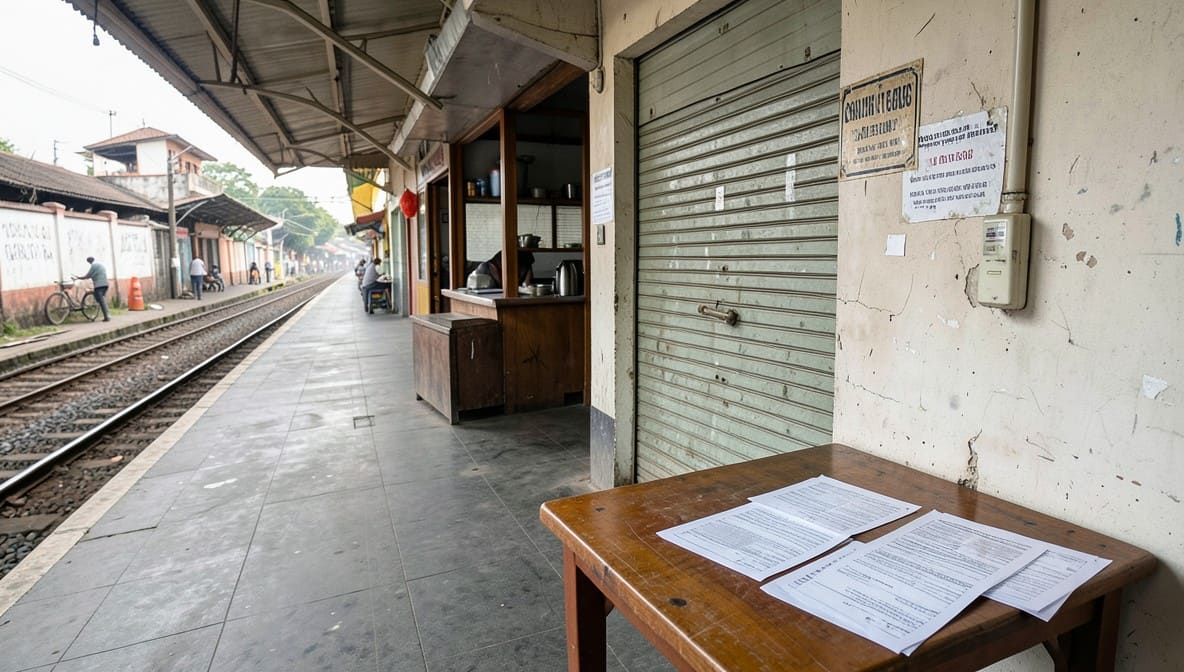
The dispute arose between Indian Oil Corporation Limited (IOCL), the appellant, and M/s Kumar Filling Station, the respondent, over the termination of a retail petrol/diesel dealership agreement. The respondent operated a retail outlet at Gehra Street, Unnao, Uttar Pradesh, under a Dealer Agreement dated 27.07.2008. The agreement was structured as a determinable contract, renewable annually after an initial five-year term, terminable by either party upon three months’ written notice.
Key Facts
- The Dealer Agreement was executed on 27.07.2008, with an initial term of five years from 07.07.2008, renewable annually.
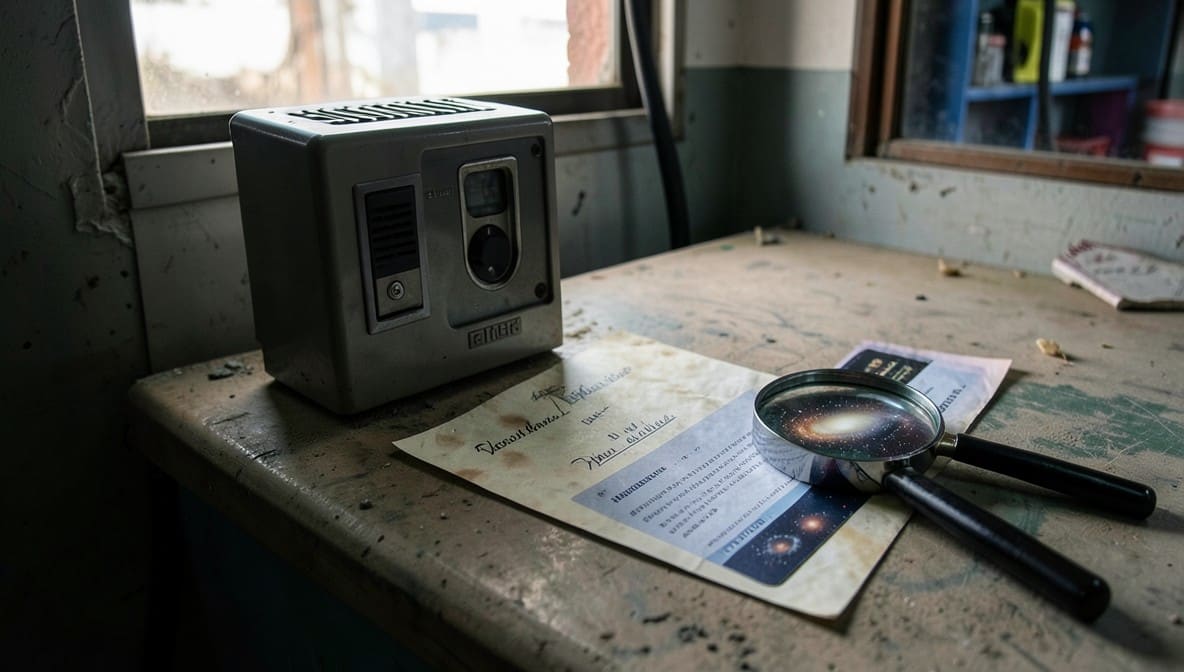
- On 09.05.2017, a joint inspection team comprising officials from the Legal Metrology Department, District Supply Officer, and IOCL technicians inspected the respondent’s outlet.
- A pulsar card from the fuel dispensing unit was seized and sealed for laboratory testing at MIDCO.
- The respondent did not appear when invited to witness the opening of the sealed unit.
- The Legal Metrology Department filed a complaint against the respondent, who admitted guilt and paid a fine of Rs. 30,000/- on 15.06.2017.
- IOCL issued a show cause notice on 28.11.2018, attaching MIDCO’s test report indicating non-conformity with design standards.
- The respondent submitted a reply on 10.12.2018.
- On 09.04.2019, IOCL terminated the dealership agreement.
- The respondent filed an application under Section 11(6) of the Arbitration and Conciliation Act, 1996, seeking appointment of an arbitrator.
- The High Court appointed a retired Judge as Arbitrator on 28.02.2019.
- The respondent challenged the termination order via a writ petition, which was disposed of on 15.03.2019 with directions to raise grievances before the Arbitrator.
Procedural History
- 27.01.2020: Arbitral Tribunal passed award partly allowing the claim - set aside termination order and directed restoration of supply, awarded Rs. 50,000/- as costs.
- 23.02.2023: Commercial Court No. 2, Lucknow dismissed IOCL’s Section 34 application to set aside the award.
- 04.03.2023: IOCL filed Appeal No. 41 of 2023 under Section 37 of the Arbitration Act before the Allahabad High Court.
- 16.02.2026: Appeal heard and reserved.
- 15.05.2026: Judgment delivered.
The Parties' Positions
For IOCL (Appellant): Argued that the Arbitrator exceeded jurisdiction by ordering restoration of dealership, which is prohibited under Section 14(1)(c) of the Specific Relief Act for determinable contracts. Relied on Indian Oil Corporation Ltd. v. Amritsar Gas Service and E. Venkatakrishna v. IOCL. Contended that the Arbitrator ignored binding precedent and failed to address the legal bar to specific performance.
For Kumar Filling Station (Respondent): Argued that the termination was arbitrary and without application of mind. Asserted that the Arbitrator had jurisdiction to grant restoration as a consequential remedy, citing the High Court’s earlier direction in the writ petition to resolve all issues before the Arbitrator.
Relief Sought
The appellant sought quashing of the arbitral award dated 27.01.2020 and the Commercial Court’s order dated 23.02.2023, specifically challenging the direction to restore the dealership. The respondent sought confirmation of the award and dismissal of the appeal.
The Legal Issue
Can an arbitral tribunal order restoration of a dealership under a determinable contract, where the contract explicitly permits termination upon notice, despite the prohibition under Section 14(1)(c) of the Specific Relief Act?
Arguments Presented
For the Appellant
IOCL relied on Indian Oil Corporation Ltd. v. Amritsar Gas Service (1991) 1 SCC 533 and E. Venkatakrishna v. Indian Oil Corporation Ltd. (2000) 7 SCC 764. It argued that the Dealer Agreement was inherently determinable, as it could be terminated by either party upon notice. Section 14(1)(c) of the Specific Relief Act explicitly bars specific performance of contracts that are “in their nature determinable.” The Arbitrator, therefore, had no legal authority to order restoration, regardless of whether termination was arbitrary. The only permissible remedy was compensation for the notice period. IOCL emphasized that the Arbitrator failed to engage with this binding precedent and erroneously treated the matter as one of procedural unfairness rather than substantive legal prohibition.
For the Respondent
The respondent contended that the Arbitrator’s jurisdiction was not limited by the Specific Relief Act because arbitration is a contractual remedy governed by the Arbitration Act. It argued that the High Court’s direction in the writ petition to raise all grievances before the Arbitrator conferred jurisdiction to grant restoration as a consequential remedy. It further claimed that the Arbitrator’s finding of arbitrariness justified equitable relief, and that the Supreme Court’s decisions in Amritsar Gas Service and Venkatakrishna were distinguishable as they involved different factual contexts.
The Court's Analysis
The Court undertook a rigorous analysis of the legal framework governing arbitral awards and the enforceability of determinable contracts. It noted that while Section 5 of the Arbitration Act limits judicial intervention, it does not override substantive statutory prohibitions such as those under the Specific Relief Act.
"The arbitrator held the distributorship to be revokable in accordance with Clauses 27 and 28 of the Agreement... the contract by its nature is determinable. This being so, granting the relief of restoration... is contrary to the mandate in Section 14(1) of the Specific Relief Act."
The Court emphasized that the Arbitrator, despite framing Issue No. 2 on restoration, failed to address it in its reasoning. The award merely stated, "In view of the findings under Issue No. 1, the claimant is entitled to restoration," without engaging with the legal bar under Section 14(1)(c). This omission was fatal.
The Court further held that the observations made in the writ petition - directing the parties to resolve issues before the Arbitrator - did not confer jurisdiction beyond what the law permitted. As held in E. Venkatakrishna, "such observation, even if it were there, would not vest the arbitrator with a jurisdiction that he did not otherwise possess in law."
The Court rejected the respondent’s argument that arbitral discretion could override statutory prohibitions. It clarified that the Arbitration Act governs procedure and enforcement, not substantive rights. Where the law prohibits a remedy - such as specific performance of a determinable contract - no tribunal, arbitral or judicial, can grant it.
The Commercial Court’s dismissal of the Section 34 application was found to be based on a misreading of Section 5 and a failure to appreciate the binding precedent of the Supreme Court. The Court concluded that the award was patently illegal and contrary to the fundamental policy of Indian law.
The Verdict
The appeal is allowed. The arbitral award dated 27.01.2020 and the Commercial Court’s order dated 23.02.2023 are quashed and set aside. The direction to restore the dealership is set aside. The respondent remains entitled to claim compensation for wrongful termination, including loss of earnings during the notice period, which may be pursued in a civil suit. No costs are awarded.
What This Means For Similar Cases
Restoration Cannot Be Ordered in Determinable Contracts
- Practitioners must now recognize that specific performance of determinable contracts is categorically barred under Section 14(1)(c) of the Specific Relief Act, regardless of arbitral findings on arbitrariness.
- Arbitrators cannot circumvent this bar by framing restoration as a "consequential remedy" - the law is absolute.
- Claims for wrongful termination must be limited to monetary compensation, not reinstatement.
Arbitral Tribunals Must Engage with Substantive Law
- Arbitrators are not exempt from statutory prohibitions; they must explicitly address and apply substantive law such as the Specific Relief Act.
- Failure to engage with binding precedents like Amritsar Gas Service renders awards vulnerable to being set aside under Section 34.
- Tribunals must ensure their reasoning addresses all framed issues, especially those involving legal limits on remedies.
Writ Court Directions Do Not Expand Arbitral Jurisdiction
- Directions from writ courts to refer disputes to arbitration do not confer powers beyond those granted by law.
- Parties cannot rely on judicial observations to justify remedies that are statutorily prohibited.
- Arbitration clauses must be interpreted within the bounds of substantive law - not as open-ended forums for equitable relief.