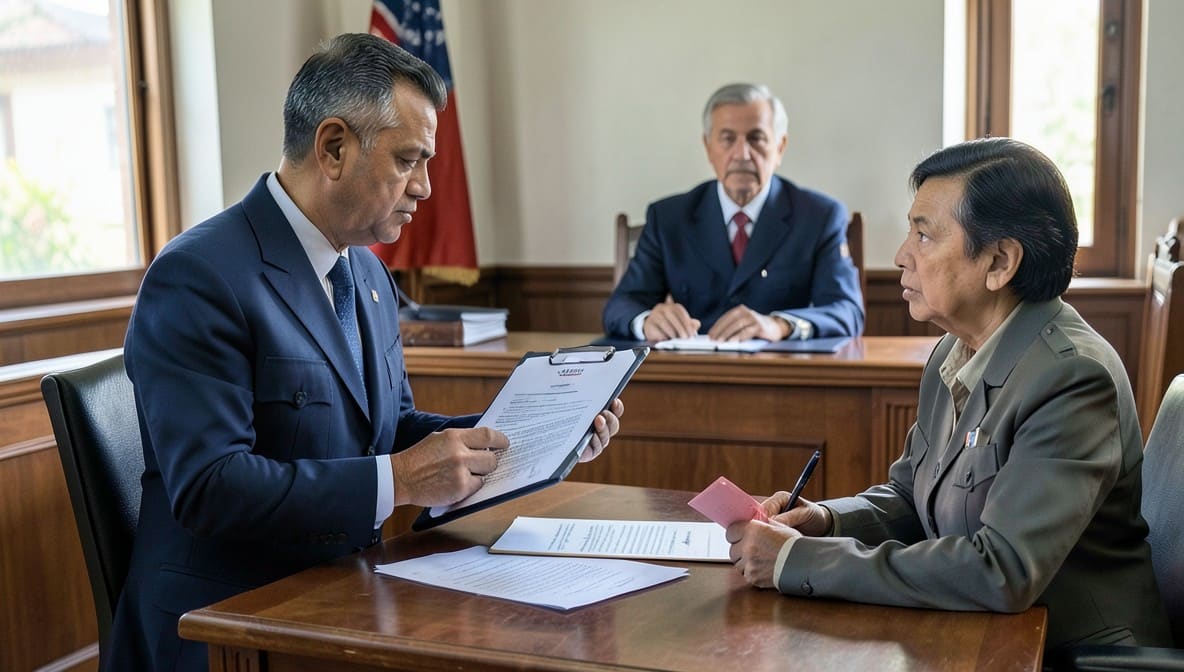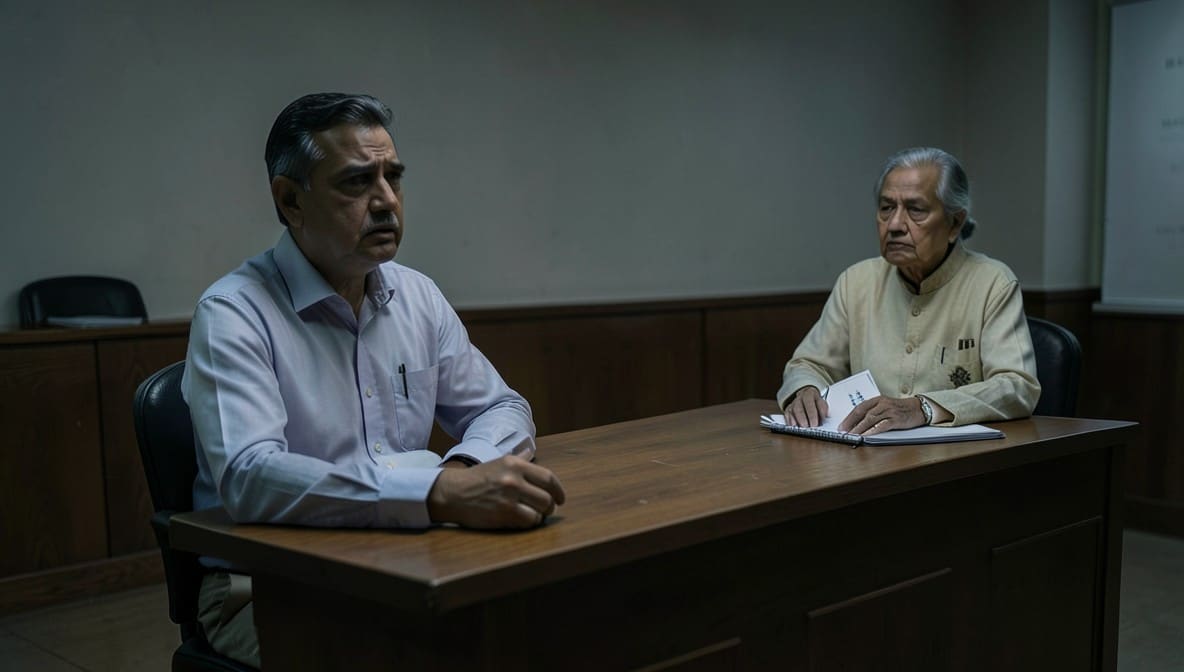
The Bombay High Court has underscored the fundamental requirement of judicial reasoning in criminal trials by setting aside a conviction under Section 307 of the Indian Penal Code, 1860 due to the trial court's failure to consider witness testimonies, cross-examinations, or the accused's statement under Section 313 of the Code of Criminal Procedure, 1973. The judgment highlights the dangers of perfunctory adjudication and remands the case for fresh consideration, offering critical guidance for trial courts on evidence evaluation.
Background & Facts
The Dispute
The appellants, Akash Vidyadhar Davare and another, were convicted by the Additional Sessions Judge, Greater Mumbai, in Sessions Case No. 299 of 2012 and Sessions Case No. 359 of 2012 for an offence under Section 307 IPC (attempt to murder). The prosecution alleged that on 22.11.2011, the appellants assaulted the complainant, Santosh Janardhan Sawant (PW-1), with iron rods and a knife, causing grievous injuries. The trial court convicted the appellants based on a single-paragraph reasoning, prompting this appeal.
Key Facts
- Incident Date: 22.11.2011
- Complainant: Santosh Janardhan Sawant (PW-1), the injured witness
- Witnesses: Eight prosecution witnesses, including PW-1, his mother (PW-2), and two doctors (PW-5 and PW-8)
- Evidence: Iron rods (Article 3 and 4) and a knife (Article 2) recovered from the accused
- Medical Evidence: PW-1 sustained injuries to his head, leg, and left thumb
- FIR: Filed by PW-1 after treatment at Rajawadi Hospital (Exhibit 66)
- Cross-Cases: The accused had filed a cross-case against the prosecution witnesses regarding the same incident
Procedural History
- 22.11.2011: Incident occurred; FIR filed
- Trial Proceedings: Prosecution examined eight witnesses, all extensively cross-examined
- 27.03.2018: Trial court convicted the appellants under Section 307 IPC based on a single-paragraph reasoning
- Criminal Appeal No. 477 of 2018: Filed before the Bombay High Court challenging the conviction
- 06.11.2025: Notice issued to the appellants' advocate, Mr. Ajay Garad, who remained absent
- 08.06.2026: Bombay High Court disposed of the appeal, setting aside the conviction and remanding the case
The Parties' Positions
For the Appellants
Mr. Rohan A. Desai, appointed as counsel for the appellants, argued that:
- The trial court's judgment was perverse, as it failed to consider the deposition of witnesses or their cross-examinations
- The prosecution had failed to establish the case beyond reasonable doubt due to contradictory and unreliable evidence
- The accused's statement under Section 313 CrPC was not considered by the trial court
For the Respondent-State
Ms. S. M. Yadav, the learned APP, supported the trial court's judgment, contending that:
- The case involved a serious offence under Section 307 IPC
- PW-1 was the injured witness, and his testimony was corroborated by medical evidence
- The injuries sustained by PW-1 were grievous, supporting the prosecution's case
Relief Sought
The appellants sought quashing of the trial court's judgment dated 27.03.2018 and an order for acquittal based on the non-evaluation of evidence.
The Legal Issue
The central question was whether a conviction under Section 307 IPC can be sustained when the trial court's judgment is perverse, failing to consider witness testimonies, cross-examinations, or the accused's statement under Section 313 CrPC, thereby violating the principles of natural justice and fair trial.
Arguments Presented
For the Appellants
- The trial court's judgment was wholly inadequate, as it contained reasoning in only one paragraph despite eight witnesses being examined
- The evidence on record was contradictory, particularly the testimonies of the doctors (PW-5 and PW-8) and the injured witness (PW-1) and his mother (PW-2)
- The trial court ignored the accused's explanation under Section 313 CrPC, which is a critical safeguard in criminal trials
- The judgment was perverse and liable to be set aside, warranting a remand for fresh consideration
For the Respondent-State
- The offence under Section 307 IPC was proved based on the testimony of PW-1 and medical evidence
- The trial court had rightly convicted the appellants, and the High Court should not interfere with the judgment
The Court's Analysis
The Bombay High Court conducted a detailed scrutiny of the trial court's judgment and identified glaring omissions in the adjudication process. The Court observed:
-
Non-Consideration of Evidence: The trial court failed to evaluate the deposition of eight witnesses, including the injured witness (PW-1) and his mother (PW-2). Their testimonies, particularly the extensive cross-examinations, were completely ignored.
-
Contradictory Evidence: The Court noted that the evidence of the doctors (PW-5 and PW-8) and the injured witness (PW-1) and his mother (PW-2) was contradictory. Such contradictions, if unaddressed, could undermine the prosecution's case.
-
Ignoring Section 313 CrPC Statement: The trial court did not consider the accused's statement recorded under Section 313 CrPC, which is a mandatory procedural safeguard to ensure the accused's right to explain the circumstances against them.
-
Perverse Judgment: The Court held that the trial court's judgment was perverse as it contained no reasoned analysis of the evidence. The entire reasoning was confined to a single paragraph, which merely summarized the prosecution's case without engaging with the defence's contentions or the contradictions in evidence.
The Court relied on the principle that a conviction cannot be sustained if the judgment is perverse or non-reasoned, as it violates the right to a fair trial under Article 21 of the Constitution of India. The Court emphasized that judicial reasoning is not a mere formality but a constitutional requirement to ensure justice.
"The deposition of the witnesses is not considered, their cross-examination is not considered and even the explanation given in the statement recorded under Section 313 of CrPC is also not considered."
"Thus, there is substance in the contention raised by Mr. Desai, learned Counsel for the Appellants that the impugned Judgment and Order of conviction is totally perverse."
The Verdict
The Bombay High Court allowed the appeal, setting aside the impugned judgment and order dated 27.03.2018 passed by the Additional Sessions Judge, Greater Mumbai, in Sessions Case No. 299 of 2012 and Sessions Case No. 359 of 2012. The case was remanded back to the trial court for fresh consideration in accordance with law. The Court also appreciated the assistance rendered by Mr. Rohan A. Desai and directed the High Court Legal Services Committee, Mumbai, to pay his professional fees as per rules.
What This Means For Similar Cases
Perverse Judgments Violate Fair Trial Guarantees
- Trial courts must engage with evidence: This judgment reinforces that perfunctory reasoning or non-consideration of evidence renders a judgment perverse and liable to be set aside. Courts must analyze witness testimonies, cross-examinations, and the accused's statement under Section 313 CrPC.
- Constitutional safeguards: The right to a fair trial under Article 21 includes the right to a reasoned judgment. Failure to provide such reasoning violates constitutional guarantees and warrants appellate intervention.
Remand as a Remedy for Procedural Lapses
- When remand is justified: Appellate courts may remand cases where the trial court has failed to consider material evidence or ignored procedural safeguards. This judgment sets a precedent for remanding cases where the trial court's reasoning is wholly inadequate.
- Practical implications for practitioners: Lawyers must scrutinize trial court judgments for non-consideration of evidence or procedural lapses. Such omissions can form strong grounds for appeal and may lead to remand or acquittal.
The Role of Cross-Examination and Contradictions
- Cross-examination is critical: The Court highlighted the importance of cross-examination in exposing contradictions in witness testimonies. Practitioners must emphasize contradictions in evidence to challenge the prosecution's case.
- Medical and ocular evidence: In cases involving grievous injuries, discrepancies between medical evidence (e.g., doctors' testimonies) and ocular evidence (e.g., injured witness's testimony) can undermine the prosecution's case. Lawyers should leverage such contradictions to argue for acquittal or remand.
Appointed Counsel and Legal Aid
- Court-appointed counsel: The judgment underscores the importance of legal representation, even when the appellants' counsel remains absent. The Court appointed Mr. Rohan A. Desai to represent the appellants, ensuring their right to fair hearing.
- Legal aid and professional fees: The Court directed the High Court Legal Services Committee to pay the appointed counsel's fees, reinforcing the state's obligation to provide effective legal aid in criminal appeals.