The Bombay High Court has reaffirmed the high threshold for overturning acquittals in criminal cases, holding that inconsistent testimonies, material omissions, and lack of corroboration among prosecution witnesses cannot be disregarded merely because the State seeks to reverse an acquittal. The judgment underscores the primacy of the trial court’s factual assessment and the necessity for appellate courts to identify legal perversity, not just alternative interpretations.
Background & Facts
The Dispute
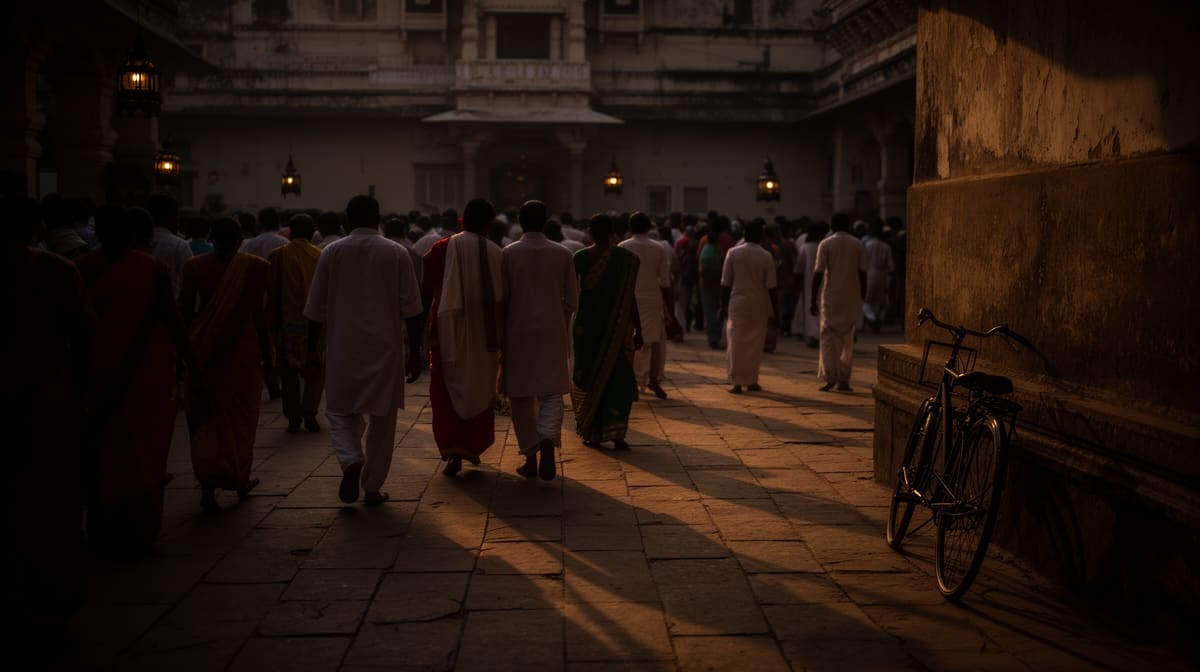
The State of Maharashtra appealed against the acquittal of nine accused persons by the Ad-hoc Additional Sessions Judge, Latur, in Sessions Trial No. 41 of 2001. The prosecution alleged that on 14.09.2000, at approximately 10:30 a.m., the accused assaulted the informant, Gayabai Baban Sonwane, and other women at a water tank in Dighol-Deshpande, Renapur, Latur. The incident allegedly followed a prior quarrel and involved physical assault, outraging modesty, and use of weapons including a stick and a knife. A separate incident occurred earlier that day at 9:00 a.m., involving the same parties, which resulted in cross-complaints.
Key Facts
- The incident occurred on 14.09.2000 at around 10:30 a.m. at a public water tank.
- The informant, Gayabai (PW1), alleged that accused nos. 1 and 3 abused her in filthy language, followed by assault by multiple accused.
- She claimed accused no. 1 struck her head with a stick, accused no. 3 inflicted a knife blow on her forehead, and accused no. 11 bit her breast.
- Fatimabee (PW4), another victim, testified that accused no. 11 bit her breast, while accused no. 2 pressed Gayabai’s breast - contradicting Gayabai’s version.
- Suryakant (PW3) and Anurath (PW5), alleged eyewitnesses, claimed all accused arrived armed with sticks and stones - a detail absent in the testimonies of the primary victims.
- Medical evidence (Exhibits P-21 and P-22) recorded injuries on Gayabai, Fatimabee, Suryakant, and Anurath, but the nature and location of injuries did not fully align with the ocular accounts.
- A prior incident occurred at 09:00 a.m. on the same day, resulting in injuries to both sides and a complaint filed by the accused at 08:00 p.m. - prior to the prosecution’s complaint.
- The prosecution examined 11 witnesses, including the victims, bystanders, and two medical officers.
Procedural History
- 14.09.2000: Alleged incident at water tank; Crime No. 93 of 2000 registered under Sections 147, 148, 323, 504, 506, 324, 294 read with 149 IPC and Section 135 Bombay Police Act.
- 15.09.2000: Cross-complaint filed by accused regarding morning altercation.
- 20.09.2000: Investigation conducted by PW10, Police Station Officer, Renapur.
- 10.12.2000: Chargesheet filed against all accused.
- 05.01.2001: Accused committed to trial by Magistrate.
- 29.07.2003: Ad-hoc Additional Sessions Judge, Latur, acquitted all accused, holding prosecution failed to prove guilt beyond reasonable doubt.
- 29.07.2003: State filed Criminal Appeal No. 746 of 2003 before the Bombay High Court, Aurangabad Bench.
- 05.01.2016: Appeal abated against respondent no. 5 (Kondiba Bandappa Randive) upon death.
- 17.03.2026: Judgment pronounced by Justice Abhay S. Waghwase.
The Parties' Positions
For the State (Appellant):
- Argued that 11 prosecution witnesses, including victims and eyewitnesses, provided consistent testimony.
- Contended that minor inconsistencies were improvements, not contradictions.
- Emphasized corroboration through medical evidence and recovery of weapons.
- Asserted that the trial court erred in disbelieving the prosecution solely due to cross-complaints.
For the Accused (Respondents):
- Argued that most witnesses were close relatives of the informant, rendering them interested.
- Highlighted material omissions and contradictions in testimonies - e.g., conflicting accounts of who bit or pressed breasts, who used weapons, and sequence of events.
- Pointed out that the cross-complaint filed earlier indicated a pre-existing hostile relationship and possible counter-allegation.
- Maintained that the trial court’s detailed appreciation of evidence was legally sound.
Relief Sought
The State sought to set aside the acquittal order dated 29.07.2003 and convict all accused persons of the charges under Sections 147, 148, 323, 504, 506, 324, 294 read with 149 IPC and Section 135 of the Bombay Police Act.
The Legal Issue
The central question was whether the High Court, in an appeal against acquittal under Section 378(1)(3) of the Code of Criminal Procedure, may reverse an acquittal based on re-appreciation of evidence where the trial court’s findings are legally plausible, despite inconsistencies in witness testimony and absence of clear corroboration.
Arguments Presented
For the Appellant
The State contended that the trial court erred in dismissing the prosecution case due to minor inconsistencies. It relied on State of Rajasthan v. Naresh (2009) 9 SCC 368 and Ghurey Lal v. State of U.P. (2008) 10 SCC 450 to argue that the cumulative effect of testimonies, supported by medical evidence and recovery of weapons, established guilt beyond reasonable doubt. It emphasized that the trial court’s reliance on cross-complaints as a basis for disbelief was misplaced, as motive was merely a prior quarrel, not a proven prior assault.
For the Respondent
The defense argued that the trial court correctly applied the principles laid down in Mallappa v. State of Karnataka (2014 INSC 104). It highlighted that the testimonies of PW1, PW3, PW4, and PW5 were mutually contradictory on critical facts - including who inflicted specific injuries, who used weapons, and the sequence of events. The defense further pointed out that the medical reports did not corroborate the ocular accounts, and the cross-complaint filed earlier cast serious doubt on the prosecution’s version as a retaliatory act.
The Court's Analysis
The Court began by reiterating the settled principles governing appeals against acquittal, as enumerated in Mallappa v. State of Karnataka. It emphasized that the trial court’s appreciation of evidence is entitled to great weight, especially when it involves assessment of credibility, demeanor, and internal consistency of witnesses.
"If the view of the Trial Court is a legally plausible view, mere possibility of a contrary view shall not justify the reversal of acquittal."
The Court meticulously compared the testimonies of the four key witnesses - Gayabai (PW1), Fatimabee (PW4), Suryakant (PW3), and Anurath (PW5). It found that their accounts diverged on fundamental details: who bit the breast (PW1 said accused no. 11; PW4 said accused no. 11, but also implicated accused no. 2); who used the stick (PW1 and PW4 said accused no. 1; PW3 said all accused carried sticks); and whether the accused arrived armed (only PW3 and PW5 claimed so).
The Court noted that PW3, who claimed to have witnessed the incident from 40 feet away, could not credibly have heard verbal abuses, yet he reproduced them verbatim. PW5 failed to mention his presence at the scene until after the assault, contradicting his claim of intervening. The omissions in cross-examination - such as failure to mention specific accused in key acts - further eroded reliability.
The Court held that the medical evidence, while confirming injuries, did not corroborate the specific allegations of weapon use or the sequence of assault. It observed that the prior incident at 9:00 a.m., with injuries reported and a complaint filed before the prosecution’s, created a reasonable doubt that the present complaint was a counterblast.
"Partial or selective appreciation of evidence may result in a miscarriage of justice and is in itself a ground of challenge."
The Court concluded that the trial court’s acquittal was not perverse, illegal, or based on a misreading of evidence. The inconsistencies were not trivial; they went to the heart of the prosecution’s narrative. The appellate court cannot substitute its own view merely because it finds another interpretation possible.
The Verdict
The appeal was dismissed. The High Court upheld the acquittal of all accused persons dated 29.07.2003. The Court found no illegality, perversity, or error of law in the trial court’s appreciation of evidence. The State’s request to convict the accused was rejected. The appeal stands dismissed with no order as to costs.
What This Means For Similar Cases
Witness Inconsistencies Cannot Be Dismissed as Minor
- Practitioners must treat material contradictions in witness accounts - especially regarding identity of assailants, weapons used, and sequence of events - as fatal to the prosecution’s case.
- Even if witnesses are related to the victim, their testimonies must be internally consistent and mutually corroborative to sustain conviction.
Cross-Complaints Can Undermine Prosecution Credibility
- A prior complaint filed by the accused, especially if it predates the prosecution’s, must be treated as a potential indicator of retaliatory motive.
- Courts will not ignore the context of a hostile relationship between parties, even if motive is not formally pleaded.
Medical Evidence Alone Is Insufficient to Overcome Ocular Deficiencies
-
While medical reports confirm injuries, they cannot substitute for credible ocular testimony.
-
Where ocular accounts are inconsistent or contain material omissions, medical evidence cannot be used to fill the gaps.
-
Always challenge the consistency of witness statements under cross-examination - omissions are as critical as contradictions.
-
In appeals against acquittal, focus on whether the trial court’s reasoning is legally plausible - not whether the appellate court would have decided differently.