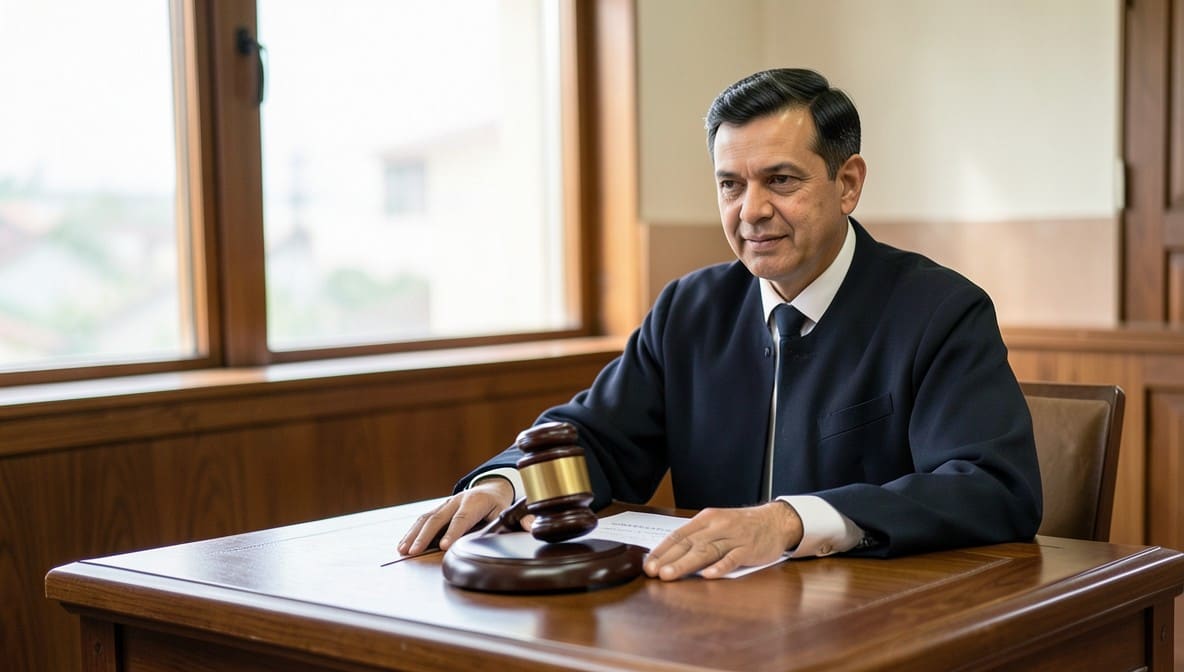
The Patna High Court has clarified that familial relationship alone cannot justify the arrest of parents-in-law in dowry death cases absent concrete evidence of their direct involvement. This ruling reinforces the principle that anticipatory bail must be granted where the prosecution’s case lacks specific allegations against the applicants, particularly when the cause of death is consistent with suicide and no incriminating material links them to the alleged offence.
Background & Facts
The Dispute
The petitioner, Pushpanjali Devi @ Pushpa Devi, and her husband Manoj Kumar Thakur @ Manoj Thakur, are the parents-in-law of the deceased, Ranjana Devi, who was married to their son, Aditya Kumar Thakur, on 01.12.2024. The deceased was found dead on 12.12.2025, and a case was registered under Sections 80 and 3(5) of the B.N.S. (Bihar Prohibition of Dowry and Prevention of Cruelty to Women Act) at Sahebpur Kamal Police Station, Case No. 345 of 2025. The husband, Aditya Kumar Thakur, is currently in judicial custody. The petitioners, who are the father-in-law and mother-in-law, are apprehending arrest despite having no alleged role in the incident.
Key Facts
- The deceased, Ranjana Devi, was married to Aditya Kumar Thakur on 01.12.2024
- The postmortem report recorded the cause of death as asphyxia due to hanging
- The informant, Ranjana Devi’s mother, filed the FIR on 13.12.2025 alleging dowry harassment
- The petitioners resided separately from the nuclear family and had no documented interaction with the deceased in the months preceding her death
- The case diary, reviewed by the court, contains no statement, witness account, or material evidence directly implicating the petitioners
- The Supervision Note (Paragraph 35) by the S.D.P.O., Balia, explicitly states that while the husband’s involvement is prima facie established, further investigation is required into the role of Saloni Kumari and the petitioners
Procedural History
- 13.12.2025: FIR registered at Sahebpur Kamal PS, Case No. 345 of 2025
- 12.12.2025: Postmortem conducted; cause of death recorded as asphyxia due to hanging
- 29.04.2026: Petitioners filed Criminal Miscellaneous No. 13184 of 2026 seeking anticipatory bail
- 29.04.2026: Hearing before the Hon’ble Justice Rajiv Roy
The Parties' Positions
For the Petitioners: The petitioners, represented by Mr. Raj Kumar and Mr. Sarvottam Kumar, argued that they are not part of the household where the alleged harassment occurred. They emphasized the absence of any specific allegation against them in the FIR or case diary, and highlighted that the cause of death is consistent with suicide. They relied on the Supervision Note which acknowledges the need for further investigation into their role, rather than confirming it.
For the Respondent/State: Mrs. Nirmala Kumari, Additional Public Prosecutor, contended that as parents-in-law, their potential role in dowry-related pressure cannot be ignored merely due to residential separation. She argued that familial ties in dowry death cases often involve indirect coercion and that bail should not be granted without full investigation.
Relief Sought
The petitioners sought anticipatory bail in the event of arrest in connection with Sahebpur Kamal PS Case No. 345 of 2025, with conditions to ensure cooperation with the investigation and non-interference with the judicial process.
The Legal Issue
The central question was whether anticipatory bail can be denied to parents-in-law in a dowry death case solely on the basis of their familial relationship, when the prosecution has not adduced any specific evidence of their involvement, and the cause of death is recorded as suicide by hanging.
Arguments Presented
For the Petitioner
The petitioners’ counsel relied on Arnesh Kumar v. State of Bihar to argue that arrest cannot be automatic merely because a person is a family member in a dowry death case. He emphasized that Section 304B IPC requires proof of demand for dowry and cruelty immediately preceding death, and that no such allegations were made against the petitioners. He pointed to the Supervision Note as evidence that the investigating agency itself recognized the lack of prima facie case against them. He further submitted that the petitioners had no control over the household and were not present at the time of the incident.
For the Respondent
The State contended that in dowry death cases, parents-in-law often exert psychological pressure indirectly, and their separation from the nuclear family does not absolve them of liability. The APP argued that the court should not interfere at the pre-arrest stage and that the investigation must be allowed to proceed without restraint. She cited State of U.P. v. Krishna Kumar to argue that the court should not grant anticipatory bail unless the case is clearly frivolous.
The Court's Analysis
The Court examined the nature of the allegations, the postmortem report, and the Supervision Note recorded by the S.D.P.O., Balia. It noted that the cause of death was asphyxia due to hanging, which, in the absence of any injury or signs of struggle, leans toward suicide. The Court observed that the FIR and case diary contained no specific allegations against the petitioners, nor any witness statement placing them at the scene or implicating them in any demand or harassment.
"So far as the husband is concerned, the case has been found to be true while for these two petitioners, they wanted further investigation beside the role of Saloni Kumari vis-a-vis, the husband has also been directed to be investigated."
The Court held that the phrase "further investigation" in the Supervision Note is not an admission of guilt but an acknowledgment of procedural incompleteness. It emphasized that anticipatory bail is a preventive remedy, not a reward for innocence, and must be granted where the threat of arrest is based on speculative or generalized allegations.
The Court distinguished this case from those where parents-in-law were actively involved in dowry demands, as evidenced by witness testimony, call records, or prior complaints. Here, the prosecution had not even alleged that the petitioners made any demand or subjected the deceased to cruelty. The Court reiterated the principle from Arnesh Kumar that arrest must be the exception, not the rule, especially in non-heinous cases where the accused are not flight risks.
The Verdict
The petitioners succeeded. The Court granted anticipatory bail to both petitioners, directing that they be released on bail upon arrest or surrender within four weeks from the date of this order, on furnishing a bail bond of Rs. 10,000/- with two sureties of like amount each, to the satisfaction of the Sub-Judge-IV-cum-Additional Chief Judicial Magistrate-IV, Begusarai. The bail is subject to five conditions: (i) one surety must be a family member with official ID proof; (ii) the petitioners must cooperate with police investigations; (iii) they must appear before the Trial Court on every date, with failure to appear for two consecutive dates leading to automatic cancellation; (iv) they must not tamper with evidence or intimidate witnesses; and (v) they must not commit any further offence. Violation of any condition permits the State to seek cancellation of bail.
What This Means For Similar Cases
Familial Status Alone Is Not Sufficient for Arrest
- Practitioners must challenge arrests of in-laws in dowry death cases where no specific act of cruelty or demand is alleged
- The burden shifts to the prosecution to show direct or proximate involvement, not merely association
- Supervision Notes and case diary entries indicating "further investigation" can be used to argue lack of prima facie case
Anticipatory Bail Is a Procedural Safeguard, Not a Merit Determination
- Courts must not conflate the need for investigation with the need for arrest
- The Arnesh Kumar guidelines apply even in state-specific dowry laws like the B.N.S.
- Conditions imposed must be reasonable and tailored to prevent abuse, not punitive
Investigative Gaps Must Be Acknowledged in Bail Orders
- When investigating agencies themselves admit the need for further inquiry, courts should not presume guilt
- Bail orders should reflect the stage of investigation and avoid prejudging the outcome
- Lawyers should routinely request and rely on Supervision Notes and case diary entries in bail applications