The conviction of a school van driver under Section 304 Part II IPC for causing the deaths of three children by knowingly overloading a vehicle and driving with earphones marks a critical affirmation of the legal principle that reckless conduct with awareness of likely fatal consequences constitutes culpable homicide, not mere negligence.
Background & Facts
The Dispute
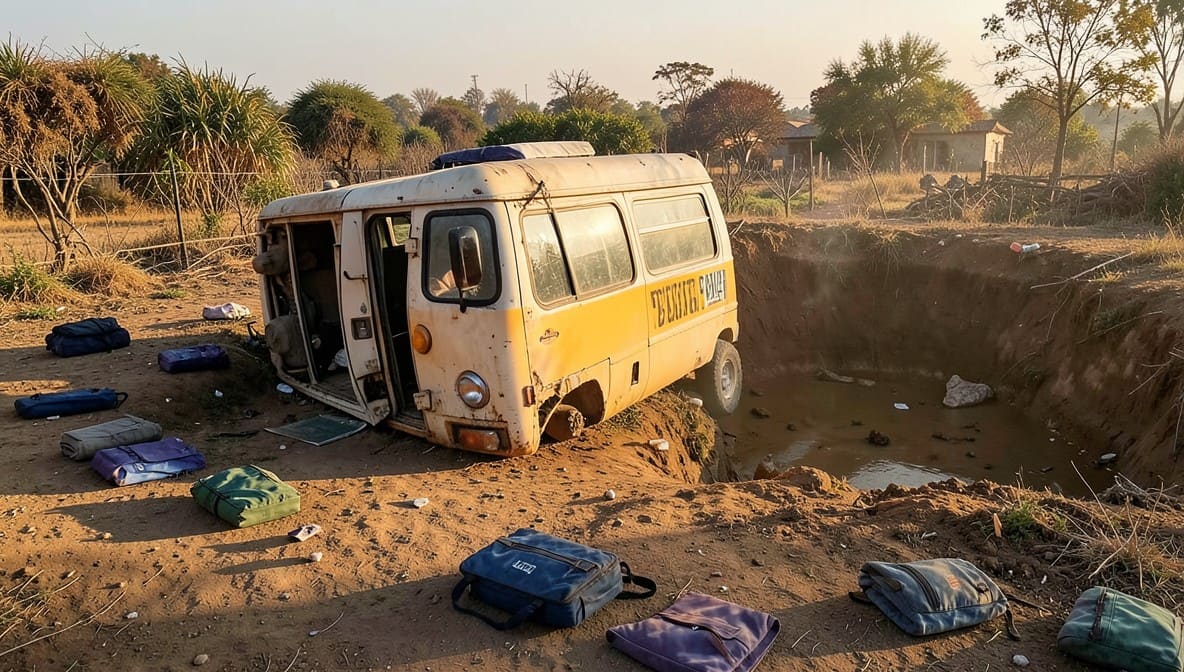
The appellant, Kamal Kishore, was the driver of a Maruti Omni Van (Registration No. MP-09-BD-7396) used to transport students of "A" Academy School in Richhoda, Shajapur. On 18.10.2019, after school examinations concluded at approximately 12:00 PM, he loaded 22 students into a vehicle with a certified seating capacity of 7+1. While reversing the vehicle near a water-filled well without any fencing, the van overturned into the well, resulting in the drowning deaths of three children and injuries to 19 others.
Key Facts
- The vehicle was a 2017 Maruti Suzuki Omni, 796 cc, 7-seater private van.
- The incident occurred at approximately 12:00 PM on 18.10.2019.
- The appellant was using earphones while driving, as testified by multiple eyewitnesses.
- Three deceased children: Hardik (5 years), Divya (5 years), and Aayush (7 years).
- Nineteen surviving children sustained injuries, all of whom were medically examined on 19.10.2019.
- Autopsy reports (Ex.P-29, P-30, P-31) confirmed drowning as cause of death.
- Mechanical inspection (Ex.D-4) revealed: no brake oil, non-functional handbrake, steering play, and operation on CNG.
- The well was unguarded and filled with water.
- The appellant denied being the driver or having any connection to the vehicle during Section 313 CrPC examination.
Procedural History
- 18.10.2019: Incident occurred at School, Richhoda, Shajapur.
- 18.10.2019: Postmortem conducted on three deceased children.
- 19.10.2019: Medical examination of 19 injured children.
- 19.10.2019: FIR No. 221/2019 registered at Police Station Sunera.
- 20.11.2025: Trial Court convicted appellant under Section 304 Part II IPC and sentenced him to 4 years RI and Rs. 2,000 fine.
- 30.04.2026: Criminal Appeal No. 11966 of 2025 decided by Madhya Pradesh High Court.
The Parties' Positions
- Appellant: Claimed innocence, denied driving the vehicle, asserted the incident was an accident due to poor road conditions and mechanical failure. Relied on testimony of PW-5 (Rajaram) and mechanical report (Ex.D-4).
- State: Argued that the appellant’s conduct - overloading, using earphones, driving an unfit vehicle near a hazardous well - demonstrated knowledge of likely fatal consequences.
Relief Sought
The appellant sought quashing of the conviction and sentence under Section 304 IPC, requesting acquittal on grounds of insufficient evidence and applicability of Section 304-A IPC instead.
The Legal Issue
The central question was whether the appellant’s conduct - loading 22 children into a 7-seater vehicle, driving with earphones, and operating a mechanically defective vehicle near an unguarded well - amounted to culpable homicide not amounting to murder under Section 304 Part II IPC, given his awareness of the likelihood of death, or whether it constituted mere rash or negligent driving under Section 304-A IPC.
Arguments Presented
For the Appellant
Learned counsel argued that the incident was a pure accident caused by adverse weather, muddy terrain, and mechanical failure, as supported by the testimony of PW-5 (Rajaram) and the mechanical report (Ex.D-4). He contended that the appellant had no intention or knowledge of causing death, and that the act fell squarely within Section 304-A IPC. He relied on Ganesh Bhavan Patel, Jayant Tiwari, Kamlesh Singh, Vishal, Nitinchandra, Rathnashalvan, and Satpal to argue that absence of mens rea and presence of external factors negate culpable homicide.
For the Respondent/State
The Government Advocate contended that the appellant’s actions demonstrated conscious disregard for safety. Loading 22 children into a 7-seater van, driving with earphones, and operating a vehicle with non-functional brakes and steering constituted knowledge that death was likely. The mechanical report did not exonerate the driver but confirmed negligence. The prosecution emphasized that the appellant’s attempt to rescue children did not negate criminal liability.
The Court's Analysis
The Court undertook a detailed analysis of the facts in light of the legal distinction between Section 304-A and Section 304 Part II IPC. It held that Section 304-A applies only to cases of rash or negligent acts without knowledge of likely death, whereas Section 304 Part II applies when the accused has knowledge that the act is likely to cause death, even without intention.
"A person, doing an act of rash or negligent driving, if aware of a risk that a particular consequence is likely to result and that result occurs, may be held guilty not only of the act but also of the result."
The Court noted that the appellant’s conduct was not merely careless but recklessly dangerous. The vehicle’s mechanical defects - absence of brake oil, non-functional handbrake, steering play - were known or ought to have been known. The decision to drive such a vehicle with 22 children, while using earphones, demonstrated a conscious disregard for safety.
The Court distinguished the precedents cited by the appellant. In Ganesh Bhavan Patel, delay undermined the prosecution; here, prompt postmortem and medical examinations preserved evidence. In Vishal, the accused was a swimming pool instructor; here, the driver was directly responsible for transporting children. The mechanical report (Ex.D-4) did not establish an accident but confirmed the vehicle’s unfitness, which the appellant chose to ignore.
The Court further held that the appellant’s attempt to rescue children after the incident did not absolve him of liability. The law does not permit a person to commit a culpable act and then claim mitigation through subsequent rescue efforts.
The cumulative effect of overloading, mechanical unfitness, use of earphones, and proximity to a hazardous well established the appellant’s knowledge that death was likely. This satisfied the requirements of Section 304 Part II IPC.
The Verdict
The appeal was dismissed. The conviction under Section 304 Part II IPC was affirmed. The appellant’s sentence of 4 years rigorous imprisonment and a fine of Rs. 2,000 with a default stipulation of 2 months additional rigorous imprisonment was upheld. The Court directed that a copy of the judgment be supplied to the appellant through the Jail Superintendent and the record be remitted to the trial court for compliance.
What This Means For Similar Cases
Knowledge of Likely Death Trumps Claims of Accident
- Practitioners must now argue that when a person operates a vehicle with known defects, in grossly overloaded conditions, near known hazards, and with impaired attention (e.g., earphones), courts will infer knowledge of likely death under Section 304 Part II IPC.
- Mere mechanical failure or weather conditions will not automatically reduce liability to Section 304-A if the accused’s conduct demonstrates conscious disregard.
Gross Overloading Is a Critical Factor in Culpable Homicide
- Transporting more than double the seating capacity of a school vehicle constitutes prima facie evidence of recklessness.
- In cases involving children, courts will apply heightened scrutiny to the duty of care owed by drivers and transporters.
- School authorities and transport contractors may now face joint liability if they knowingly permit overloading.
Rescue Attempts Do Not Mitigate Criminal Liability
-
Post-incident rescue efforts, while commendable, cannot be invoked to negate mens rea or reduce charges from culpable homicide to negligence.
-
The law treats the act causing death as the focal point; subsequent conduct is irrelevant to the determination of guilt under Section 304.
-
Always examine whether the accused had knowledge of the risk, not merely whether the act was rash.
-
In school transport cases, mechanical inspection records and seating capacity documentation must be scrutinized as key evidence.
-
Prosecutors should emphasize cumulative risk factors - not isolated incidents - to establish knowledge under Section 304 Part II.