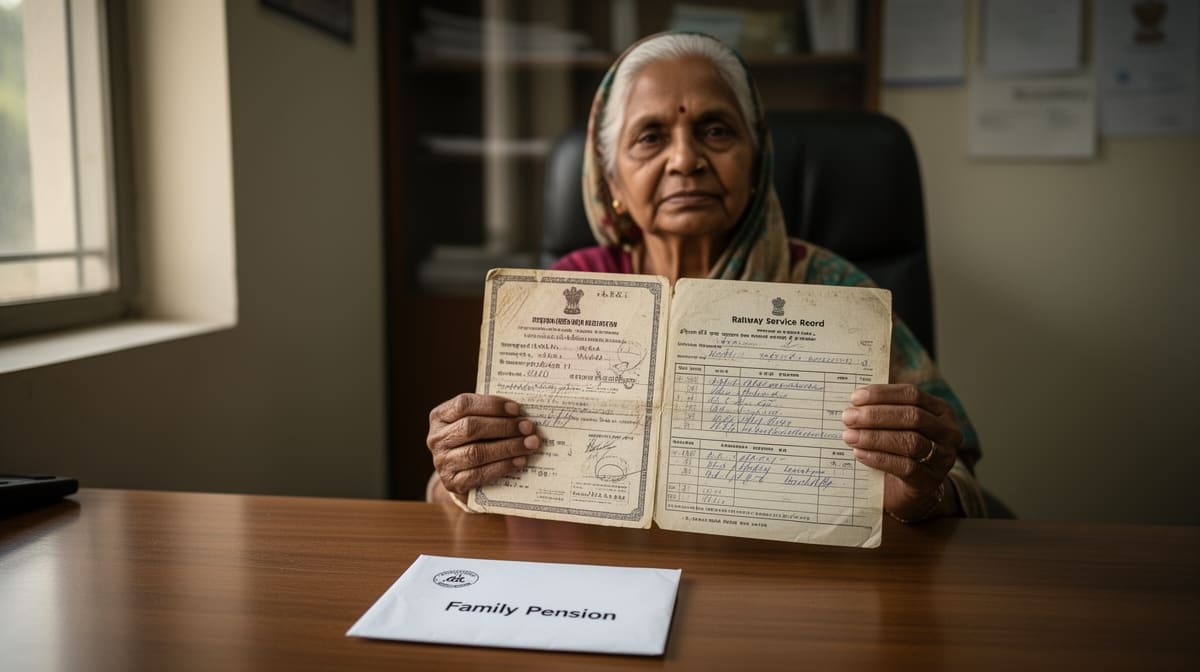
The Kerala High Court has reaffirmed that a divorced daughter is entitled to family pension under Section 29(2) of the Hindu Marriage Act, 1955, if her marriage was dissolved through a valid customary or statutory process during the lifetime of her parents. This judgment clarifies the interplay between statutory pension rules and personal laws governing divorce, reinforcing that customary dissolutions - such as those under the Madras Marumakkattayam Act, 1932 - remain valid even after repeal, provided they occurred before the repealing statute came into force.
Background & Facts
The Dispute
The respondent, Smt. Saraswati, is the divorced daughter of late N.K.E. Krishnan, a former Naik in the Indian Army who was receiving disability pension. After her father’s death in 1989, her mother received family pension until her demise on 09.08.2015. The respondent, belonging to the Hindu Thiyya community, was married at the age of 16 on 18.02.1973 without her consent. The marriage lasted only three days, following which she returned to her parental home. On 27.11.1974, she executed Annexure A3, a registered divorce deed with her husband, Elancherry Raghavan, as per the customary practice of the Thiyya community.
Key Facts
- The respondent’s father was a disability pensioner; her mother received family pension until 09.08.2015
- The respondent’s marriage in 1973 was voidable as she was a minor
- Annexure A3, a registered divorce deed, was executed on 27.11.1974 under customary law
- The respondent lived with her parents until their deaths and was dependent on them
- She was admitted as a member of the Ex-servicemen Contributory Health Scheme (ECHS) during her father’s lifetime (Annexure A10 and A11)
- After her mother’s death, she applied for continuation of family pension
- The Principal Controller of Defence Accounts (Pension) (4th petitioner) demanded a non-marriage certificate, income certificate, and a divorce decree from a competent court (Annexure A4, A7)
- The respondent obtained a divorce decree (Annexure A9) from the Family Court, Thalassery, on 27.01.2018 in O.P.No.762 of 2017
Procedural History
The respondent’s claim for family pension was rejected at multiple stages:
- 17.10.2015: Respondent applied for family pension
- 08.05.2017: Annexure A5 - Application forwarded for pre-audit
- 09.08.2017: Annexure A6 - Chief Records Officer requested early action
- 18.09.2017: Annexure A7 - Senior Accounts Officer demanded divorce decree from court
- 06.03.2018: Respondent submitted income certificate
- 07.03.2018: Respondent submitted non-remarriage certificate (Annexure A8)
- 27.01.2018: Annexure A9 - Family Court granted divorce decree
- 05.09.2018: Annexure A15 - Senior Accounts Officer rejected claim, citing G.O.I. MoD letter dated 17.11.2017, which required divorce proceedings to be instituted during the parents’ lifetime
- 19.09.2018: Annexure A16 - Claim treated as closed
- 20.11.2018: Annexure A17 - Senior Records Officer rejected request
- 11.01.2021: Annexure A20 - Senior Accounts Officer reiterated rejection
- 16.08.2021: Respondent filed O.A.No.157 of 2021 before the Armed Forces Tribunal, Regional Bench, Kochi
- 09.08.2023: Ext.P3 - Tribunal allowed the original application, directing issuance of Pension Payment Order (PPO) with arrears from 09.08.2015 and 9% interest for non-compliance within four months
- 2024: Respondent filed M.A.No.465 of 2024 for execution of Ext.P3, with petitioners undertaking to comply within four months
- 31.07.2024: Tribunal granted four months for compliance (Ext.R1(c))
- 23.05.2025: W.P.(C)No.19100 of 2025 - Division Bench directed compliance with Ext.P3 within stipulated timelines
- 2026: Respondent filed Contempt Case No.197 of 2026 for non-compliance
- 10.04.2026: Special Bench constituted to hear the writ petition and contempt case
Relief Sought
The respondent sought:
- Quashing of Annexures A15, A16, A17, and A20, which rejected her claim
- Setting aside of Annexure R17 (G.O.I. MoD letter dated 17.11.2017) to the extent it excluded divorced daughters whose divorce proceedings were initiated after parents’ death
- Direction to petitioners to pay family pension with arrears from 09.08.2015
The Legal Issue
The central question was whether a divorced daughter is entitled to **family pension under the Government of India, Ministry of Defence (MoD) letter dated 17.11.2017 if her marriage was dissolved through a customary divorce deed executed during her parents’ lifetime, even if a judicial divorce decree was obtained subsequently after their deaths.
Arguments Presented
For the Petitioners
- Relied on para 4 of the MoD letter dated 17.11.2017, which stipulates that divorced daughters are eligible for family pension only if divorce proceedings were instituted in a competent court during the lifetime of the pensioner or spouse
- Contended that since the respondent’s divorce decree (Annexure A9) was obtained on 27.01.2018, after her parents’ deaths, she was not eligible for pension
- Argued that a mutual agreement of separation cannot be considered a valid divorce for pension purposes
For the Respondent
- Argued that her marriage in 1973 was voidable as she was a minor
- Contended that Annexure A3 divorce deed was executed as per the customary practice of the Thiyya community, which was statutorily recognised under Section 6 of the Madras Marumakkattayam Act, 1932
- Relied on Section 29(2) of the Hindu Marriage Act, 1955, which saves rights recognised by custom or conferred by special enactments
- Submitted that the Madras Marumakkattayam Act, 1932 applied to Thiyyas of Malabar, and Section 6 allowed dissolution by registered instrument
- Argued that the Kerala Joint Hindu Family System (Abolition) Act, 1975, which repealed the Madras Marumakkattayam Act, 1932, did not affect Annexure A3 as it was executed before the repeal
- Alleged suppression of material facts by the petitioners, citing Prestige Lights Ltd. v. State Bank of India [(2007) 8 SCC 449]
The Court's Analysis
The Court conducted a detailed examination of the legal framework governing divorce and pension eligibility:
-
Validity of Customary Divorce
- The Court noted that Section 29(2) of the Hindu Marriage Act, 1955 saves rights recognised by custom or conferred by special enactments
- The Madras Marumakkattayam Act, 1932 applied to Thiyyas of Malabar, and Section 6 allowed dissolution of marriage by a registered instrument
- The Kerala Joint Hindu Family System (Abolition) Act, 1975, which repealed the Madras Marumakkattayam Act, 1932, did not affect Annexure A3 as it was executed before 01.12.1976
- The Court relied on Gopalakrishnan Nair v. Sarasamma [1979 KLT 810], which held that Section 4 of the Interpretation and General Clauses Act, 1125 preserves rights accrued under repealed statutes unless a contrary intention appears
-
Effect of Judicial Divorce Decree
- The Court observed that Annexure A9 judgment merely formalised the dissolution already effected by Annexure A3
- The respondent obtained the decree only because the petitioners insisted on a court-issued divorce certificate
- The Family Court’s decree was based on desertion for 43 years, corroborating the validity of Annexure A3
-
Suppression of Material Facts
- The Court noted that the petitioners failed to disclose their undertaking in M.A.No.465 of 2024 to comply with Ext.P3 within four months
- They also omitted mention of the Division Bench judgment dated 23.05.2025 in W.P.(C)No.19100 of 2025, which directed compliance with Ext.P3
- The Court cited Prestige Lights Ltd. [(2007) 8 SCC 449] and Dalip Singh v. State of UP [(2010) 2 SCC 114], which hold that suppression of material facts disentitles litigants to relief
- However, the Court refrained from penalising the petitioners, as the respondent’s case was meritorious on other grounds
"The effect of Section 7(2) of the Kerala Joint Hindu Family System (Abolition) Act, 1975, was considered by a Division Bench of this Court in Gopalakrishnan Nair v. Sarasamma [1979 KLT 810], while considering the special provision for dissolution of marriage under the Travancore Nair Act II of 1100, this Court held thus:...
The right to obtain dissolution under the Nair Act continued to be operative by virtue of Section 29(2) of the Hindu Marriage Act, 1955. The repeal of the Nair Act did not affect pending proceedings, as Section 4 of the Interpretation and General Clauses Act preserves accrued rights unless a contrary intention appears."
The Verdict
The Court dismissed the writ petition, upholding the Armed Forces Tribunal’s order (Ext.P3). The key directions are:
- The petitioners (Union of India and defence authorities) must issue a Pension Payment Order (PPO) granting family pension to the respondent from 09.08.2015
- Arrears of pension must be paid within four months from the date of the judgment
- Non-compliance will attract 9% interest per annum on the unpaid amount
What This Means For Similar Cases
Customary Divorce Valid Under Section 29(2) Hindu Marriage Act
- Statutory recognition of customary dissolutions: Courts must recognise dissolutions effected through customary practices or special enactments under Section 29(2) of the Hindu Marriage Act, 1955, even if they predate judicial decrees
- Repealed statutes preserve accrued rights: Rights accrued under repealed statutes (e.g., Madras Marumakkattayam Act, 1932) remain valid if the dissolution occurred before repeal, as per Section 4 of the Interpretation and General Clauses Act
- Judicial decrees are formalities: If a customary divorce deed exists, a subsequent judicial decree merely formalises the dissolution and does not invalidate the earlier dissolution
Pension Authorities Must Recognise Customary Divorces
- No insistence on judicial decrees alone: Pension authorities cannot reject claims solely because the divorce decree was obtained after the parents’ death, if a valid customary divorce was executed during their lifetime
- Burden of proof on claimant: The claimant must prove:
- The customary practice was antiquated, continuous, and certain (Kizhakkayi Dasan v. Kuniyil Cheerootty [2025 (7) KHC 197])
- The divorce deed was executed during the parents’ lifetime
- The customary divorce was statutorily recognised (e.g., under Madras Marumakkattayam Act, 1932)
Suppression of Facts Disentitles Relief
- Clean hands doctrine: Litigants approaching courts under Article 226 must disclose all material facts, including undertakings, compliance orders, and previous judgments
- Consequences of suppression: Courts may refuse relief or impose costs for non-disclosure, as seen in Prestige Lights Ltd. [(2007) 8 SCC 449] and Dalip Singh [(2010) 2 SCC 114]
- No penalty in this case: The Court refrained from penalising the petitioners, but practitioners must note the risk of dismissal for non-disclosure