The Bombay High Court has clarified that a second wife married during the subsistence of a prior valid marriage cannot claim legal heirship under the Hindu Succession Act, 1956, even if she has children with the deceased. The judgment reinforces the statutory invalidity of such unions and their consequences on succession rights.
Background & Facts
The Dispute
The present civil revision application challenges an order dated 29.04.2025 passed by the Civil Judge Junior Division, Dharur, District Beed, which partly allowed Miscellaneous Civil Application No. 397 of 2022 for a Legal Heirship Certificate. The application was filed by Respondent Nos. 1 and 2 seeking declaration as legal heirs of the deceased Shrimant Dadarao Kapse, who died on 26.09.2022.
Key Facts
- The deceased, Shrimant Dadarao Kapse, was first married to Respondent No. 1, from whom Respondent No. 2 (a daughter) was born.
- The petitioner, Kaushalyabai Shrimant Kapse, claims to have married the deceased after his alleged divorce from Respondent No. 1.
- The petitioner alleges that she and the deceased were married "long back" and that five sons (Respondent Nos. 5 to 9) were born from this union.
- Respondent Nos. 1 and 2 contend that no valid divorce decree was ever obtained between the deceased and Respondent No. 1.
- The petitioner did not produce any court decree or document evidencing the dissolution of the first marriage.
- The petitioner appeared before the Trial Court and contested the heirship application.
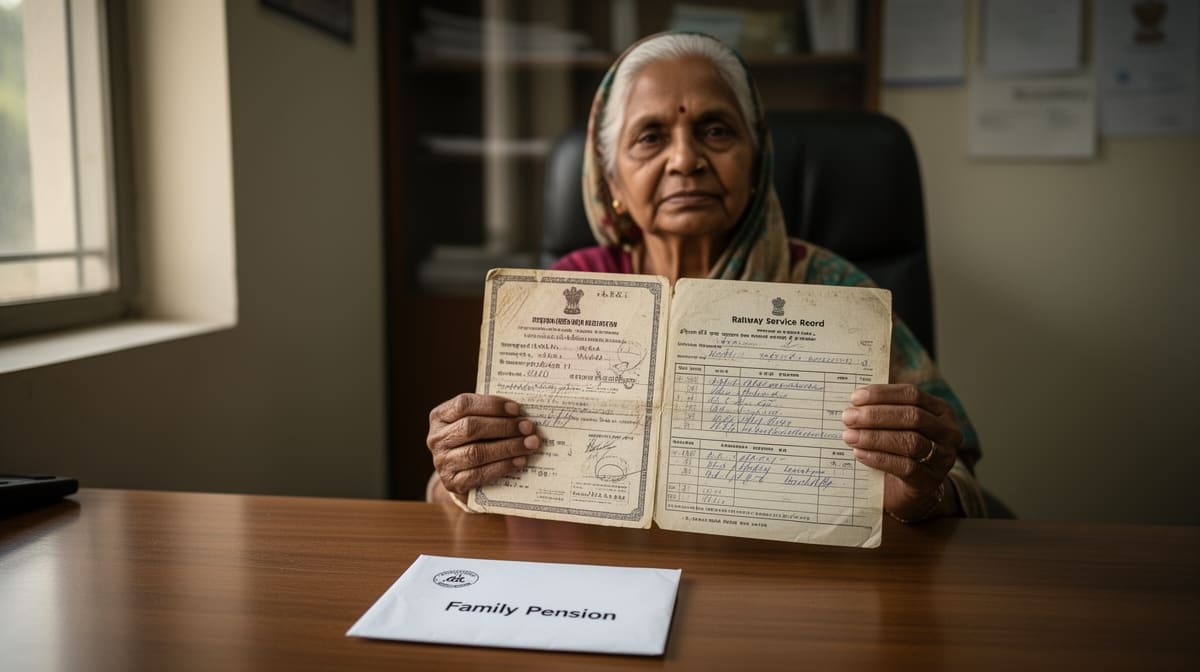
- The petitioner retired from employment and sought pensionary benefits, which were the subject of the heirship dispute.
Procedural History
- 26.09.2022: Death of Shrimant Dadarao Kapse.
- 2022: Respondent Nos. 1 and 2 filed MCA No. 397 of 2022 before the Civil Judge Junior Division, Dharur, seeking Legal Heirship Certificate.
- 29.04.2025: Trial Court passed order partly allowing the application, recognizing Respondent Nos. 1 to 9 as legal heirs.
- 11.06.2026: Civil Revision Application No. 28 of 2026 filed before the Bombay High Court, Aurangabad Bench, challenging the Trial Court’s order.
The Parties' Positions
For the Petitioner
The petitioner claimed to be the lawful second wife of the deceased and sought recognition as a legal heir under the Hindu Succession Act, 1956. She argued that her marriage was valid and that she was entitled to pensionary benefits as the surviving spouse.
For the Respondents
Respondent Nos. 1 and 2 contended that the petitioner’s marriage was void ab initio under the Hindu Marriage Act, 1955, as the deceased was still legally married to Respondent No. 1 at the time of the second marriage. They asserted that no divorce decree had ever been obtained.
Relief Sought
The petitioner sought quashing of the Trial Court’s order dated 29.04.2025 and a declaration that she is the sole legal heir entitled to the deceased’s pensionary benefits and estate.
The Legal Issue
The central question was whether a woman who claims to be a second wife in a marriage solemnized while the first spouse is still alive can claim the status of a "widow" under Class I of the Schedule to the Hindu Succession Act, 1956, and thereby inherit the deceased’s estate or pensionary benefits.
Arguments Presented
For the Petitioner
The petitioner’s counsel argued that the marriage, though possibly irregular, was solemnized in good faith and that the children born from it are legitimate. She contended that denying her heirship would be unjust, especially since she had lived with the deceased as his wife for years and raised five children. She relied on equitable principles and the welfare of children to argue for recognition.
For the Respondent
The respondents contended that the petitioner’s marriage was void under Section 5(i) and Section 11 of the Hindu Marriage Act, 1955, as the deceased was already married to Respondent No. 1 and no valid divorce decree was produced. They emphasized that the Hindu Succession Act, 1956, explicitly limits Class I heirs to a "widow" of a valid marriage, and that a void marriage does not confer such status.
The Court's Analysis
The Court examined the statutory framework governing marriage and succession under Hindu law. It noted that Section 5(i) of the Hindu Marriage Act, 1955, mandates that neither party shall have a spouse living at the time of marriage. Any marriage in contravention of this provision is void under Section 11.
"Under the provisions of Section 5(i) read with Section 11 of the Hindu Marriage Act, 1955, any marriage solemnized while a previous spouse is living is null and void ab initio."
The Court held that even if the petitioner believed in good faith that the first marriage had been dissolved, the absence of a legally recognized divorce decree rendered her marriage void from inception. The Court rejected the argument that long cohabitation or the birth of children could validate a void marriage.
The Court further clarified that under the Hindu Succession Act, 1956, only a "widow" of a valid marriage qualifies as a Class I heir. A woman in a void marriage does not acquire the status of a widow. The Court cited settled precedent that the legal consequences of a void marriage are confined to the parties and do not extend to succession rights.
However, the Court affirmed the Trial Court’s recognition of the children born from the void marriage as legitimate under Section 16 of the Hindu Marriage Act, 1955, which provides that children of void marriages are legitimate and entitled to inherit the property of their parents.
"The status of the children born from such a wedlock (Respondent Nos. 5 to 9) remains protected as legitimate under Section 16 of the Hindu Marriage Act, 1955 and their right to be declared legal heirs alongside the first family cannot be denied."
The Court found no error in the Trial Court’s balanced approach - denying heirship to the petitioner while upholding the rights of the children. No perversity or illegality was found in the order under challenge.
The Verdict
The Civil Revision Application was dismissed. The order dated 29.04.2025 of the Civil Judge Junior Division, Dharur, was upheld. The petitioner is not recognized as a legal heir to the deceased’s estate or pensionary benefits. Respondent Nos. 1 to 9 are declared legal heirs, with Respondent Nos. 5 to 9 inheriting as legitimate children of the deceased. No monetary relief was granted to the petitioner.
What This Means For Similar Cases
Void Marriages Do Not Confer Widow Status
- Practitioners must advise clients that cohabitation, social recognition, or long-term relationship does not cure a void marriage under the Hindu Marriage Act.
- Pension authorities and succession proceedings must strictly apply Section 5(i) and Section 11 to determine heirship eligibility.
- Claims for pension or property by second wives without a divorce decree must be rejected at the preliminary stage.
Children’s Rights Are Independent of Parental Marriage Validity
- Even in void marriages, children retain full inheritance rights under Section 16 of the Hindu Marriage Act.
- Legal heirship applications must separately identify and protect the rights of children born from void unions.
- Courts and tribunals must ensure that children are not penalized for the legal invalidity of their parents’ marriage.
Documentary Proof of Divorce Is Non-Negotiable
- Oral testimony or affidavits claiming divorce are insufficient.
- Only a decree of divorce from a competent court qualifies as proof of dissolution of marriage.
- Practitioners must insist on certified copies of divorce decrees before filing heirship applications or pension claims.