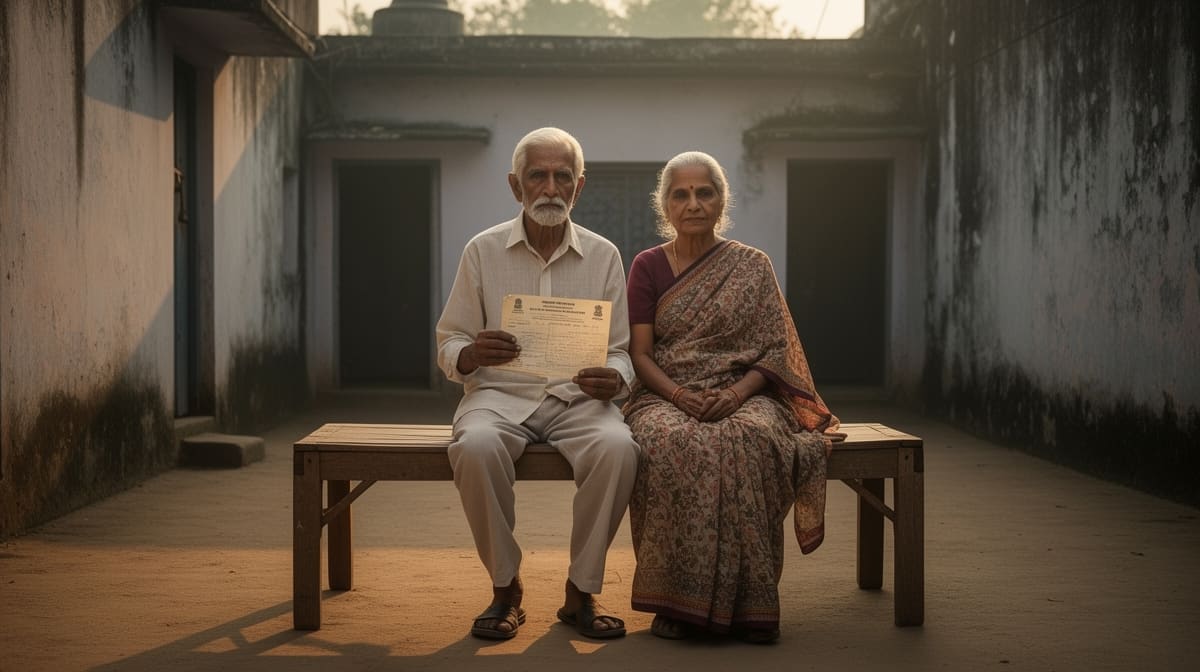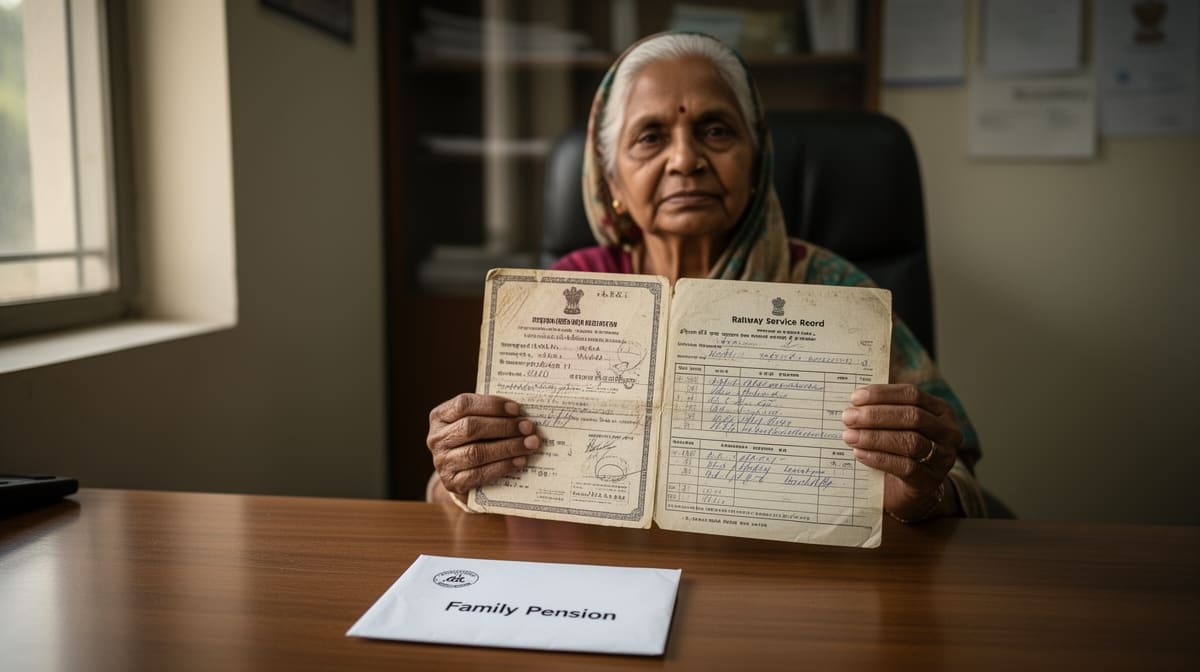
The Central Administrative Tribunal, Allahabad, has delivered a definitive ruling on the legal status of second marriages under the Hindu Marriage Act, 1955, and their impact on entitlement to family pension and compassionate appointment. The judgment clarifies that service benefits cannot be withheld due to inter se disputes between rival claimants, but must be determined by applying statutory and rule-based entitlements, not procedural delays.
Background & Facts
The Dispute
The case arises from the death in harness of Shri Pramod Kumar Bedharak, a regular Peon with the North Central Railway, on 7 December 2011. Two women assert competing claims as his widow: Smt. Shimla Devi, who claims to be his first legally wedded wife since 1978, and Smt. Shakuntala Devi, who claims to have married him in 2005 after his alleged desertion of the first wife. Both women seek family pension, compassionate appointment for their children, and other terminal benefits. The Railway Administration, unable to resolve the conflicting claims, issued a directive on 30 March 2012 requiring both parties to obtain a succession certificate from a civil court before processing any benefits.
Procedural History
- December 2011: Both claimants submitted applications for compassionate appointment and pensionary benefits.
- March 2012: Railway Administration issued a procedural notice requiring succession certificate as precondition for consideration.
- August 2012: CAT Allahabad, in OA No. 1106/2012, directed the Railway to pass a reasoned order on Shakuntala Devi’s claim.
- November 2012: Chief Personnel Officer passed a reasoned order rejecting Shakuntala Devi’s claim without addressing the validity of her marriage.
- 2013: Both claimants filed Original Applications under Section 19 of the Administrative Tribunals Act, 1985, challenging the succession certificate requirement and seeking direct grant of benefits.
Relief Sought
The applicants sought:
- Quashing of the 30 March 2012 order demanding a succession certificate
- Direct grant of family pension, DCRG, GIS, and unpaid salary to the legally entitled widow
- Compassionate appointment for their children without procedural barriers
- Compensation for undue harassment and interest on delayed payments
The Parties' Positions
- Smt. Shakuntala Devi: Argues her marriage was valid under customary law of the 'Shudra' community due to prolonged desertion by the first wife; her name and children were recorded in official Railway records.
- Smt. Shimla Devi: Asserts she is the only legally wedded wife; no divorce decree was ever granted; second marriage is void under Section 11 of the Hindu Marriage Act, 1955.
- Railway Administration: Contends that due to conflicting claims, succession certificate is a neutral, precautionary step to avoid wrongful disbursement.
The Legal Issue
The central question was whether a second marriage solemnized during the subsistence of a first marriage under Hindu law can confer legal status as a widow for the purpose of family pension and compassionate appointment under Railway Rules, and whether the insistence on a succession certificate is a lawful precondition for processing such claims.
Arguments Presented
For the Appellant/Petitioner (Smt. Shakuntala Devi)
Relied on M. Govindaraju v. K. Munisami Gounder to argue that desertion in the 'Shudra' community constitutes customary divorce, dissolving the first marriage. Cited Haruli Devi and Smt. M. Samadhanam to assert that service records (Medical Identity Card, PF nomination, privilege passes) establish de facto marital status. Argued that Railway Board Circulars do not mandate succession certificates for compassionate appointment, and that withholding benefits violates Article 14 and Article 21.
For the Respondent/State (Smt. Shimla Devi and Railway Administration)
Contended that under Section 11 of the Hindu Marriage Act, 1955, a second marriage during subsistence of a first marriage is void ab initio. Cited Rameshwari Devi v. State of Bihar and Chandra Kali v. State of U.P. to establish that void marriages confer no legal rights. Argued that the succession certificate requirement is not a denial but a procedural safeguard to prevent wrongful disbursement of public funds, and that the claimants’ applications were premature as no final order had been passed.
The Court's Analysis
The Tribunal undertook a rigorous analysis of statutory provisions, precedent, and administrative rules. It rejected the argument that customary divorce in the 'Shudra' community applied to the facts of this case, noting that M. Govindaraju pertained to a specific community in Karnataka and could not be extrapolated to Uttar Pradesh without evidence of local custom. The Court emphasized that the Hindu Marriage Act, 1955 is a uniform civil code for Hindus, and no customary practice can override its provisions unless expressly recognized by statute or judicial precedent.
"Any marriage, if at all, solemnised by the late employee with Smt. Shakuntala Devi during the subsistence of his first marriage, without obtaining a decree of divorce from the first wife, clearly establishes that such second marriage is in violation of the provisions of the Hindu Marriage Act."
The Tribunal distinguished Smt. Pushpa v. Smt. Y. Jansi Rani, where equal pension sharing was permitted, on the ground that the second marriage in that case had been legally dissolved before remarriage. Here, no such dissolution occurred. The Court held that the term "widows" in Rule 75(7)(i)(a) of the Railway Services (Pension) Rules, 1993, refers only to legally wedded wives, not to those in void marriages. The provision was intended for polygamous marriages permitted under personal law, not for illegal unions.
Regarding compassionate appointment, the Tribunal noted that while the Railway Board Circular dated 2 January 1992 restricts appointment to children of second wives, this restriction has been declared ultra vires by the Calcutta High Court in Smt. Namita Golder. The Tribunal held that children from both marriages are legitimate and entitled to be considered for compassionate appointment, provided they meet eligibility criteria. The insistence on a succession certificate for this purpose was held to be legally untenable.
The Court further held that family pension is a statutory benefit under service rules, not a matter of succession. The status of the first wife as the only legally recognized widow was established by the absence of any divorce decree and the clear prohibition under the Hindu Marriage Act. Therefore, no succession certificate was required to disburse pension to Smt. Shimla Devi.
The Verdict
Smt. Shimla Devi, the first legally wedded wife, prevailed. The Court held that a second marriage during the subsistence of a first marriage under Hindu law is void ab initio and confers no legal rights to family pension or widow status. The Railway Administration was directed to release family pension to Smt. Shimla Devi without delay and to consider compassionate appointment claims from children of both marriages, without requiring a succession certificate.
What This Means For Similar Cases
Family Pension Is Not Subject to Succession Law
- Practitioners must argue that family pension under Railway Rules is a statutory benefit tied to service records, not inheritance
- No succession certificate is required where the widow’s status is established by marriage records and absence of divorce
- Denial of pension on grounds of rival claims without adjudication violates Rule 75(7) and Article 14
Void Marriages Cannot Be Validated by Administrative Records
- Service records alone cannot validate a void marriage under the Hindu Marriage Act
- Even if a second wife is listed on Medical Identity Cards or PF nominations, such entries do not override statutory prohibitions
- Administrative convenience cannot override the sanctity of personal law
Compassionate Appointment Must Be Considered for All Legitimate Children
-
Children born from void marriages are legitimate under Section 16 of the Hindu Marriage Act
-
Railway Board Circulars restricting compassionate appointment to children of first wives are ultra vires and unenforceable
-
Tribunals must direct authorities to evaluate compassionate appointment on merit, financial distress, and eligibility - not marital status of the parent
-
Actionable Takeaway: In all service benefit disputes involving multiple claimants, first establish legal marital status under personal law before applying administrative rules. If the marriage is void, pension goes to the legally wedded spouse; compassionate appointment must be considered for all children regardless of parental marital status.