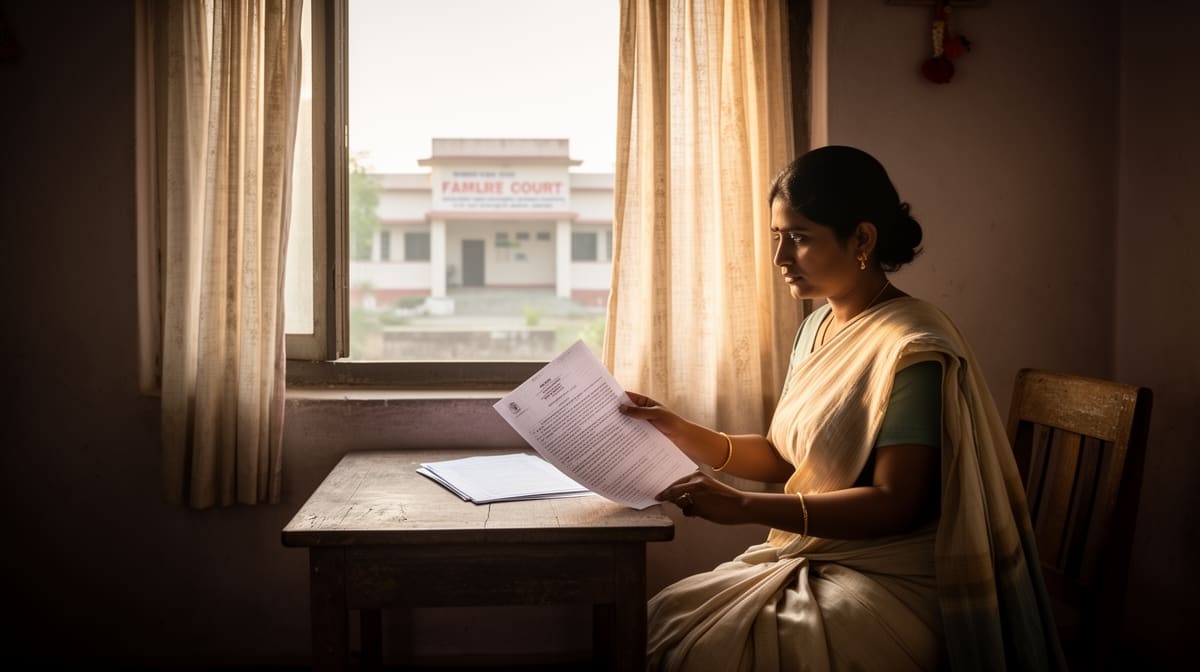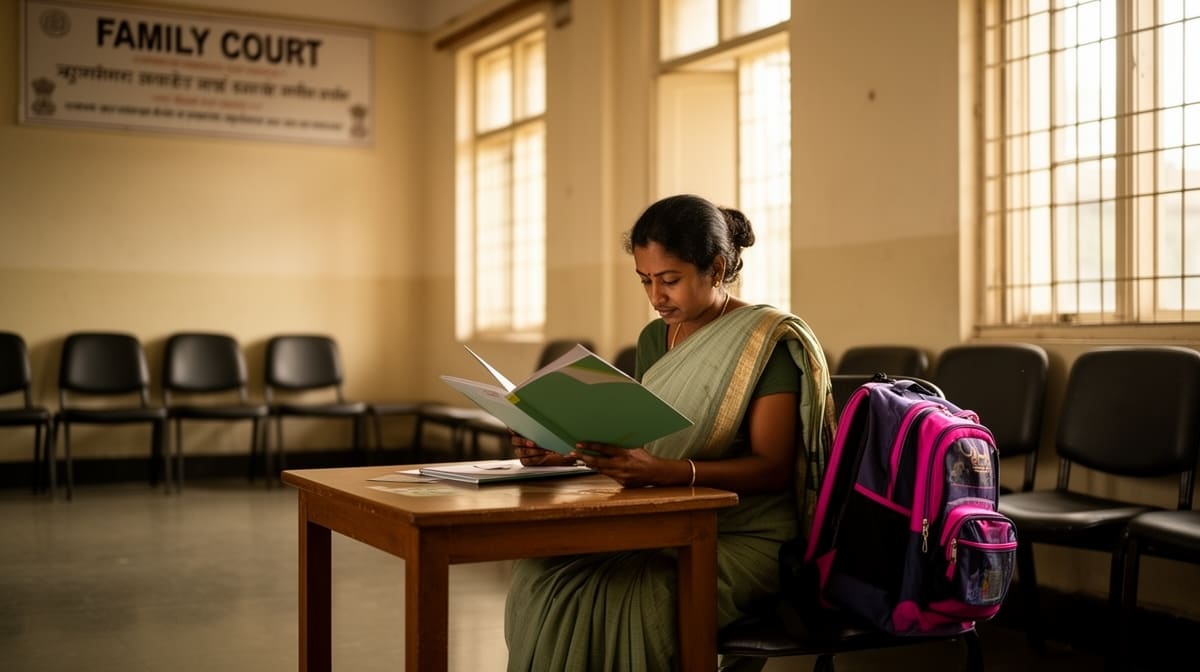
The Madhya Pradesh High Court has affirmed that persistent judicial inaction and deliberate non-compliance with maintenance orders constitute sufficient grounds for transferring a matrimonial case under Section 24 CPC. This ruling reinforces the principle that courts must not permit procedural delays to compound the suffering of vulnerable litigants, particularly women and children dependent on court-ordered financial support.
Background & Facts
The Dispute
The petitioner, Smt. Sangeeta Prajapati, sought transfer of a pending divorce petition filed by her husband under Section 13 of the Hindu Marriage Act from the Family Court in Bhind to the Family Court in Gwalior. The dispute arose amid the respondent’s consistent refusal to comply with multiple court orders for maintenance.
Procedural History
- 27/01/2021: Petitioner filed an application under Section 125 Cr.P.C. for maintenance.
- 05/03/2025: Family Court, Bhind ordered respondent to pay Rs. 3,000/month to petitioner and Rs. 1,000/month to their minor daughter, effective from the date of application.
- 30/01/2025: Petitioner filed a petition under Section 9 Hindu Marriage Act in Gwalior seeking restitution of conjugal rights.
- 18/07/2025: Family Court, Bhind granted interim maintenance of Rs. 1,000/month under Section 24 HMA in the divorce petition.
- 08/10/2025: Respondent paid only Rs. 2,000 - despite owing over Rs. 30,000 in arrears.
- 11/03/2026: Petitioner filed this application under Section 24 CPC seeking transfer.
Relief Sought
The petitioner sought transfer of the divorce proceedings to Gwalior, citing financial hardship, non-enforcement of maintenance orders, and deliberate delays by the Bhind Family Court.
The Legal Issue
The central question was whether Section 24 of the Code of Civil Procedure permits transfer of a matrimonial case when the trial court exhibits persistent indifference to court-ordered maintenance and enables procedural delays that prejudice a vulnerable litigant.
Arguments Presented
For the Petitioner
Counsel argued that the respondent’s refusal to pay maintenance, despite clear orders under Section 125 Cr.P.C. and Section 24 HMA, constituted a violation of judicial dignity and the petitioner’s fundamental right to livelihood. The repeated adjournments by the Bhind court - despite both parties being present - demonstrated systemic neglect. Reliance was placed on Rajnesh v. Neha to establish that an able-bodied husband cannot evade maintenance obligations.
For the Respondent
Counsel contended that the respondent was unemployed and lacked means to pay maintenance. He argued that the case was progressing normally and that transfer would disrupt judicial continuity. He conceded no stay had been granted against the maintenance order but claimed the delay in evidence recording was due to witness unavailability.
The Court's Analysis
The Court examined the conduct of both parties and the trial judge with a focus on judicial accountability and procedural fairness. It rejected the respondent’s claim of financial incapacity, citing Rajnesh v. Neha, and emphasized that unemployment alone does not absolve an able-bodied man of maintenance obligations.
"It is clear that respondent has not respected any order either passed under Section 125 Cr.P.C. or under Section 24 of the Hindu Marriage Act and he is adamant in not making payment of maintenance amount even to his minor daughter."
The Court meticulously reviewed the order sheets from the Bhind Family Court, noting that on four occasions - 05/12/2025, 16/12/2025, 15/01/2026, and 13/02/2026 - both parties were present, yet the court adjourned proceedings without valid cause. On 15/01/2026, the court claimed a witness was absent despite the respondent’s cross-examination being pending. The Court found this conduct to be not merely negligent but deliberately obstructive.
The Court held that Section 24 CPC is not confined to convenience or forum shopping but extends to cases where the trial court’s inaction or indifference causes undue hardship. The petitioner’s repeated appearances and the respondent’s non-compliance created a situation where continued litigation in Bhind would perpetuate injustice.
The Verdict
The petitioner succeeded. The Court held that persistent non-compliance with maintenance orders and systemic judicial indifference justify transfer under Section 24 CPC. The case was ordered transferred to the Family Court, Gwalior, with directions to transmit records immediately.
What This Means For Similar Cases
Judicial Indifference Can Justify Transfer
Practitioners may now invoke Section 24 CPC not merely for convenience, but to challenge courts that habitually adjourn proceedings despite party presence and pending evidence. This ruling transforms transfer applications into tools for enforcing judicial accountability.
Maintenance Non-Compliance Is a Ground for Relief
- Where maintenance orders under Section 125 Cr.P.C. or Section 24 HMA are ignored, transfer applications gain stronger footing.
- Courts must now consider whether delay is tactical or structural - deliberate inaction by the trial judge is no longer tolerated.
- Evidence of repeated adjournments with no valid reason, coupled with non-payment, creates a compelling case for transfer.
Burden Shifts to Trial Courts to Justify Delays
Trial judges must now proactively record reasons for adjournments, especially when parties are present. Blanket adjournments under phrases like "formal orders" or "witness not present" without corroboration will be scrutinized. This ruling compels courts to prioritize expeditious disposal in maintenance matters.