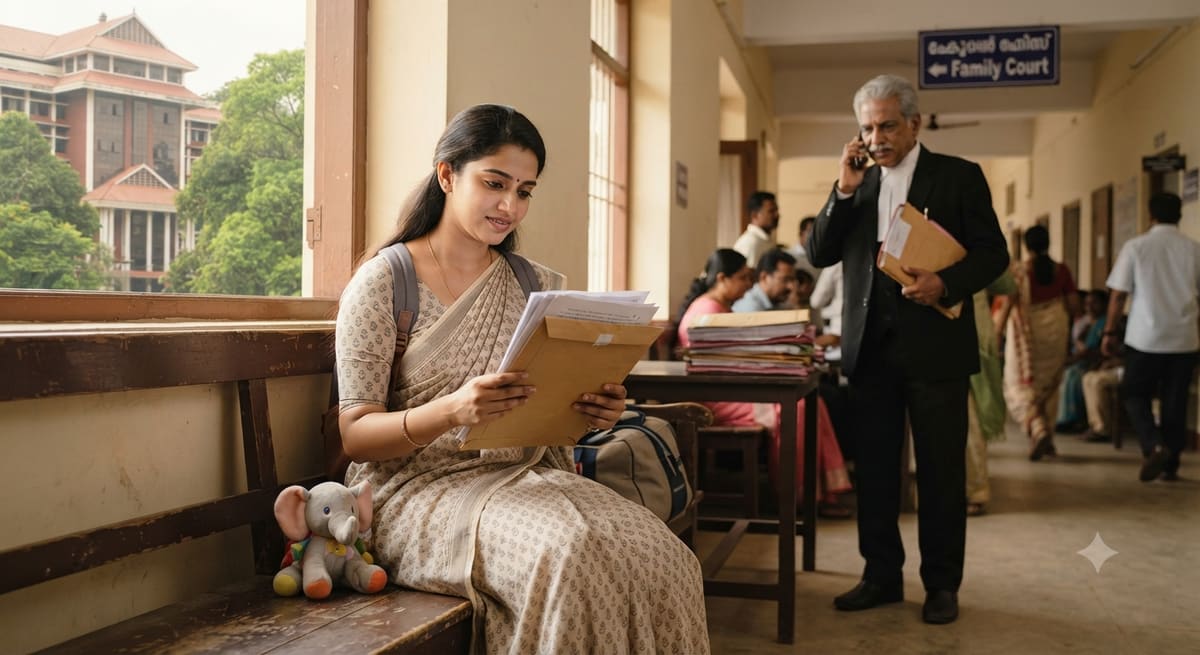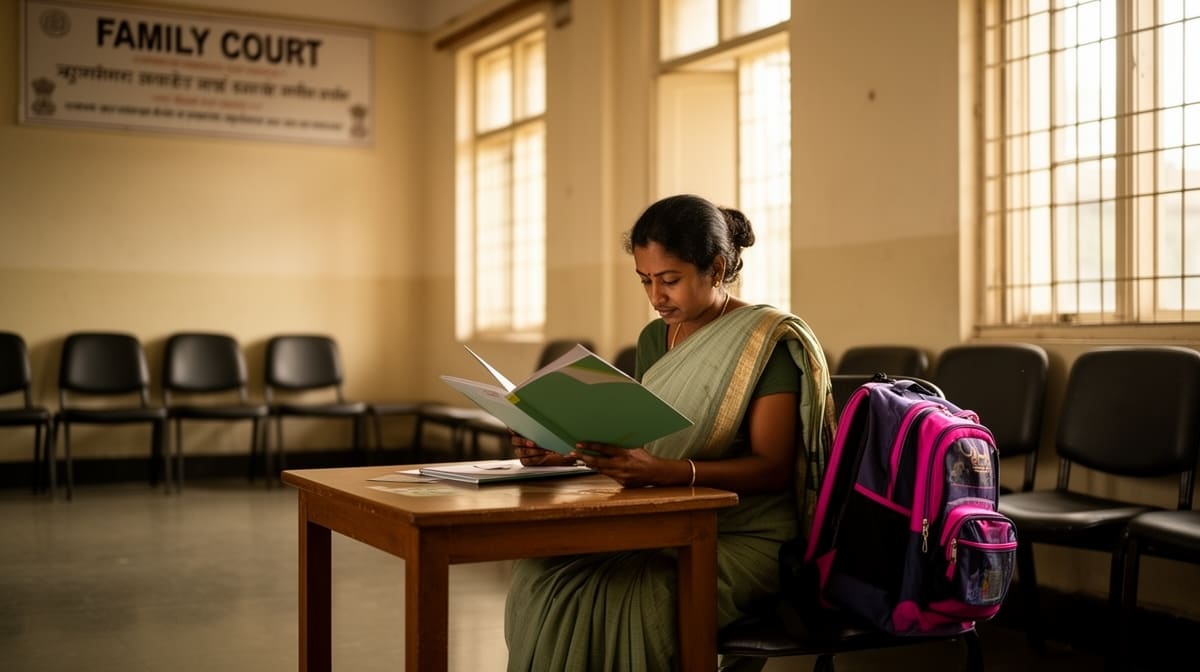
The Madras High Court has affirmed that the convenience of a financially vulnerable wife is a decisive factor in granting transfer of matrimonial proceedings under Section 24 of the Civil Procedure Code. This order underscores the judiciary’s evolving recognition of practical barriers to justice in personal law matters, particularly when gendered economic disparities intersect with procedural geography.
Background & Facts
The Dispute
The petitioner, Chitra, wife of the respondent Pandian, seeks transfer of a matrimonial suit filed by the respondent under H.M.O.P. No.103 of 2025 at the Sub Judge’s Court in Devakottai, Sivagangai District. The marriage was solemnised in 1999, but the couple has been separated for years. The petitioner, who resides in Villivakkam, Chennai, is the primary caregiver for their children and lacks independent income. She contends that traveling over 435 kilometers to attend proceedings in Devakottai imposes severe hardship.
Procedural History
- October 2024: Respondent filed H.M.O.P. No.103 of 2025 before the Sub Judge, Devakottai.
- November 2025: Petitioner filed C.M.P. No.29575 of 2025 seeking interim stay of proceedings.
- December 2025: Interim stay granted by the High Court.
- February 2026: Transfer petition under Section 24 CPC filed, with no appearance by the respondent.
Relief Sought
The petitioner sought transfer of the matrimonial suit to the Family Court in Chennai, citing financial incapacity, childcare responsibilities, and the impracticality of long-distance travel. She also requested continuation of the interim stay until disposal of the transfer petition.
The Legal Issue
The central question was whether Section 24 of the Civil Procedure Code permits transfer of a matrimonial suit on grounds of the wife’s financial hardship and geographical inconvenience, even when the suit was originally filed in the respondent’s jurisdiction.
Arguments Presented
For the Petitioner
The petitioner’s counsel, Mr. D. Chandrakumar, relied on the principle that Section 24 CPC empowers courts to transfer cases in the interest of justice and convenience. He cited Smt. S. Meena v. S. Rajendran and Smt. R. Sujatha v. R. Suresh to argue that in matrimonial disputes, the wife’s welfare and accessibility to justice must be prioritized. He emphasized that the petitioner’s lack of income and primary caregiving role rendered travel to Devakottai not merely inconvenient but unjust.
For the Respondent
The respondent did not appear or file any counter-affidavit, leaving the court to evaluate the petitioner’s claims on unopposed evidence.
The Court's Analysis
The Court examined the scope of Section 24 CPC, which allows transfer when it serves the ends of justice or the convenience of parties. It held that in matrimonial matters, the convenience of the wife is not merely a factor but a compelling consideration, especially when compounded by economic vulnerability. The Court noted that the petitioner’s residence in Chennai, her role as sole caregiver, and the absence of any counter-evidence from the respondent collectively justified transfer.
"In matrimonial proceedings, the hardship faced by the wife in attending distant courts cannot be ignored, particularly when she lacks independent means and bears the primary responsibility for minor children. The ends of justice demand that she be afforded reasonable access to justice without undue burden."
The Court rejected the notion that jurisdictional primacy of the respondent’s location overrides equitable considerations. It clarified that Section 24 CPC is not confined to technical jurisdictional errors but encompasses substantive fairness. The interim stay was vacated as the transfer order rendered it redundant.
The Verdict
The petitioner succeeded. The Court held that Section 24 CPC authorizes transfer of matrimonial proceedings when the wife’s financial hardship and geographical burden undermine access to justice. The suit was transferred to the Family Court, Chennai, with records to be transmitted within three weeks.
What This Means For Similar Cases
Convenience of the Wife Is a Ground for Transfer
- Practitioners must now explicitly plead financial incapacity, childcare duties, and distance as integral to the ends of justice under Section 24 CPC.
- Affidavits should include proof of residence, income status, and dependency on children to substantiate hardship claims.
- Courts are now expected to treat these factors as presumptively valid unless rebutted by the respondent.
Family Courts Are Preferred Forums for Matrimonial Disputes
- Transfer to a designated Family Court is now a recognized remedy to ensure specialized, child-sensitive adjudication.
- Even if the original suit was filed in a civil court, petitioners may invoke Section 24 CPC to seek transfer to a Family Court, especially where children are involved.
- This reinforces the legislative intent behind the Family Courts Act, 1984, to centralize and humanize matrimonial dispute resolution.
Non-Appearance by Respondent Strengthens Petitioner’s Case
- When the respondent fails to appear, courts may rely more heavily on the petitioner’s unchallenged averments.
- Practitioners should ensure affidavits are detailed and corroborated to preempt skepticism, even in ex parte proceedings.
- This case sets a precedent for expeditious disposal of transfer petitions in uncontested matrimonial matters.