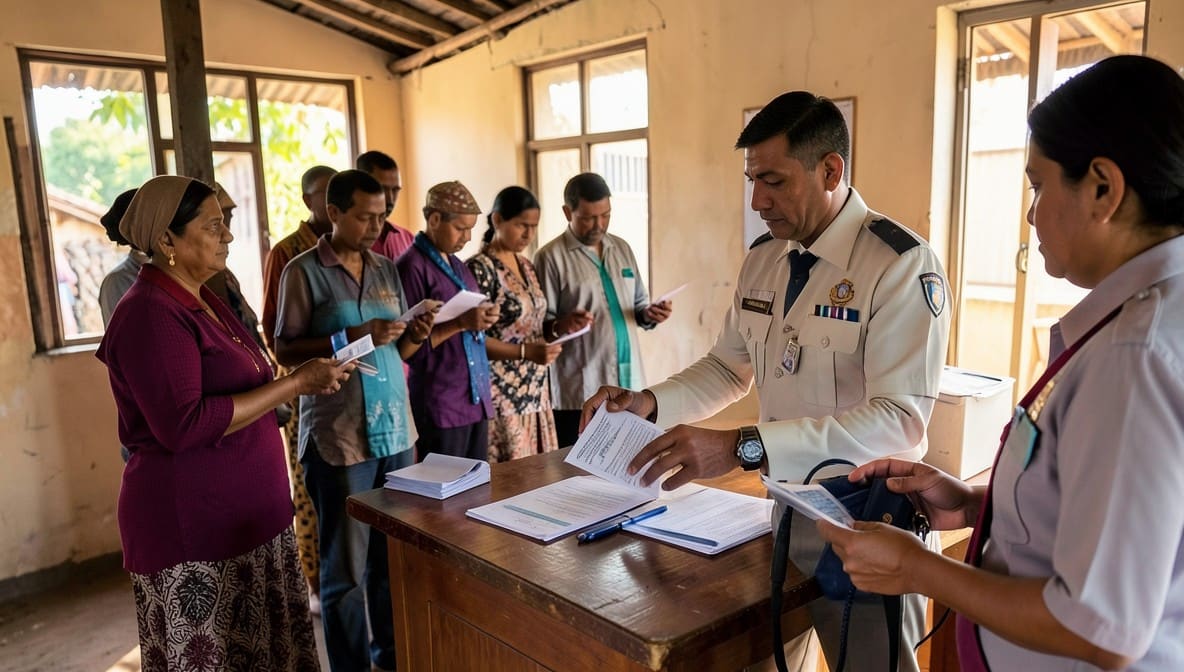
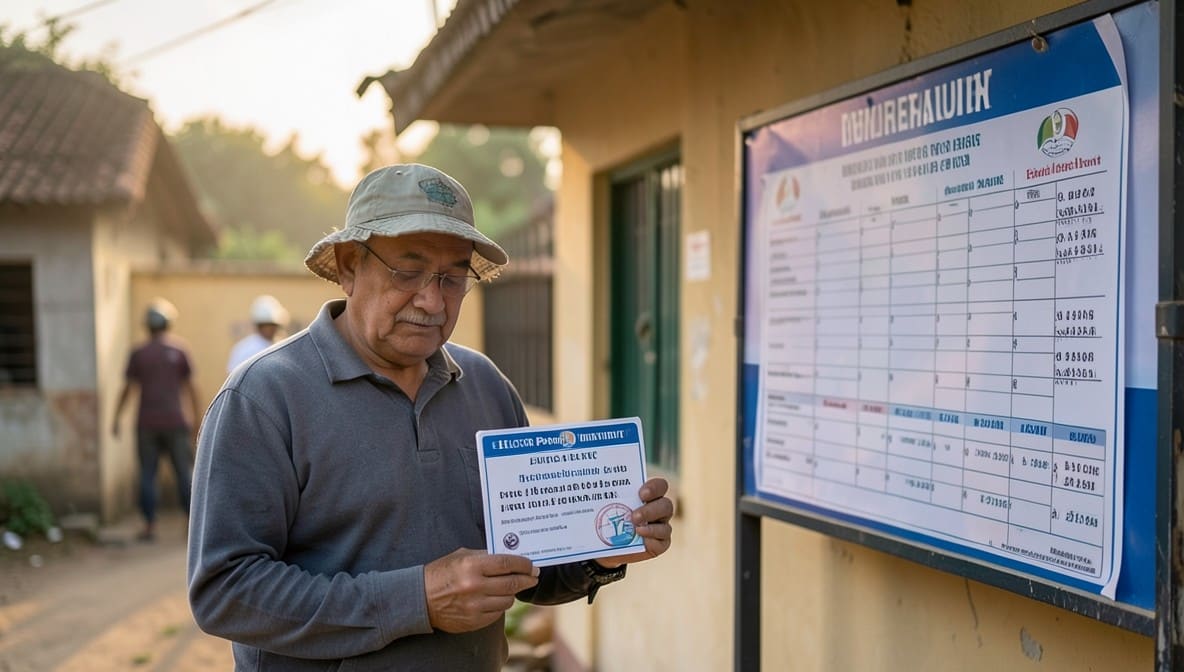
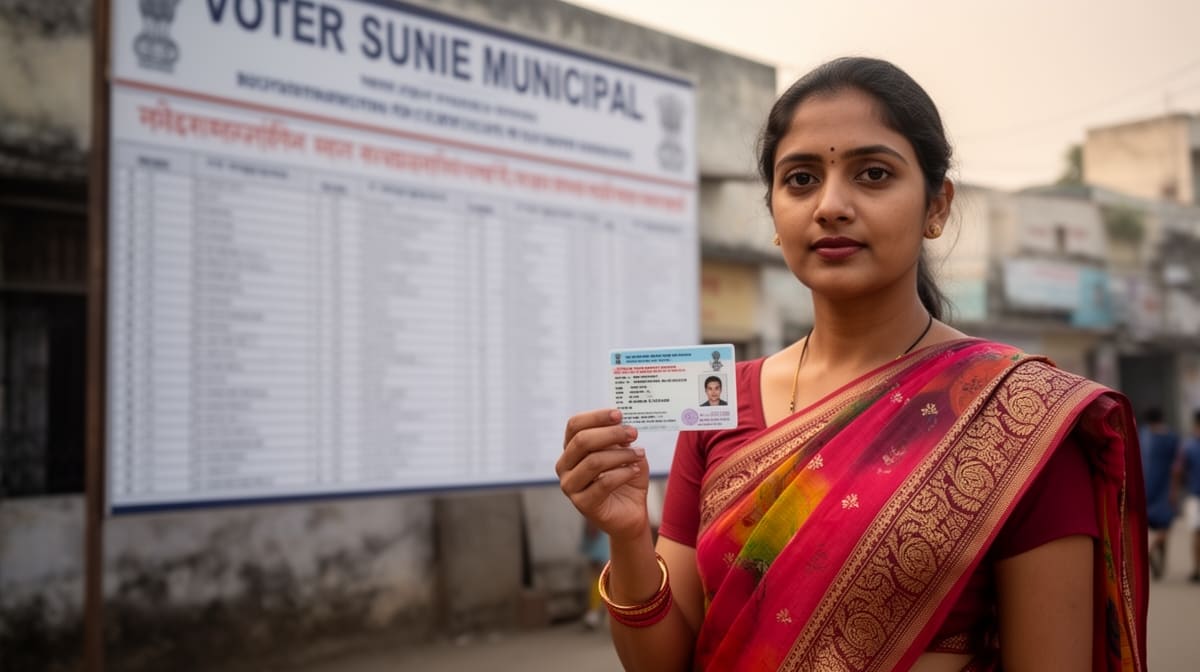
The Gauhati High Court has reaffirmed that the deletion of names from electoral rolls, even if alleged to be arbitrary, cannot be challenged directly through a writ petition under Article 226 when statutory remedies under the Representation of the People Act, 1950 are available and efficacious. The judgment underscores the principle that judicial review must not preempt administrative and quasi-judicial processes mandated by Parliament.
Background & Facts
The Dispute
Forty residents of Village Jugicherra, Post Office Isabeel, District Sribhumi, Assam, filed a collective writ petition challenging the deletion of their names from the Electoral Roll for Polling Station No. 151 under Assembly Constituency No. 125 Patherkandi. The petitioners, all long-time voters with Electoral Photo Identity Cards (EPICs), claimed they had consistently exercised their franchise in prior State and Parliamentary elections. During the Special Revision of Electoral Rolls, 2026, their names were initially included in the draft roll published on 27.12.2025 and later in the final roll published on 10.02.2026. However, upon verification via the Election Commission’s official portal, their names were found to be missing.
Key Facts
- All petitioners are residents of Village Jugicherra, Pin 788728, within the territorial jurisdiction of 125 Patherkandi Legislative Assembly Constituency
- Each petitioner possessed a valid EPIC issued by the Election Commission of India
- Draft Electoral Roll published on 27.12.2025 included all forty petitioners
- Final Electoral Roll published on 10.02.2026 initially listed all petitioners
- On 31.03.2026, when the writ petition was filed, the ECI’s online portal showed deletion of 39 petitioners’ names
- The ECI stated the deletions were based on findings that these individuals had ceased to be ordinarily resident in the constituency
- Petitioner No. 40 (Nur Islam S/O Abdul Mojid) was confirmed to be reinstated in the roll
- The Assam Legislative Assembly elections were scheduled for polling on 09.04.2026
- The last date for filing nominations was 23.03.2026
Procedural History
- 17.11.2025: Election Commission of India issued Notification for Special Revision of Electoral Rolls in Assam, with 01.01.2026 as qualifying date
- 27.12.2025: Draft Electoral Roll published for 125 Patherkandi LAC, including all 40 petitioners
- 02.02.2026: Claims and objections to draft roll disposed of
- 10.02.2026: Final Electoral Roll published, listing all petitioners
- 31.03.2026: Writ Petition (WP(C)/1862/2026) filed before Gauhati High Court
- 02.04.2026: Hearing before Justice Manish Choudhury; ECI submitted that Petitioner No. 40’s name would be reinstated
- 16.03.2026: Notification published in Assam Gazette fixing election schedule: nominations closed on 23.03.2026; polling on 09.04.2026; election completion by 06.05.2026
The Parties' Positions
For the Petitioners
- Argued that their names were deleted without any notice, inquiry, or opportunity of hearing
- Contended that they continue to reside at the same address recorded in their EPICs and electoral records
- Asserted that deletion was arbitrary, violative of Article 19(1)(a) and Article 326 of the Constitution
- Claimed that the ECI’s online portal discrepancy rendered them unable to vote despite being eligible
For the Respondents (ECI and State Authorities)
- Admitted deletion of 39 names but justified it on grounds of change in ordinary residence
- Stated that house-to-house verification during Special Revision revealed non-residency
- Emphasized that statutory remedies under Sections 23 and 24 of the Representation of the People Act, 1950 were available
- Argued that writ jurisdiction under Article 226 is not a substitute for statutory appeals
- Noted that the last date for inclusion under Section 23 had passed (23.03.2026), but remedies remain available post-election
Relief Sought
The petitioners sought:
- Immediate restoration of their names in the Electoral Roll for 125 Patherkandi LAC
- Direction to the ECI to update its portal to reflect their inclusion
- Declaration that deletion without hearing violated constitutional rights
- Permission to vote in the upcoming Assembly elections on 09.04.2026
The Legal Issue
The central question was whether the deletion of names from an electoral roll, allegedly without compliance with Section 22 of the Representation of the People Act, 1950, renders a writ petition under Article 226 maintainable, despite the existence of statutory remedies under Sections 23 and 24.
Arguments Presented
For the Petitioner
Mr. S.B. Laskar and Mr. H.A. Laskar argued that the deletion of names without prior notice or opportunity of hearing violated the principles of natural justice enshrined in Article 14. They relied on State of U.P. v. Mohd. Noor and K.S. Puttaswamy v. Union of India to assert that the right to vote is a fundamental constitutional right. They contended that the ECI’s failure to follow Section 22’s procedural safeguards rendered the deletion void ab initio, making judicial intervention under Article 226 imperative. They further argued that the urgency of the impending election (polling on 09.04.2026) justified bypassing statutory remedies.
For the Respondent
Ms. S. Kataki, Standing Counsel for ECI, submitted that Section 22 mandates a reasonable opportunity of hearing before deletion, but the petitioners had not exhausted the remedies provided under Sections 23 and 24. She cited S. R. Bommai v. Union of India to emphasize that courts must not interfere where an alternative efficacious remedy exists. She clarified that while the last date for inclusion under Section 23 had passed, the petitioners could still file applications post-election, and appeals under Section 24 remained available. The statutory framework, she argued, was designed precisely to resolve such factual disputes regarding residence and eligibility.
The Court's Analysis
The Court undertook a detailed examination of Sections 21, 22, 23, and 24 of the Representation of the People Act, 1950, and the Registration of Electors Rules, 1960. It noted that Section 22 explicitly requires the Electoral Registration Officer to provide a reasonable opportunity of hearing before deleting a name on grounds of change of residence or disqualification. The Court observed that while the petitioners alleged non-compliance with this requirement, they had not filed any application under Section 23 to seek reinstatement.
"The existence of a specific statutory mechanism to address grievances relating to electoral roll entries cannot be bypassed by invoking the extraordinary jurisdiction under Article 226, especially when the remedy is efficacious and the factual issues are best determined by the designated authorities."
The Court emphasized that Section 23 provides a clear, accessible, and time-bound procedure for any person whose name has been deleted to apply for inclusion. Rule 26 of the Registration of Electors Rules, 1960, further prescribes procedural safeguards, including public notice of applications and written reasons for rejection. The Court held that these mechanisms are not illusory or inadequate.
It also noted that while the last date for inclusion under Section 23 had passed for the 2026 elections (23.03.2026), the statutory right to apply for inclusion remains open post-election. The Court rejected the petitioners’ argument that delay in processing would render the remedy ineffective, stating that the law contemplates resolution after the election, and that the petitioners’ rights are preserved for future elections.
The Court distinguished K. Veeraswami v. Union of India and State of Haryana v. Bhagwan Das, where writ jurisdiction was invoked due to complete absence of statutory remedies. Here, the statutory framework was fully operational.
The Verdict
The writ petition was disposed of with directions. Petitioner No. 40’s name was reinstated. For the remaining thirty-nine petitioners, the Court directed:
- They shall file applications under Section 23(1) of the Representation of the People Act, 1950 before the jurisdictional Electoral Registration Officer within fifteen days from 06.05.2026
- The Electoral Registration Officer shall decide such applications in accordance with Section 23 and Rule 26 of the Registration of Electors Rules, 1960
- Any rejection must be accompanied by a written brief statement of reasons and communicated forthwith
- Aggrieved petitioners may file appeals under Section 24 of the Act: first to the District Magistrate or equivalent, and second to the Chief Electoral Officer
- No further interim relief or direction for inclusion in the 2026 electoral roll shall be granted
What This Means For Similar Cases
Statutory Remedies Are Not Optional
- Practitioners must advise clients to exhaust remedies under Section 23 before approaching High Courts under Article 226 in electoral roll disputes
- Courts will dismiss writ petitions as premature if statutory procedures are available and unexhausted
- The doctrine of alternative remedy remains firmly intact in electoral law
Procedural Compliance Is Non-Negotiable
- Electoral Registration Officers must strictly follow Section 22 before deletion: notice, inquiry, and opportunity of hearing are mandatory
- Failure to record reasons for deletion or to provide hearing renders the action liable to be set aside on appeal
- Digital portal discrepancies do not override the statutory process; the official roll is the authoritative record
Post-Election Remedies Are Legally Valid
- Voters whose names are deleted close to elections may still file applications under Section 23 after polling
- The right to vote is not extinguished by election timing; eligibility for future elections remains intact
- Delay in processing post-election does not invalidate the remedy; courts will not grant interim relief unless irreparable harm is shown