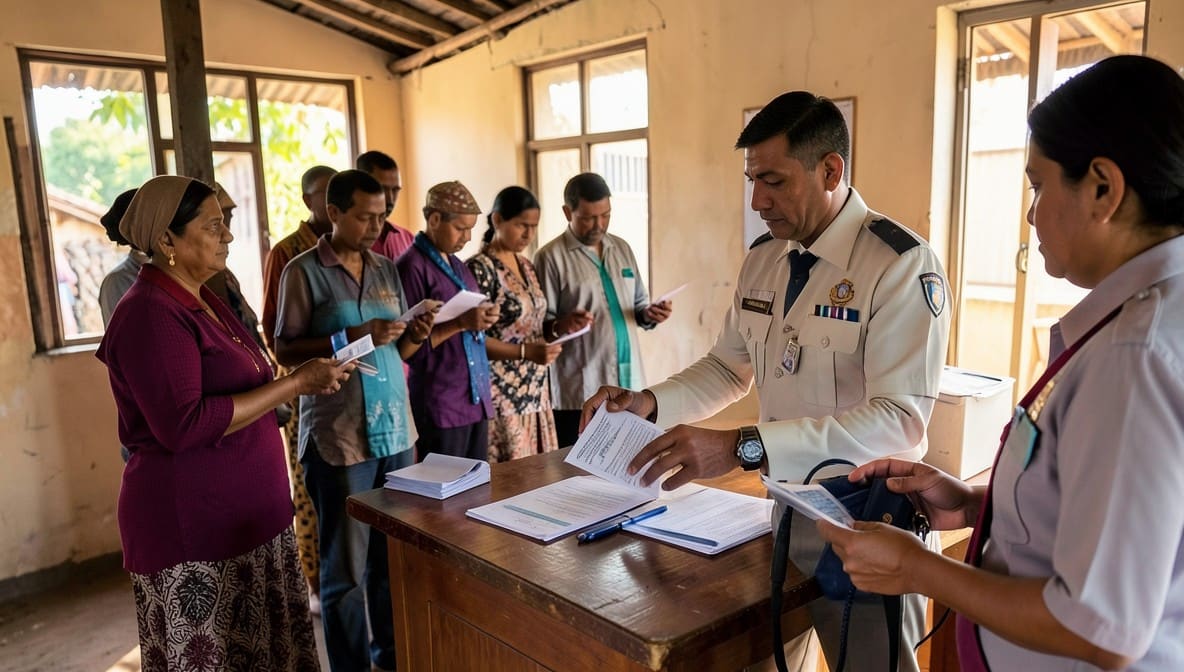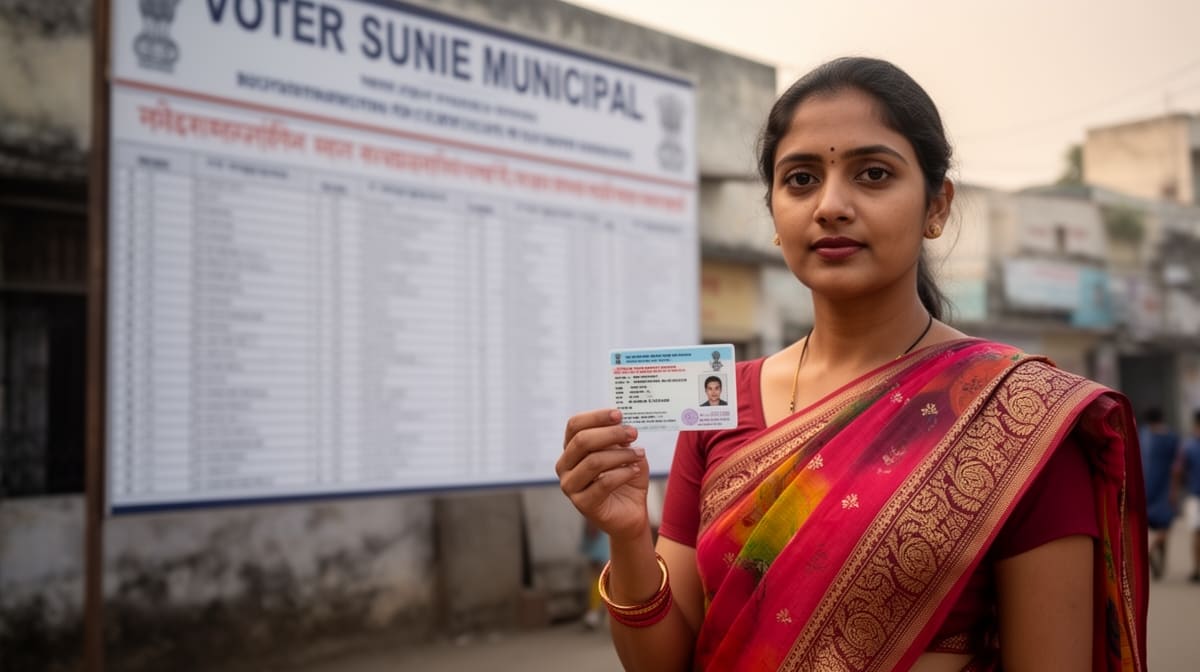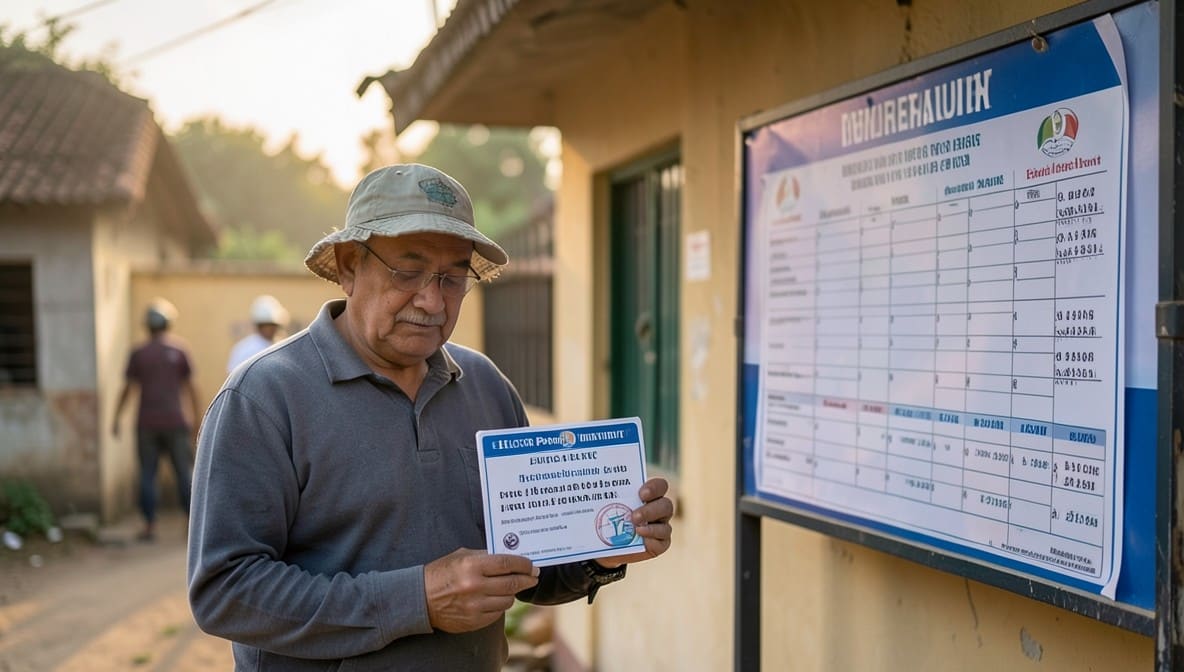
The Gauhati High Court has reaffirmed that the deletion of voters from electoral rolls without providing a prior opportunity to be heard is a violation of statutory procedure under the Representation of the People Act, 1951. In a significant ruling, the Court directed authorities to expedite the re-inclusion of nineteen petitioners whose names were removed during a Special Revision, emphasizing that procedural fairness is non-negotiable in electoral administration.
Background & Facts
The Dispute
Nineteen petitioners, all residents of Purbo Bazaricherra Kitte, Village, P.O. & P.S. Bazaricherra, District Sribhumi (formerly Karimganj), Assam, filed a writ petition under Article 226 of the Constitution alleging that their names were deleted from the electoral rolls without any prior notice, hearing, or opportunity to contest the deletion. The petitioners had been enrolled voters for years, holding valid Elector Photo Identity Cards (EPICs), and had consistently exercised their right to vote in both State Legislative Assembly and Parliamentary elections from Assembly Constituency No. 125 Patharkandi.
Key Facts
- The petitioners were enrolled voters in the electoral roll prior to the Special Revision conducted by the Election Commission of India (ECI)
- Their names were omitted from the electoral roll published after the Special Revision initiated under Section 21 of the Representation of the People Act, 1951
- No individual notice, inquiry, or opportunity to be heard was provided to any petitioner prior to deletion
- The petitioners submitted a joint representation dated 02.03.2026 to the District Election Officer (Respondent No. 6)
- The representation was forwarded to the Electoral Registration Officer (Respondent No. 7) for verification
- The petitioners were not informed of any grounds for deletion, nor were they given access to the records or evidence relied upon
Procedural History
- 17.11.2025: Election Commission of India issued Notification under Section 21 of the RP Act, 1951, initiating Special Revision of electoral rolls in Assam with 01.01.2026 as the qualifying date
- Prior to 01.01.2026: All petitioners were duly enrolled voters in the electoral roll for Patharkandi LAC
- Post-Special Revision (January - February 2026): Names of petitioners were deleted from the final electoral roll without procedural compliance
- 16.03.2026: Writ Petition (WP(C)/1548/2026) filed before the Gauhati High Court
- 17.03.2026: Court directed ECI to verify current status of petitioners’ enrollment
- 17.03.2026: Office Letter No. SEL.27/2026/143 received from District Commissioner & District Election Officer, Sribhumi, confirming deletion but stating that action for re-inclusion had been initiated upon receipt of the 02.03.2026 representation
The Parties' Positions
For the Petitioners
The petitioners, represented by Mr. M.D.A.J. Atia, contended that:
- Their names were deleted without any notice, inquiry, or opportunity to be heard, violating Section 22 of the RP Act, 1951
- The deletion was arbitrary, mala fide, and in breach of the principles of natural justice
- The deletion deprived them of their fundamental right to vote under Article 326 of the Constitution
- The ECI’s reliance on administrative convenience cannot override statutory safeguards
For the Respondents
The respondents, represented by counsel for the Union of India, ECI, and State of Assam, submitted that:
- The ECI has wide powers under Section 21 to conduct Special Revisions
- The petitioners failed to exhaust statutory remedies under Section 23 (application for inclusion) and Section 24 (appeal)
- The matter involved factual disputes regarding ordinary residence and eligibility, which are best resolved through the statutory appellate mechanism
- The petitioners’ writ petition was premature and not maintainable
Relief Sought
The petitioners sought:
- Immediate restoration of their names in the electoral roll for Patharkandi LAC
- A direction to the ECI and District Authorities to follow due process before any future deletion
- A declaration that deletion without prior hearing is illegal and unconstitutional
- Costs of litigation
The Legal Issue
The central question was whether Section 22 of the Representation of the People Act, 1951 mandates a prior opportunity to be heard before deletion of a voter’s name from the electoral roll, and whether failure to comply renders such deletion illegal.
Arguments Presented
For the Petitioner
The petitioners relied on Section 22 of the RP Act, 1951, which explicitly requires the Electoral Registration Officer to provide a reasonable opportunity of being heard before deleting a name on grounds of change of residence or ineligibility. They argued that the statutory mandate is not discretionary but mandatory, and that the proviso to Section 22 is a substantive right, not a procedural formality. They cited State of U.P. v. Raj Narain and K.S. Puttaswamy v. Union of India to underscore that electoral rights are fundamental and procedural fairness is integral to democratic participation. The absence of any record of notice, inquiry, or representation by the petitioners rendered the deletion void ab initio.
For the Respondent
The respondents contended that while Section 22 provides for a hearing, the petitioners had not exhausted their statutory remedies under Section 23 (application for inclusion) and Section 24 (appeal). They argued that the writ petition was an abuse of process, as the petitioners could have applied for inclusion and appealed any adverse order. They emphasized the ECI’s administrative autonomy under Section 21 and the need to maintain electoral integrity during revision cycles.
The Court's Analysis
The Court undertook a detailed textual and purposive interpretation of Section 22 and Section 23 of the RP Act, 1951. It noted that Section 22, which governs deletion of names, contains a clear proviso: "Provided that before taking any action... the electoral registration officer shall give the person concerned a reasonable opportunity of being heard... after proper verification of facts."
"The proviso to Section 22 is not a mere formality; it is a statutory safeguard designed to protect the citizen’s right to vote from arbitrary administrative action."
The Court held that the statutory obligation to provide a hearing is triggered whenever deletion is proposed under clauses (a), (b), or (c) of Section 22. The fact that the petitioners’ names were deleted without any notice, inquiry, or record of hearing rendered the deletion procedurally invalid, regardless of whether the underlying reason for deletion (e.g., change of residence) was substantively correct.
The Court further observed that Section 23 provides a remedy for inclusion, but it does not negate the requirement of due process under Section 22 for deletion. The two provisions operate independently: one governs removal, the other governs restoration. The Court rejected the respondents’ argument that petitioners must first apply under Section 23 before challenging deletion, noting that such a reading would render Section 22’s hearing requirement meaningless.
The Court also examined Rule 26 of the Registration of Electors Rules, 1960, which mandates that applications for inclusion be publicly displayed and objections invited. This further reinforces the principle of transparency and participation in electoral roll management.
The Court emphasized that the right to vote is not merely a statutory right but a constitutional one under Article 326, and that procedural fairness is an essential component of its exercise. The Court distinguished Election Commission of India v. Sankaralal (2019), where the Court upheld administrative efficiency, by noting that efficiency cannot override statutory mandates designed to protect individual rights.
The Verdict
The writ petition was disposed of with the following directions:
- The District Election Officer (Respondent No. 6) and the Electoral Registration Officer (Respondent No. 7) shall complete the process initiated pursuant to the Representation dated 02.03.2026 and decide on the inclusion of the petitioners’ names in the electoral roll within 14 days
- The decision shall be communicated in writing to each petitioner within 48 hours of being taken
- The decision shall be based on proper verification of facts and compliance with Section 22 and Rule 26 of the Registration Rules
- If the petitioners are aggrieved by the final decision, they may file an appeal under Section 24 of the RP Act, 1951
- The Office Letter No. SEL.27/2026/143 dated 17.03.2026 is marked as Document ‘A’ and placed on record
What This Means For Similar Cases
Prior Hearing Is Mandatory, Not Optional
- Practitioners must now argue that any deletion of a voter’s name without prior notice and hearing is void under Section 22, regardless of the reason
- Authorities cannot rely on bulk deletions or administrative convenience to bypass statutory safeguards
- Evidence of non-compliance with the proviso to Section 22 is sufficient to challenge deletion in writ petitions
Statutory Remedies Do Not Bar Writ Jurisdiction in Procedural Violations
- The existence of Section 23 and Section 24 remedies does not oust the High Court’s writ jurisdiction where fundamental procedural rights are violated
- Courts may intervene at the pre-decision stage when statutory mandates are flagrantly ignored
- Writ petitions remain maintainable when the violation is of a mandatory procedural nature affecting constitutional rights
Electoral Roll Integrity Requires Transparency
- The requirement to publicly display applications under Rule 26 must be strictly followed
- Any deletion must be accompanied by a written record of reasons and verification
- Aadhaar linkage under Section 23(4) cannot be used as a pretext for deletion if alternate documents are furnished