In a significant ruling on the interplay between execution proceedings and appellate rights, the Allahabad High Court has held that dispossession cannot be effected pending an admitted appeal under Section 21 of the UP Act No. 13 of 1972, particularly when the impugned order entails serious civil consequences. The judgment reinforces the principle that admission of an appeal operates as an implied stay against dispossession, aligning with the Supreme Court's precedent in Mool Chand Yadav v. Raza Buland Sugar Company.
Background & Facts
The Dispute
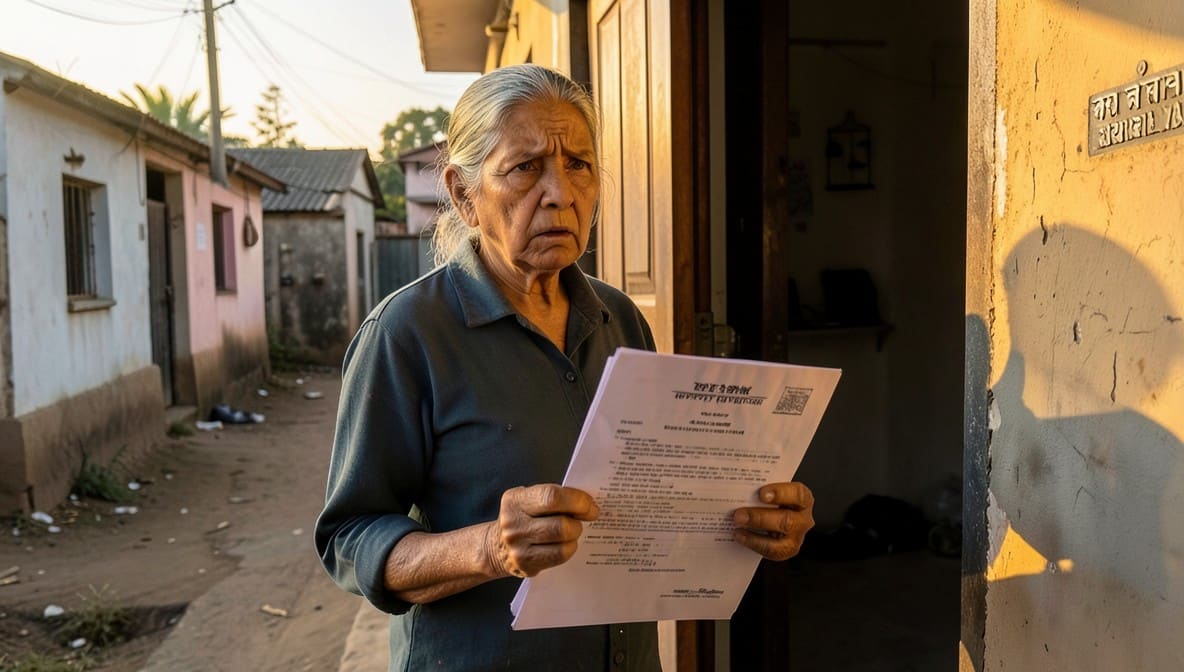
The petitioner, Smt. Aanchal Gupta, a 77-year-old widow, is embroiled in a protracted legal battle concerning her right to possession of a property in Uttar Pradesh. The dispute arises from two distinct proceedings under the UP Act No. 13 of 1972 (UP Urban Buildings (Regulation of Letting, Rent and Eviction) Act, 1972):
- A proceeding under Section 20 of the Act, in which this Court had previously granted a stay of dispossession (Matter under Article 227 No. 2877 of 2026).
- A proceeding under Section 21(1)(a) of the Act (PA Case No. 41 of 2012), wherein an eviction order was passed against her on 19.08.2025.
Key Facts
- The petitioner was subjected to an eviction order under Section 21(1)(a) of the UP Act No. 13 of 1972 on 19.08.2025.
- An appeal against this order (PA Appeal No. 35 of 2025) was filed within the prescribed time limit and admitted on 03.10.2025.
- Despite the admission of the appeal, no interim order was passed to stay the dispossession.
- In February 2026, an execution application was filed, and on 06.05.2026, Form D under Rule 14 of the relevant rules was issued by the executing court, signaling imminent dispossession.
- On 11.05.2026, the petitioner filed an application along with an affidavit requesting the executing court to restrain proceedings pursuant to the dakhal parwana (possession warrant), but no consideration was given to this request.
- The matter was posted for hearing in July 2026, leaving the petitioner vulnerable to dispossession during the summer vacation.
Procedural History
- 19.08.2025: Eviction order passed under Section 21(1)(a) of UP Act No. 13 of 1972 (PA Case No. 41 of 2012).
- 03.10.2025: Appeal (PA Appeal No. 35 of 2025) admitted, but no interim stay granted.
- February 2026: Execution application filed.
- 06.05.2026: Form D issued by executing court.
- 11.05.2026: Petitioner’s application for restraint on dispossession filed.
- June 2026: Present writ petition (Writ - C No. 8204 of 2026) filed before Allahabad High Court.
Relief Sought
The petitioner sought:
- Protection of possession pending disposal of PA Appeal No. 35 of 2025.
- Stay of execution proceedings until the appeal is decided on merits.
- Direction to the appellate court to dispose of the appeal within a specified timeframe.
The Legal Issue
The central question before the Court was whether dispossession can be effected pending an admitted appeal under Section 21 of the UP Act No. 13 of 1972, particularly when the appeal entails serious civil consequences and no interim stay has been explicitly granted.
Arguments Presented
For the Petitioner
- Relied on the judgment of the Supreme Court in Mool Chand Yadav & anr. v. Raza Buland Sugar Company (1983 AWC 121 SC), which held that if an appeal is admitted and the impugned order entails serious civil consequences, the appellant cannot be left as a swinging pendulum, and the effect of the order must be stayed pending appeal.
- Contended that admission of the appeal operates as an implied stay against dispossession, and executing the eviction order would render the appeal infructuous.
- Highlighted the vulnerability of the petitioner, a 77-year-old widow, who would face irreparable harm if dispossessed during the summer vacation.
For the Respondent
- The respondent, represented by the Chief Standing Counsel (C.S.C.), did not present substantive arguments in the judgment text. However, the Court noted that the stay order in the Section 20 proceeding was distinct and did not operate as a stay in the Section 21 proceeding.
The Court's Analysis
The Court undertook a two-fold analysis of the legal principles governing the case:
-
Distinction Between Proceedings: The Court observed that the stay order granted in the Section 20 proceeding (Matter under Article 227 No. 2877 of 2026) was of no consequence to the execution proceedings under Section 21. This was because the two proceedings were distinct, with separate scopes and legal bases. The Court emphasized that a stay in one proceeding does not automatically extend to another, even if they arise from the same property dispute.
-
Implied Stay Pending Appeal: The Court relied heavily on the Supreme Court’s judgment in Mool Chand Yadav, which established that admission of an appeal against an order entailing serious civil consequences operates as an implied stay against the execution of that order. The Court quoted the following passage from the judgment:
"If an appeal against an order is admitted and the order impugned entails serious civil consequences, the appellant cannot be left as a swinging pendulum and, therefore, the effect and operation of the order impugned must be stayed pending appeal."
Applying this principle, the Court held that the petitioner’s dispossession pending the appeal would defeat the very purpose of the appellate remedy, particularly given the serious civil consequences of eviction for a 77-year-old widow.
-
Judicial Discretion and Equity: The Court exercised its equitable jurisdiction under Article 226 of the Constitution to protect the petitioner’s possession pending the appeal. It noted that allowing dispossession at this stage would cause irreparable harm and render the appeal infructuous, thereby violating principles of natural justice.
The Verdict
The Allahabad High Court allowed the writ petition and issued the following directions:
- Protection of Possession: The petitioner shall not be dispossessed from the property involved in PA Appeal No. 35 of 2025 pending its disposal on merits.
- Disposal Timeline: The appellate court is directed to decide PA Appeal No. 35 of 2025 within three months from the date a certified/true/attested downloaded copy of this order is produced before it.
- Adjournment Condition: The petitioner undertakes not to seek any adjournment before the appellate court. In the event of two successive adjournments, the interim protection shall stand vacated, and consequences will follow.
What This Means For Similar Cases
Admission of Appeal Operates as Implied Stay
- Practitioners must argue that admission of an appeal against an order entailing serious civil consequences (e.g., eviction, dispossession, or termination of service) operates as an implied stay against execution of that order. This principle, as reiterated by the Allahabad High Court, is grounded in the Supreme Court’s judgment in Mool Chand Yadav.
- Courts are likely to intervene under Article 226 or Article 227 where execution of an order would render the appeal infructuous or cause irreparable harm to the appellant.
Distinct Proceedings Require Separate Stays
- A stay order in one proceeding does not automatically extend to another, even if the disputes arise from the same factual matrix. Practitioners must ensure separate stay applications are filed for each proceeding to avoid execution.
- Execution courts may proceed unless explicitly restrained by a higher court. This judgment underscores the need for proactive legal strategy to secure interim protection in each distinct proceeding.
Vulnerable Parties Entitled to Equitable Relief
- Courts are inclined to grant equitable relief to vulnerable parties, such as senior citizens, widows, or individuals facing irreparable harm. Practitioners should highlight the human angle (e.g., age, health, financial dependence) to strengthen pleas for interim protection.
- Undertakings by petitioners (e.g., not seeking adjournments) may be imposed as a condition for interim relief, as seen in this case. Parties must comply strictly with such conditions to avoid vacatur of protection.