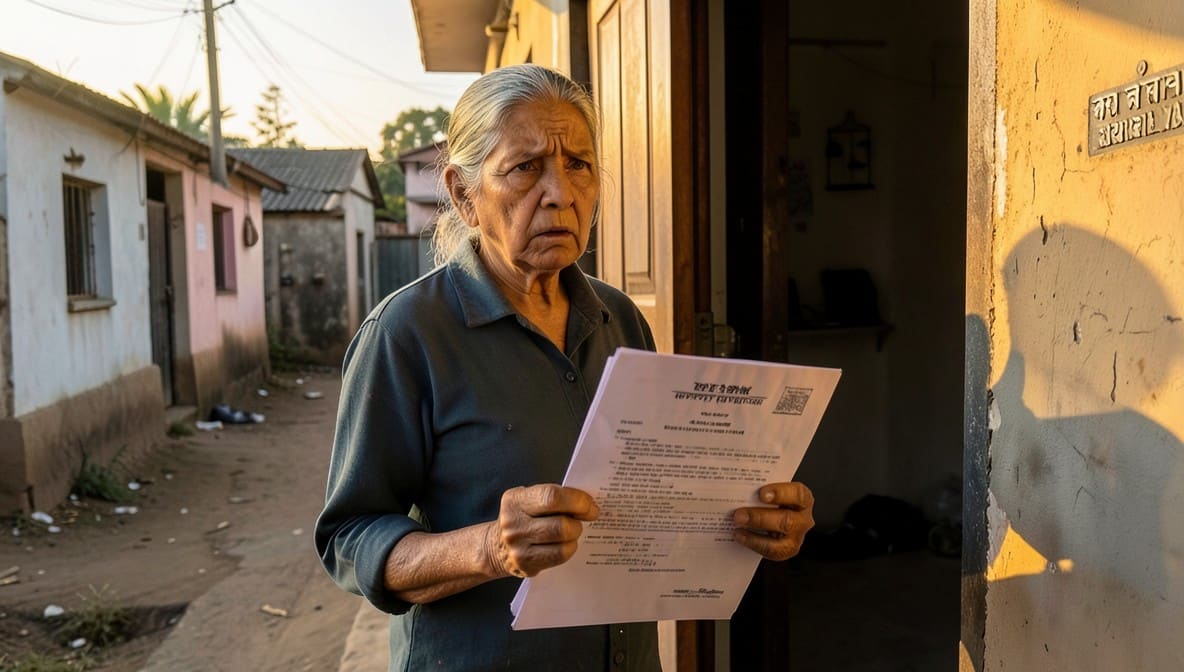
The Allahabad High Court has reinforced the obligation of appellate courts to promptly decide stay applications in civil appeals under Section 96 CPC, emphasizing that undue delay undermines the efficacy of interim relief and violates the principles of natural justice. In a significant directive, the Court ordered the appellate court to decide the pending stay application within three months and mandated preservation of the status quo pending disposal.
Background & Facts
The Dispute
The petitioner is the defendant in Original Suit No. 253 of 1991, filed by the plaintiff seeking permanent injunction to restrain the defendants from interfering with possession and use of a disputed property. The trial court, by judgment and decree dated 31.03.2026, decreed the suit in favor of the plaintiff. The decree directed the defendants, including the petitioner, to remove certain constructions from the property within three months and deliver physical possession to the plaintiff.
Key Facts
- The trial court had previously passed an order of status quo on 08.11.2021, which remained in force throughout the pendency of the suit
- The status quo order effectively prevented any alteration of the property’s condition or possession
- The petitioner filed a stay application (Application No. 5-C) before the appellate court seeking suspension of the trial court’s decree pending appeal
- The appellate court admitted the Regular Civil Appeal No. 102 of 2026 on 01.05.2026 under Section 96 CPC
- The appellate court fixed 01.06.2026 for hearing the stay application, a date falling during summer vacation when civil courts are closed
- Despite noting the stay application and inviting objections, the appellate court did not pass any interim order
Procedural History
- 08.11.2021: Trial court passed status quo order in Original Suit No. 253 of 1991
- 31.03.2026: Trial court delivered judgment and decree directing removal of constructions and delivery of possession
- 01.05.2026: Regular Civil Appeal No. 102 of 2026 filed under Section 96 CPC; admitted by District Judge, Jaunpur
- 01.06.2026: Hearing date fixed for stay application (Application 5-C); falls during summer vacation
- No interim order passed by appellate court despite acknowledgment of the application and objections
- 2026: Petitioner filed writ petition under Article 227 before the Allahabad High Court
Relief Sought
The petitioner sought:
- Immediate grant of interim status quo pending disposal of stay application 5-C
- Direction to the appellate court to decide the stay application on merits within a stipulated time
- Continuation of the status quo order dated 08.11.2021 until final disposal of the appeal
The Legal Issue
Whether an appellate court, having admitted a civil appeal under Section 96 CPC and acknowledged a pending stay application, is obligated to decide the application within a reasonable time, and whether failure to do so warrants intervention under Article 227 of the Constitution.
Arguments Presented
For the Petitioner
The petitioner’s counsel relied on the judgment in Mool Chand Yadav v. Raza Buland Sugar Company Limited (1983 AWC 121 SC), arguing that once a stay application is filed and admitted, the appellate court must act expeditiously. The failure to pass any interim order despite the gravity of the decree - requiring demolition and dispossession - amounts to a violation of the principles of natural justice and judicial propriety. The petitioner emphasized that the status quo order dated 08.11.2021 had been in force for over four years and its sudden suspension without adjudication of the stay application would cause irreparable harm.
For the Respondent
The respondents did not file a separate written submission. The Court noted that no opposition was raised before it, and the respondents’ counsel did not contest the petitioner’s contentions regarding delay or the applicability of Mool Chand Yadav.
The Court's Analysis
The Court examined the nature of the decree and the consequences of its enforcement pending appeal. It observed that the trial court’s order required removal of constructions and delivery of possession - acts that are irreversible and would render the appeal infructuous if executed prematurely. The Court noted that the appellate court had admitted the appeal and taken note of the stay application, yet failed to pass any interim order, despite the existence of a long-standing status quo order.
"The failure to decide the stay application within a reasonable time, particularly when the decree involves irreversible civil consequences, amounts to a denial of justice and violates the settled principle that appellate courts must act with dispatch."
The Court relied on Mool Chand Yadav, which held that appellate courts cannot remain passive when a stay application is pending and the decree carries serious consequences. The Court further held that the mere fixing of a hearing date during vacation does not absolve the appellate court of its duty to act. The Court emphasized that the doctrine of audi alteram partem requires not just hearing, but timely decision.
The Court concluded that the petitioner’s case for interim relief was made out, not merely on the strength of the prior status quo order, but on the appellate court’s inaction in the face of a legally admitted appeal and a pending stay application.
The Verdict
The petition was allowed. The Court directed the appellate court to decide Application No. 5-C on merits within three months from the date a downloaded copy of this order is filed before it. Till such decision, the parties to Civil Appeal No. 102 of 2026 are directed to maintain status quo with regard to the nature and possession of the property forming the subject matter of Original Suit No. 253 of 1991. The status quo order dated 08.11.2021 shall remain in force until further order.
What This Means For Similar Cases
Timely Disposal of Stay Applications Is Mandatory
- Practitioners must now cite this judgment to oppose delays in deciding stay applications under Section 96 CPC
- Courts cannot defer decisions by fixing hearings during vacation periods without taking interim action
- Failure to decide within a reasonable time invites writ intervention under Article 227
Status Quo Orders Are Not Automatically Revoked on Appeal
- A pre-trial or pre-decree status quo order continues to bind parties unless expressly vacated by the appellate court
- The appellate court must explicitly consider whether to suspend such an order before allowing enforcement of a decree
- The burden shifts to the appellant to demonstrate why the status quo should be disturbed
Appellate Courts Cannot Be Passive
- Admitting an appeal and noting a stay application creates a duty to act
- Judicial inaction in the face of irreversible consequences constitutes a breach of judicial responsibility
- This judgment establishes a three-month timeline as the outer limit for deciding stay applications in civil appeals