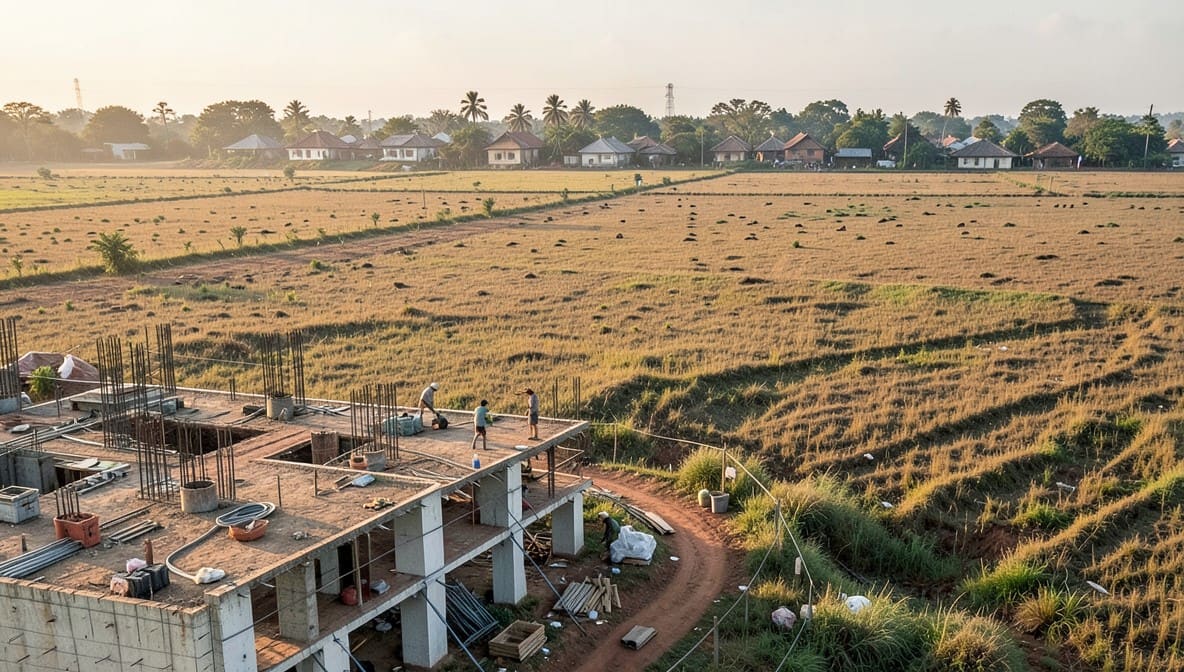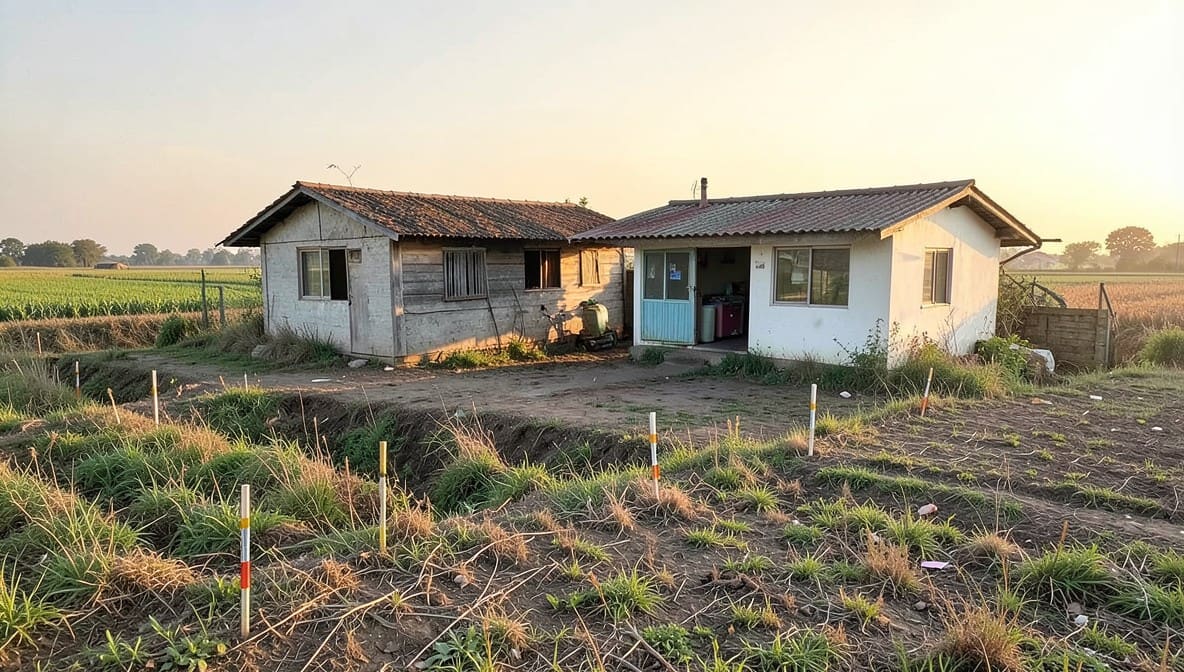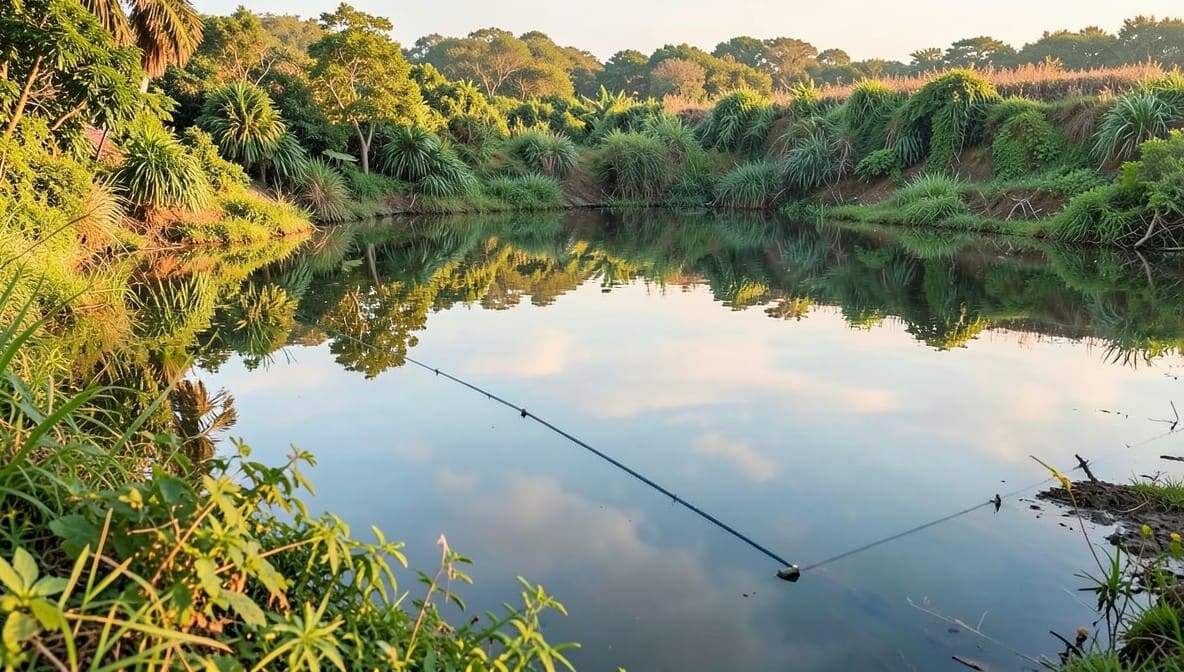
The Kerala High Court recently clarified the scope of Section 218 of the Kerala Panchayat Raj Act, 1994, holding that 'kulam puramboke' land does not automatically vest with Grama Panchayats. The judgment underscores the distinction between water bodies and revenue land, affirming that Panchayats cannot claim ownership over lands merely described as 'kulam puramboke' in revenue records.
Background & Facts
The Dispute
The appellant, Vazhappally Grama Panchayat, represented by its Secretary, filed a writ petition seeking a declaration that 82 cents of 'kulam puramboke' land in Survey No. 122/12, Vazhappally East Village, vested with it under Section 218 of the Kerala Panchayat Raj Act, 1994. The Panchayat further sought to quash Exhibit P20, an order issued by the State Government reallocating the land for other governmental purposes, and prayed for its assignment for developmental activities.
Key Facts
-
The disputed property, measuring 82 cents, was classified as 'kulam puramboke' in revenue records.
-
On 12.06.1961, the State Government leased 48.5 cents of this land to the 5th respondent, Chengannassery Metal and Allied Industries Co-operative Society Ltd., under Exhibit P4 for a period of 12 years.
- The lease deed stipulated that unauthorized use would result in termination without compensation.
- The 5th respondent executed a 'kuthakapattom' deed as directed by the Tahsildar.
-
The lease expired in 1973, but the 5th respondent continued to occupy the land without paying rent.
-
On 15.03.1985, the Panchayat requested the State Government to assign 25 cents of the leased land for constructing a community hall, nursery school, and Kalyana Mandapam.
- The Government allowed the assignment under Exhibit P7, subject to payment of ₹68,750/- for land value and survey charges.
- Due to financial constraints, the Panchayat requested a free assignment, which was denied.
- The Government subsequently cancelled the assignment and reallocated portions of the land:
- 10 cents to the Agricultural Department,
- 10 cents for the Chethippuzha Village Office,
- 4.5 cents for road widening.
-
In 1987, the Tahsildar directed the 5th respondent to pay arrears and vacate the land, as the lease had expired.
- The 1st respondent issued Exhibit P8, cancelling the 'kuthakapattom' and directing the District Collector to evict the society.
- The 5th respondent challenged Exhibit P8 in O.P. No. 7222 of 1994 and obtained an interim stay.
- The original petition was dismissed for default under Exhibit P9, rendering the cancellation final.
-
The Tahsildar issued an eviction order, directing the 5th respondent to vacate within three days.
- Exhibit P11 was issued, directing the 5th respondent to remit Rs. 11,46,000/- in arrears within two weeks.
- The 5th respondent challenged Exhibits P8 and P11 in W.P.(C) No. 15473/2006, seeking time to remit the amount and a direction to dispose of their representation.
- By Exhibit P12, the court allowed the 5th respondent to make monthly payments and held that they were entitled to 'pattayam' upon clearing the dues.
-
Aggrieved by Exhibit P12, the Panchayat filed R.P. No. 1064/2012, which was dismissed.
- The Panchayat then filed W.A. No. 2097/2012, which was allowed by Exhibit P14.
- Exhibit P14 set aside Exhibit P12 and directed the State Government to reconsider the representations of both parties within three months.
-
The Panchayat submitted Exhibit P15, requesting the land for developmental use, alleging that the 5th respondent had leased the property to outsiders for commercial activities.
-
The State Government issued Exhibit P20, stating that the land had been reclassified as government puramboke and reallocated for other activities.
- The 5th respondent was advised to apply for lease renewal, subject to clearing defaulted rent.
- Aggrieved by Exhibit P20, the Panchayat filed the present writ petition, which was dismissed by the learned Single Judge, leading to this appeal.
Procedural History
- 15.03.2013: Writ Petition (WP(C) No. 21195/2013) filed before Kerala High Court.
- Judgment Date: Single Judge dismissed the writ petition (date not specified in judgment).
- 30.06.2026: Writ Appeal (WA No. 742/2019) filed before Division Bench of Kerala High Court.
Relief Sought
The appellant sought:
- A declaration that the disputed property vested with the Panchayat under Section 218 of the Kerala Panchayat Raj Act, 1994.
- Quashing of Exhibit P20.
- Assignment of the land for developmental purposes.
The Legal Issue
The central question was whether 'kulam puramboke' land, as described in revenue records, vests with the Grama Panchayat under Section 218 of the Kerala Panchayat Raj Act, 1994, which vests water bodies and adjacent lands with Panchayats.
Arguments Presented
For the Appellant (Vazhappally Grama Panchayat)
- Contended that the disputed property, being 'kulam puramboke', fell within the ambit of Section 218 of the Act, which vests water bodies and adjacent lands with Panchayats.
- Argued that the State Government’s reallocation of the land under Exhibit P20 was arbitrary and contrary to the provisions of the Act.
- Highlighted that the 5th respondent had been occupying the land unlawfully post-lease expiry and had sub-leased it for commercial purposes.
For the Respondents (State Government and Others)
- Contended that Section 218 applies only to water bodies and their adjacent lands, not to 'kulam puramboke' land, which remains revenue property.
- Argued that the Panchayat’s request for assignment itself acknowledged that the land was revenue property, not vested with it.
- Stated that Exhibit P20 was issued in accordance with governmental priorities and that the Panchayat could seek alternative land.
The Court's Analysis
The Division Bench examined Section 218 of the Kerala Panchayat Raj Act, 1994, which reads:
"All public water courses (other than river passing through more areas than the panchayath area which the Government may, by notification in the gazette, specify), the beds and banks of river, streams, irrigation and drainage channels, canals, lakes, backwaters and water courses and all standing and flowing water, springs, reservoirs, tanks, cisterns, fountains, wells, kappus, chals, stand pipes and other water works including those used by the public to such an extent as to give a prescriptive right to their use whether existing at the commencement of this Act or afterwards made, laid or erected at the cost of the Panchayat or otherwise, and also any adjacent land, not being private property appertaining thereto absolutely vest with the Panchayath."
The Court observed:
"The learned Single Judge, on a scanning of the entire pleadings, came to a definite conclusion that the petitioner does not have a case that any of the water courses mentioned in Section 218 of the Act passes through the property. In the revenue records the property is admittedly shown as 'kulam puramboke'. Therefore, at no stretch of imagination, it can be stated that 'kulam puramboke' also fall within the sweep of Section 218. There is no 'kulam', and only 'puramboke' and 'kulam puramboke' lie there. 'Kulam puramboke' can only vest with the revenue."
The Court held that the term 'kulam puramboke' does not imply the existence of a water body ('kulam') within the property. Since the revenue records described the land merely as 'kulam puramboke' without evidence of an actual water body, Section 218 could not be invoked to claim vesting with the Panchayat. The Court further noted that the Panchayat’s request for assignment of the land itself was an admission that the property was revenue land, not vested with it under the Act.
The Verdict
The Kerala High Court dismissed the writ appeal, affirming the Single Judge’s order. The Court held:
- The disputed property, described as 'kulam puramboke' in revenue records, does not vest with the Grama Panchayat under Section 218 of the Kerala Panchayat Raj Act, 1994.
- The property remains revenue land, and the State Government is entitled to reallocate it for other purposes.
- No relief was granted to the appellant, and Exhibit P20 was upheld.
What This Means For Similar Cases
Strict Interpretation of Vesting Provisions
- Section 218 of the Kerala Panchayat Raj Act vests only specific categories of land - such as water bodies and their adjacent lands - with Grama Panchayats.
- Panchayats cannot claim vesting over lands merely described as 'kulam puramboke' unless there is evidence of an actual water body within the property.
- Revenue records play a crucial role in determining the nature of land; descriptive terms like 'kulam puramboke' must be substantiated with factual evidence of water bodies.
Panchayats’ Limited Authority Over Revenue Land
- Panchayats seeking assignment or developmental use of land must first establish their legal entitlement under the Act.
- Requests for assignment may be construed as admissions that the land is not vested with the Panchayat.
- State Governments retain authority over revenue lands, and Panchayats cannot challenge reallocation unless they prove vesting under the Act.
Evidentiary Requirements for Land Claims
- Panchayats must produce clear evidence of water bodies or adjacent lands to invoke Section 218.
- Mere classification in revenue records (e.g., 'kulam puramboke') is insufficient without proof of the underlying water body.
- Courts will scrutinize revenue records and factual matrices to determine vesting, emphasizing the need for precise documentation in land disputes.