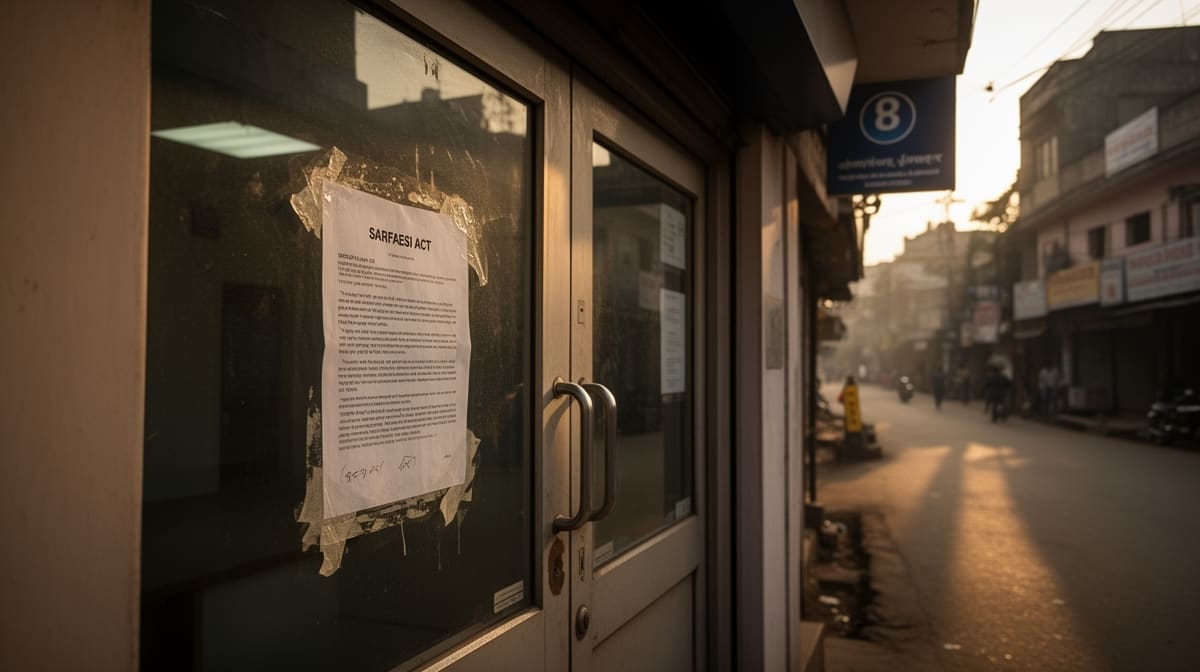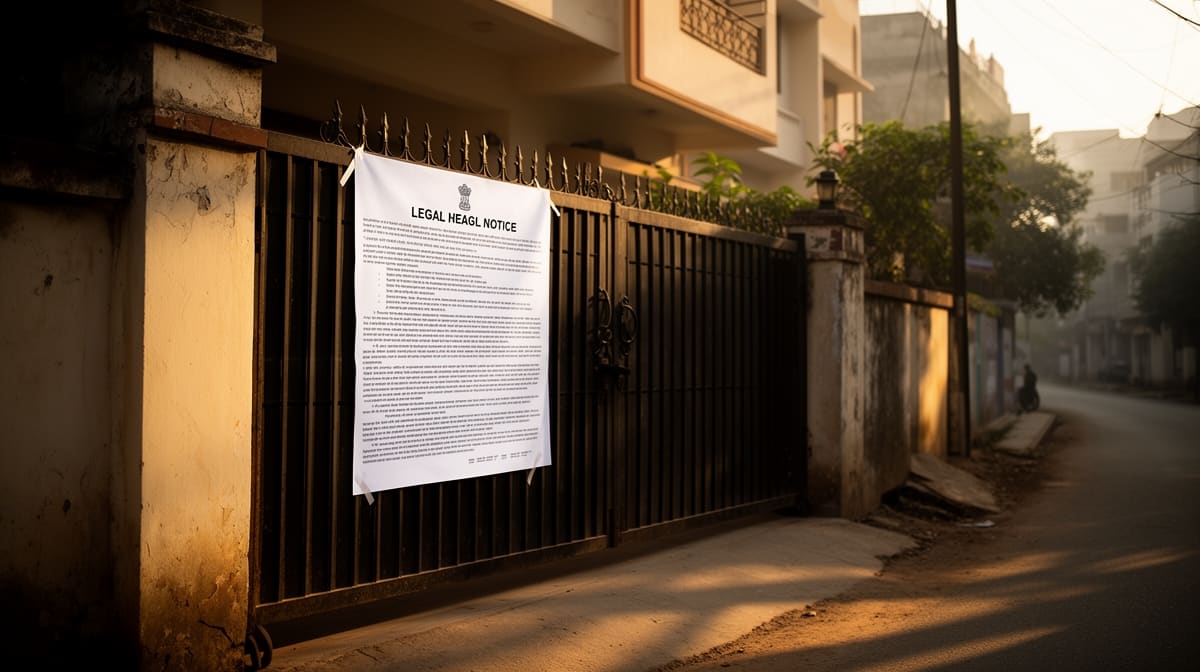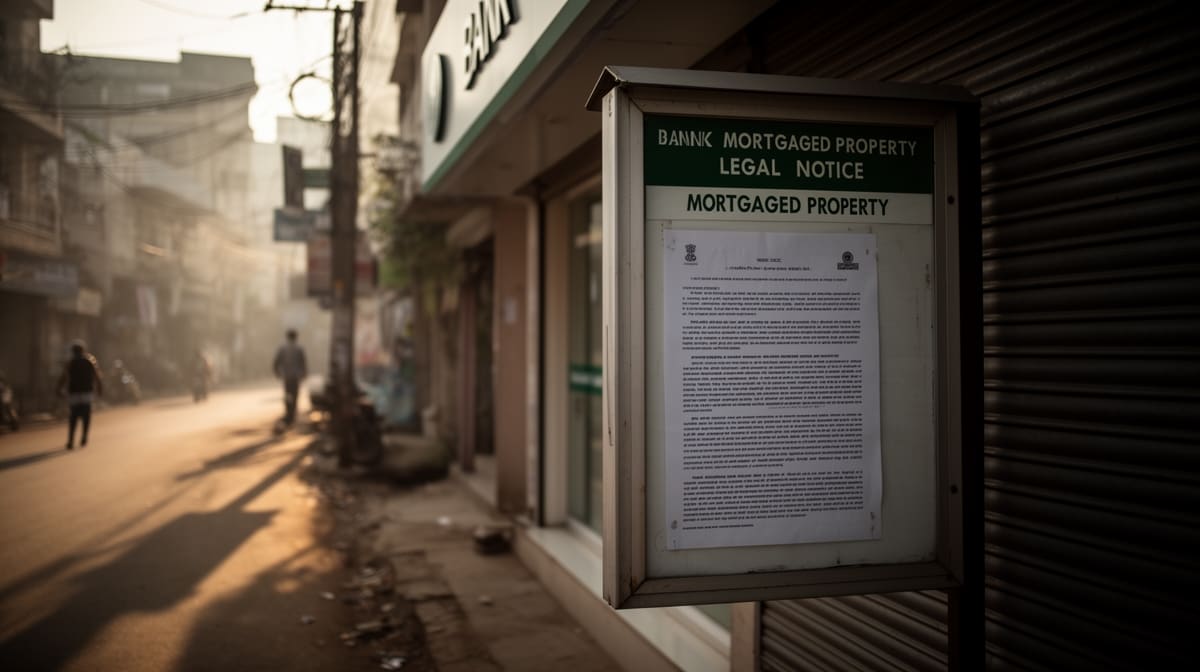
The Bombay High Court has clarified that the statutory deposit requirement under the Recovery of Debts Due to Banks and Financial Institutions Act cannot operate as an absolute barrier to interim relief when an application for exemption is pending. This ruling reinforces procedural fairness in debt recovery proceedings and prevents irreparable loss of property rights before adjudication.
Background & Facts
The Dispute
The petitioners, K.V. Corporation and others, are borrowers whose properties are subject to enforcement proceedings initiated by IDBI Bank under the Recovery of Debts Due to Banks and Financial Institutions Act, 1993. The Debt Recovery Tribunal (DRT) had ordered possession of the secured assets, with the date for physical takeover fixed for 7 March 2026. The petitioners filed an application (IA No. 201 of 2026) before the Debt Recovery Appellate Tribunal (DRAT) seeking a stay on possession pending appeal.
Procedural History
- The petitioners filed an appeal before the DRAT but failed to deposit the mandatory 25% of the debt as required under Section 18(1) of the RDDBFI Act.
- The DRAT rejected the stay application solely on the ground of non-deposit, without adjudicating a pending application for exemption from the deposit requirement.
- The petitioners approached the High Court via writ petition, arguing that the DRAT’s failure to decide the exemption application amounted to a denial of natural justice and rendered the appeal infructuous.
Relief Sought
The petitioners sought immediate stay on possession of their properties and directed the DRAT to decide their pending application for exemption from the statutory deposit before ruling on the stay request.
The Legal Issue
The central question was whether the DRAT can refuse to consider an application for interim stay solely on the ground of non-deposit of 25%, while a pending application for exemption from such deposit remains undecided.
Arguments Presented
For the Petitioner
Learned counsel argued that the DRAT’s refusal to entertain the stay application without first deciding the exemption plea violated the principles of natural justice and proportionality. Reliance was placed on M/s. S. R. Bhatia v. DRT and Rajesh Kumar v. IDBI Bank, where courts held that procedural rigidity must yield to substantive justice when hardship is imminent. The petitioners emphasized that the possession date was imminent and that the exemption application raised genuine financial hardship.
For the Respondent
IDBI Bank contended that Section 18(1) of the RDDBFI Act mandates a mandatory deposit as a condition precedent to entertain any stay. It argued that the statutory requirement is unambiguous and that the DRAT acted within its powers by refusing stay due to non-compliance. The bank further submitted that the petitioners had ample opportunity to comply and that delay in depositing was deliberate.
The Court's Analysis
The Court examined the interplay between the mandatory deposit requirement and the equitable power of the DRAT to grant interim relief. It held that while Section 18(1) imposes a deposit obligation, it does not oust the tribunal’s inherent power to consider exemption applications on merit. The Court emphasized that the DRAT’s duty is not mechanical compliance but adjudication.
"The statutory deposit is a condition for entertaining the appeal, not a bar to adjudicating whether the condition should be waived in the interest of justice."
The Court noted that the DRAT had adjourned the exemption application beyond the possession date, effectively rendering the appeal infructuous before it could even be heard. This, the Court held, was a violation of Article 14 and Article 21 of the Constitution, as it deprived the petitioners of their property without due process. The Court distinguished State of Maharashtra v. Dattatraya where deposit was deemed mandatory in the absence of any pending exemption plea.
The Court further observed that the petitioners had offered to deposit Rs. 40 lakhs - significantly more than the 25% threshold - and had undertaken to deposit the balance if exemption was denied. This demonstrated bona fide intent and negated any claim of mala fide delay.
The Verdict
The petitioners succeeded. The Bombay High Court held that the DRAT must decide exemption applications before denying interim relief. It directed the DRAT to decide both the exemption plea and the stay application within 15 days and granted interim stay on possession subject to the petitioners depositing Rs. 40 lakhs within one week.
What This Means For Similar Cases
Exemption Applications Cannot Be Ignored
- Practitioners must now file exemption applications under Section 18(1) as a matter of course when deposit is unaffordable
- DRATs are bound to hear and decide such applications before rejecting stay
- Failure to do so renders the order liable to be set aside on writ jurisdiction
Deposit Is Conditional, Not Absolute
- The 25% deposit is a procedural condition, not a jurisdictional bar
- Courts may permit partial or substituted deposit if the applicant demonstrates financial hardship
- Undertakings to deposit the balance upon denial of exemption are legally enforceable and acceptable
Stay Is Not Dependent on Full Deposit
- Interim relief may be granted even without full deposit if the applicant shows:
- Imminent loss of property
- Genuine hardship
- Willingness to comply with conditions
- The burden shifts to the bank to prove mala fide intent or abuse of process