The Bombay High Court has reaffirmed that property tax liability under Section 209 of the Mumbai Municipal Corporation Act, 1888 must be determined and billed individually to occupiers based on their respective rent shares, rather than imposing collective liability on non-defaulting parties. This judgment underscores the statutory obligation of municipal authorities to follow due process in tax recovery, particularly in cases involving cooperative societies and multiple occupiers.
Background & Facts
The Dispute
The petitioner, M/s Jayantilal Investments, a builder and developer, challenged two demand notices issued by the Bombay Municipal Corporation (BMC) for recovery of arrears of property tax. The notices, dated 13.01.2017 and 07.05.2024, sought recovery of Rs. 63,81,416 (incorrectly mentioned as Rs. 63,81,4116) for the period from 01.10.1995 to 31.03.2010, along with subsequent arrears. The petitioner contended that the liability for non-payment of taxes lay with another occupier, Mrs. Shirley Rajwani, who had defaulted on payments for Gala Nos. 6, 7, 8, and 9, which were leased to Bharat Cooperative Bank Limited.
Key Facts
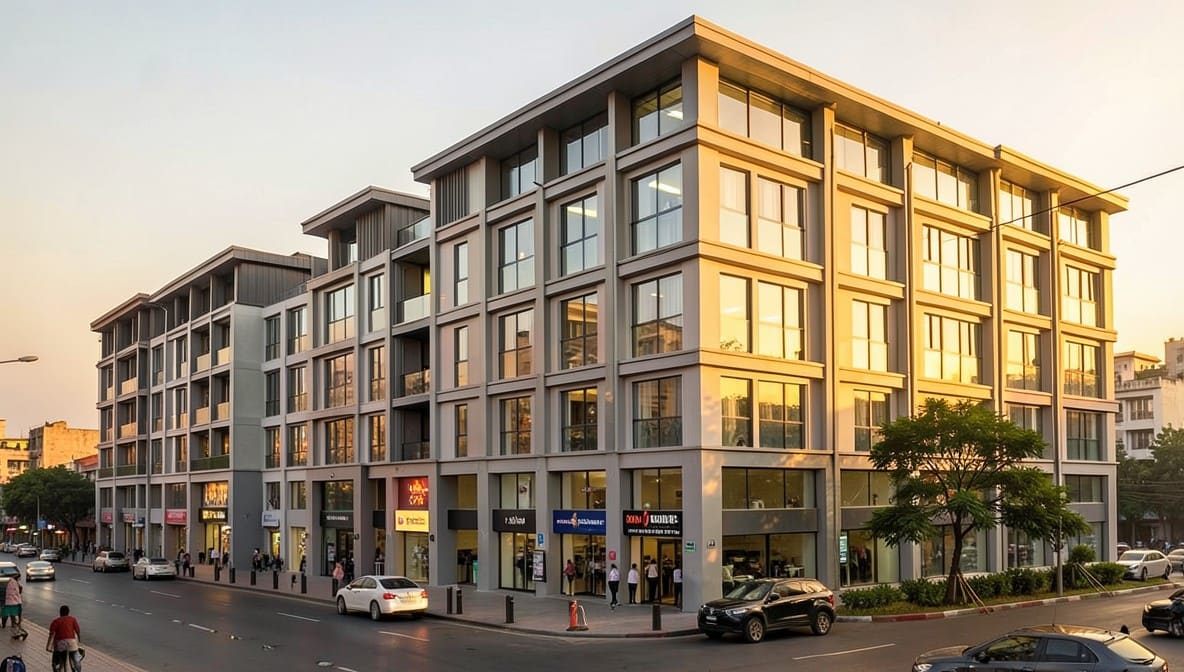
- The petitioner owned Gala Nos. 101, 101A, 102, and 103 on the first floor of Balaji Arcade Premises Co-operative Society Ltd. (Respondent No. 3).
- Gala Nos. 6, 7, 8, 9, 13, 14, and 15 on the ground floor were owned by other members, including Mrs. Shirley Rajwani (Respondent No. 4), and were leased to Bharat Cooperative Bank.
- The bank had paid Rs. 9,83,921 to Mrs. Rajwani for property taxes, but she failed to remit the amount to the society or the BMC.
- The petitioner and other society members regularly paid their property taxes, except for Mrs. Rajwani, whose default led to the issuance of a Warrant of Attachment by the BMC.
- The petitioner had previously approached the High Court in Writ Petition No. 300 of 2012, wherein the Division Bench directed the BMC to determine individual liabilities under Sections 209 and 209-A of the Mumbai Municipal Corporation Act.
Procedural History
- 31.01.2012: Division Bench of the Bombay High Court directed the BMC to determine individual tax liabilities of the petitioner, the society, and Mrs. Rajwani under WP No. 300 of 2012.
- 13.01.2017: BMC issued a demand notice to the petitioner for Rs. 63,81,416 (incorrectly stated as Rs. 63,81,4116) for the period 01.10.1995 to 31.03.2010. The notice also demanded Rs. 18,29,035 for the period 01.04.2010 to 31.03.2017.
- 02.11.2016: BMC requested the petitioner to produce payment receipts for the period 01.10.1995 to 31.10.2010, which the petitioner complied with.
- 08.11.2016: The society confirmed that the petitioner had paid Rs. 51,60,002 for the period 01.04.2010 to 30.09.2016 for its units. The society also admitted that Mrs. Rajwani owed Rs. 38,27,069 for Gala Nos. 6 to 15.
- 2016: The BMC passed a reasoned order acknowledging that Mrs. Rajwani was the defaulter for Gala Nos. 6, 7, 8, and 9 and directed the issuance of individual bills to the concerned parties.
- 07.05.2024: BMC issued another demand notice to the petitioner for Rs. 1,06,56,690 (including penalty up to 31.03.2023).
- 2024: The petitioner filed Interim Application (L) No. 34252 of 2024 seeking injunction against coercive action.
Relief Sought
The petitioner sought:
- Quashing of the demand notices dated 13.01.2017 and 07.05.2024.
- A direction to the BMC to recover taxes only from the defaulter, Mrs. Rajwani, and not from the petitioner.
- Clarification that the petitioner’s liability was limited to Rs. 67,071 for its units (Gala Nos. 101, 101A, 102, and 103).
The Legal Issue
The central question was whether the BMC could impose collective liability for property tax arrears on a non-defaulting occupier under Section 209 of the Mumbai Municipal Corporation Act, 1888, when the default was attributable to another occupier, and whether the BMC’s failure to issue individual bills violated statutory provisions.
Arguments Presented
For the Petitioner
- The petitioner contended that Section 209(1) of the Mumbai Municipal Corporation Act mandates the BMC to serve individual bills on occupiers based on their rent share, and collective billing was illegal.
- The petitioner relied on the reasoned order passed by the BMC in 2016, which explicitly identified Mrs. Rajwani as the defaulter for Gala Nos. 6, 7, 8, and 9.
- The petitioner argued that it had already paid Rs. 51,60,002 for its units and was willing to pay the remaining Rs. 67,071, but could not be held liable for Mrs. Rajwani’s default.
- The petitioner emphasized that the BMC’s demand notices were contrary to the High Court’s earlier direction in WP No. 300 of 2012.
For the Respondents
- The BMC argued that the property was assessed as a single unit, and the society was collectively responsible for tax payments.
- The BMC contended that the petitioner, as a member of the society, shared liability for the arrears.
- The BMC relied on the principle of joint and several liability, asserting that the society’s default could be recovered from any of its members.
The Court's Analysis
The Court examined Section 209 of the Mumbai Municipal Corporation Act, 1888, which provides:
"The Commissioner may serve a bill for the amount due on the occupier of the premises, and if there are two or more occupiers, the bill shall be served on each of them for such portion of the sum due as bears to the whole amount due in the same ratio which the rent paid by such occupier bears to the aggregate amount of rent paid by them both or all in respect of the said premises."
The Court observed that the BMC had failed to adhere to this provision, which required individual billing based on rent shares. Instead, the BMC had issued collective demand notices to the petitioner, despite clear evidence that Mrs. Rajwani was the defaulter for Gala Nos. 6, 7, 8, and 9.
The Court relied on the reasoned order passed by the BMC in 2016, which had acknowledged that:
"The owners of other units viz. 10 to 15 were regularly paying the taxes, but not the owners of Unit No. 6, 7, 8, and 9."
The Court noted that the BMC’s attempt to impose liability on the petitioner, despite its own reasoned order identifying Mrs. Rajwani as the defaulter, was arbitrary and contrary to law. The Court emphasized that the BMC could not disregard its own findings and issue demand notices to non-defaulting parties.
The Court also considered the society’s communication dated 08.11.2016, which confirmed that the petitioner had paid Rs. 51,60,002 for its units and that Mrs. Rajwani owed Rs. 38,27,069 for Gala Nos. 6 to 15. The Court held that the BMC’s demand notices were unsustainable as they sought to recover arrears attributable to another occupier.
The Verdict
The Court allowed the writ petition and quashed the demand notices dated 13.01.2017 and 07.05.2024. The Court restrained the BMC from recovering any amount from the petitioner under these notices and directed the BMC to recover the arrears from the actual defaulter, Mrs. Rajwani. The Court clarified that the petitioner’s liability was limited to Rs. 67,071 for its units (Gala Nos. 101, 101A, 102, and 103) and that this amount must be paid by the petitioner. The Interim Application (L) No. 34252 of 2024 was also disposed of.
What This Means For Similar Cases
Individual Billing Is Mandatory Under Section 209
- Municipal authorities must issue individual bills to occupiers based on their rent shares, as mandated by Section 209(1) of the Mumbai Municipal Corporation Act.
- Collective billing or imposing liability on non-defaulting occupiers is illegal and arbitrary.
- Practitioners should emphasize the statutory requirement of individual billing in disputes involving multiple occupiers.
Reasoned Orders Bind Municipal Authorities
- Municipal authorities are bound by their own reasoned orders and cannot issue demand notices contrary to their findings.
- If a reasoned order identifies a specific defaulter, authorities cannot shift liability to other parties without fresh evidence or justification.
- Courts will intervene to prevent arbitrary recovery actions that disregard earlier determinations.
Society Members Cannot Be Held Liable for Another’s Default
- In cooperative societies, individual members are not liable for the defaults of other members unless there is a specific agreement or statutory provision to the contrary.
- The Court’s judgment reinforces that liability must be fastened on the defaulter and not on non-defaulting members.
- Societies and members should maintain clear records of payments to avoid disputes over tax liabilities.