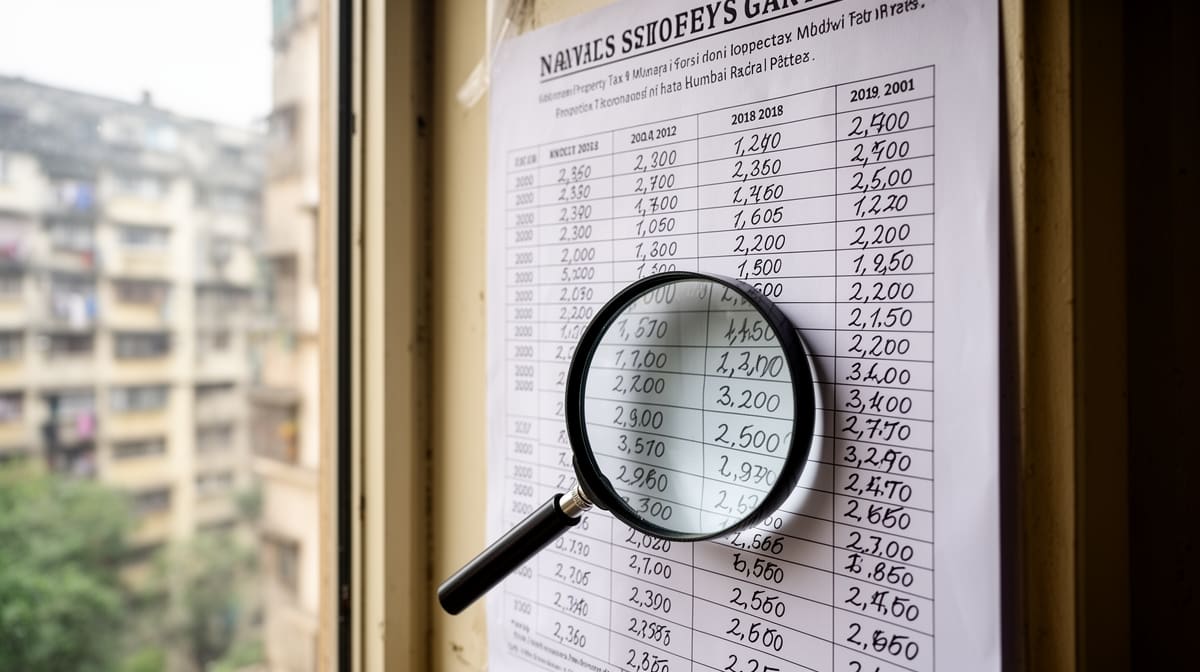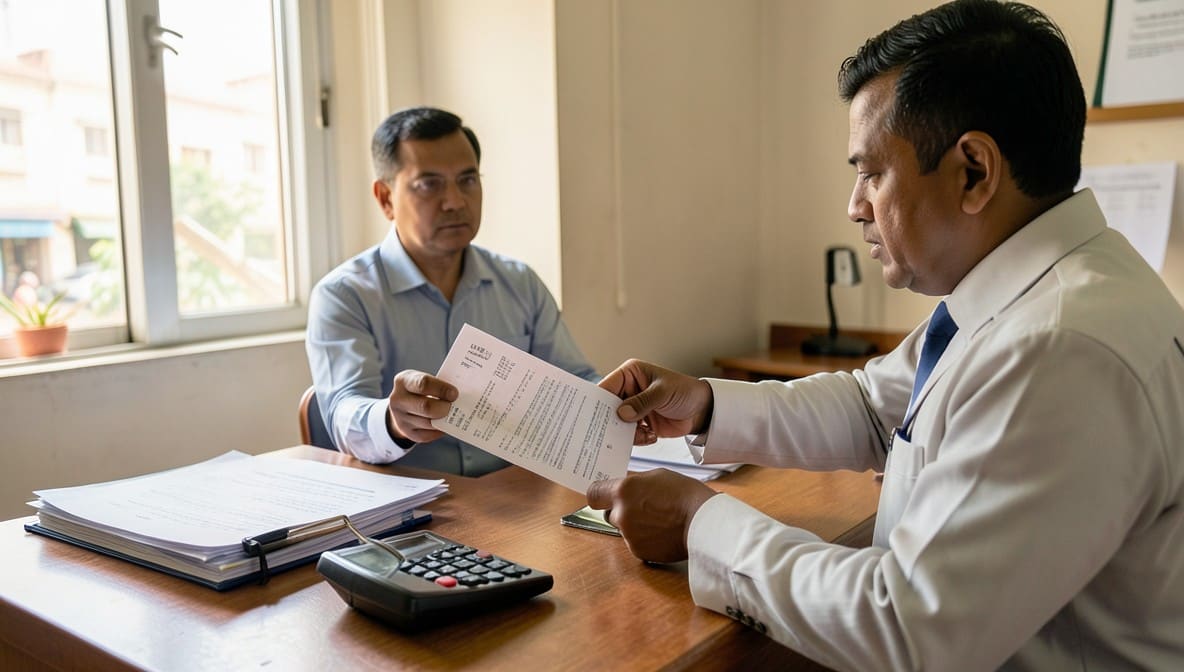
The Bombay High Court has clarified that a change in ownership of property is a legitimate basis for reassessment of ratable value under municipal tax statutes, rejecting the notion that prior assessments are immune from review. The judgment reinforces the statutory duty of municipal corporations to ensure annual accuracy in property tax valuation, placing the burden squarely on the assessee to demonstrate procedural irregularities with specificity.
Background & Facts
The Dispute
The dispute centers on the Pune Municipal Corporation’s reassessment of the annual ratable value of a commercial property located at Survey No. 103/1A/129, Yerawada, Pune. The property, measuring 3825.25 square metres with a constructed area of 540.4 square metres, was originally assessed at an annual ratable value of Rs. 6,000 in 1989 under prior ownership. After multiple transfers - including acquisition by the Income Tax Department and subsequent auction sale to Shamkunj Cooperative Housing Society - the respondent, Shabnoor Ayub Pathan, acquired the property in May 1993.
Procedural History
- 1995: Respondent applied for mutation of title in municipal records.
- 1996: Corporation issued a special notice proposing to revise ratable value to Rs. 5,80,550 for constructed area and Rs. 5,74,550 for open land, withdrawing a 40% self-occupation concession.
- 1997: Respondent appealed under Section 406 of the Bombay Provincial Municipal Corporations Act, 1949 to the Small Causes Court, which set aside the reassessment.
- Subsequent Appeal: Corporation appealed to the District Court, which affirmed the Small Causes Court’s order.
- 2026: Corporation filed Writ Petition No. 5920 of 2006 before the Bombay High Court.
Relief Sought
The petitioner sought to set aside the judgments of the lower courts and restore the reassessed ratable value, arguing that the Courts below erred in law by treating change in ownership as a bar to reassessment and by misallocating the burden of proof.
The Legal Issue
The central question was whether a mere change in ownership can justify a fresh reassessment of ratable value under the Bombay Provincial Municipal Corporations Act, 1949, and whether the burden of proving procedural non-compliance under the Taxation Rules lies with the assessee or the municipal authority.
Arguments Presented
For the Petitioner
Counsel for the Municipal Corporation relied on two key precedents: Municipal Corporation of the City of Pune v. M/s E.L.F. Filament Industries Pvt. Ltd. and Pune Municipal Corporation v. Vimal Govind Joshi. He argued that:
- The statutory scheme mandates annual revision of ratable value, making each assessment independent.
- A change in ownership may signal material changes in use, occupation, or eligibility for concessions, necessitating reassessment.
- The respondent failed to raise a specific ground under Section 406 alleging violation of Rules 15 and 20 of the Taxation Rules, depriving the Corporation of a fair opportunity to prove compliance.
- The burden of disproving the presumption of correctness of the assessment lies with the assessee, not the authority.
For the Respondent
The respondent did not contest the legal principles but relied on the findings of the lower courts, which held that:
- Reassessment based solely on change of ownership was legally impermissible.
- The Corporation failed to demonstrate strict compliance with procedural requirements under the Taxation Rules.
- The withdrawal of the self-occupation concession lacked adequate justification.
The Court's Analysis
The Court conducted a rigorous statutory interpretation of the Bombay Provincial Municipal Corporations Act, 1949, particularly its annual revision mechanism. It emphasized that property tax assessment is not a static, one-time determination but a recurring obligation under the statute.
"The liability to pay property tax arises from the statute. It does not depend on whether the previous owner objected or remained silent."
The Court rejected the lower courts’ reasoning that change in ownership barred reassessment, holding that such a view would render the annual revision process meaningless. It cited M/s E.L.F. Filament Industries Pvt. Ltd. to affirm that an assessment cannot be frozen merely because it was not disputed in an earlier year.
Crucially, the Court examined the procedural posture of the appeal under Section 406. It held that appellate proceedings are confined to grounds raised. Since the respondent did not specifically allege violation of Rules 15 and 20, the lower courts erred in treating the Corporation’s lack of detailed evidence on procedure as fatal. The Court reiterated the principle from Vimal Govind Joshi: an assessment by a statutory authority carries a presumption of correctness, and the burden rests on the assessee to demonstrate its illegality.
The Court further noted that the withdrawal of the 40% concession was justified upon change in ownership, as self-occupation no longer applied. The absence of a specific challenge to this aspect meant the lower courts had no basis to interfere.
The Verdict
The petitioner won. The Bombay High Court held that a change in ownership justifies reassessment of ratable value and that the burden of proving procedural non-compliance lies with the assessee. The impugned judgments were set aside, and the Corporation’s reassessment order was restored.
What This Means For Similar Cases
Reassessment Is Not Barred by Change of Ownership
- Practitioners must now argue that change in ownership is a valid trigger for reassessment, not a procedural bar.
- Municipal authorities may lawfully revisit prior valuations when new ownership suggests altered use, occupation, or eligibility for concessions.
- Tax assessments cannot be shielded from review simply because they were unchallenged in prior years.
Burden of Proof Rests on the Assessee
- In tax appeals under Section 406, vague allegations of procedural defects are insufficient.
- Assessees must specify which rule was violated and how it caused prejudice.
- Municipal corporations need not proactively prove compliance unless a specific challenge is raised.
Procedural Challenges Must Be Specific and Timely
- Appeals under municipal statutes are not open-ended inquiries.
- Failure to raise a procedural ground in the first appeal waives the right to challenge it later.
- Lawyers must draft appeals with precision - omitting key grounds risks forfeiture of substantive defenses.