The Bombay High Court has clarified that pillion riders are unequivocally covered under comprehensive motor insurance policies, overturning a Tribunal’s erroneous exoneration of the insurer. This judgment reinforces the scope of liability under non-act policies and recalibrates compensation methodology in motor accident claims, setting critical precedents for income assessment, deduction ratios, and interest computation.
Background & Facts
The Dispute
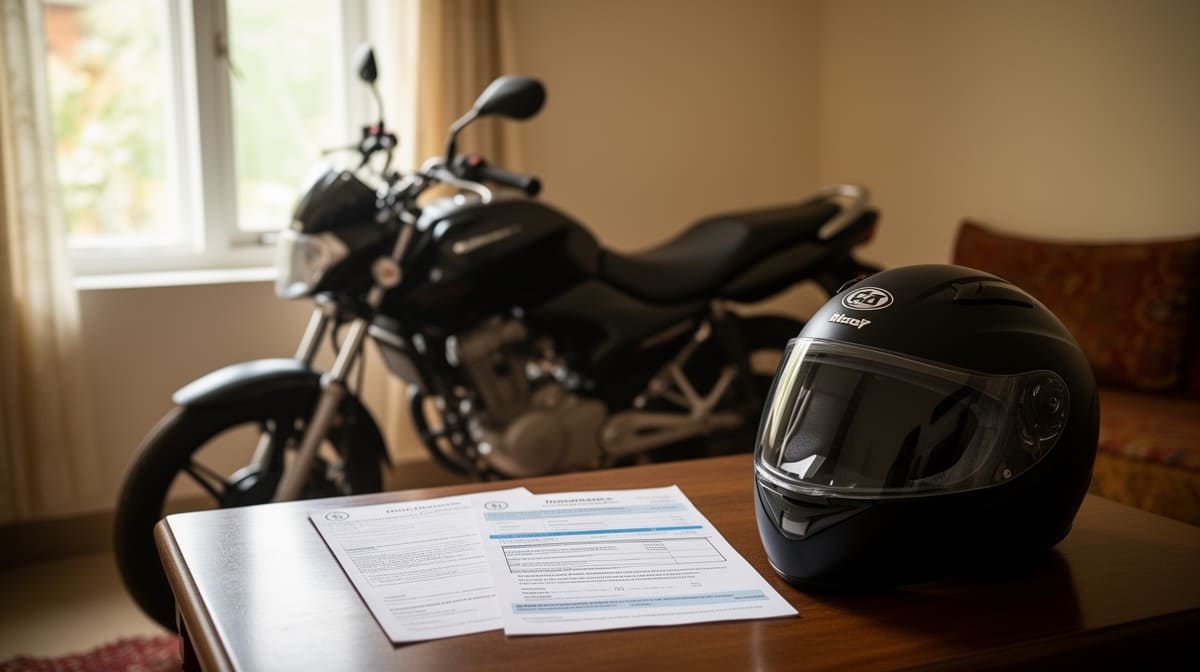
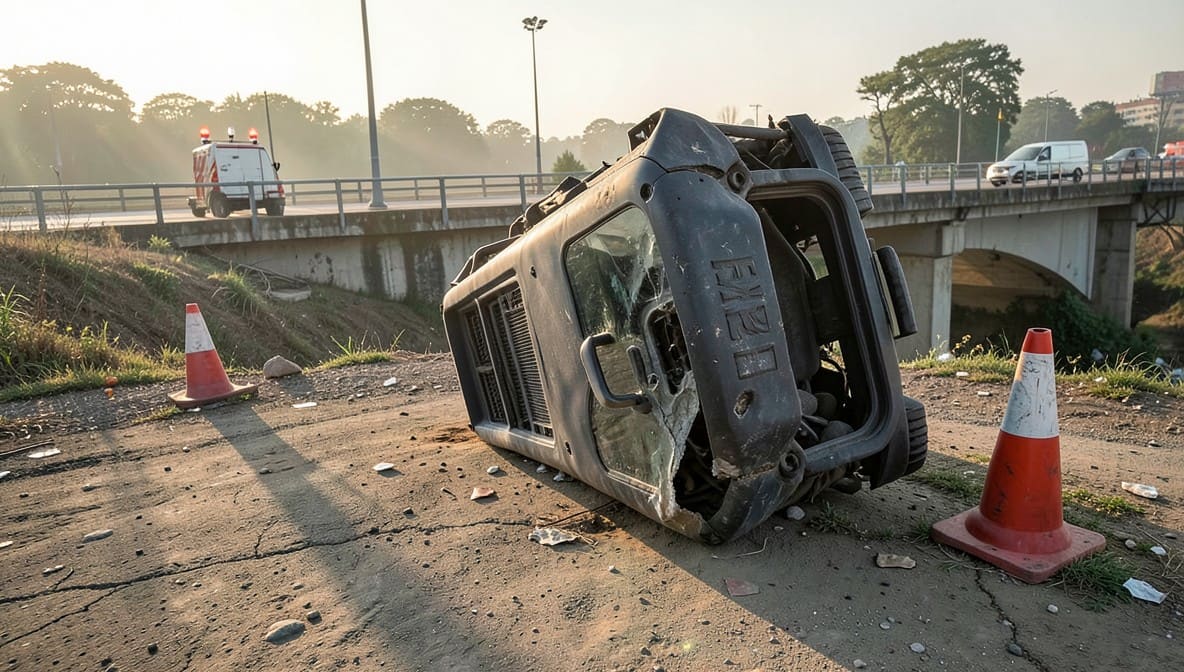
The appellants, heirs of the deceased Muralidhar Chandwani, filed Motor Accident Claims Petition No. 208 of 2011 seeking compensation for his death in a road accident on 27.06.2011. Muralidhar, aged 54, was a pillion rider on a motorcycle (MH-37 F2006) driven by respondent no. 1, Bhagwan Baliram Vairagade. The motorcycle was struck by an unknown vehicle, causing fatal head injuries. Muralidhar succumbed to his injuries on 12.07.2011. A criminal case was registered in connection with the incident.
Key Facts
- The motorcycle was insured under a comprehensive policy with respondent no. 2, Oriental Insurance Co. Ltd.
- The deceased was not the owner or driver of the vehicle but was traveling as a pillion rider.
- The claimants alleged that the driver (respondent no. 1) was negligent and rash in driving.
- The deceased was earning Rs. 15,000 per month at the time of death, according to the claim petition.
- The claimants sought total compensation of Rs. 10,00,000 under various heads: loss of dependency, loss of consortium, funeral expenses, medical expenses, and future prospects.
- Respondent no. 2 (Insurance Company) denied liability on two grounds: (i) the driver lacked a valid license, and (ii) the policy did not cover pillion riders under an act-only policy.
- Respondent no. 1 admitted negligence and contended that liability rested with the insurer.
Procedural History
- 27.06.2011: Road accident resulting in death of Muralidhar Chandwani.
- 12.07.2011: Death of deceased due to injuries sustained in accident.
- 2011: Motor Accident Claims Petition No. 208 of 2011 filed before the Motor Accident Claims Tribunal (MACT), Hingoli.
- 24.08.2017: MACT passed award allowing claim against respondent no. 1 only, awarding Rs. 5,77,491/-, and exonerating respondent no. 2 on the ground that pillion riders were not covered under the policy.
- 15.12.2017: First Appeal No. 4968 of 2017 filed before the Bombay High Court, Aurangabad Bench.
- 23.03.2026: Judgment reserved.
- 25.03.2026: Judgment pronounced.
Relief Sought
The appellants sought:
- Setting aside the MACT’s exoneration of the insurer.
- Enhancement of compensation on account of:
- Underestimation of income (Rs. 120/day instead of Rs. 200/day)
- Incorrect deduction of 1/3rd for personal expenses instead of 1/4th
- Interest awarded from 01.04.2016 instead of date of filing (2011)
- Omission of future prospects
- Inadequate award for loss of consortium
- Joint and several liability of both respondents.
The Legal Issue
The central questions were: (1) Whether a pillion rider is covered under a comprehensive motor insurance policy; (2) Whether the Tribunal erred in calculating the deceased’s income, applying the deduction ratio for personal expenses, and fixing the interest period; and (3) Whether the insurer can be held jointly liable when the policy is comprehensive.
Arguments Presented
For the Appellant/Petitioner
The appellants’ counsel relied on Magma General Insurance Company Limited v. Nanu Ram Alias Chuhru Ram and Others (2018) 18 SCC 130 to argue that Rs. 40,000 each should be awarded for consortium to each of the four claimants. He contended that the deceased’s daily wage should be fixed at Rs. 200 (not Rs. 120), yielding an annual income of Rs. 72,000. He further argued that under Sarla Verma v. Delhi Transport Corporation (2009) 6 SCC 121, where there are four dependents, only 1/4th of income should be deducted for personal expenses, not 1/3rd. He emphasized that interest must commence from the date of filing the claim petition (2011), not from 01.04.2016, which was merely the date of affidavit filing. He cited the Bombay High Court’s decision in FA No. 2057 of 2010 to establish that comprehensive policies cover pillion riders without limitation.
For the Respondent/State
The respondent insurer’s counsel argued that the issue of pillion rider coverage under comprehensive policies was pending before a larger bench and that the Tribunal’s computation was correct. He defended the income calculation, the 1/3rd deduction, and the interest period, urging the Court not to disturb the award.
The Court's Analysis
The Court examined the nature of the insurance policy and distinguished between act-only and comprehensive policies. It held that the policy in question was a comprehensive one, as evidenced by its terms and the insurer’s acceptance of premium beyond statutory minimum. The Court relied on its own precedent in First Appeal No. 2057 of 2010, which held:
"Thus, there can be a little doubt as regards limits of liability under the comprehensive/package policy to compensate in the event of occurrence of death or sustenance of injury of a pillion rider on the two wheeler or occupant in a private car. It is stated in clear terms that there are no limits on the liability and the Insurance Companies are liable to reimburse the claim in its entirety."
The Court rejected the insurer’s argument that pillion riders are excluded, noting that such an interpretation would defeat the purpose of comprehensive coverage. It further held that the Tribunal’s reliance on Rs. 120/day as income was manifestly low; given prevailing wage rates, Rs. 200/day (Rs. 6,000/month) was reasonable. The Court applied Sarla Verma to mandate a 1/4th deduction for personal expenses, as there were four dependents. It held that future prospects of 10% must be added to the net annual income, as per settled law. Regarding interest, the Court observed that the Tribunal’s choice of 01.04.2016 was arbitrary and not supported by any statutory or factual basis; interest must run from the date of filing the claim petition. The Court also upheld the award of Rs. 1,60,000 for consortium (Rs. 40,000 x 4), Rs. 15,000 for loss of estate, and Rs. 25,000 for funeral expenses, as per MACT norms. Medical expenses of Rs. 1,21,291 were accepted as duly documented.
The Verdict
The appeal was partly allowed. The Court modified the MACT award and directed respondents no. 1 and 2 to jointly and severally pay enhanced compensation of Rs. 3,97,200/-, along with interest at 6% per annum from the date of filing of the claim petition (2011) until realization. The total compensation, including all heads, amounted to Rs. 9,74,691/-, of which Rs. 5,77,491/- had already been paid, leaving an enhanced amount of Rs. 3,97,200/-. Respondents were directed to deposit the enhanced amount with the Court within 12 weeks. Upon deposit, the claimants were permitted to withdraw the amount with accrued interest. The modified award was to be prepared accordingly.
What This Means For Similar Cases
Comprehensive Policies Cover All Occupants
- Practitioners must now argue that any occupant of a vehicle - including pillion riders - is covered under comprehensive motor insurance policies, regardless of whether they are named or listed.
- Insurers cannot invoke exclusionary clauses that contradict the broad language of comprehensive coverage.
- Claims for pillion riders must be treated as third-party claims under comprehensive policies, not restricted to act-only liability.
Income and Deduction Standards Are Fixed
- For claimants earning daily wages, Rs. 200/day is now a reasonable baseline in rural and semi-urban areas.
- Where there are four or more dependents, the 1/4th deduction for personal expenses under Sarla Verma is mandatory - 1/3rd is no longer permissible.
- Future prospects of 10% must be added to net annual income unless the deceased was over 58 or employed in a non-regular capacity.
Interest Must Commence from Filing Date
-
Interest on compensation must be calculated from the date of filing the claim petition, not from arbitrary dates such as affidavit filing or hearing dates.
-
Tribunals must provide clear reasoning for any deviation from this norm; failure to do so invites appellate interference.
-
Practitioners should now routinely demand interest from the date of filing and cite this judgment to counter tribunal delays.
-
Insurers must be held jointly liable when the policy is comprehensive, even if the driver is uninsured or unlicensed - provided the vehicle was insured.
-
This judgment reinforces that compensation under MACT is not a discretionary award but a statutory entitlement calculated by fixed principles.