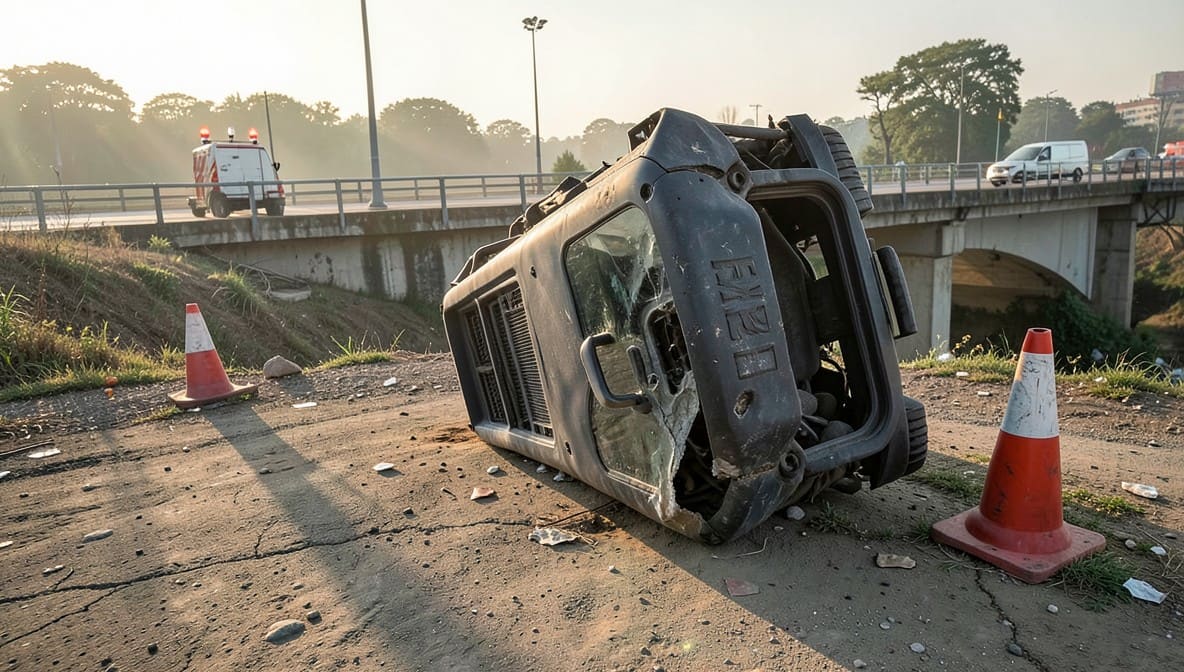
The Bombay High Court has clarified that a comprehensive motor insurance policy obligates the insurer to compensate occupants of a private vehicle even when excess passengers are present, provided there is no credible evidence that they were fare-paying passengers. This judgment reinforces the distinction between Act policies and comprehensive policies, and significantly enhances the compensation framework for families of deceased victims in road accident claims.
Background & Facts
The Dispute
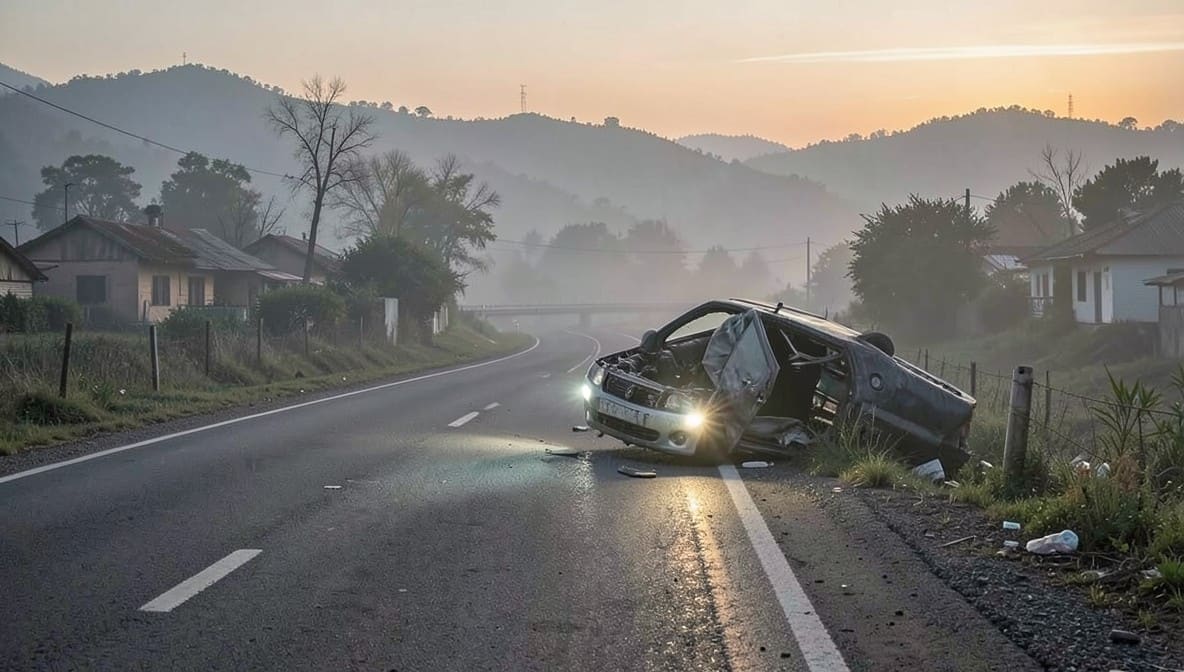
On 05-08-2006, at approximately 05:00 a.m., a Scorpio Jeep (MH-22 K-7777) owned by Hamid S/o Mehandibhai Nathani overturned near the Mandave Shivar bridge in Parbhani district while en route from Parbhani to Mahabaleshwar. The accident resulted in the deaths of two occupants: Anil Pampatwar (aged 32) and Sanjay Choudhary (aged 33). Four other occupants sustained grievous injuries. A criminal case (FIR No. 46/2006) was registered against the driver under Sections 279, 304(A), 337, 338, and 427 IPC.
Legal heirs of both deceased filed separate claims under Section 166 of the Motor Vehicles Act before the Motor Accident Claims Tribunal (MACT), Parbhani: MACP No. 280/2006 (for Anil Pampatwar) and MACP No. 277/2006 (for Sanjay Choudhary). The insurer, New India Assurance Company Ltd., resisted both claims on grounds of alleged breach of policy conditions - specifically, that the vehicle was being used to carry paid passengers and that more than the permitted number of occupants were present.
Key Facts
- Date of Accident: 05-08-2006
- Vehicle Involved: Scorpio Jeep, MH-22 K-7777, owned by Respondent No. 5 (Hamid Nathani)
- Policy Type: Comprehensive/Package Policy issued by New India Assurance Company Ltd.
- Policy Coverage: Third-party liability, Personal Accident (PA) cover of Rs. 1,00,000 per unnamed passenger (max 8), and own damage cover
- Claimants in MACP No. 280/2006 (Anil Pampatwar):
- Gauri (wife, aged 31)
- Mranali (daughter, aged 12)
- Tanvi (daughter, aged 7)
- Premilabai (mother, aged 63)
- Claimants in MACP No. 277/2006 (Sanjay Choudhary):
- Surekha (wife, aged 32)
- Shubham (son, aged 12)
- Sumit (son, aged 10)
- Shivdasrao (father, aged 65)
- Shantabai (mother, aged 60)
- Business of Deceased Anil Pampatwar: Operated "Pandurang Electricals" in Parbhani since 1990; income documented via Income Tax Returns (ITRs)
- Business of Deceased Sanjay Choudhary: Operated "Durga Electricals" in Bori since 2002
- Documentary Evidence: ITRs for FY 2004-05 and 2005-06 submitted for Anil Pampatwar (Exh. 33, 34); no ITR submitted for Sanjay Choudhary
- Insurance Investigator’s Report (RW1): Alleged 14 passengers were traveling and had paid for transport; no signatures of witnesses obtained; no statements recorded from driver or owner
- Insurance Branch Manager (RW2): Admitted policy was comprehensive; PA cover limited to Rs. 1,00,000 per passenger; no denial of comprehensive nature
Procedural History
- 05-08-2006: Accident occurs
- 05-08-2006: FIR registered at Natepute Police Station
- 2006: Claim petitions filed before MACT, Parbhani (MACP No. 277/2006 and MACP No. 280/2006)
- 15-01-2011: MACT, Parbhani passes common award:
- MACP No. 277/2006: Awarded Rs. 8,05,000
- MACP No. 280/2006: Awarded Rs. 18,85,000
- 2011: New India Assurance Company Ltd. files First Appeals (FA No. 1054/2012 and FA No. 1056/2012) before Bombay High Court
- 20-April-2026: Judgment reserved
- 07-May-2026: Judgment pronounced
The Parties' Positions
Appellant (New India Assurance Co. Ltd.):
- Argued breach of policy conditions due to:
- Excess passengers (14 instead of permitted 8)
- Paid passengers (alleged hire and reward)
- Relied on eight judgments to argue exclusion of liability
- Contended that PA cover of Rs. 1,00,000 per passenger was the only applicable liability
Respondents (Legal Heirs of Deceased):
- Contended that the policy was comprehensive and covered all occupants regardless of number
- Denied allegations of paid transport; asserted all occupants were friends traveling together
- Submitted ITRs as proof of income for Anil Pampatwar
- Argued for enhancement of compensation under Nagappa, Pranay Sethi, and Magma General Insurance
Owner (Hamid Nathani):
- Supported the Tribunal’s award
- Did not challenge liability
- Agreed with claimants’ position on policy coverage
Relief Sought
- Appellant: Dismissal of claims on grounds of policy breach
- Respondents (Claimants):
- Enhancement of compensation based on:
- Future prospects (40% of income)
- Loss of consortium (Rs. 40,000 per claimant)
- Loss of estate and funeral expenses (Rs. 15,000 each)
- Interest at 9% from date of filing
- Payment by insurer within stipulated time
- Enhancement of compensation based on:
The Legal Issue
The central question was whether an insurer under a comprehensive motor policy can deny liability for occupant compensation on the grounds of excess passengers or alleged paid transport, in the absence of credible evidence proving breach of policy conditions.
Arguments Presented
For the Appellant
The appellant, New India Assurance Company Ltd., contended that the policy excluded liability for passengers carried for hire or reward, and that carrying 14 passengers (exceeding the permitted 8) constituted a material breach. It relied on RW1’s investigation report alleging paid transport and RW2’s admission that PA cover was capped at Rs. 1,00,000 per passenger. It cited judgments such as Oriental Fire and General Insurance Co. v. Hirabai Nikam and New India Assurance v. Suman Pawar to argue that liability is limited to third-party or PA coverage only. It further argued that the Tribunal erred in accepting ITRs as proof of income and in applying an incorrect multiplier.
For the Respondent
The claimants, represented by multiple counsel, argued that the policy was explicitly a comprehensive policy, as admitted by the insurer’s own witness (RW2). They emphasized that the burden to prove breach lay with the insurer, which failed to record statements from the driver or owner, and did not produce signed affidavits from alleged paying passengers. They relied on National Insurance Co. Ltd. v. Balakrishnan (AIR 2013 SC 473) to establish that comprehensive policies cover all occupants irrespective of number, provided no proof of hire and reward exists. They further sought enhancement of compensation under Pranay Sethi (40% future prospects) and Magma General Insurance (Rs. 40,000 per claimant for consortium), and challenged the Tribunal’s under-valuation of income.
The Court's Analysis
The Court began by affirming the Tribunal’s finding that the accident resulted from rash and negligent driving, a conclusion supported by the FIR, spot panchanama, and the absence of any other vehicle involvement. The Court then turned to the insurer’s primary defense: breach of policy conditions.
"It would be profitable to refer and rely on the case of National Insurance Company Ltd. v. Balakrishnan and Anr., AIR 2013 SC 473, the Hon’ble Apex Court... [which] clarified that a 'Comprehensive/Package Policy' covers the liability of the insurer for payment of compensation for the occupant in a car."
The Court held that the insurer’s own witness, RW2, had unequivocally admitted the policy was comprehensive. This admission was decisive. The Court emphasized that the burden to prove breach of policy conditions - specifically, that passengers were being carried for hire or reward - rested squarely on the insurer. The investigator’s report (Exh. 37) was found to be legally insufficient: no statements were recorded from the driver or owner, no signatures were obtained from the alleged paying passengers, and no documentary proof of payment was produced.
The Court further noted that the insurer had previously settled its own claim for vehicle damage, indicating recognition of liability under the policy. The Court rejected the insurer’s reliance on judgments concerning Act policies, distinguishing them clearly from comprehensive policies.
On compensation, the Court examined the ITRs for Anil Pampatwar (FY 2004-05: Rs. 3,41,760; FY 2005-06: Rs. 5,56,867). While the 2006-07 return was posthumous and excluded, the Court averaged the two preceding years to arrive at an annual income of Rs. 2,00,000. For Sanjay Choudhary, the Court accepted the claimant’s testimony of Rs. 1,20,000 annual income from business and agriculture, and fixed it at Rs. 60,000 as a conservative estimate.
Applying Sarla Verma (2009) 6 SCC 121, the Court upheld the multiplier of 16. It then applied Pranay Sethi (2017) 16 SCC 680 to award 40% of the adjusted income as future prospects, and Magma General Insurance (2018) 18 SCC 130 to award Rs. 40,000 per claimant for loss of consortium and Rs. 15,000 each for funeral expenses and loss of estate.
The Court found no merit in the insurer’s appeal and granted substantial enhancement to both claimants.
The Verdict
The appellant’s appeals were dismissed. The MACT’s award dated 15-01-2011 was modified as follows:
- In MACP No. 277/2006 (Sanjay Choudhary’s heirs): Enhanced compensation of Rs. 4,33,000, payable by the insurer.
- In MACP No. 280/2006 (Anil Pampatwar’s heirs): Enhanced compensation of Rs. 16,65,000, payable by the insurer.
- Both amounts carry interest at 9% per annum from the date of filing the respective claim petitions until realization.
- The insurer must deposit the enhanced compensation and interest with the Court within 12 weeks.
- The claimants may withdraw the amount upon deposit.
- The apportionment among claimants shall follow the Tribunal’s original distribution.
What This Means For Similar Cases
Comprehensive Policies Cover All Occupants, Regardless of Number
- Practitioners must now argue that comprehensive motor policies automatically cover all occupants, irrespective of whether the number exceeds the insurer’s internal limit (e.g., 8 passengers).
- Insurers cannot rely on policy wordings excluding "hire and reward" unless they prove actual payment was made.
- The burden of proof for breach lies entirely with the insurer.
Future Prospects and Consortium Are Now Standard in All Fatal Accident Claims
- Future prospects: 40% of net annual income must be added to the compensation base, even for self-employed individuals with fluctuating income.
- Loss of consortium: Rs. 40,000 per claimant is now the recognized minimum for each dependent, regardless of the deceased’s age or income.
- Funeral and estate loss: Rs. 15,000 each is mandatory and non-discretionary.
- These components must be explicitly calculated and awarded, even if not claimed separately.
Documentary Evidence Trumps Investigative Reports
-
Investigative reports lacking signatures, sworn statements, or corroboration from the driver or owner are legally insufficient.
-
ITRs, even if filed posthumously for prior years, are admissible and reliable for income estimation.
-
Courts will not accept speculative allegations of "paid transport" without concrete proof.
-
Practitioners should always request the policy document and insist on its classification (Act vs. Comprehensive) at the earliest stage.
-
In appeals, always seek enhancement under Pranay Sethi and Magma General Insurance even without a cross-appeal, as permitted by Nagappa.
-
Always challenge the insurer’s investigation report for procedural defects: missing signatures, unexamined witnesses, and failure to record statements from the owner or driver.
-
For income estimation, use the average of the two most recent pre-accident financial years if income is fluctuating.
-
Always claim and argue for 9% interest from the date of filing, as this judgment confirms its applicability.