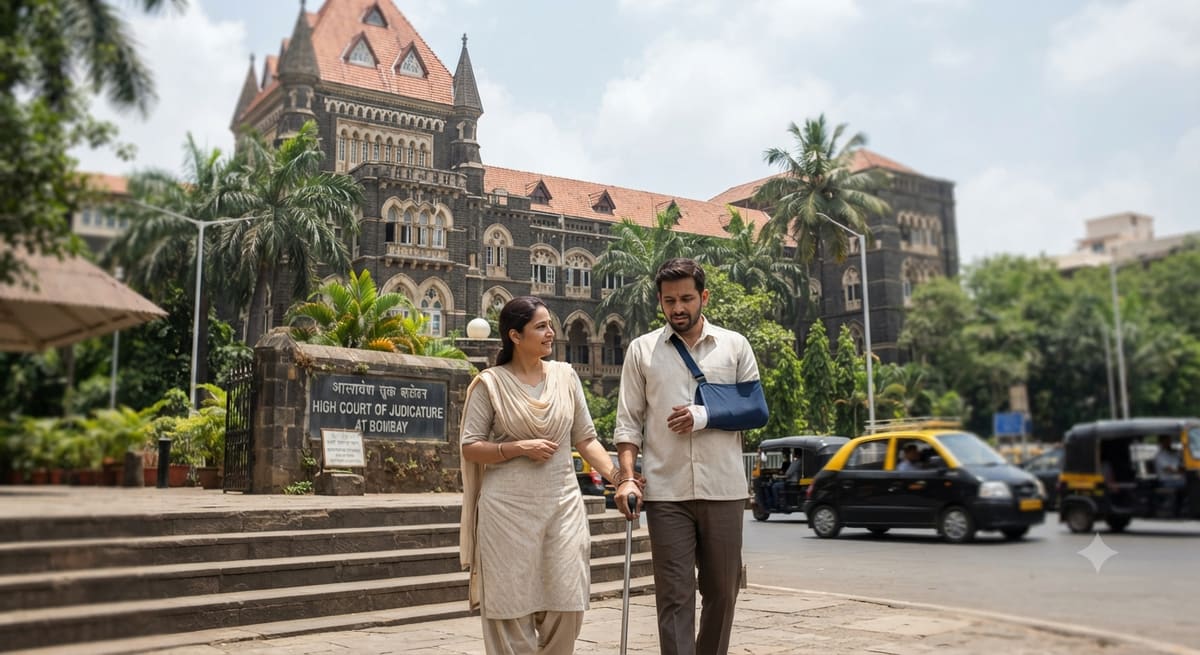
The Bombay High Court recently corrected a Motor Accident Claims Tribunal's compensation award, enhancing it from Rs. 25,000 to Rs. 83,275. The judgment highlights critical errors in factual calculations, particularly regarding salary loss duration and the failure to account for disability, setting important precedents for future compensation claims under the Motor Vehicles Act, 1988.
Background & Facts
The Dispute
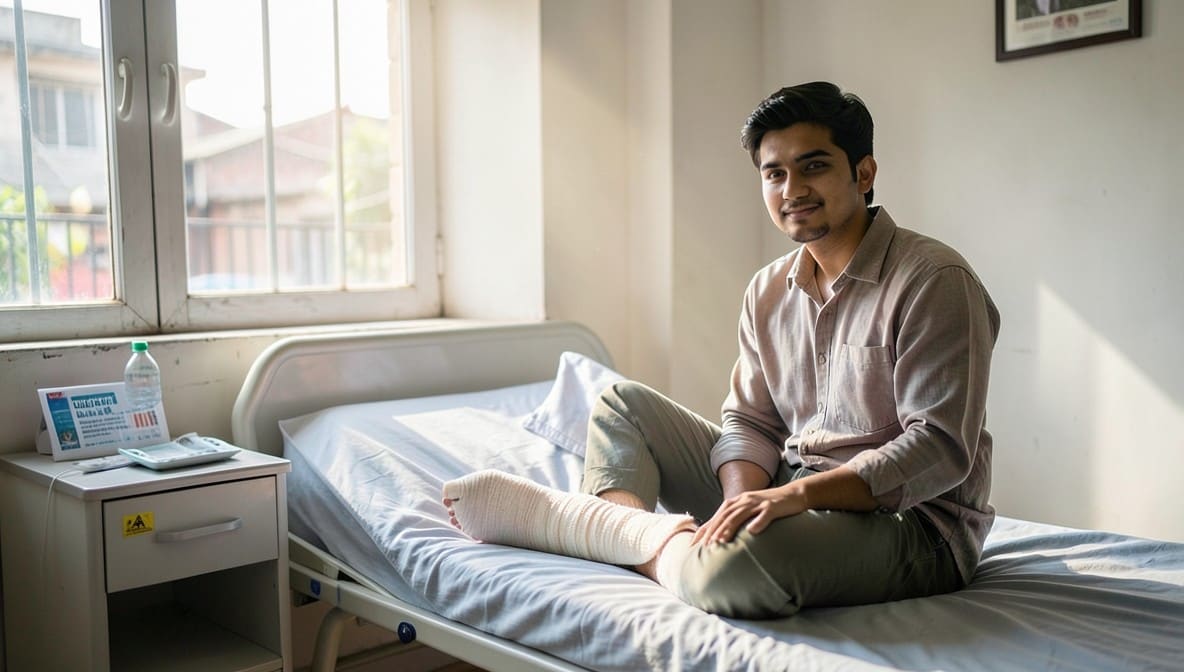
The appellant, Shivshankar Harinandan Sinha, sustained severe injuries on 5 September 2000 when he was knocked down by a bus belonging to the Municipal Corporation of Greater Bombay while walking on S.V. Road, Dahisar. The Motor Accident Claims Tribunal, Mumbai, awarded compensation of Rs. 25,000, which the appellant challenged in this appeal seeking enhancement.
Key Facts
Date of Accident: 5 September 2000
Injuries Sustained: Loss of 10-12 teeth, memory impairment, and bodily injuries requiring hospitalization from 5 September 2000 to 20 September 2000
Medical Treatment: Regular hospital visits for approximately 3 years post-accident
Employment Impact: The appellant was absent from his job from the date of the accident until March 2002 (approximately 18 months)
Salary Details: The appellant earned Rs. 2,385 per month; his employer paid salary for 90 days during his absence
Tribunal's Award Breakdown:
Medical expenses and treatment: Rs. 3,000
Conveyance: Rs. 1,500
Special diet: Rs. 1,500
Loss of salary: Rs. 7,155 (calculated for 6 months instead of 18 months)
Pain and suffering: Rs. 11,845
Total: Rs. 25,000
Procedural History
6 November 2011: Appeal admitted by the Bombay High Court (First Appeal No. 158 of 2005)
14 July 2026: Final judgment delivered by Justice Jitendra Jain
Relief Sought
The appellant sought enhancement of compensation on the following grounds:
Loss of Salary: The Tribunal erroneously calculated loss for 6 months instead of 18 months
Special Diet: Inadequate compensation considering the loss of 10-12 teeth
Disability: No amount awarded despite evidence of memory impairment and prolonged absence from work
Pain and Suffering: Insufficient compensation given the severity of injuries
The Legal Issue
The primary question before the Court was whether the Tribunal's compensation award was just and reasonable, particularly:
Whether the Tribunal erred in calculating the loss of salary period, thereby undercompensating the appellant.
Whether the Tribunal failed to adequately account for disability, pain and suffering, and special diet requirements arising from the injuries.
Arguments Presented
For the Appellant
Ms. Ketki Gokhale, counsel for the appellant, argued:
The Tribunal's calculation of salary loss for only 6 months was factually incorrect, as the appellant was absent from work for 18 months.
The appellant lost 10-12 teeth, necessitating a higher compensation for special diet.
The appellant suffered memory impairment and prolonged physical limitations, justifying an award under the disability head.
For the Respondent
Ms. Lubna Shaikh, counsel for the Municipal Corporation of Greater Bombay, contended:
The Tribunal's award of Rs. 25,000 was justified, as reasoned in paragraph 9 of its order.
No additional details were filed before the Tribunal to support enhancement, and thus, the award should not be disturbed.
The Court's Analysis
The Court meticulously examined the Tribunal's factual findings and identified critical errors in the compensation calculation:
"The Tribunal records that the claimant was absent from his job from date of accident (5 September 2000) till March 2002. This period works out to around 18 months but the Tribunal in the order has miscalculated at 6 months."
The Court noted that the Tribunal accepted the appellant's absence for 18 months but erroneously calculated salary loss for only 6 months. After accounting for the 3 months' salary paid by the employer, the appellant was entitled to compensation for 15 months at Rs. 2,385 per month, aggregating to Rs. 35,775, instead of Rs. 7,155 awarded by the Tribunal.
Regarding pain and suffering, the Court observed:
"The Tribunal accepts that the claimant was out of job for 18 months. This indicates that the injury suffered by the claimant was severe. He also lost around 10 to 12 teeth and was in hospital from 5 September 2000 to 20 September 2000 and had to regularly thereafter visits hospital for treatment for about 3 years. Looking at these facts, the amount on account of pain and suffering awarded by the Tribunal is on the lower side."
The Court enhanced this head from Rs. 11,845 to Rs. 15,000.
On special diet, the Court held:
"In my view, this amount appears to be on the lower side since the claimant lost around 10 to 12 teeth. Therefore, he was required to take special diet for a longer period."
Accordingly, the Court increased the compensation from Rs. 1,500 to Rs. 3,000.
Most significantly, the Court addressed the disability head, which the Tribunal had entirely omitted:
"The claimant has not led evidence of doctor to prove any amount under the disability head, but at the same time looking at the nature of the injury, it cannot be said that there was no disability whatsoever. Therefore, the Court awards Rs. 25,000/- as lump sum towards the disability."
The Court emphasized that while no medical evidence was led to quantify disability, the nature of injuries - including memory loss, prolonged absence from work, and loss of teeth - necessitated an award under this head.
The Verdict
The Bombay High Court allowed the appeal in part and enhanced the compensation as follows:
Medical expenses and treatment: Rs. 3,000 (unchanged)
Conveyance: Rs. 1,500 (unchanged)
Special diet: Rs. 3,000 (enhanced from Rs. 1,500)
Loss of salary: Rs. 35,775 (enhanced from Rs. 7,155)
Pain and suffering: Rs. 15,000 (enhanced from Rs. 11,845)
Disability: Rs. 25,000 (new head)
Total Compensation: Rs. 83,275 (enhanced from Rs. 25,000)
Enhanced Amount: Rs. 58,500 (rounded off from Rs. 58,275)
Interest: The appellant is entitled to interest on the enhanced amount from the date of filing the application until realization.
Credit for Withdrawn Amounts: If any amount was deposited and withdrawn by the appellant, credit must be given while implementing this order.
What This Means For Similar Cases
Tribunal's Factual Errors Can Be Corrected on Appeal
This judgment underscores that appellate courts can intervene to correct factual errors in compensation calculations. Practitioners should:
Scrutinize Tribunal Orders: Ensure that calculations for salary loss, medical expenses, and other heads align with the evidence on record.
Highlight Discrepancies: If the Tribunal miscalculates periods (e.g., absence from work), appeal on the ground of factual inaccuracy.
Disability Compensation Need Not Always Require Medical Evidence
The Court awarded Rs. 25,000 for disability despite the absence of medical evidence, relying instead on the nature of injuries and their impact on the appellant's life. This sets a precedent that:
Circumstantial Evidence Suffices: Courts may infer disability from prolonged hospitalization, memory impairment, or loss of bodily function, even without formal medical quantification.
Holistic Assessment: Compensation can be awarded based on the overall impact of injuries, including loss of earning capacity and quality of life.
Pain and Suffering Awards Are Subject to Judicial Review
The Court enhanced the pain and suffering compensation from Rs. 11,845 to Rs. 15,000, signaling that:
Tribunal Awards Are Not Final: Appellate courts can reassess compensation for pain and suffering if the amount is disproportionate to the severity of injuries.
Factors for Enhancement: Prolonged treatment, loss of teeth, and extended absence from work can justify higher awards under this head.