The Madhya Pradesh High Court has clarified that authorities cannot seize a vehicle for unpaid road tax without first following the mandatory statutory procedure under the M.P. Motoryan Karadhan Adhiniyam, 1991. The judgment reinforces that procedural compliance is non-negotiable, even in revenue enforcement, and that seizure of the vehicle itself is disproportionate when less intrusive alternatives exist.
Background & Facts
The Dispute
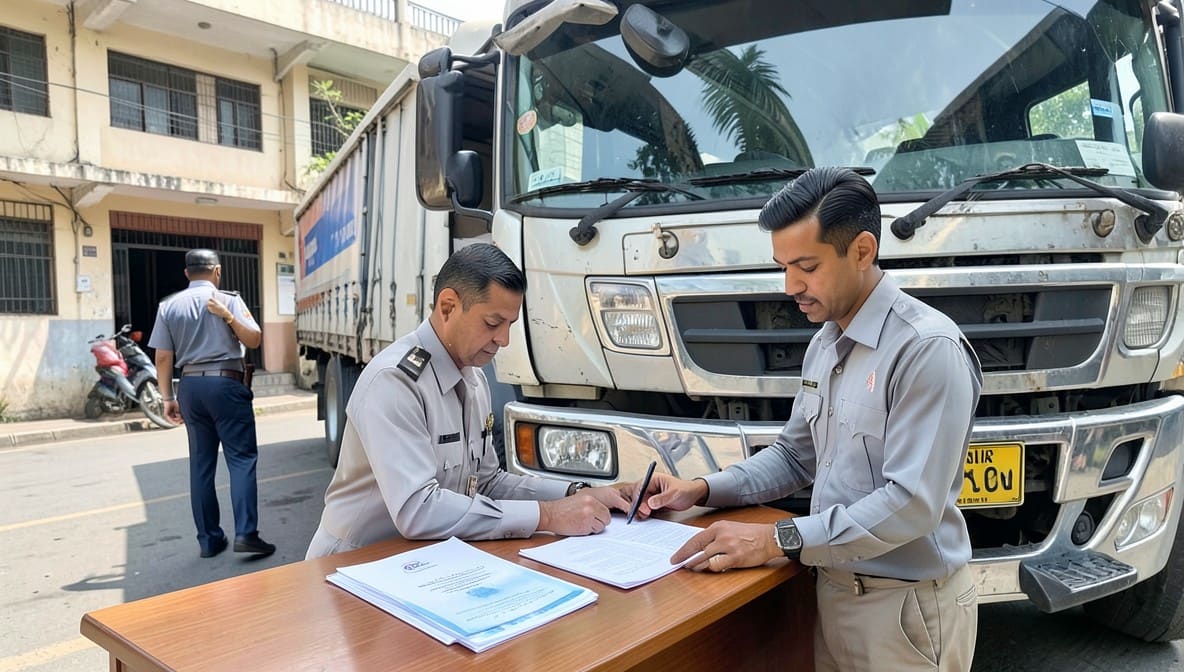
The petitioner, Mohtd. Rafique, is the registered owner of a bus bearing registration number MP35ZE-7510. On 27.01.2026, the Regional Transport Office (RTO), Chhindwara, seized the vehicle on the ground of alleged unpaid road tax under Section 207 of the Motor Vehicles Act and Section 16(3) of the M.P. Motoryan Karadhan Adhiniyam, 1991. The seizure memo (Annexure P/2) cited tax dues as the reason but did not reference any assessment order or notice issued under the Adhiniyam.
Key Facts
- The petitioner admits to non-payment of road tax but contends no formal demand or assessment was made.
- The vehicle was seized on 27.01.2026 without any prior notice or opportunity to pay.
- The petitioner offered to pay the outstanding tax and penalty and requested compounding of the offence under Section 207 of the Motor Vehicles Act.
- The petitioner further submitted that the RTO could have seized only the Registration Certificate, as permitted under the proviso to Section 207(1) of the Motor Vehicles Act.
- The RTO did not issue any notice in Form E-2 as mandated by Rule 15 of the M.P. Motoryan Karadhan Adhiniyam Rules, 1991.
- No assessment of tax liability was conducted prior to seizure.
- On 06.03.2026, the Additional Regional Transport Officer confirmed in writing that no assessment order had been passed.
Procedural History
- 27.01.2026: Vehicle seized by RTO, Chhindwara, under Section 16(3) of the M.P. Motoryan Karadhan Adhiniyam and Section 207 of the Motor Vehicles Act.
- 13.03.2026: Petition filed before the High Court seeking quashing of seizure and release of vehicle.
- 06.03.2026: Additional RTO, Chhindwara, filed affidavit confirming no assessment order was passed.
- 08.04.2026: Hearing conducted before Justice Sandeep N. Bhatt.
- 10.04.2026: Judgment delivered.
Relief Sought
The petitioner sought:
- Declaration that the seizure proceedings dated 27.01.2026 are void ab initio.
- A writ of mandamus directing release of the bus.
- Exemplary costs of Rs. 1,00,000 for illegal seizure.
- Any other relief deemed fit.
The Legal Issue
The central question was whether the authorities could lawfully seize a motor vehicle for unpaid road tax under Section 16(3) of the M.P. Motoryan Karadhan Adhiniyam, 1991, without first conducting a formal assessment, issuing a notice under Rule 15, and providing an opportunity to pay.
Arguments Presented
For the Petitioner
The petitioner’s counsel relied on two key precedents. First, Nikhata Afros v. Union of India (AIR 1997 MP 41), which held that where a vehicle is seized for violation of transport regulations, the authorities must prefer seizing the Registration Certificate over the vehicle itself, especially when the offence is compoundable. Second, Sunderbhai Ambalal Desai v. State of Gujarat (2002) 10 SCC 283, which emphasized that seized vehicles must not be retained indefinitely and that courts must direct their release pending adjudication, subject to conditions. The petitioner argued that the Adhiniyam mandates a two-step process: (1) assessment and notice under Rule 15, and (2) recovery as arrears of land revenue only after non-payment. The seizure of the vehicle bypassed both steps and was therefore illegal.
For the Respondent
The State counsel conceded that no assessment order had been passed but contended that the seizure was justified due to the existence of tax dues. The argument was that the Adhiniyam empowers seizure for recovery of dues and that procedural lapses do not invalidate the substantive right to recover taxes. However, no specific statutory provision or precedent was cited to justify direct seizure without notice or assessment.
The Court's Analysis
The Court undertook a detailed examination of the statutory framework under the M.P. Motoryan Karadhan Adhiniyam, 1991, and its Rules. Rule 15(1) mandates that before any recovery action, the Taxation Authority must serve a notice in Form E-2 on the owner, specifying the amount due. Sub-rule (3) permits recovery as arrears of land revenue only if the amount remains unpaid after seven days and no reasonable cause is shown. Only after this process can Section 16(3) be invoked for seizure.
"In the present case, the RTO concerned has straightway proceeded for seizure of the vehicle without following the relevant provisions of the Adhiniyam, 1991."
The Court held that the absence of any notice or assessment rendered the seizure illegal and arbitrary. The State’s reliance on Section 16(3) was misplaced because the provision is not self-executing - it requires prior compliance with Rule 15. The Court further relied on Nikhata Afros, which explicitly held that seizure of the Registration Certificate is the appropriate measure under Section 207 of the Motor Vehicles Act, and that the vehicle itself should not be detained unless absolutely necessary.
The Court also applied Sunderbhai Ambalal Desai, noting that prolonged retention of seized vehicles causes depreciation and economic loss, and that courts must ensure their prompt release subject to conditions. The Court observed that tax recovery can be effected through other means - such as attachment of bank accounts or recovery as arrears of land revenue - without resorting to seizure of the vehicle.
The Verdict
The petition was allowed. The Court quashed the seizure memo dated 27.01.2026 and directed the authorities to release the bus bearing registration number MP35ZE-7510 forthwith, subject to verification of the petitioner’s ownership. The authorities are permitted to seize the Registration Certificate to facilitate recovery of tax dues. The petitioner must provide an undertaking that he will not alter the vehicle’s nature or structure without prior permission of the Court and shall produce the vehicle upon demand. No costs were awarded.
What This Means For Similar Cases
Procedural Compliance Is Mandatory for Tax Seizures
- Practitioners must challenge any vehicle seizure under state transport tax laws where no Form E-2 notice was issued or no assessment order exists.
- The burden shifts to the State to prove compliance with Rule 15 before invoking Section 16(3).
- Courts will not uphold seizures based on mere allegations of tax arrears without procedural documentation.
Registration Certificate Seizure Is the Prescribed Remedy
- In cases of non-payment of road tax or violation of transport rules, authorities must first seize the Registration Certificate under Section 207(1) proviso of the Motor Vehicles Act.
- Seizure of the vehicle itself is permissible only if the owner refuses to surrender the RC or if the vehicle is used for illegal purposes beyond mere tax default.
- Legal notices should always demand RC seizure before seeking vehicle detention.
Vehicles Cannot Be Held Indefinitely for Revenue Recovery
- Courts will apply Sunderbhai Ambalal Desai to direct release of seized vehicles pending adjudication, subject to undertakings and security.
- Authorities must not retain vehicles for more than six months without auction or insurance claim procedures.
- Petitioners in similar cases may now seek interim release on filing an undertaking and depositing a bond.