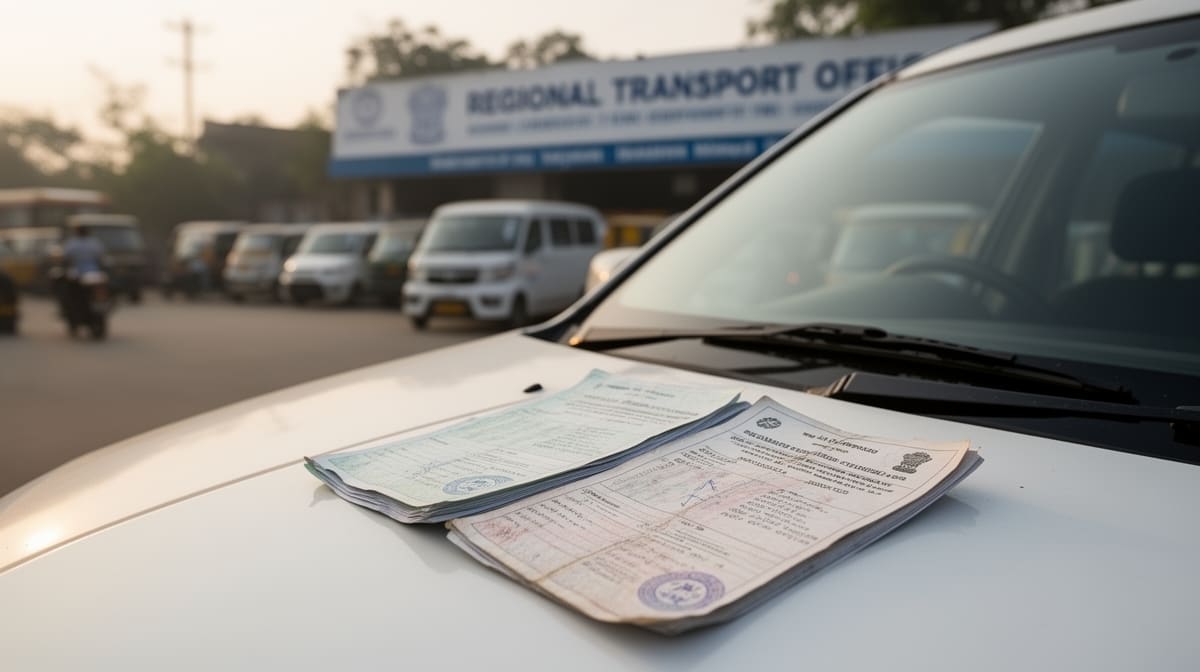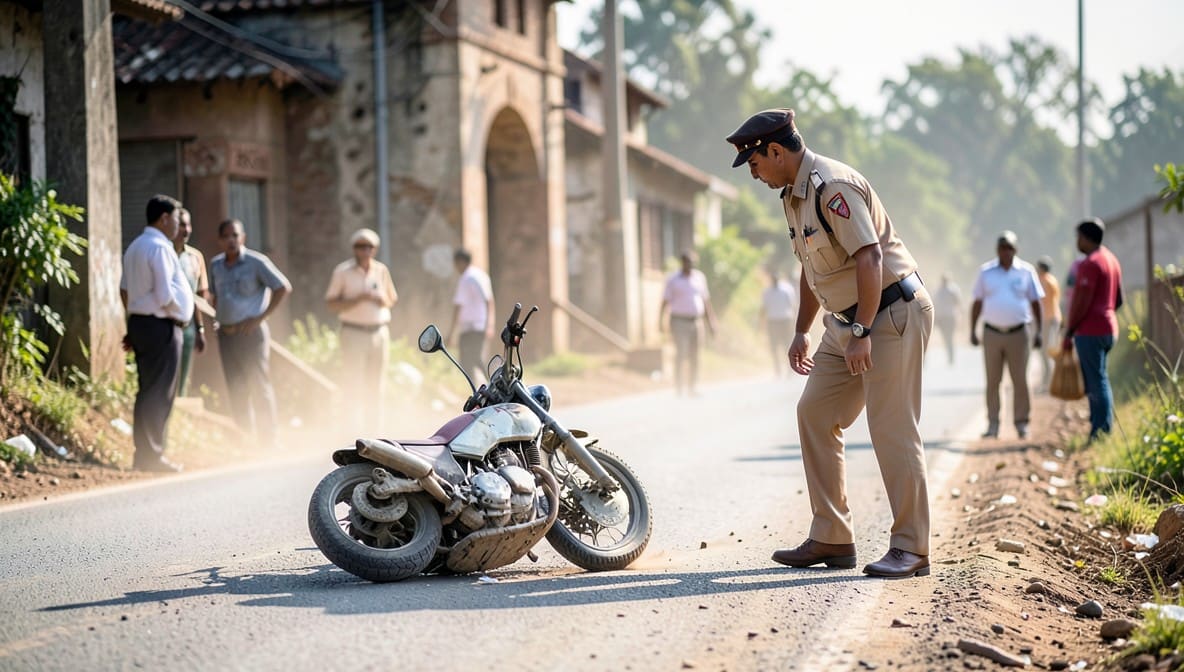
The Madhya Pradesh High Court has clarified that under Section 163-A of the Motor Vehicles Act, 1988, a person borrowing a vehicle is entitled to the same insurance coverage as the registered owner, provided the policy explicitly covers owner liability. This ruling affirms a critical principle of no-fault compensation for victims of road accidents, irrespective of technical ownership status at the time of the incident.
Background & Facts
The Dispute
On 3.01.2009, the deceased Jagdish borrowed a motorcycle bearing registration No. M.P. 09 MM 7002, owned by the late Satish. Jagdish was riding the motorcycle with his brother-in-law Dilip as a pillion rider, en route to Kadwali. Due to dazzling headlights from an oncoming vehicle, the motorcycle ran over a heap of gravel, causing Jagdish to suffer grievous injuries. He was rushed to Bhandari Hospital, where he succumbed to his injuries on 4.01.2009.
Key Facts
- The motorcycle was insured under a policy (Exhibit P/1) covering the owner’s liability up to Rs. 1,00,000
- Jagdish was not the registered owner but was lawfully in possession of the vehicle as a borrower
- The accident occurred without any allegation of negligence by Jagdish or the owner
- The claim petition was filed under Section 163-A of the Motor Vehicles Act, 1988, which provides for no-fault compensation
- Survivors of Jagdish claimed Rs. 10,00,000 as compensation before the Motor Accident Claims Tribunal (MACT)
Procedural History
- 03.01.2009: Date of accident
- 04.01.2009: Death of Jagdish
- 2010: Claim petition filed before 5th Member, MACT, Indore (Claim Case No. 72/2010)
- 03.01.2012: MACT dismissed the claim petition in toto, holding that the deceased, as a borrower, was not entitled to insurance coverage
- 12.04.2012: Misc. Appeal No. 477 of 2012 filed before the High Court of Madhya Pradesh, Indore
- 06.05.2026: Judgment delivered by Justice Binod Kumar Dwivedi
Relief Sought
The appellants sought reversal of the MACT’s order and directed payment of Rs. 1,00,000 under the insurance policy, along with interest at a just rate from the date of filing the claim petition. They further sought that the amount be distributed equally among all survivors.
The Legal Issue
The central question was whether a person who borrows a motor vehicle and is injured or killed in an accident while in lawful possession of the vehicle is entitled to compensation under Section 163-A of the Motor Vehicles Act, 1988, up to the limit of the owner’s insurance policy.
Arguments Presented
For the Appellant
Learned counsel for the appellants relied on two key precedents: Ramkhiladi & Anr. v. United India Insurance Co. Ltd & Anr. (2020 ACJ 627) and Iffco-Tokio General Insurance Co. Ltd v. Dhanpat Kewat & Ors. (2025 ACJ 1241). They argued that under Section 163-A, compensation is payable irrespective of fault, and the term "owner" in the insurance policy must be interpreted to include a person lawfully in possession of the vehicle, such as a borrower. The policy coverage of Rs. 1,00,000 was intended to protect all persons using the vehicle with the owner’s consent, and the deceased, as a borrower, had stepped into the shoes of the owner for the purpose of insurance coverage.
For the Respondent
Learned counsel for the respondent insurance company contended that the MACT correctly held that only the registered owner is entitled to the benefit of the insurance policy. They argued that the policy terms explicitly covered the owner, and extending coverage to borrowers would expand the insurer’s liability beyond contractual terms. They further submitted that the tribunal had applied the correct legal standard and that no error warranted interference.
The Court's Analysis
The Court examined the nature of Section 163-A, which is a statutory mechanism for no-fault compensation, designed to ensure swift relief to victims of motor accidents. The Court noted that the purpose of the provision is humanitarian and not technical. The insurance policy (Exhibit P/1) clearly covered the owner’s liability up to Rs. 1,00,000. The Court held that the term "owner" in the context of Section 163-A and the insurance policy must be interpreted purposively to include a person lawfully in possession of the vehicle, especially when the use is with the owner’s consent.
"The deceased, having borrowed the motorcycle with the owner’s implied consent, stepped into the shoes of the owner for the purpose of insurance coverage under Section 163-A. To deny compensation on the basis of technical ownership would defeat the very object of the provision."
The Court distinguished the respondent’s reliance on policy wording by emphasizing that insurance policies under the Motor Vehicles Act are not ordinary commercial contracts but statutory instruments designed to protect victims. The precedents cited by the appellants were directly on point and were followed. The Court found no merit in the MACT’s dismissal of the claim on the ground that the deceased was not the registered owner.
The Verdict
The appeal was partly allowed. The Court set aside the MACT’s order dated 03.01.2012 and directed the respondent insurance company to pay Rs. 1,00,000 to the appellants, being the policy limit for owner’s liability. Interest at the rate of 6% per annum shall accrue from the date of filing of the claim petition (2010) until actual payment. The amount shall be distributed equally among all survivors. The MACT shall facilitate disbursement upon deposit of the amount into the appellants’ joint savings bank account.
What This Means For Similar Cases
Borrowers Are Covered Under Section 163-A
- Practitioners must now argue that lawful possession, even without registration, qualifies a person as a "deemed owner" for insurance purposes under Section 163-A
- Insurance companies cannot deny claims merely because the victim was not the registered owner if the vehicle was used with consent
- Claim petitions under Section 163-A should always plead the borrower status and attach proof of lawful possession
Insurance Policy Interpretation Must Be Purposive
- Courts will interpret insurance policy terms in favor of victims, especially under statutory no-fault regimes
- The phrase "owner’s liability" in policies must be read to include persons lawfully operating the vehicle
- Insurers must review policy wordings to ensure compliance with judicial interpretations under Section 163-A
No-Fault Compensation Overrides Technical Defenses
- Technicalities such as registration, title, or policy exclusions cannot override the humanitarian intent of Section 163-A
- Tribunals must prioritize victim compensation over insurer liability limitations
- Claims under Section 163-A should be decided on the basis of factual possession and accident causation, not ownership documentation