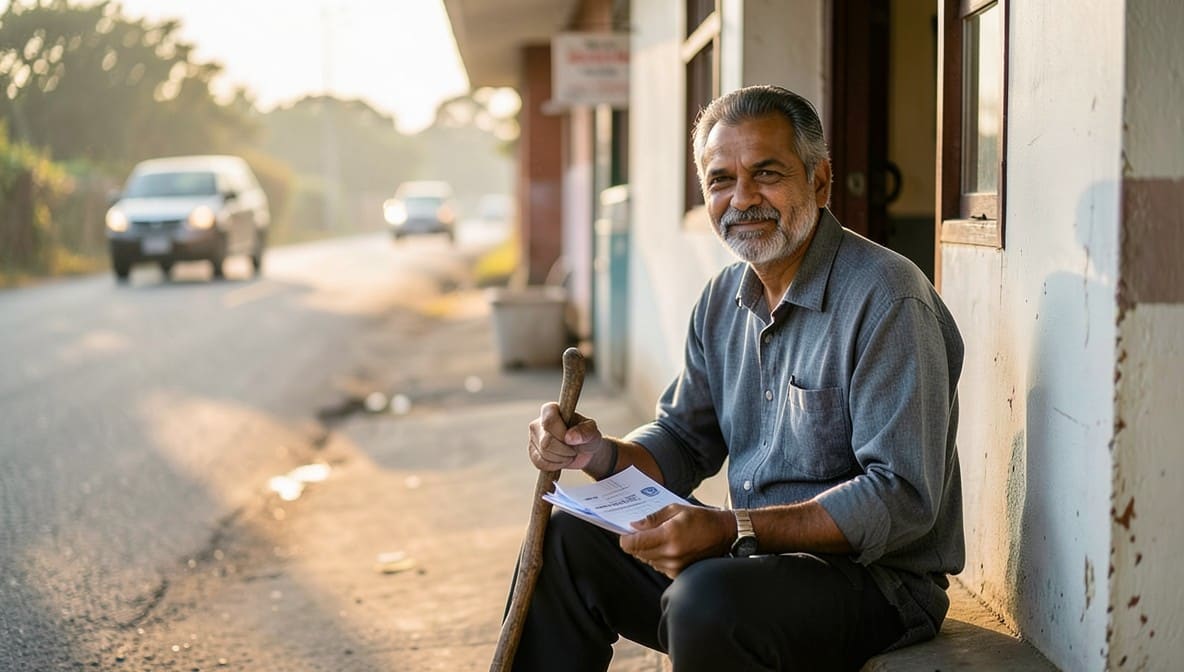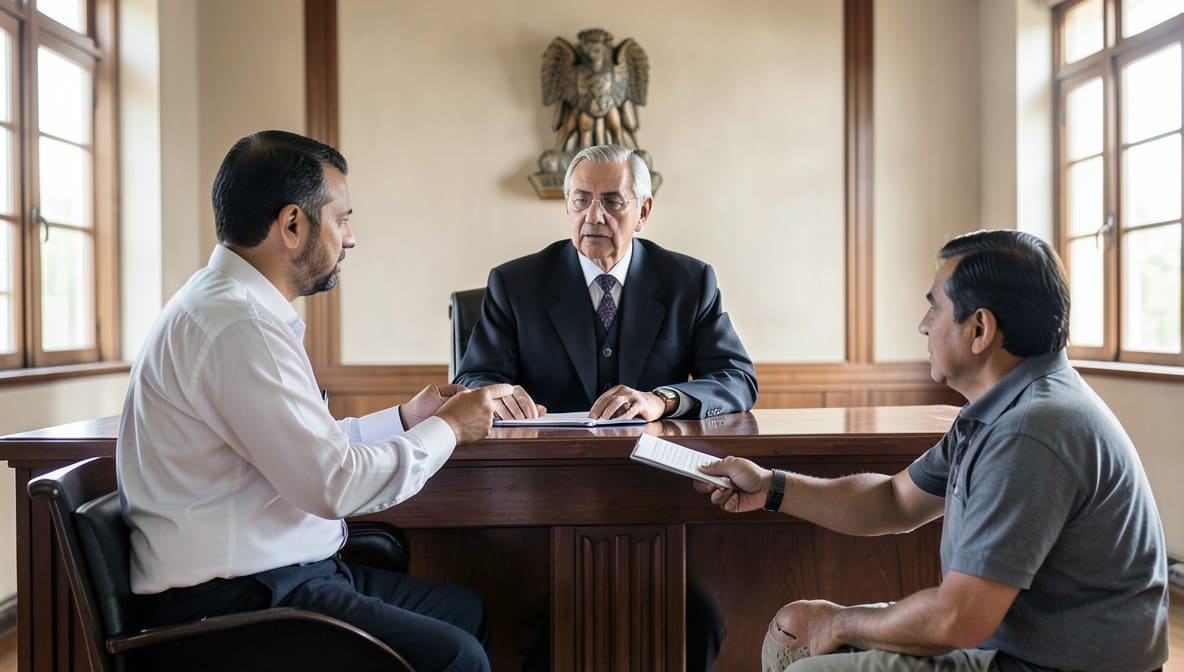
In a significant ruling on motor accident compensation, the Madras High Court dismissed an appeal by United India Insurance Co. Ltd., affirming the Tribunal's award of Rs. 9,63,107 with 7.5% interest. The judgment clarifies that insurance liability persists even when criminal proceedings are closed as a 'mistake of fact', and reaffirms the multiplier method for calculating loss of income in cases of permanent disability.
Background & Facts
The Accident
On 07.01.2018 at 23:00 hours, the petitioner S. Manibalan was riding as a pillion passenger on a TVS Apache motorcycle (Registration No. PY-01-BY-7342) owned by the 1st respondent M. Gangaiamaran. While traveling on the customs road at Vellapakkam turning, the 1st respondent drove rashly and negligently, hitting a stone on the road. This caused the petitioner to fall and sustain severe injuries:
- Comminuted fracture of the shaft of the right humerus
- Comminuted fracture of both bones of the right forearm
- Blunt injury on the abdomen with Grade 3 liver laceration
- Injuries on the forehead and right hand
- Tenderness on the right lumbar and epigastric regions
- Multiple grievous injuries across the body
The petitioner underwent treatment at Government Head Quarters Hospital, Cuddalore, JIPMER Hospital, Cuddalore, and Abiraami Hospital, Cuddalore, where surgery was performed on 18.01.2018. A disability certificate (Ex.C1) assessed his whole body disability at 38%.
Procedural History
- 07.01.2018: Accident occurred
- Post-accident: FIR registered against the 1st respondent (driver)
- Date not specified: Criminal case closed as 'Mistake of Fact'
- Date not specified: Petitioner filed M.C.O.P.No.2470 of 2018 before the Motor Accident Claims Tribunal (Principal Sub Judge), Cuddalore
- 16.08.2022: Tribunal awarded compensation of Rs. 9,63,107 with 7.5% interest from the date of petition
- Date not specified: Insurance Company (appellant) filed C.M.A.No.882 of 2023 and C.M.P.No.8197 of 2023 before Madras High Court
- 25.02.2026: Appeal reserved
- 29.04.2026: Judgment pronounced
The Parties' Positions
For the Appellant (Insurance Company):
- Argued that the Tribunal erred in fastening liability on the insurance company when the criminal case was closed as a 'mistake of fact'
- Contended that the claimant failed to prove rash and negligent driving by oral and documentary evidence
- Argued that the multiplier method was incorrectly applied as the petitioner did not prove loss of avocation or income
- Highlighted that the Medical Board's certificate (Ex.C1) only mentioned functional disability, not permanent disability
For the Respondents (Claimant and Driver):
- The 1st respondent (claimant) argued that the Tribunal's analysis of evidence was correct and the compensation awarded was just and reasonable
- The 2nd respondent (driver) was ex-parte
Relief Sought
The appellant sought setting aside of the Tribunal's award dated 16.08.2022, which directed the insurance company to pay Rs. 9,63,107 with 7.5% interest from the date of petition.
The Legal Issue
The central questions before the Court were:
- Whether the insurance company can avoid liability when the criminal case against the driver was closed as a 'mistake of fact'?
- Whether the multiplier method under the Sarla Varma formula is applicable when the Medical Board certifies only functional disability, not permanent disability?
- Whether the claimant must prove actual loss of income to avail compensation under Section 166 of the Motor Vehicles Act?
Arguments Presented
For the Appellant (Insurance Company)
- Relied on the closure of the criminal case as a 'mistake of fact' to argue that negligence was not established
- Contended that the claimant failed to prove rash and negligent driving through oral or documentary evidence
- Argued that the multiplier method was incorrectly applied as the petitioner did not file any document proving loss of avocation or income
- Emphasized that the Medical Board's certificate (Ex.C1) assessed only functional disability, not permanent disability
For the 1st Respondent (Claimant)
- Argued that the Tribunal's analysis of evidence was thorough and the compensation awarded was just and reasonable
- Highlighted that the petitioner was a B.Tech graduate working as an engineer, and the injuries sustained would permanently affect his earning capacity
The Court's Analysis
The Court conducted a detailed examination of the evidence and legal principles:
-
Liability of Insurance Company: The Court observed that the FIR was registered against the driver, and the appellant failed to establish that the accident occurred due to the petitioner's negligence. The Tribunal rightly rejected the Final Report (Ex.R1) as the investigating officer (R.W.1) did not conduct a proper investigation. The closure of the criminal case as a 'mistake of fact' did not absolve the insurance company of liability under Section 166 of the Motor Vehicles Act.
"On the side of the appellant, it has not been established that the alleged accident occurred due to the negligent act of the petitioner/injured. Further, the Tribunal rightly held that the evidence of R.W.1, the Sub Inspector of Police, Nellikuppam Police Station, cannot be accepted for the reason that he had not investigated the case. Therefore, the learned Tribunal rightly rejected the copy of the Final Report marked as Ex.R1."
-
Multiplier Method and Disability: The Court upheld the Tribunal's application of the multiplier method under the Sarla Varma formula. It noted that the petitioner was 22 years old at the time of the accident, a B.Tech graduate working as an engineer, and the injuries sustained (comminuted fractures and Grade 3 liver laceration) were grievous and bound to affect his earning capacity permanently. The 38% disability certified by the Medical Board (Ex.C1) was sufficient to establish loss of earning capacity, even if it was termed as functional disability.
"Considering the age, avocation and the nature of the injuries of the petitioner, the Tribunal had rightly adopted the multiplier method in calculating the loss of income. The petitioner was a B.Tech Graduate working as an Engineer in a private company, aged 22 years at the time of the accident, and the injuries sustained by him - comminuted fracture of the shaft of the right humerus, comminuted fracture of both bones of the right forearm, and Grade 3 liver laceration - are grievous in nature and are bound to affect his earning capacity for the remainder of his working life."
-
Notional Income and Compensation Heads: The Court approved the Tribunal's calculation of notional income at Rs. 9,000 per month, the 38% disability, and the multiplier of 18. It held that the compensation awarded under each head was just and proper, and no interference was warranted.
The Verdict
The Madras High Court dismissed the appeal (C.M.A.No.882 of 2023) filed by the insurance company. The Court upheld the Tribunal's award of Rs. 9,63,107 with 7.5% interest per annum from the date of the petition until realization. No costs were awarded. The connected miscellaneous petition (C.M.P.No.8197 of 2023) was also closed.
What This Means For Similar Cases
Insurance Liability Persists Despite Criminal Case Closure
- The judgment reinforces that insurance companies cannot evade liability merely because criminal proceedings against the driver are closed as a 'mistake of fact'. The burden is on the insurance company to prove that the accident was not caused by the driver's negligence.
- Practitioners should note that police reports lacking proper investigation (e.g., where the investigating officer did not conduct inquiries) will not absolve the insurance company of liability.
Multiplier Method Applies Even for Functional Disability
- The Court clarified that the multiplier method under the Sarla Varma formula is applicable even when the Medical Board certifies functional disability (as opposed to explicitly stating 'permanent disability'). The nature of the injuries and their impact on earning capacity are sufficient to justify the multiplier method.
- Key takeaway for lawyers: When arguing for compensation, emphasize the severity of injuries (e.g., fractures, organ damage) and their long-term impact on avocation, even if the disability certificate does not explicitly state 'permanent disability'.
Notional Income Can Be Adopted Without Proof of Actual Loss
- The judgment confirms that Tribunals can adopt notional income (here, Rs. 9,000 per month) for calculating compensation, even if the claimant does not provide documentary proof of actual income loss. This is particularly relevant for young professionals or those in informal employment.
- Practical implication: Claimants need not furnish salary slips or income tax returns to avail compensation. The Tribunal can rely on age, education, and avocation to determine notional income.